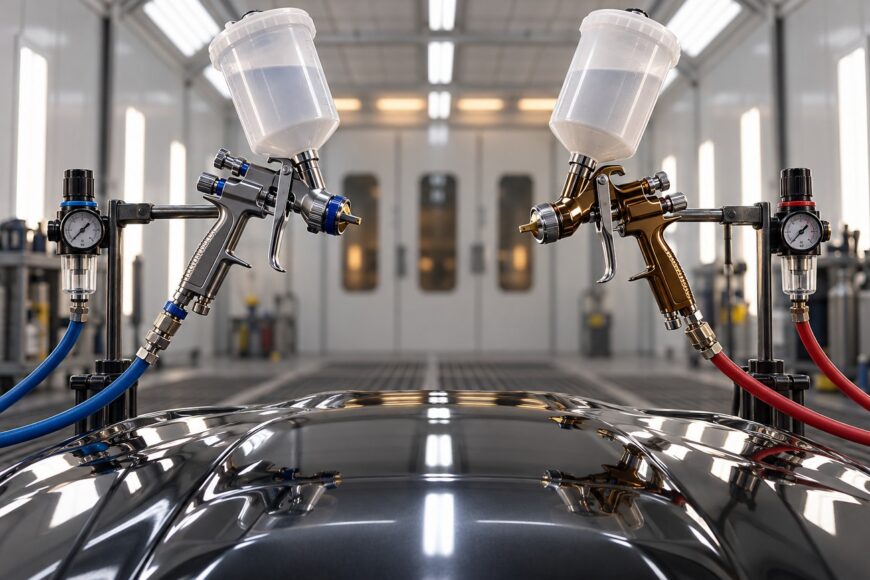
Choosing between a SATAjet 5000 and an Iwata WS-400 for clear coat starts with the version and coating system, not the logo on the gun. The SATAjet 5000 B is available as HVLP or RP, while the WS-400 Series 2 must be identified as a Clear or HD configuration. Those differences affect air demand, fan behavior, working distance, and the speed at which you can lay down a wet coat.
SATA generally offers a broad, productive fan that can cover large panels efficiently once the painter adapts to it. Iwata’s Split Nozzle is intended to distribute material across the fan and reduce central over-application, which can suit a more controlled application style. Neither design guarantees a smoother clear coat or lower consumption by itself. Viscosity, temperature, hardener, pressure, distance, overlap, pass speed, and flash time remain decisive.
- The Real Choice: Fan Behavior, Not Brand Prestige
- SATAjet 5000 for Clear Coat: HVLP or RP?
- Iwata WS-400 for Clear Coat: What Split Nozzle Actually Changes
- SATAjet 5000 vs Iwata WS-400: Clear-Coat Comparison Table
- How Clear-Coat Setup Determines the Finish
- The Problems Painters Actually Encounter
- Common Mistakes, Myths, and Hidden Ownership Costs
- Which Gun Should You Choose for Your Clear-Coat Workflow?
- Frequently asked questions
- What is the best Iwata spray gun for clear coat?
- What is the best spray gun for spraying clear coat?
- Which is better, the Iwata LPH400 or the WS-400?
- How should I test a new clear coat gun before painting a full panel?
The Real Choice: Fan Behavior, Not Brand Prestige
A meaningful comparison has to name the exact SATAjet 5000 version and the exact WS-400 configuration. The SATAjet 5000 B is available in HVLP and RP versions, and the two technologies have different air requirements and working distances. The WS-400 Series 2 is offered in configurations intended for basecoat and clear coat work, so a WS-400 Clear and a WS-400 HD should not be treated as interchangeable references.
Both product families are compliant spray guns. That classification addresses transfer-efficiency requirements, yet it does not make their air use, practical transfer behavior, application speed, or finish quality identical. A compliant gun can still waste material through excessive overlap, poor distance control, overspray, or a pressure setting that does not suit the clear coat.
The operator’s working rhythm is part of the comparison. A broad SATA fan can make a large door or quarter panel productive, while the WS-400’s distribution pattern may give a painter more localized control. The better result comes from matching that behavior to the clear coat, the compressor, the panel, and the painter’s hand speed.
SATAjet 5000 for Clear Coat: HVLP or RP?
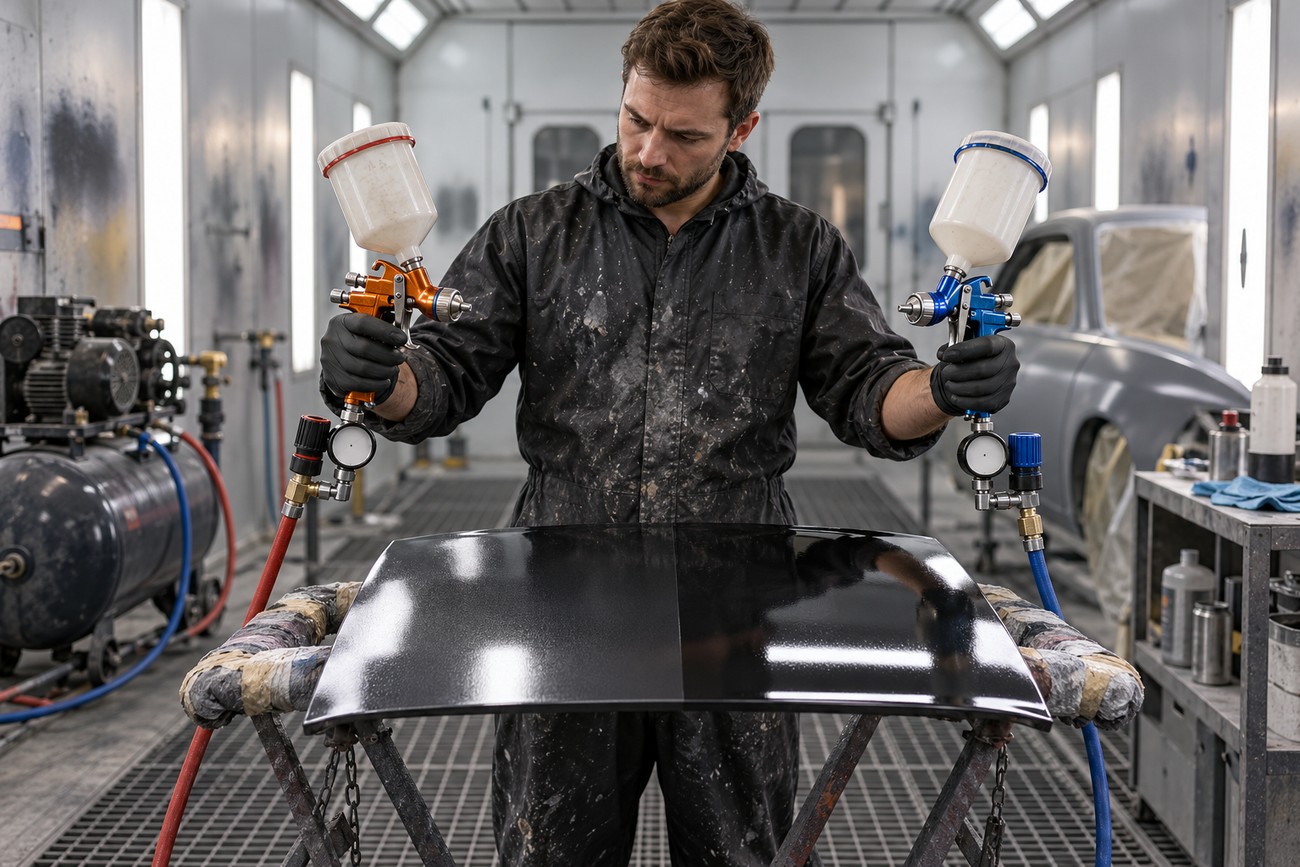
The SATAjet 5000 B HVLP and RP versions should be approached as different tools rather than two labels for the same setup. The stated maximum inlet setting is approximately 2 bar / 29 psi, while the correct working pressure still depends on the coating manufacturer’s technical data sheet and the gun’s working configuration. Pressure shown with an unloaded regulator is not enough to confirm the operating condition.
Air demand is a practical dividing line. SATA HVLP uses approximately 15.2 cfm, while SATA RP uses approximately 10.2 cfm. That difference can determine whether the compressor maintains pressure during a continuous pass, especially through a long hose, restrictive fittings, or a filter that is already loaded with contamination.
Typical working distance also changes with the technology. SATA HVLP is used at approximately 10–15 cm, while SATA RP is used at approximately 17–21 cm. The broad, productive fan can shorten work on large panels, but a painter who keeps the old distance and hand speed from a narrower gun may apply too much material, create runs, or increase overspray.
HVLP is therefore not automatically the superior choice, and RP is not automatically the safer one. HVLP can suit a shop with adequate air capacity and a painter comfortable working closer to the panel. RP may be easier to integrate where air supply is limited or where the operator prefers a longer working distance, provided the clear coat is tuned to it.
Iwata WS-400 for Clear Coat: What Split Nozzle Actually Changes
The WS-400 Series 2 is intended primarily for basecoat and clear coat applications. Its Split Nozzle is designed to distribute material across the fan and reduce central over-application. That feature can help produce a more even pattern when the fluid setting, pressure, distance, and overlap are already appropriate.
Split Nozzle does not establish automatic superiority over the SATAjet 5000. It changes how material is distributed through the fan; it does not remove the need to match the gun to the clear coat. A poor viscosity choice or excessive fluid delivery can still produce dry edges, runs, uneven gloss, or excess material.
For the WS-400 Clear, official nozzle options include 1.3 and 1.4. The correct choice depends on viscosity and the coating system. A thicker clear coat, a different temperature, or a different hardener can alter the result enough that choosing a nozzle by habit produces a misleading comparison.
WS-400 HD recommendations for some Spies Hecker clear coat systems include 1.2–1.4 at 1.8–2.2 bar. That is a system-specific recommendation, not a universal setting for every WS-400 or every clear coat. The coating technical data sheet remains the starting point, followed by a controlled spray test.
SATAjet 5000 vs Iwata WS-400: Clear-Coat Comparison Table
The figures below are approximate where stated, and the coating-related settings remain system-dependent.
| Configuration | Intended use | Air demand | Working distance | Fan behavior | Nozzle guidance | Likely strengths | Setup risks |
|---|---|---|---|---|---|---|---|
| SATAjet 5000 B HVLP | Clear coat and other refinishing materials, subject to the coating data sheet | Approximately 15.2 cfm | Approximately 10–15 cm | Broad, productive fan with close working distance | Use the size specified for the clear coat and viscosity | Efficient coverage on large panels when the compressor and technique are suitable | High air demand, overspray, excess material, or runs if distance and speed are carried over from another gun |
| SATAjet 5000 B RP | Clear coat and other refinishing materials, subject to the coating data sheet | Approximately 10.2 cfm | Approximately 17–21 cm | Broad, productive fan with a longer working distance | Use the size specified for the clear coat and viscosity | Lower air demand than SATA HVLP and a productive large-panel workflow | Incorrect distance, fluid delivery, or pressure can cause dry spray or uneven wetting |
| Iwata WS-400 Clear | Primarily basecoat and clear coat applications | System-dependent; verify the gun and coating data | System- and setup-dependent | Split Nozzle distributes material across the fan and reduces central over-application | Official options include 1.3 and 1.4; select according to viscosity and coating system | Controlled distribution for a deliberate clear coat application | May require a slower pass, and the wrong nozzle or pressure can undermine uniformity |
| Iwata WS-400 HD | Use with specified coating systems, including some clear coat recommendations | System-dependent; verify the gun and coating data | System- and setup-dependent | Configuration-specific fan and atomization behavior | For some Spies Hecker clear coats, recommendations include 1.2–1.4 at 1.8–2.2 bar | Can suit a clear coat system that specifically lists the HD configuration | A recommendation for one coating system cannot be transferred to every clear coat |
How Clear-Coat Setup Determines the Finish
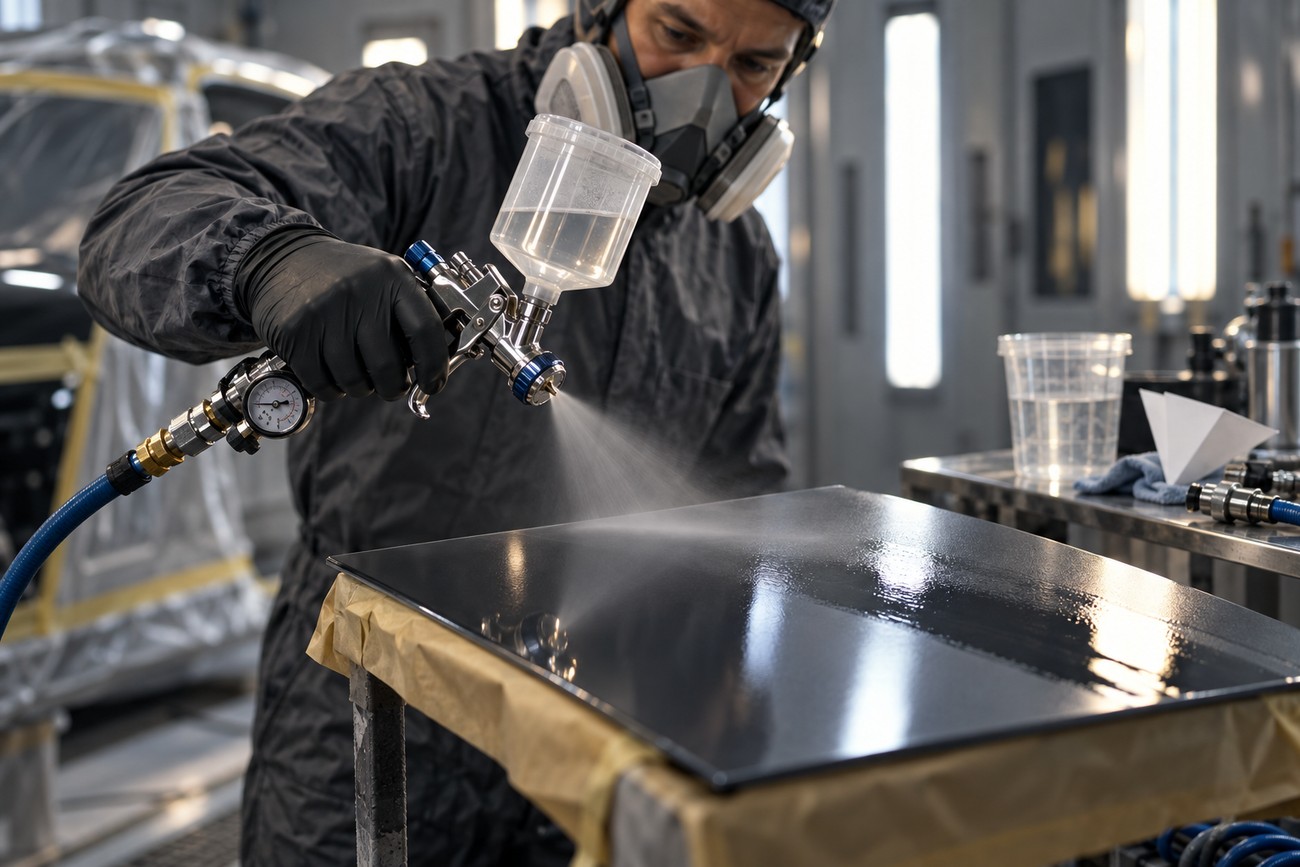
Start with the clear coat manufacturer’s technical data sheet. It should determine the initial nozzle, reduction or viscosity target, pressure range, hardener, and flash requirements. There is no universal correct pressure for every clear coat, and the same nominal nozzle size can behave differently as temperature and viscosity change.
Check pressure at the gun in working conditions, with the trigger pulled. A regulator can show a satisfactory unloaded reading while the pressure drops through the air line, filter, fittings, or compressor cycle. Set the fan and fluid delivery only after the air supply can maintain the required working condition.
Change one variable at a time during setup. If you alter pressure, fluid, distance, and speed together, a better or worse result provides no useful information about the cause. Begin with the data-sheet setting, spray a test pattern, and then adjust pressure, fluid, distance, or pass speed separately while watching atomization and wetting.
Clear coat appearance comes from the whole application window. Viscosity and temperature affect atomization; hardener affects open time and flow; distance and overlap control film build; pass speed determines how much material reaches each area. Flash time also matters because a second coat applied too soon can disturb the first, while excessive waiting can reduce intercoat flow and change the final gloss.
The Problems Painters Actually Encounter
Some SATA users report that the gun feels thirsty and produces a wide fan before the correct setup and hand technique are established. A broad fan can consume more material when the painter overlaps too heavily or uses more fluid than the clear coat requires. The same fan becomes an advantage on a large panel once the pass speed, distance, and trigger control are recalibrated.
Runs are often linked to transferred habits rather than a single gun defect. A painter moving from a slower or narrower gun may stay too close, move too slowly, or hold the trigger open too long with a SATAjet 5000. The clear coat then receives a heavier wet film than intended, while the operator may blame the gun for a setup error.
Moving to a wider, more productive fan requires a deliberate reset of hand speed and distance; retaining the old rhythm is a common route to runs.
Some practitioners find the WS-400 slower for uniform clear coat laydown because they prefer a more deliberate pass. Other users are dissatisfied with their clear coat result despite the gun’s reputation. That experience is subjective and does not establish a universal product defect. A rapidly curing clear coat can make pass speed and the available application window more important than the nominal softness of the fan.
Dry spray, uneven gloss, and apparent material waste can all result from carrying the wrong technique between guns. The useful diagnosis is to check the data sheet, wetting pattern, film build, overlap, and flash time before changing equipment. A gun cannot compensate for incorrect reduction, weak air supply, or poor preparation.
Common Mistakes, Myths, and Hidden Ownership Costs
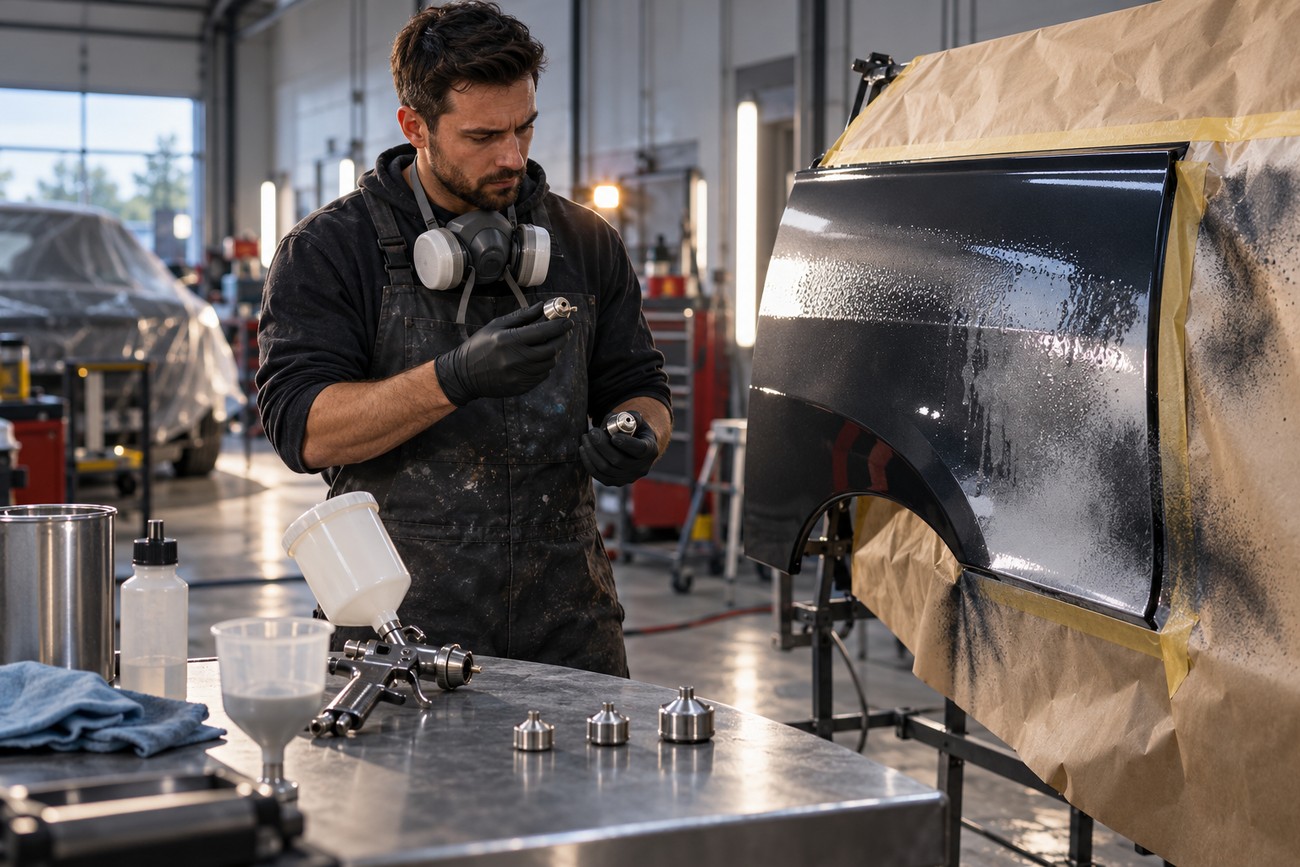
HVLP is not automatically more economical in real work. SATA HVLP uses substantially more air than SATA RP, and compliance does not guarantee lower material consumption than RP. Actual consumption depends on fluid delivery, overlap, pass speed, overspray, panel shape, and the painter’s ability to keep the fan correctly positioned.
A 1.3 or 1.4 nozzle is not universally correct for clear coat. Recommendations can range from 1.2–1.4 depending on the material and configuration, and viscosity changes with temperature and mixing conditions. Selecting a nozzle by brand reputation or habit can create an unfair comparison between the SATAjet 5000 and WS-400.
Catalog pressure figures also need context. The pressure recommended for a particular coating system is a starting point, while the working reading must be verified with the trigger pulled. Likewise, claims about WS-400 material savings are not fixed percentages; the result depends on pressure, technique, coating, and application conditions.
Ownership includes more than the gun body. The compressor and air system must maintain working demand, particularly for SATA HVLP, and filtration must remove moisture and contamination. Cleaning time, replacement nozzle-and-needle sets, wasted clear coat, overspray, and rework all affect cost. A cheaper initial purchase can become expensive if the air system or maintenance routine cannot support consistent spraying.
Which Gun Should You Choose for Your Clear-Coat Workflow?
SATA RP is a sensible starting point for a painter who wants a productive large-panel workflow with approximately 10.2 cfm air consumption. Its broad fan can cover substantial areas efficiently, provided the operator uses the approximately 17–21 cm working distance and adjusts speed and fluid delivery to the clear coat.
SATA HVLP suits a shop with enough air capacity for approximately 15.2 cfm and a painter who is comfortable with the closer approximately 10–15 cm working distance. It can be productive, yet the extra air demand and broad fan make compressor performance and technique especially important. A weak air system can turn a promising setup into unstable atomization.
The WS-400 can fit an operator who prioritizes controlled material distribution and prefers a deliberate pass. Its Split Nozzle may be useful where reducing central over-application is valuable, while the appropriate WS-400 Clear or HD configuration must still be matched to the coating data sheet. Neither gun is a universal winner across every clear coat, panel, or application style.
- Confirm whether the SATAjet 5000 is HVLP or RP, and whether the Iwata is WS-400 Clear or HD.
- Check compressor capacity and air-line performance under working load.
- Match nozzle and pressure to the clear coat technical data sheet.
- Consider panel size, clear coat cure speed, and the pass speed you can maintain consistently.
- Allow time for a test panel if you are willing to change setup variables methodically.
Frequently asked questions
What is the best Iwata spray gun for clear coat?
The WS-400 Clear is a relevant Iwata configuration for clear coat because it is intended for basecoat and clear coat applications and offers official 1.3 and 1.4 nozzle options. The correct choice still depends on the viscosity and technical requirements of the coating system.
A product label cannot replace a coating-specific test panel. Confirm the data-sheet nozzle and pressure, spray a controlled pattern, and judge wetting, overlap, atomization, and final gloss before committing to a full panel.
What is the best spray gun for spraying clear coat?
The best gun is the one that matches the clear coat, available air supply, panel size, cure speed, and operator technique. SATA RP may suit a productive large-panel workflow with lower air demand than SATA HVLP, while SATA HVLP requires adequate air capacity. The WS-400 may suit a painter who values controlled distribution and a deliberate pass.
Clear coat cure speed can change the decision because a short application window rewards a pass speed the operator can maintain consistently. Preparation, reduction, pressure, distance, overlap, and flash time remain more important than a universal model ranking.
Which is better, the Iwata LPH400 or the WS-400?
That comparison requires the exact model version, nozzle, coating, pressure, and application goal. LPH400 and WS-400 configurations can be intended for different spray behavior, so a model-wide ranking would be unsupported without matching the operating conditions.
For a clear coat decision, compare the pattern and wetting on the same test material using the same controlled process. The WS-400 information here concerns its Clear and HD configurations; it should not be used to assume that every Iwata model behaves the same way.
How should I test a new clear coat gun before painting a full panel?
Use the coating technical data sheet as the baseline for nozzle, pressure, viscosity, hardener, and flash time. On a test panel or suitable test surface, spray a pattern with the intended distance and overlap, then inspect atomization, wetting, edge coverage, and the tendency toward runs or dry spray.
Change one setting at a time after the baseline pass. Record the pressure with the trigger pulled, then adjust fluid, distance, speed, or pressure separately. Commit to production work only after the test produces the required wet film and gloss without relying on excessive material or unstable technique.