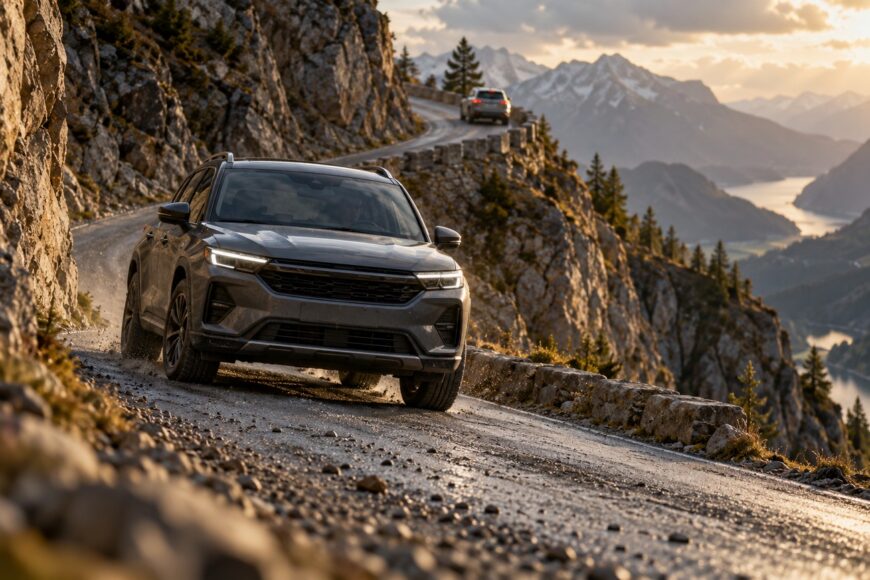
Mountain roads demand slower, earlier decisions, yet many drivers judge safety by the posted speed limit or by how confidently local traffic moves. That approach leaves too little margin for a tightening bend, a hidden vehicle, or a surface that changes without warning.
The main risks build on one another: heavy brake loads on descents, blind curves, reduced engine power at altitude, rapidly changing grip, and mental fatigue. A safe trip starts before the first slope, with a sound vehicle, suitable tires, and a plan to manage speed and gears before the road demands it.
- Why Mountain Roads Require a Different Driving Strategy
- Prepare the Car Before Entering the Mountains
- Control Speed and Gears on Climbs and Descents
- Handle Blind Curves, Oncoming Traffic, and Passing
- Adapt to Fog, Rain, Ice, and Changing Road Surfaces
- Prevent Driver Fatigue and Bad Decisions
- What to Do When Brakes Overheat or Grip Disappears
- Frequently asked questions
- What are the five Cs of safe driving on mountain roads?
- What should you do when two vehicles meet on a very narrow mountain road?
- What is the 1-2-3 rule in driving, and does it apply on mountain roads?
- What is the single greatest danger on a mountain road?
Why Mountain Roads Require a Different Driving Strategy
Mountain roads combine sustained climbs and descents with tight-radius curves, narrow lanes, limited sightlines, and fast weather changes. A road can appear open while a crest hides oncoming traffic, or a dry surface can carry mud, loose rock, or localized ice. Each factor reduces the time available for correction.
Downhill driving deserves particular caution. Crashes while driving downhill occur 1.5–3 times as often as crashes while driving uphill because gravity increases speed, lengthens the braking task, and places sustained heat into the service brakes. A vehicle that feels stable at the start of a descent can become difficult to control several minutes later.
Posted speed limits provide an upper legal reference, not a guaranteed safe speed for every bend. Safe speed depends on slope, curve radius, visibility, surface grip, and weather. Reduce speed before a curve, crest, wet patch, or change in gradient so the vehicle is already settled when visibility or traction worsens.
Prepare the Car Before Entering the Mountains
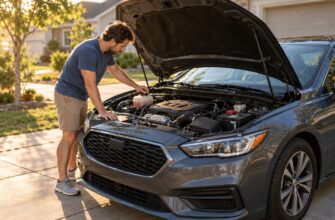
Inspect the brakes before departure, including pedal feel, fluid condition, warning lights, and any vibration or pulling. Check tire pressure when the tires are cold, inspect tread and sidewalls, and confirm that the vehicle is not carrying more load than recommended. Distribute luggage low and evenly so the car remains predictable through curves.
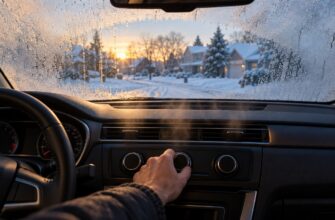
Plan enough fuel for the route and possible delays, especially where service stations are scarce. Check the forecast for the highest part of the route rather than only the departure town. Snow, ice, or packed frost require winter tires or chains; careful driving does not make summer tires equivalent to winter equipment.
Mountain roads can wear tires several times faster than normal because of lateral cornering forces, overload, and frequent braking. Inspect them again after a demanding trip, looking for uneven shoulders, cuts, exposed damage, or a change in handling. A vehicle with questionable brakes or worn tires has less safety margin on sustained grades.
Postpone or change the route if the brakes feel abnormal, a tire is damaged, required traction equipment is unavailable, or conditions exceed your experience. Delaying a trip is a practical safety decision when the car cannot provide a reliable margin for error.
Control Speed and Gears on Climbs and Descents
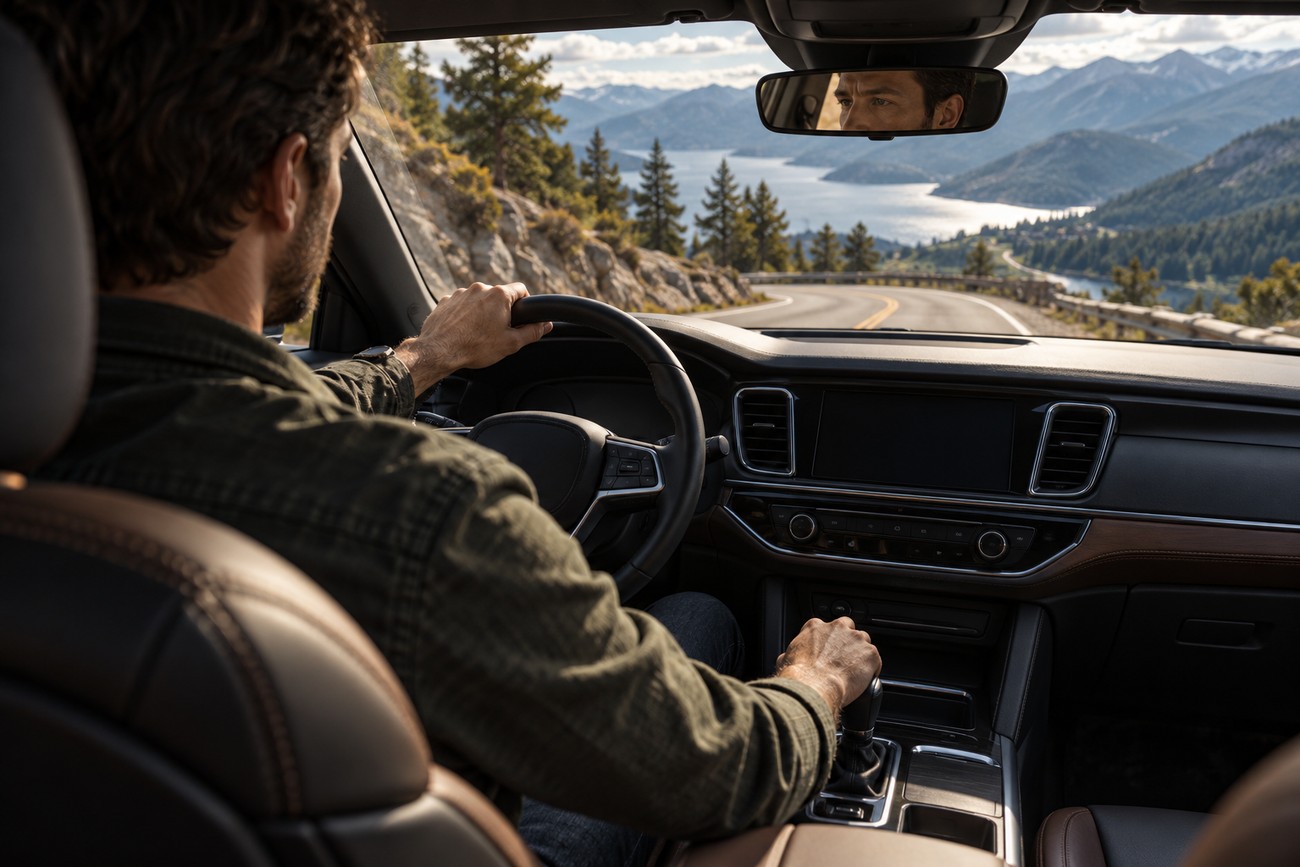
Select a lower gear before entering a steep climb or descent. The steeper the grade, the lower the gear should be, within the vehicle manufacturer’s guidance. Choosing early preserves steady traction and avoids a rushed shift while the vehicle is already accelerating or losing momentum.
Use a suitable low gear and engine braking before and during a sustained descent. Apply the service brakes deliberately to reduce speed when needed, then release them so they can cool. Continuous pedal pressure creates heat and can reduce braking performance; brake failure is reported in more than 20% of incidents attributed to vehicle malfunction on descents.
Choosing a high gear for a descent and waiting until the vehicle is accelerating leaves too little control for a smooth correction. The safer decision is made before the slope takes over, while the vehicle is still at a manageable speed.
On a climb, avoid waiting until the engine is struggling before selecting a lower gear. At high altitude, engine power can decrease by approximately 20–25% because atmospheric pressure is lower, so a vehicle may need more revs and an earlier downshift than it would on level ground. Keep a reserve of traction and avoid unnecessary gear changes inside a steep, slippery section.
Modern brakes are designed for normal braking demands, yet electronic systems and brake hardware cannot remove the heat generated by a long descent. Engine braking reduces reliance on the service brakes; it does not repair a mechanical fault. If the vehicle begins to accelerate despite braking, treat that as a warning to slow down and reassess immediately.
Handle Blind Curves, Oncoming Traffic, and Passing
Approach every blind curve as if an oncoming vehicle may already be there. Stay in your lane, keep a speed that allows you to stop within the visible road, and avoid cutting across the center line. Blind curves and changing gradients increase the risk of head-on collisions and rollovers.
Do not overtake before a concealed curve, near a crest, or on a narrow section where you cannot see the road beyond the maneuver. A vehicle approaching from the other side may be hidden by the bend or may need extra room because of its size. Wait for a long, clear view and enough space to complete the pass without forcing another driver to brake.
Leave room for the vehicle’s dynamic width and turning path. A car may need more lateral space at the middle of a tight turn than its stationary outline suggests, while a loaded vehicle, trailer, or bus may swing across part of the lane. Unfamiliar drivers should choose a conservative line instead of copying the path of a local driver whose vehicle dimensions and route knowledge may differ.
When exiting a safe, controlled bend, a small, smooth increase in throttle can help stabilize the vehicle by restoring steady traction. Use it only when entry speed, grip, and visibility are already safe. Abrupt acceleration on a wet, icy, or loose surface can break traction and widen the vehicle’s path.
Adapt to Fog, Rain, Ice, and Changing Road Surfaces
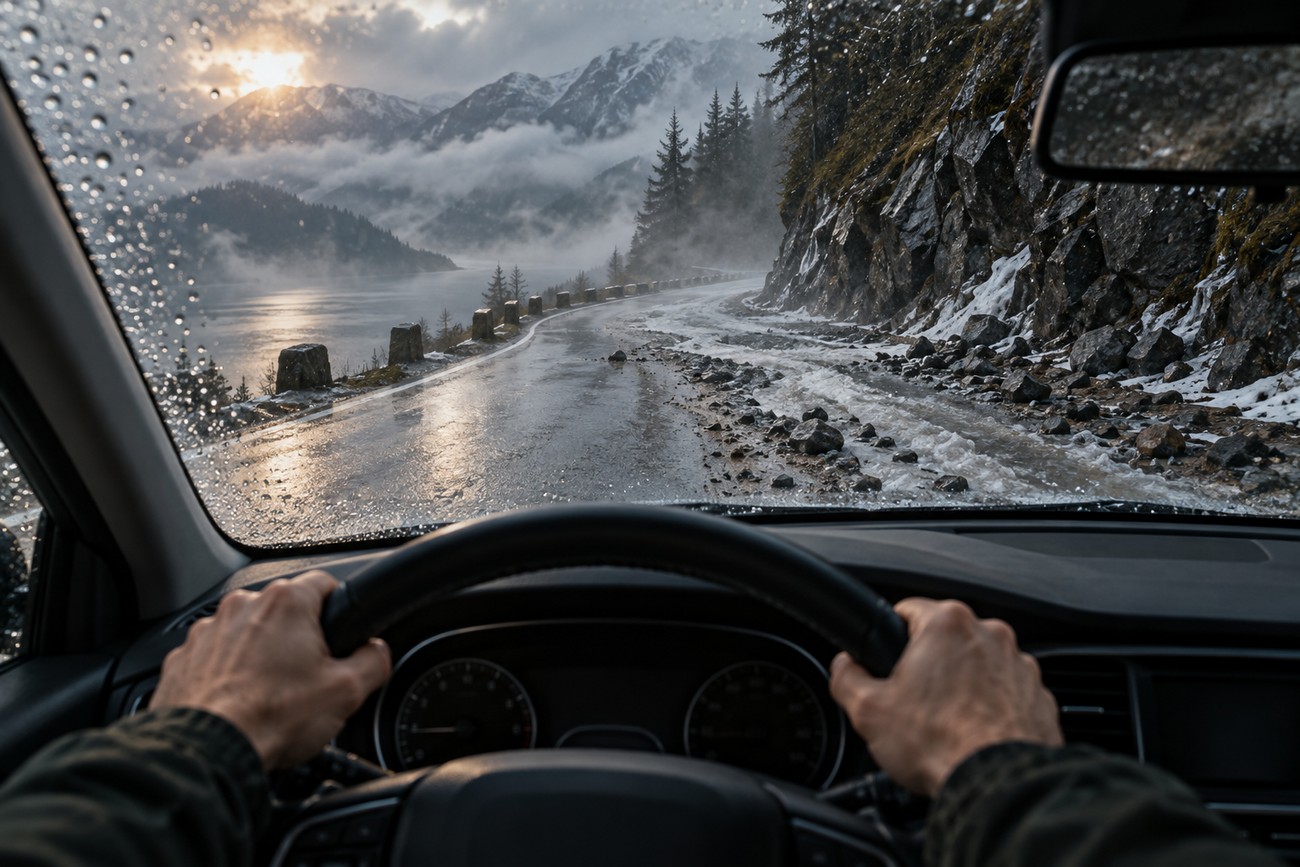
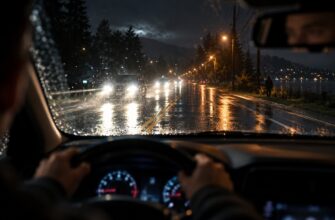
Reduce speed before entering fog, heavy rain, or a shaded section where ice may form. Fog shortens sight distance, while rain can conceal standing water, debris, and changes in the road edge. A speed that felt reasonable in clear conditions may leave no time to respond once visibility contracts.
Grip can change abruptly because of clay or mud deposits, loose rocks, and localized ice. These hazards may appear as small patches on an otherwise dry road, yet they can affect steering and braking immediately. Keep both hands available, make smooth inputs, and avoid sudden steering or pedal movements across uncertain surfaces.
Winter tires or chains should be used when snow, ice, or packed frost create low-grip conditions. Summer tires remain unsuitable for those conditions even if the driver proceeds cautiously. Missing winter tires or chains sharply increases the risk of sliding and loss of control.
Weather and surface conditions can change faster in mountainous terrain than a driver can safely compensate for with abrupt braking or steering. Increase following distance, slow before the hazard, and be prepared to stop or turn back if the road becomes unsuitable for the vehicle and equipment.
Prevent Driver Fatigue and Bad Decisions
Serpentine driving creates a high mental workload. You must monitor the trajectory, slope, oncoming traffic, road edge, surface, weather, and vehicle response at the same time. Psychological fatigue from this continuous task can reduce decision speed and judgment, even when you still feel physically capable of driving.
Use short, frequent stops on demanding routes. Stop in a safe, legal location away from the travel lane, then use the pause to reset your attention, check the vehicle, and review the next section. A brief break taken before concentration drops is more useful than waiting until mistakes begin.
Plan conservatively on unfamiliar roads. Allow extra time, avoid scheduling a difficult descent when you are already tired, and leave room for unexpected closures or weather. A route that appears short on a map can require sustained concentration for much longer than its distance suggests.
Local traffic speed is not evidence that a curve or descent is safe for you. Local drivers may know the road, its sightlines, and its usual hazards, while you may be seeing the section for the first time. Keep your own speed within the margin provided by your visibility, grip, vehicle, and experience.
What to Do When Brakes Overheat or Grip Disappears
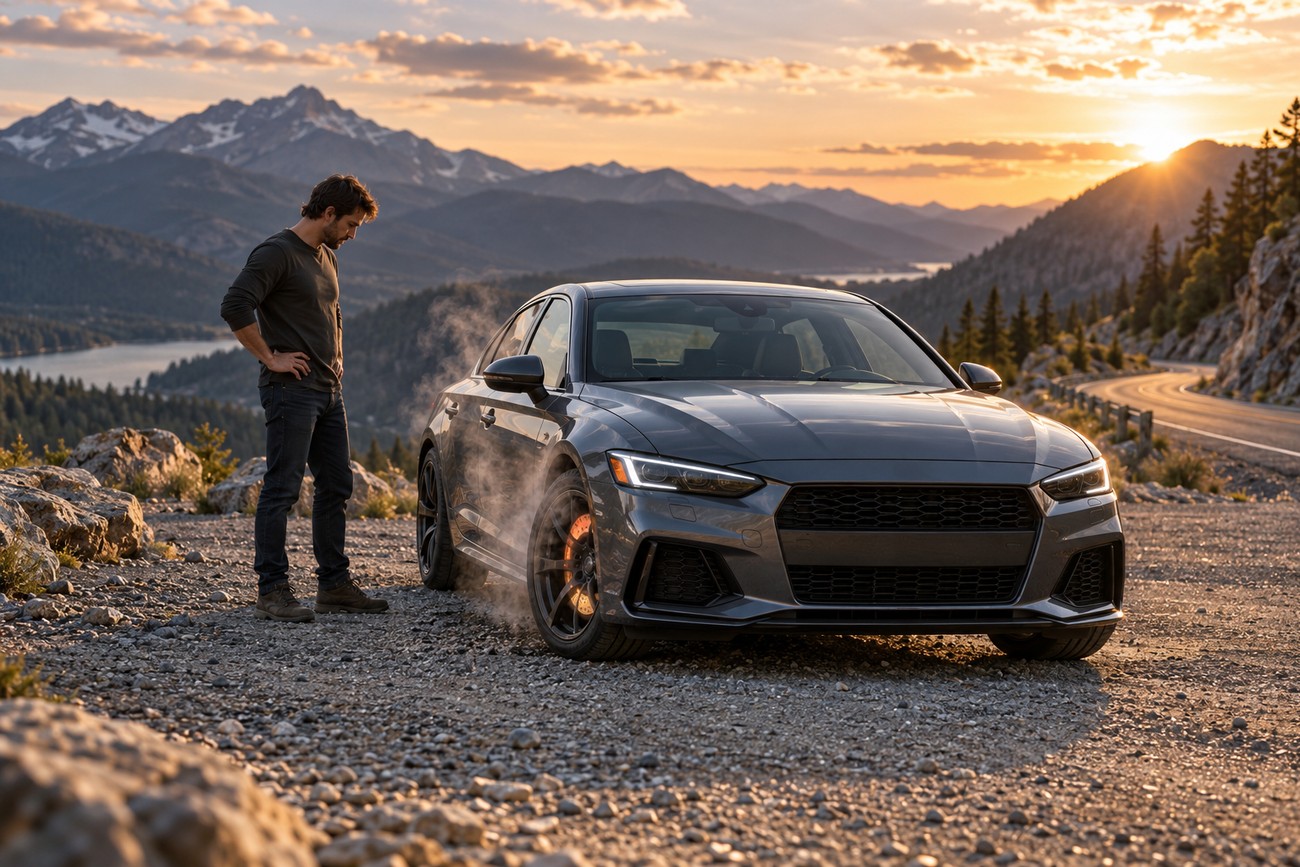
Warning signs include a change in pedal feel, reduced braking response, an unusual smell, smoke, or a vehicle that continues to gain speed despite firm braking. Treat any change as a control problem. Reduce the load immediately with a lower gear where appropriate, keep the vehicle straight, and avoid sharp steering.
Stop in a safe place as soon as possible, using an emergency area or a broad pullout away from traffic. Allow the brakes to cool and arrange an inspection if their response has changed. Do not continue on the assumption that the problem will resolve during the next part of the descent.
Engine braking reduces reliance on the service brakes, but it does not repair a mechanical fault. Electronic stability control and descent-assistance systems support control; they cannot compensate for excessive speed, unsuitable gear selection, or inadequate tire grip.
If grip disappears, look where you need the vehicle to go, ease off abrupt inputs, and avoid panic braking or steering. Keep the wheels aligned with the road as far as possible, and use the safest available space to stop. Once the vehicle is stationary, reassess the surface and equipment before proceeding.
Frequently asked questions
Mountain-driving rules of thumb can help organize attention, but they never replace a speed and gear choice based on the road in front of you.
What are the five Cs of safe driving on mountain roads?
The five Cs are commonly described as concentration, caution, control, courtesy, and consideration. This mnemonic is not a universal legal standard, so use it as a prompt: concentrate on the road and escape space, use caution before blind bends, keep control through speed and gear selection, show courtesy when vehicles meet, and consider the limits of other drivers and vehicles.
The words become useful only when translated into actions. Concentration means stopping when fatigue affects decisions; caution means slowing before a hidden hazard; control means keeping a reserve of traction; courtesy means making space without forcing a risky reverse; and consideration means refusing to copy traffic that is moving beyond your safe margin.
What should you do when two vehicles meet on a very narrow mountain road?
Slow early, communicate clearly, and compare the road ahead before either vehicle commits to a difficult maneuver. Identify the nearest safe passing space, such as a widened section with firm ground, and agree who will move there. Avoid stopping beside an edge, near a crest, or inside a blind bend.
Do not wait until the last second to reverse. If reversing is necessary, do it slowly toward a visible, stable area, using a spotter when available and safe. The vehicle with the clearer view or better access to a wider space may need to yield, regardless of which direction it is traveling.
What is the 1-2-3 rule in driving, and does it apply on mountain roads?
Different driving schools use “1-2-3” for different spacing, observation, or sequence mnemonics. Verify the local definition before relying on it. It is not a fixed safe distance for a road where grades, visibility, weather, and grip change continually.
On mountain roads, use the actual visible stopping distance and the condition of the surface as your guide. Leave more space when descending, in fog, or behind a larger vehicle that blocks your view, and increase it again when the road becomes wet or loose.
What is the single greatest danger on a mountain road?
The central danger is loss of control caused by speed that is excessive for the conditions. Downhill brake load, poor grip, blind curves, changing gradients, and fatigue each make that loss of control more likely or more difficult to correct.
There is no single speed that is safe for every mountain road. A controlled pace, an appropriate gear, a clear view, suitable tires, and enough attention create the margin that allows you to respond before a small hazard becomes an emergency.