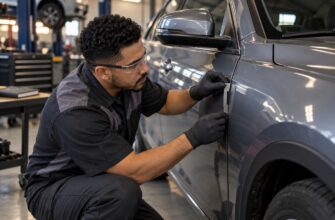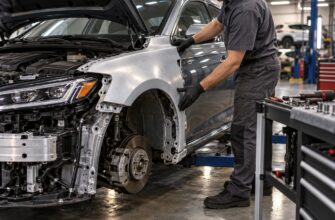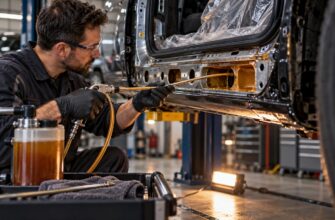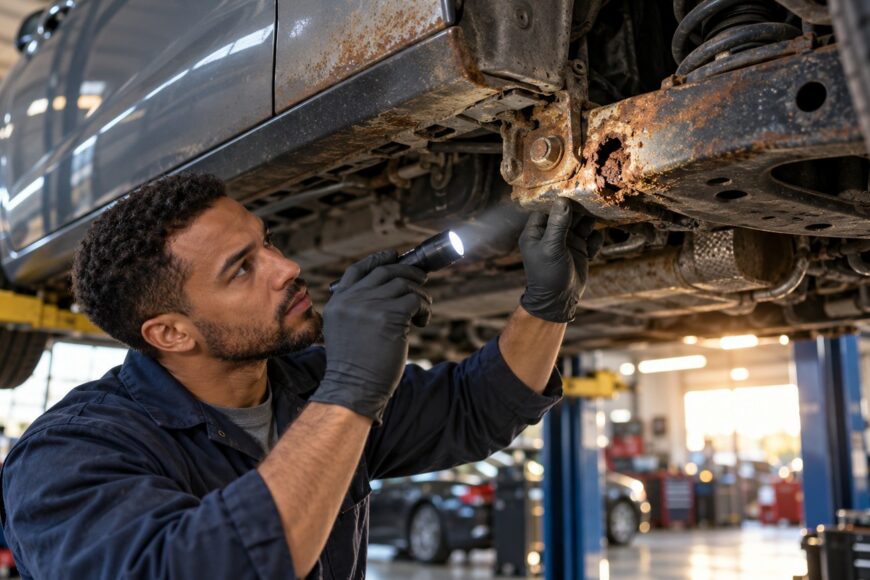
A used car can drive smoothly, brake normally, and pass a short test drive while its load-bearing metal underneath has already weakened. The danger is easy to miss because the visible rust spot may be small, while corrosion inside a sill, subframe, floor section, or mounting area has reduced the component’s strength.
Surface appearance is therefore a poor measure of structural risk. The buying decision should include an independent inspection from below, ideally with the vehicle safely raised and the underside clean enough to reveal seams, drain holes, repairs, and mounting points. Use the checklist below to separate cosmetic oxidation from defects that require a documented safety assessment before you proceed.
- Why Rust Can Make a Used Car Unsafe
- Before You Inspect: History, Location, and Seller Red Flags
- The Underbody Rust Inspection Checklist
- Surface Rust, Structural Rust, and Signs of a Bad Repair
- How to Inspect Without Creating a New Problem
- What to Do When the Inspection Finds Rust
- Used-Car Rust Checklist: Green Flags, Warning Signs, and Walk-Away Signals
- Frequently asked questions
- What is the $3,000 rule for buying cars?
- Which car brand rusts the most?
- What should I do if the seller refuses an independent rust inspection?
- How should I compare two used cars with similar visible rust?
Why Rust Can Make a Used Car Unsafe
Corrosion is structurally dangerous when it reduces the load-bearing capacity of a frame, subframe, sill, floor, mounting area, or other safety-critical component. Visible area alone is not the measure. A small opening beside a suspension mount can matter more than a broad patch of light oxidation on a decorative body panel because the weakened metal carries a concentrated load.
Begin with the parts that transfer vehicle forces: the frame or unibody rails, subframes, sills, jacking points, floor, suspension and steering mounts, brake-line areas, and seat-belt mountings. These areas can be affected from the outside, inside a closed profile, or around a previous repair. Corrosion near a mounting point deserves priority because the surrounding metal helps hold the component in position.
A normal drive provides useful information about noise, steering, braking, and suspension behavior, but it cannot establish structural safety. The car may track straight and feel composed while corrosion has weakened a hidden sill or subframe. A smooth test drive should therefore lead to a lift inspection rather than end the investigation.
The same principle applies to seat-belt anchors and brake-line areas. A compromised anchor can affect restraint performance, while corroded brake lines can create a separate safety problem even when the frame appears sound. If the inspection reveals perforation, soft structural metal, a hole during a light check, or a crack in a load-bearing zone, treat the finding as a serious safety and inspection concern.
Before You Inspect: History, Location, and Seller Red Flags
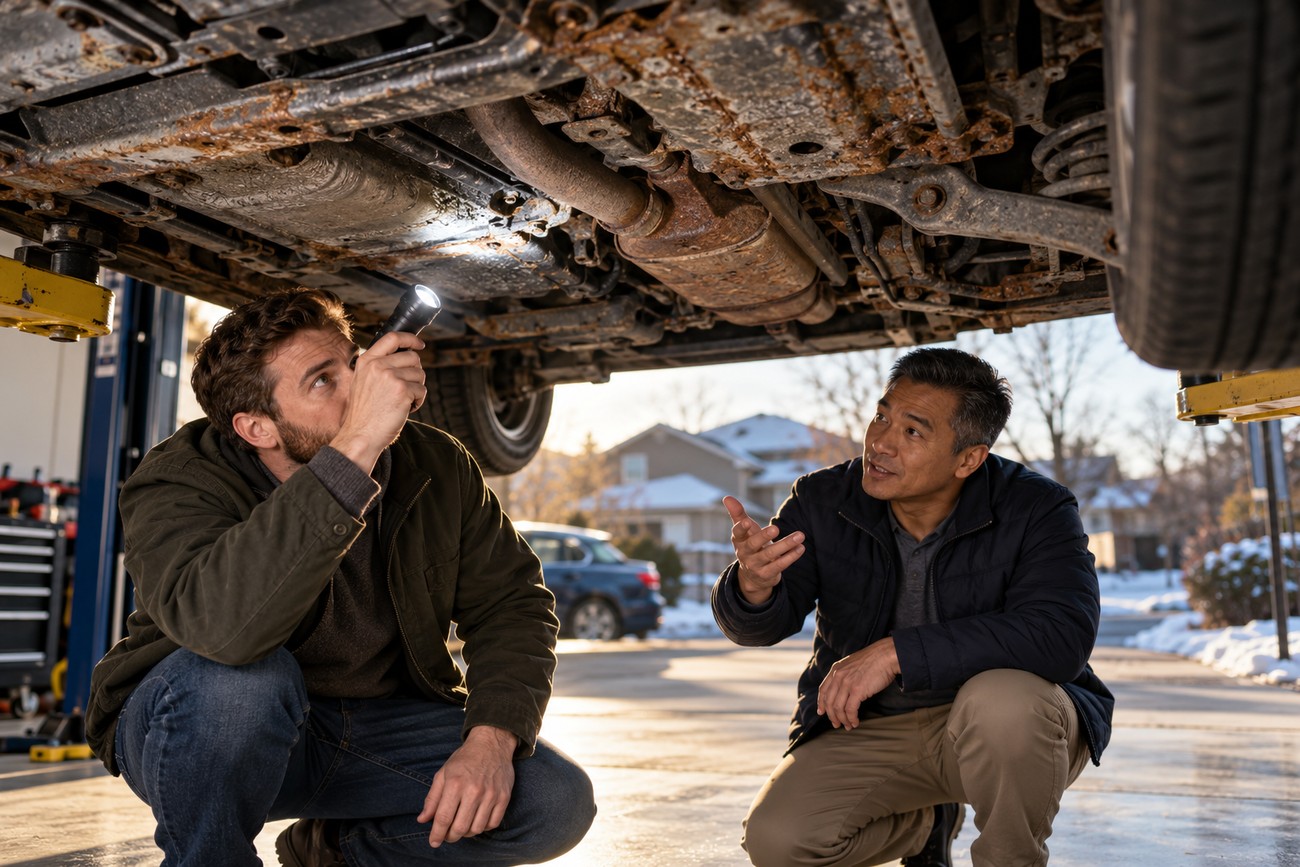
Ask where the car spent its working life, especially whether it was regularly exposed to winter road salt, coastal air, or a snowy climate. Long-term operation in corrosive regions increases the likelihood of rust around sills, jacking points, seams, and the underbody. A vehicle recently moved to a dry area may still carry years of corrosion from its earlier location.
Request a clear account of underbody repairs, replacement subframes or other structural parts, flooding, accidents, and previous rustproofing. Ask whether the underside was recently washed, coated, or covered with sound-deadening material. A seller who uses the phrase “surface rust” should be able to show clean photographs from below and explain which components were examined.
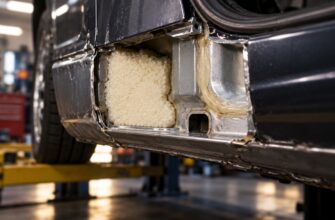
Fresh underseal, sealant, sound deadening, or rustproofing can conceal welds, patches, cracks, and holes. The coating itself does not restore lost metal or prove that a repair has the strength of the original component. Photograph suspicious areas before any new coating is applied, and make continued access for structural inspection a condition of the purchase.
A seller-recommended inspection may provide useful background, yet it does not replace an independent inspection by a mechanic chosen by you. The difference is control over the scope, equipment, and wording of the report. If the seller refuses a safe lift inspection, insists on a preferred workshop, or will not allow photographs and written findings, treat that resistance as a material buying risk.
The Underbody Rust Inspection Checklist
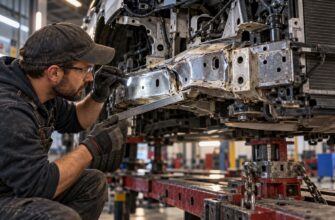
A meaningful structural-rust inspection generally requires a lift or safe ramp. Never crawl beneath a vehicle supported only by a jack, and do not rely on a top-side walk-around to establish the condition of hidden underbody metal. Inspect after the underside is clean enough to reveal seams, drain holes, mounting points, accumulated salt, and the transitions between original metal and repaired areas.
| Inspection step | What to examine | Why it matters |
|---|---|---|
| 1. Establish safe access | Use a lift or safe ramp; confirm the underside is clean and dry enough to assess its condition. | Hidden sill, floor, and subframe corrosion cannot be assessed reliably from above. |
| 2. Follow the load path | Inspect frame or unibody rails, subframes, crossmembers, and their joins. | Loss of load-bearing capacity can make a small visible defect structurally significant. |
| 3. Check mounting areas | Examine suspension, steering, brake, seat-belt, and jacking points, including the surrounding metal. | Corrosion beside a mounting point can weaken the transfer of braking, steering, or suspension forces. |
| 4. Compare both sides | Look for matching corrosion, different textures, fresh welds, new fasteners, and localized patches. | Symmetry can suggest an environmental or model-related pattern; a localized difference may indicate damage or repair. |
| 5. Check drainage and profiles | Inspect drain holes, seams, moisture traps, and accessible inside surfaces of closed sections. | Blocked drainage and internal corrosion can leave the outside looking better than the inner metal. |
| 6. Record evidence | Photograph each finding and request a written structural-safety assessment. | Clear documentation supports a purchase decision and prevents vague descriptions from replacing evidence. |
Follow a consistent sequence: inspect the rails and subframes first, then the sills and jacking points, followed by the floor, suspension and steering mounts, brake-line areas, and seat-belt anchors. Look for swelling seams, layered flaking, holes, crushed lift points, and rust around fasteners. Compare the left and right sides before deciding whether a patch is isolated or part of a wider pattern.
As a British MOT reference, corrosion within 30 cm of relevant brake, steering, suspension, or other prescribed mounting points is significant to the assessment. That jurisdiction-specific reference is useful because it highlights the importance of the surrounding metal, although inspection rules and legal consequences vary by country. In every location, the load-bearing role of the component remains the practical safety question.
Compare both sides and inspect around mounting points first. A localized patch, a different sealant texture, or a fresh fastener can reveal a previous repair that a general glance across the underbody would miss.
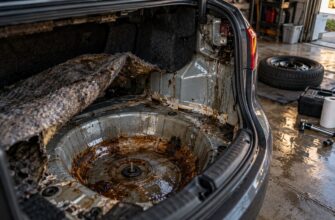
Inspect the inside of accessible profiles where possible, including the edges of sills and drain openings. Do not assume that a clean outer surface proves sound inner metal. Record the location, length, and apparent depth of every concern, then ask the inspector whether further opening or disassembly is needed before the vehicle can be considered structurally sound.
Surface Rust, Structural Rust, and Signs of a Bad Repair
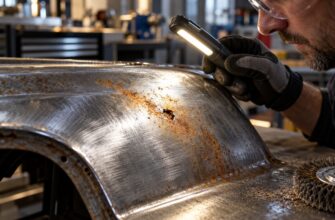
Light, flaky oxidation on an exposed surface may remain cosmetic when the metal underneath is solid and the affected area is away from safety-critical mounts. Pitting, swelling seams, and layered scale require closer assessment because they can indicate metal loss beneath the visible surface. The location, thickness, and condition of the remaining metal determine the risk.
Perforation, metal that feels soft under a controlled check, a hole appearing during a light check, or a crack in a load-bearing zone is a serious safety and inspection concern. These findings should stop a casual purchase decision until a competent inspector identifies the component and repair scope. A small opening beside a subframe or jacking point should receive more attention than a larger stain on a replaceable cosmetic panel.
Signs of concealed work include a sharp transition in color, fresh welds, a different sealant texture, unusually thick coating, new fasteners, and a patch that does not match the surrounding surface. None of these clues proves that a repair is defective. They do show that the area needs closer inspection and documentation before you rely on the seller’s description.
A structural repair should restore strength comparable to that of the original component using suitable metal and sound workmanship. Body filler, fiberglass, solder, adhesive, or cosmetic coating is not an equivalent structural repair. Underseal may protect a sound repair from moisture, yet it cannot substitute for removing unsound metal and rebuilding the load path properly.
How to Inspect Without Creating a New Problem
Inspection methods should reveal the vehicle’s condition without causing damage. Light, controlled checking of material strength may be appropriate for a competent inspector who understands the component and the surrounding wiring, brake lines, fuel lines, and coatings. Indiscriminate screwdriver-poking or punching is unsafe, potentially damaging, and unprofessional.
Start with visual evidence. Use a strong light, inspect seams and drain holes, compare both sides, and look for moisture traps or dirt packed into a joint. Where an accessible profile allows it, examine the inside surface with suitable inspection equipment. A clean-looking outer sill or frame does not establish the condition of the inner metal because rust can develop inside a closed profile.
Symmetric corrosion can point to a model or environmental pattern, such as repeated exposure to salt or a shared drainage weakness. Localized corrosion can indicate blocked drainage, impact damage, or poor repair. This comparison helps you decide where to widen the inspection, though it does not replace a structural assessment.
Stop when the metal is soft, the coating hides the relevant area, a crack is visible, or the suspected defect lies near a major mount. Ask for a professional inspection and a written finding instead of trying to expose the problem yourself. A buyer who creates a hole, damages a line, or disturbs a questionable repair may complicate both the diagnosis and any later discussion with the seller.
What to Do When the Inspection Finds Rust
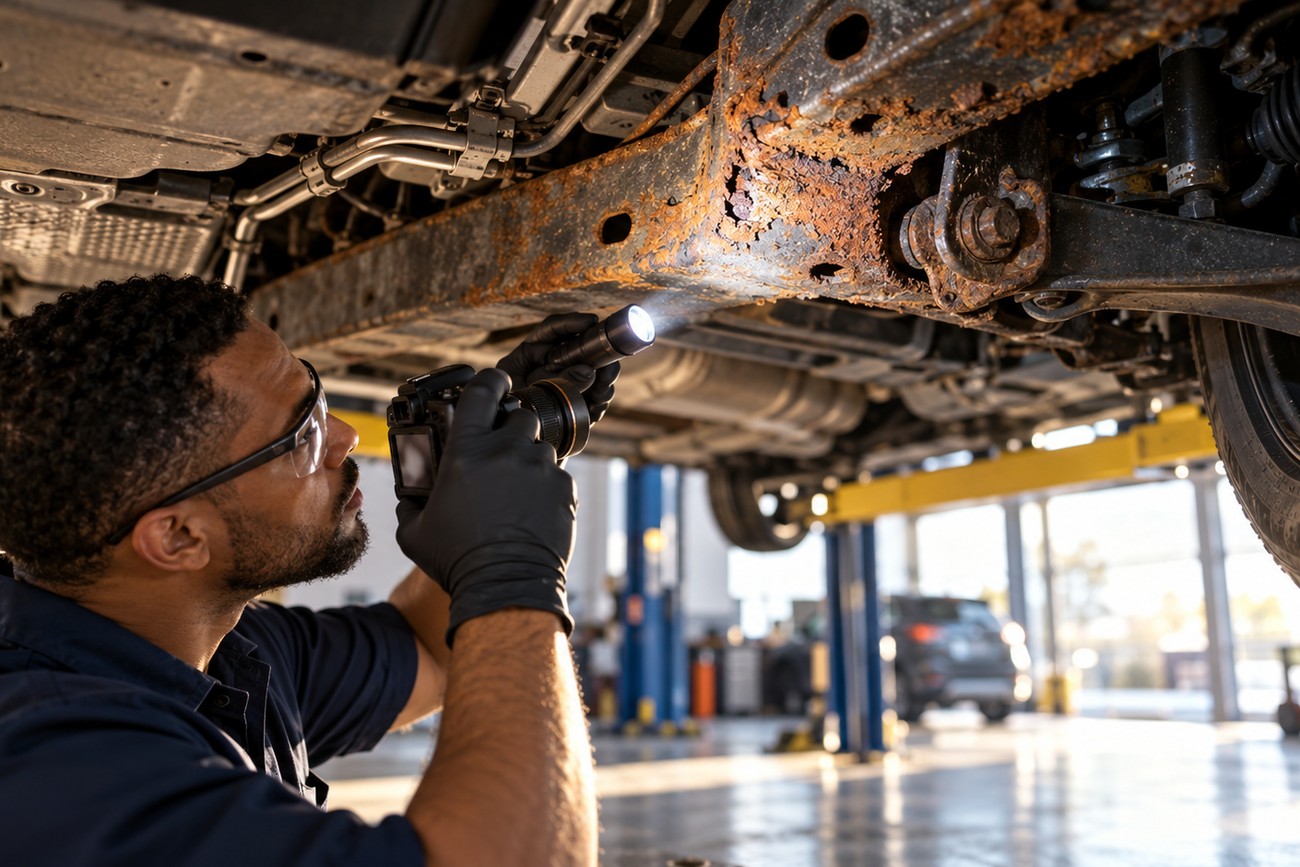
Document the exact component and location first. Record whether the concern affects a frame rail, subframe, sill, floor, jacking point, suspension or steering mount, brake-line area, or seat-belt mounting. Photographs should show both the wider context and the close detail, while the written report should use structural-safety language rather than simply stating “rust present.”
Ask the inspector to describe the corrosion severity, the likely load-bearing consequence, and whether access or disassembly is needed. A useful report should identify the component, location, corrosion severity, structural-safety implication, and any need to open a sealed section or remove parts. If the scope remains uncertain, pause the purchase until that uncertainty is resolved.
There is no single price for rust repair. Cost depends on access, hidden corrosion, disassembly, and the work needed to restore strength, rather than the visible size of the rust spot. A small area can require extensive work if the repair is behind a sill, around a mounting point, or inside a closed structural section.
A discount does not make an unknown structural defect safe. Consider proceeding only when the repair method, responsible workshop, expected scope, and safety implications are clear enough for an informed decision. If the report identifies weakened load-bearing metal and the seller will not permit further inspection or proper repair, walking away is usually more defensible than accepting an attractive price and undefined liability.
Used-Car Rust Checklist: Green Flags, Warning Signs, and Walk-Away Signals
Use this table to classify findings by evidence and next action. Minor visible oxidation is not automatically structural, while corrosion at a load-bearing or safety-related location requires a safety-focused assessment before purchase.
| Inspection finding | Likely meaning | Evidence to request | Buyer action and severity |
|---|---|---|---|
| Light surface oxidation on exposed, non-structural metal | May be cosmetic if the underlying metal is solid and the location is not safety-critical. | Clean photographs, close inspection, and confirmation of sound metal. | Monitor or negotiate only after verification; lower concern. |
| Flaking, pitting, or swelling seam on a sill, floor, rail, or subframe | Possible loss of metal or corrosion developing beneath the surface. | Lift inspection, comparison with the opposite side, and a written assessment. | Pause the decision until structural significance is clear; warning sign. |
| Rust around suspension, steering, brake, seat-belt, frame, subframe, sill, floor, or jacking point | Corrosion in an area that transfers or supports safety-related loads. | Component-specific structural-safety report and photographs. | Require an independent specialist assessment before purchase; serious warning. |
| Perforation, soft structural metal, a hole during a light check, or a crack | Significant metal loss or failure in a load-bearing zone. | Diagnosis of the full affected area and repair scope. | Walk away until properly investigated and repaired; serious safety concern. |
| Fresh underseal, sealant, sound deadening, or rustproofing over a suspect area | Could conceal welds, patches, cracks, holes, or incomplete preparation. | Photos before coating, access to the repair, and independent inspection. | Do not treat the coating as proof of quality; investigate further. |
| Different sealant texture, color transition, fresh weld, or new fastener | Evidence of previous repair, replacement, or localized damage. | Repair history and an assessment of workmanship and metal continuity. | Proceed only when the repair is transparent and structurally credible. |
| Seller refuses a safe lift inspection or independent report | The vehicle’s condition cannot be verified on the buyer’s terms. | A clear explanation and permission for a mechanic chosen by the buyer. | Walk away rather than substitute a seller-selected inspection. |
Frequently asked questions
What is the $3,000 rule for buying cars?
The “$3,000 rule” is an informal budgeting phrase, not an official safety, valuation, or rust-assessment standard. It may be used as a personal limit for repairs, but it cannot tell you whether a vehicle is safe or whether a quoted repair scope is complete.
Assess the structural defect first. If the affected area is unknown, hidden, or close to a load-bearing mount, apply no price threshold until a competent inspection identifies the required work and restores comparable strength.
Which car brand rusts the most?
No single car brand universally rusts the most across all models, years, climates, and maintenance histories. Model year, corrosion protection, winter road salt, coastal exposure, storage, drainage, and repair history often matter more than a brand-wide reputation.
Compare the specific vehicle’s underside and history instead of relying on a ranking. A documented, dry-climate example with sound repairs may be a better prospect than a newer vehicle with concealed corrosion from heavy salt exposure.
What should I do if the seller refuses an independent rust inspection?
Do not substitute a seller-selected inspection. Ask once for safe lift access and a mechanic chosen by you, with photographs and written findings where structural corrosion is suspected.
If the seller refuses, treat the refusal as a reason to walk away. Appearance, a smooth test drive, and verbal assurances cannot establish the condition of hidden structural metal.
How should I compare two used cars with similar visible rust?
Compare location and load-bearing relevance first, then examine symmetry, repair transparency, and the quality of the written findings. Rust on a cosmetic panel has a different significance from rust around a frame, subframe, sill, floor, jacking point, suspension or steering mount, brake line, or seat-belt anchor.
Choose the vehicle with the clearer inspection evidence and known repair scope, even if its visible patch appears larger. A smaller-looking defect with hidden spread or an undocumented repair carries more uncertainty than a documented, localized issue that an independent inspector has assessed.