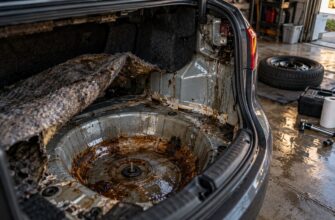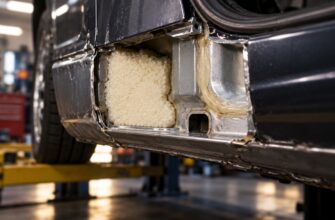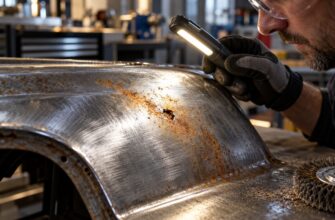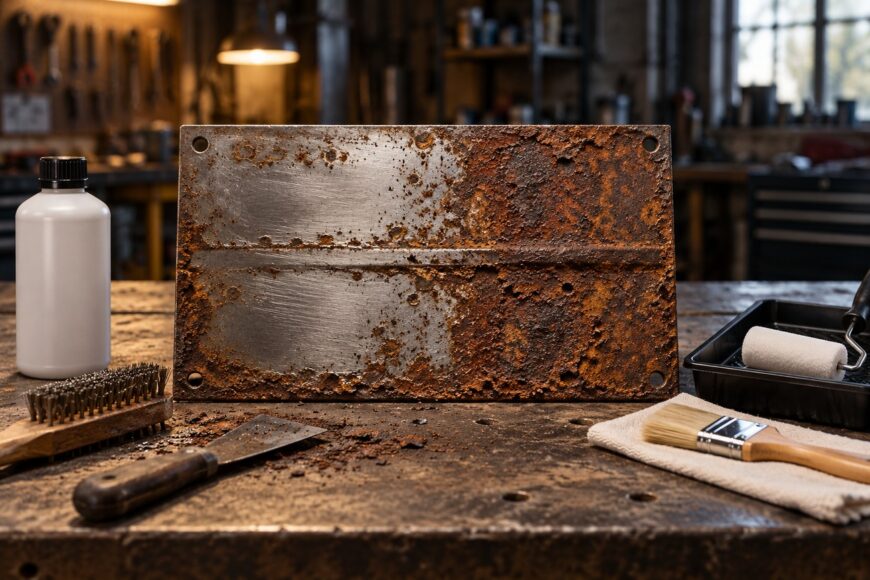
A rust converter can save time where tightly bonded corrosion remains after cleaning, especially on shapes or structures that are difficult to abrasive-blast. It cannot rescue loose scale, oil, moisture, or a poorly prepared substrate. The product works only within the limits set by the remaining rust, the metal, and the coating system that follows.
The main risk is familiar: rust reappears beneath the paint, or the new coating loses adhesion and lifts from the steel. Product chemistry, surface condition, reaction time, and post-treatment requirements determine whether a converter is appropriate. A darkened surface may show that a reaction has started, but it does not prove that the corrosion is fully converted or ready for painting.
- What Rust Converter Products Actually Do
- When a Rust Converter Is the Right Tool
- Acidic, Epoxy and Combination Formulas: What Changes
- How to Choose a Rust Converter Product
- Application Steps That Prevent Rust from Returning
- Common Failure Modes, Limits and Misleading Claims
- Frequently asked questions
- How long should you leave a rust converter on?
- What is the best rust converter product for a vehicle or trailer?
- What is the best rust converter product?
- Rust converter products and when to use them on Reddit
What Rust Converter Products Actually Do
A rust converter treats corrosion that remains after mechanical cleaning; it does not remove rust in the same way as abrasion, grinding, or blasting. The intended substrate is ferrous metal from which loose, flaky, or crumbling corrosion has already been removed. Firmly bonded residual rust provides the surface on which the chemical treatment can work.
This distinction matters because a conversion film cannot support a sound coating if it is attached to unstable scale. Thick rust may hide voids, moisture, and further corrosion beneath its surface. Painting over that layer can produce an apparently complete finish while the underlying corrosion continues to expand and lift the coating.
Many professional products are positioned as 3-in-1 systems. Their stated functions are rust conversion, formation of a passivating layer, and priming for a later coating. That description is a product claim rather than a universal definition: some formulations perform these functions together, while others require a separate primer or have more limited paint-over conditions.
A black or dark film often indicates that a reaction has taken place. It does not by itself prove complete conversion, sound adhesion, or readiness for paint. The treated area still needs inspection for remaining loose material, dry-through, surface contamination, and compliance with the product’s instructions for priming and topcoating.
When a Rust Converter Is the Right Tool
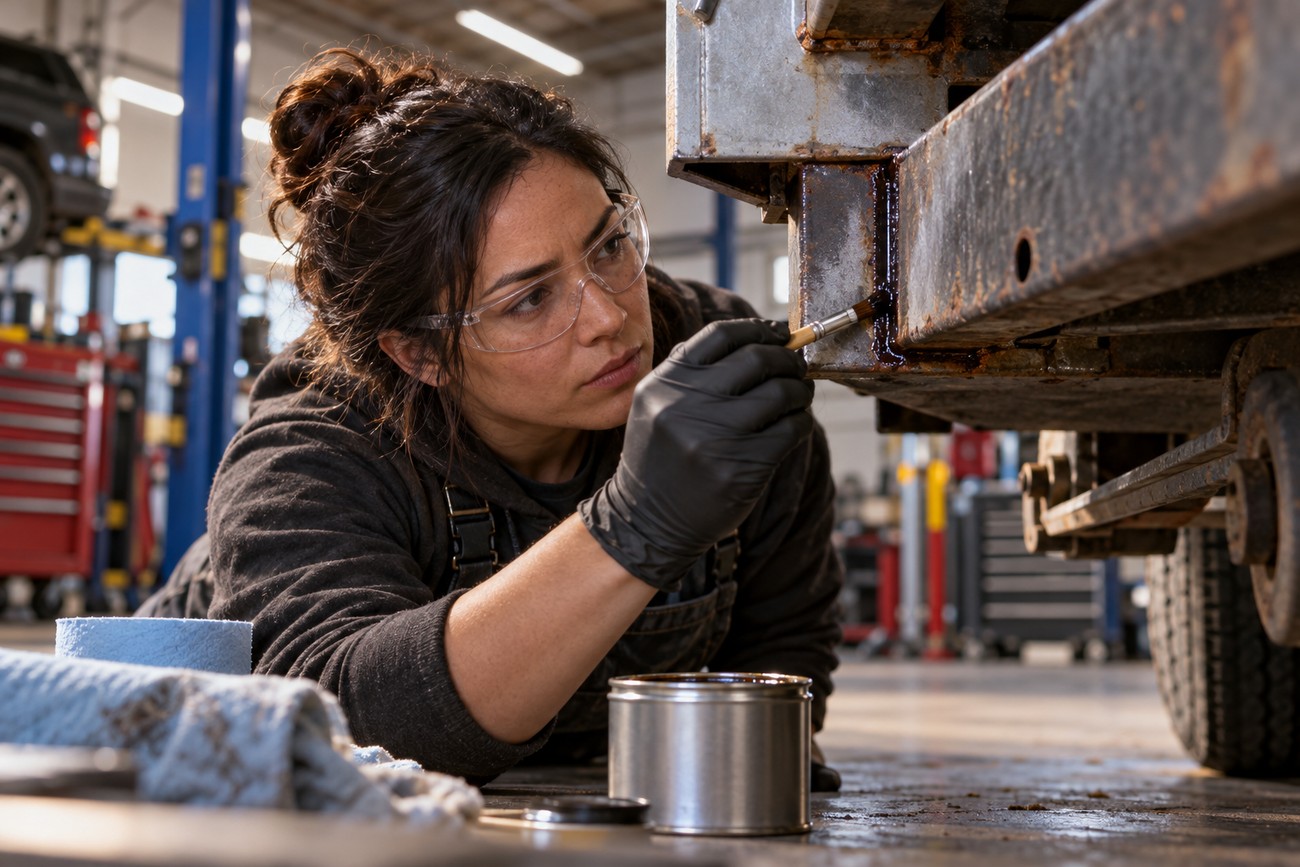
The practical use case is a black-metal surface where complete mechanical or abrasive cleaning is difficult, expensive, or restricted by geometry and working conditions. A converter can be useful after cleaning when a thin layer of tightly bonded corrosion remains in pits, seams, edges, or other areas that cannot be reached efficiently. Its role is to treat the stable residue, not to conceal a failing layer.
Typical applications include vehicles, trailers, fences, railings, sheet metal, and exterior surfaces of tanks. The same approach can support corrosion conservation on structures that remain in service, where removing every trace of adherent rust would disrupt the asset or require disproportionate preparation. The final coating system still has to match the exposure and the product documentation.
A converter is a poor choice for thick, flaky, or crumbling corrosion. It is also unsuitable as a substitute for full mechanical preparation where the steel has deep section loss, hidden delamination, or extensive loose scale. Abrasive cleaning, power tools, localized replacement, or another repair method may be needed before chemical treatment is considered.
This distinction is also reflected in the standard. GOST 30662-99 applies to rust converters for ferrous-metal products used with incomplete surface cleaning and defines comparative effectiveness test methods. Its test specimens are at least 50 × 100 mm, with a dimensional tolerance of ±1 mm; these laboratory requirements do not remove the need to assess the actual corrosion layer on the job.
Acidic, Epoxy and Combination Formulas: What Changes
Rust converters on the market include acidic, epoxy-based, and combination formulations. They should be compared by function and application regime rather than by a general claim that one chemistry is always best. The formula affects how the product reacts with corrosion, what surface condition it accepts, and whether the treated area needs a separate primer.
Acidic products commonly depend on a defined reaction with iron oxides. Their instructions may specify a particular dwell time, temperature range, number of coats, or a requirement to remove residue before painting. Remaining acidity, salts, or reaction products can affect the next coating if the surface is not treated exactly as directed.
Epoxy-based products may combine conversion with a barrier or primer function. Some professional epoxy-based products are specified for –50 to +80 °C, with short-term exposure up to +160 °C. Those figures are product-specific and should never be transferred to another formulation without confirmation in its technical documentation.
Combination products may simplify the coating sequence by converting corrosion, forming a passivating layer, and providing a primed surface in one system. That does not mean every topcoat is compatible with the result. The finish may require a matching solvent base, a defined overcoating window, or an additional primer to achieve the intended adhesion and exposure resistance.
Temperature and chemistry also influence field behavior. A product that reacts acceptably on a warm, dry workshop surface may behave differently in cold or humid conditions. Check the substrate limits, drying conditions, reaction time, and compatibility statements before treating a large area; a small test panel can reveal residue, poor wetting, or coating incompatibility before rework becomes extensive.
How to Choose a Rust Converter Product
Choose the product by matching its chemistry and coating role to the substrate condition, remaining corrosion, working environment, and planned finish. The table provides a starting comparison; the individual datasheet controls the final decision.
| Formulation | Suitable corrosion condition | Primer function | Preparation demands | Checks before painting |
|---|---|---|---|---|
| Acidic | Firmly bonded residual rust after loose corrosion has been removed | May be absent or limited; often requires a separate primer | Dry, clean ferrous metal; careful control of contamination and reaction conditions | Reaction time, temperature, residue removal, neutralization or rinsing requirements, and topcoat compatibility |
| Epoxy-based | Residual corrosion accepted by the particular product, with a stable substrate beneath it | Some products are positioned as a converter and primer | Strict control of cleanliness, dryness, mixing or application procedure, and film formation | Overcoating window, compatible finish, film condition, service temperature, and any separate primer requirement |
| Combination | Residual adherent rust within the product’s stated limits | May combine conversion, passivation, and priming in a 3-in-1 system | Loose rust, dirt, grease, and moisture must still be removed | Whether the black film is paint-ready, residue instructions, finish compatibility, and exposure limitations |
The label “3-in-1” should be read as a description of intended functions, not as permission to skip preparation. Confirm whether the product actually forms the primer layer required by the planned topcoat and whether the manufacturer specifies direct painting. A separate primer may still be needed, especially where the finish system has strict adhesion or corrosion-protection requirements.
Claims of use on “any metal” deserve particular caution. The supported scope here is black or ferrous metals; galvanized, non-ferrous, and other substrates require confirmation in the individual product documentation. The same caution applies to statements about UV resistance, solvent resistance, and broad temperature tolerance.
Product descriptions often provide laboratory or short-term performance information more readily than long-term field evidence. Exposure to water, salts, abrasion, sunlight, temperature cycling, and movement can be more demanding than a controlled test. Select the complete coating system for the actual service environment, rather than treating the strongest marketing claim as proof of field durability.
Application Steps That Prevent Rust from Returning
Begin by inspecting the corrosion rather than choosing the product from the color of the surface alone. Remove loose, flaky, and crumbling rust with the appropriate mechanical method, then remove dirt and grease. Leave only corrosion that is firmly bonded and within the product’s stated application range; hidden flaking material is a structural preparation problem, not a conversion opportunity.
The surface must be dry before treatment. Moisture can dilute or interrupt the reaction and can remain trapped beneath the new film. Oil and dirt interfere with wetting and adhesion, so a surface that looks clean from a distance may still need degreasing and further inspection before the converter is applied.
Judge the remaining rust by adhesion and friability, not by color. Remove material that can be lifted, brushed away, or crumbled, and do not use a dark conversion film to conceal corrosion that is still separating from the steel.
Apply the product with the permitted tool and in the stated manner. Depending on the instructions, this may be a brush, sponge, swab, or sprayer. Work into pits, seams, and edges without creating unapproved pools or excessively thick films; coverage quality matters more than producing the darkest visible surface.
Observe the specified reaction time and temperature. There is no universal dwell time for every rust converter, and extending the treatment arbitrarily may leave residue or create a surface that is difficult to coat. After the reaction, inspect the area and follow the datasheet on whether residue must be wiped, rinsed, removed mechanically, or left in place.
Finish the sequence only after confirming the paint-over procedure. Some products require a separate primer, while others are designed to receive a topcoat directly within a defined window. A small test area can check adhesion and appearance, but it does not replace the product instructions or a realistic assessment of the corrosion beneath the film.
Common Failure Modes, Limits and Misleading Claims
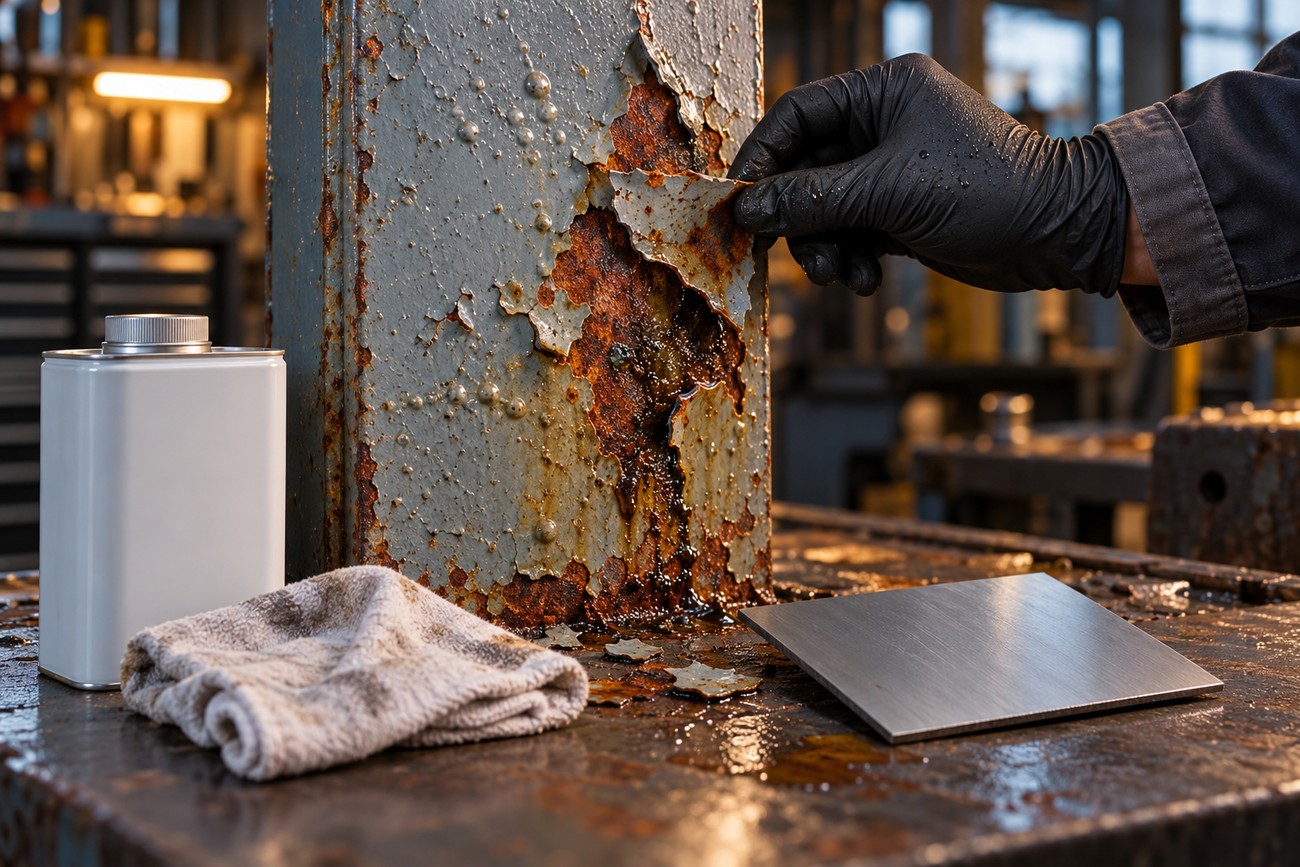
Rust bleeding through paint usually points to preparation or coating-system failure. Loose corrosion may have been left beneath the converter, or the product may have been applied over contamination and moisture. In either case, the visible finish can hide an unstable interface, allowing corrosion to return beneath the paint.
Weak adhesion commonly follows application to wet, dirty, or oily metal. It can also result from painting over a residue that the instructions require you to remove, or from using a finish that is chemically incompatible with the treated surface. Adhesion should be considered a system property involving the steel, converter, primer, and topcoat.
A black film is easy to overinterpret. It may indicate a reaction at the surface while deeper rust remains unconverted or poorly attached. Inspect edges, pits, seams, and areas with variable corrosion depth; if the film lifts with unstable material, remove the material and reassess the preparation rather than adding another coat.
Access problems also limit the method. A liquid can reach a narrow gap more easily than a grinding wheel, but it cannot reliably stabilize deeply damaged steel or compensate for an inaccessible pocket of loose corrosion. Where the converter cannot wet the retained rust or where the substrate is structurally compromised, a different repair or cleaning method is required.
Three common myths cause repeated rework. Converters are not all the same, and acidic, epoxy-based, and combination products have different regimes. They are not automatically suitable for every metal or stage of corrosion, and they do not universally replace sandblasting or full mechanical cleaning. Preparation quality and an honest assessment of the corrosion layer matter more than the broadest marketing promise.
Frequently asked questions
How long should you leave a rust converter on?
Leave it for the reaction time stated in the individual product instructions and apply it within the specified temperature range. There is no universal dwell time for every converter. The required time can depend on the formulation, corrosion condition, film thickness, and application temperature.
Before starting, identify what happens after the reaction: the residue may need to be wiped, rinsed, removed, left in place, or coated within a stated window. Do not infer the next step from the surface color. The datasheet determines whether the treated area is ready for a primer or topcoat.
What is the best rust converter product for a vehicle or trailer?
The suitable product is the one that matches the vehicle or trailer’s ferrous substrate, remaining adherent corrosion, exposure conditions, and planned topcoat. Check whether the product is intended for mobile equipment, whether it acts as a primer, and whether the finish coating is listed as compatible.
For exposed underbody or trailer areas, preparation limits and water, salt, abrasion, and temperature exposure may matter more than a 3-in-1 label. Remove unstable rust first, test the complete coating sequence on a small area, and use the product datasheet to confirm curing and overcoating requirements.
What is the best rust converter product?
There is no universal best product. The choice depends on the substrate, corrosion condition, preparation limits, formulation, required primer function, and compatibility with the final coating. A product suitable for firmly bonded rust on accessible ferrous steel may be unsuitable for galvanized metal, non-ferrous metal, loose scale, or a different exposure.
Compare technical documentation rather than relying on the darkest conversion film or the broadest label claim. Confirm surface preparation, reaction conditions, residue handling, paint compatibility, and service limits before selecting a product for the full job.
Rust converter products and when to use them on Reddit
Discussion forums can help identify recurring application problems, but they should be treated as practical commentary rather than product documentation. User results may involve different steel conditions, climates, preparation methods, or topcoats, so a successful recommendation may not transfer to your surface.
Use such reports to identify questions to check: whether loose rust was removed, whether the surface was dry and degreased, how long the product reacted, and whether the residue was removed before painting. Then verify each point against the specific manufacturer’s instructions and test the complete system on a small area.