Shaking at a stop, an unstable cold start, or a stumble that nearly disappears when you open the throttle can all point to a rough idle. The same complaint can come from a lean mixture, a rich mixture, an ignition misfire, or a mechanical fault, so the sensation alone cannot identify the failed part.
Idle is a revealing operating condition because each cylinder receives only a small air-fuel charge. A small error in airflow, fuel delivery, or ignition timing can therefore have a larger effect than it does during acceleration. The useful first step is to separate air, fuel, ignition, sensor, and mechanical faults before replacing anything.
- The Most Common Causes of a Rough Idle
- What the Symptoms Reveal: Cold Starts, Shaking, and Driving Fine
- A Diagnostic Order That Prevents Parts Swapping
- Checking Air, Fuel, Ignition, and Mechanical Faults
- Mistakes That Hide the Real Problem
- Fuel Quality, Octane, and When to Stop Guessing
- Frequently asked questions
- What is the most common cause of a rough idle?
- Why does my car idle rough but drive fine?
- Why does my car shake at idle but drive fine?
The Most Common Causes of a Rough Idle
Common causes include unmetered air entering through a hose or gasket, ignition faults, fuel-delivery problems, dirty injectors or filters, inaccurate sensors, and mechanical problems inside the engine. A vacuum leak often creates a lean mixture, while a leaking injector or incorrect sensor signal can produce a rich condition.
Ignition faults include worn spark plugs, weak coils, damaged wiring, and poor connections. A small misfire may be felt as a tremor even when engine speed appears steady. Fuel pressure that is too low, an injector with a poor spray pattern, or restricted fuel flow can create similar symptoms.
At idle, even small deviations in air, fuel, or ignition become more noticeable because each cylinder receives a small mixture charge. This explains why a car may feel acceptable on the road yet shake at a stop. The same roughness can result from a lean mixture, a rich mixture, or misfires, and these conditions require different tests.
Sensor errors are another source of confusion. A mass airflow sensor can underreport or overreport airflow while the engine still starts and drives. Throttle-position, oxygen, coolant-temperature, or intake-pressure signals can also distort the fuel calculation. Compression loss, valve problems, or incorrect valve timing should be considered when air, fuel, and ignition tests do not explain the symptom.
What the Symptoms Reveal: Cold Starts, Shaking, and Driving Fine
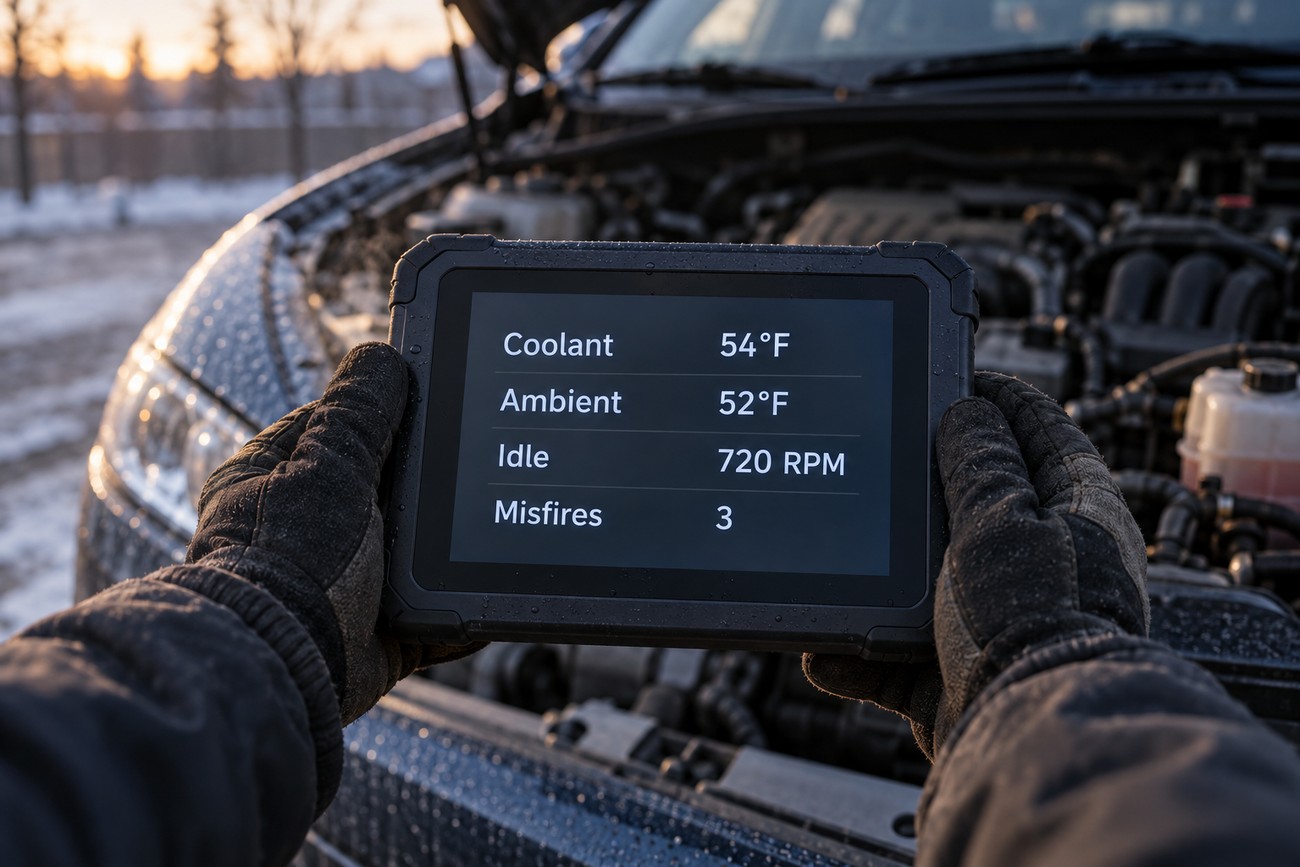
Roughness that is strongest when the engine is cold often points toward mixture control, ignition weakness, or an injector that does not deliver evenly during warm-up. A small intake leak can be more influential before the engine reaches operating temperature. Compare coolant-temperature and airflow readings with actual conditions rather than assuming they are correct.
A car can idle roughly yet drive almost normally when increased airflow and fuel delivery mask a marginal fault. Idle can expose a small imbalance that is less noticeable under throttle. Misfire data remains worth checking even if acceleration feels smooth.
Vibration without obvious RPM fluctuation does not prove that the engine is running smoothly. Small ignition misfires may cause vibration before the Check Engine light or a clear fault code appears. A damaged engine mount can also transmit normal engine pulses into the body, so a technician must distinguish an engine-running problem from a vibration-transfer problem.
If the problem begins after refueling, poor-quality fuel is one reasonable hypothesis. It may accelerate injector or spark-plug contamination rather than instantly damage the engine. A weak fuel pump or restricted filter can also affect idle, so the recent fuel purchase should not replace testing of the fuel-delivery system.
A Diagnostic Order That Prevents Parts Swapping
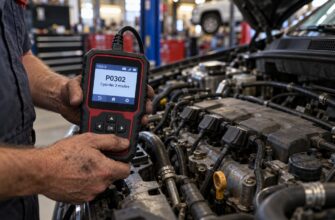
Begin by confirming when the fault occurs: cold or warm, with the air conditioner on or off, and only at idle or throughout the rev range. Scan for stored, pending, and history codes, then record misfire counters and freeze-frame information where available. The absence of a Check Engine light does not rule out an early, intermittent, or low-level fault.
Next, inspect intake hoses, vacuum lines, electrical connectors, and grounds. Look for splits, loose clamps, disturbed wiring, and signs that a recent repair left a connection loose. Review live data at warm idle and at a raised engine speed. Fuel trims are often more informative than RPM alone because they show how the engine computer is correcting the mixture.
Long-term fuel trim is generally near 0%. A deviation of roughly 5–7% may still be considered workable, while +15–20% often suggests unmetered air or underreported airflow. These are practical diagnostic clues rather than universal specifications. Compare short-term and long-term behavior at idle and at raised RPM instead of treating one reading as a verdict.
A healthy MAF sensor should produce a signal that changes progressively as engine speed rises. A multimeter or oscilloscope may be used for evaluation, depending on the sensor and vehicle. MAF inspection is especially relevant with hard starting, stalling at idle, or air- and mixture-related codes, but cleaning the sensor is not automatically a repair.
Only after these checks should you test the ignition and fuel systems in detail. This order prevents a common cycle in which new spark plugs produce a short-lived change, the symptom returns, and another unrelated part is installed without proving the original diagnosis.
Checking Air, Fuel, Ignition, and Mechanical Faults
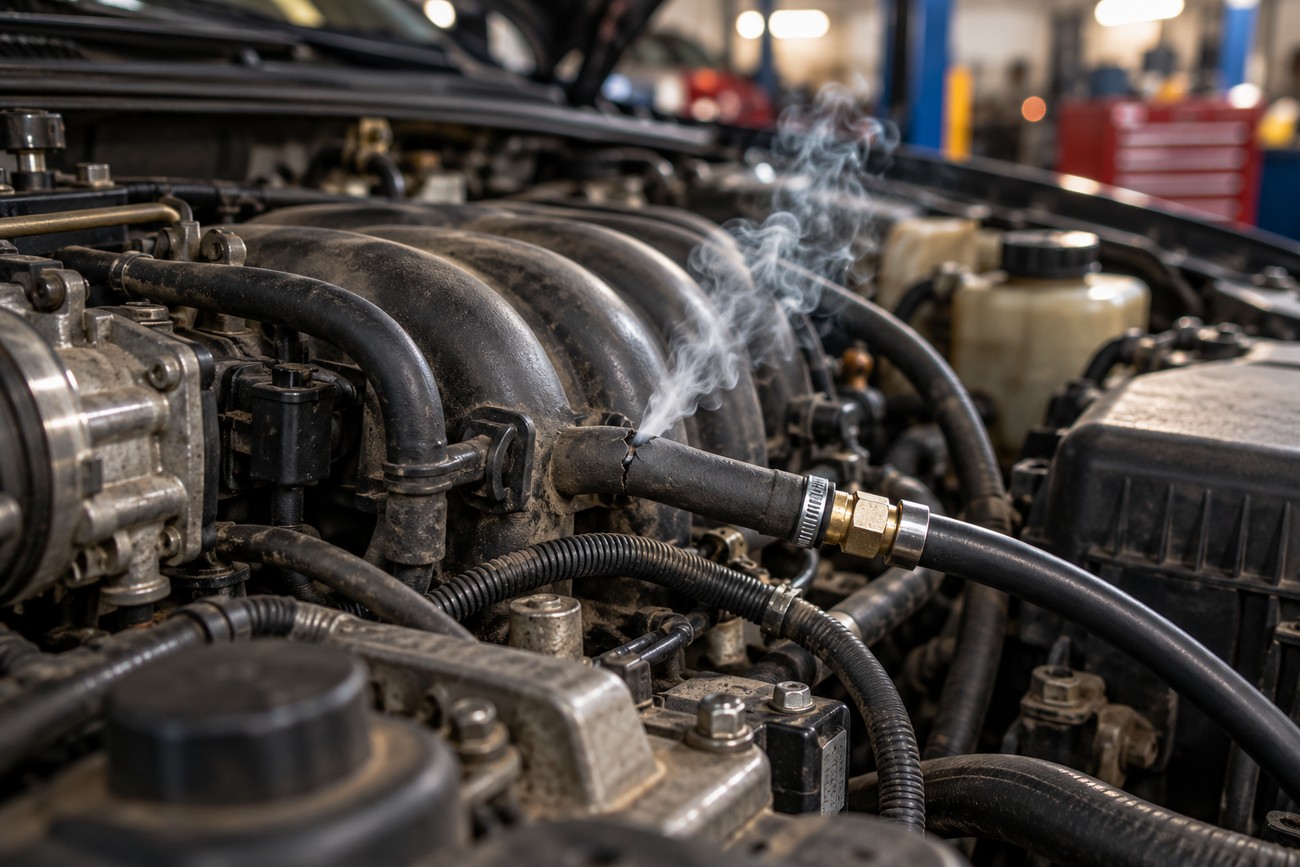
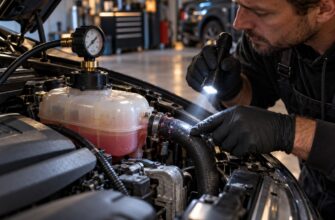
Small leaks at hoses, gaskets, and intake connections can disrupt mixture calculation more than expected. Inspect the crankcase ventilation system, brake-booster hose, intake manifold area, and throttle-body connection. A smoke test is often safer and more conclusive than spraying flammable chemicals around a running engine.
Fuel testing should include actual pressure, pressure stability, and response to engine demand, with specifications taken from the vehicle service information. A contaminated injector may affect idle more than mid-range operation because there is little fuel-delivery margin. Injector balance or flow testing can separate an injector problem from a general pressure problem.
Check spark plugs for fouling, wear, incorrect gap, and signs that one cylinder is different from the others. Test coils and their connectors, then use cylinder-specific misfire data or a controlled swap only when the test is suitable for that engine. Replacing spark plugs without checking air leaks, fuel pressure, and fuel trims can leave the real fault untouched.
Handle the MAF sensor carefully. Aggressive cleaning products can damage its sensitive element, and physical contact can permanently alter the reading. Use only a method approved for the sensor and vehicle, and remember that a sensor that is inaccurate across its range may need testing or replacement rather than repeated cleaning.
Compression, leak-down testing, valve timing, and other mechanical checks belong later in the process unless the symptoms strongly suggest them from the start. Uneven compression or valve leakage can create persistent cylinder-specific roughness that no sensor replacement will cure. Mechanical evidence is especially important when fuel, spark, and airflow readings appear normal.
Mistakes That Hide the Real Problem
The most expensive mistake is treating a familiar symptom as proof of a familiar part. Installing plugs, coils, injectors, or a MAF sensor without scan data may change the symptom by coincidence, while the original fault continues. A basic record of trims, misfire counts, and operating conditions usually provides more direction than a long list of replaced parts.
A rough idle can be the first visible sign of a hidden air leak. If the leak remains, the lean mixture may persist and can contribute to excessive exhaust-valve heat. A temporary improvement after moving a hose or cleaning a throttle body does not prove that the component was the root cause.
No Check Engine light does not rule out early or intermittent misfires and mixture faults. Stable RPM also does not guarantee a healthy idle, because the control system may compensate for a fault while the engine still vibrates. The quality of combustion matters as much as the number shown on the tachometer.
After throttle cleaning or sensor replacement, some vehicles may require adaptation and clearing of learned corrections before idle quality returns. Requirements vary by vehicle, so use the proper service procedure rather than disconnecting the battery as a universal reset. If the fault returns after adaptation, continue testing instead of repeating the same cleaning operation.
Fuel Quality, Octane, and When to Stop Guessing

Octane describes a gasoline’s resistance to detonation. Higher octane does not directly correct rough idle caused by an air leak, ignition fault, injector problem, inaccurate airflow measurement, or low compression. Choosing a higher grade can be appropriate for an engine that requires it, but it is not a general idle repair.
Poor-quality fuel may accelerate deposits or injector and spark-plug contamination. Symptoms that start immediately after refueling make fuel quality worth checking, especially if the engine also shows hesitation or difficult starting. They do not eliminate the need to test ignition, intake leaks, fuel pressure, and fuel trims.
A persistent rough idle, repeated stalling, strong misfire symptoms, or worsening operation should lead to proper testing rather than repeated additives. Continued driving with a severe misfire can damage the emissions system and may leave you without reliable power. If the engine is shaking heavily or stalling in traffic, arrange diagnosis promptly.
Use the evidence already available: when the symptom occurs, whether trims change with engine speed, which cylinder records a misfire, and whether fuel pressure holds. This approach takes more effort than guessing at the parts counter but reduces unnecessary replacements and makes the eventual repair easier to verify.
Frequently asked questions
Rough idle can have several causes, even when the symptoms seem familiar. The timing of the roughness, fuel trims, and misfire data help narrow the possibilities. A physical inspection can also help separate engine roughness from vibration transmitted by a damaged mount.
What is the most common cause of a rough idle?
There is no single most common cause across all engines. A technician ranks possibilities such as a vacuum leak, ignition misfire, or mixture fault by noting when the roughness occurs and comparing live fuel trims and misfire data at idle and raised RPM, rather than guessing from how often a part fails on other vehicles.
Why does my car idle rough but drive fine?
Extra airflow and fuel under throttle can mask a marginal fault, while idle exposes small mixture or ignition errors. Check misfire data even if acceleration feels normal: a smooth drive does not rule out an intermittent misfire.
Why does my car shake at idle but drive fine?
The shake may reflect rough combustion, or a damaged engine mount may be transmitting engine vibration into the body. Stable RPM does not rule out an intermittent misfire or a mounting problem; compare misfire data with a physical inspection of the mounts.