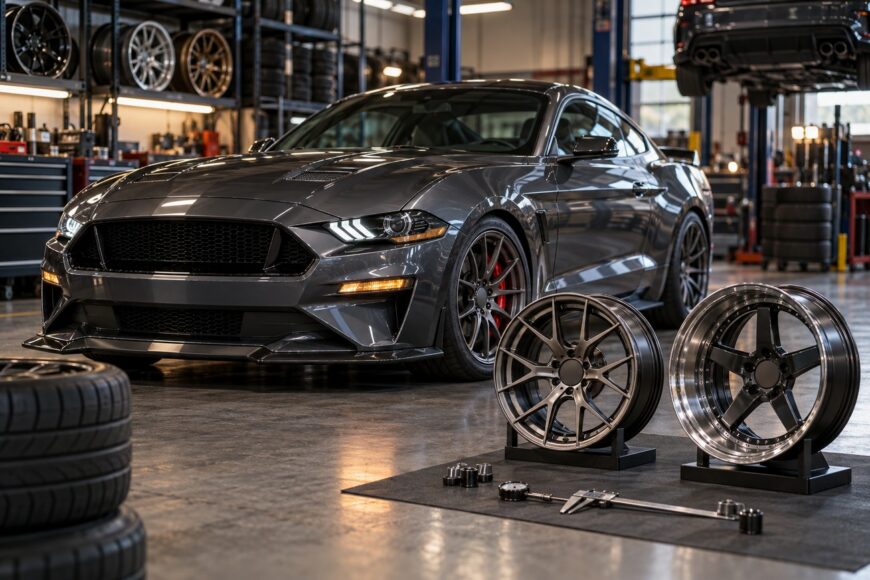
Rotiform and BBS appeal to different priorities. Rotiform offers aggressive visual fitment, deep-dish styling, mesh patterns, and broad customization, while BBS carries stronger OEM and motorsport credibility. Neither badge alone proves that a wheel is suitable, durable, or correctly engineered for your vehicle.
A fair comparison works model by model. Construction, load rating, width, offset, brake clearance, finish quality, impact reserve, repair support, and intended use matter more than the brand name on the center cap. A cast Rotiform and a forged BBS belong to different product categories, just as two wheels from the same brand can have very different engineering and ownership costs.
- What Actually Separates Rotiform and BBS
- Design, Fitment, and the Cost of Choosing a Look
- Construction, Weight, Strength, and Quality Control
- Rotiform vs. BBS: The Practical Comparison
- Daily Driving: Roads, Finishes, Brakes, and Repairs
- The Buying Mistakes That Make Either Brand Look Bad
- Which Brand Should You Choose?
- Frequently asked questions
- Who makes the best quality wheels: Rotiform or BBS?
- How can I verify that a used Rotiform or BBS wheel is genuine?
- What should I inspect before buying a used wheel from either brand?
- How should I protect aftermarket wheel finishes during winter?
What Actually Separates Rotiform and BBS
BBS is strongly associated with OEM supply, motorsport programs, predictable geometry, and high-end wheel engineering. Its range includes cast, flow-formed, and forged wheel solutions, so BBS is not always forged. The familiar motorsport reputation is strongest in particular product families rather than automatically applying to every wheel carrying the BBS name.
Rotiform is built around custom styling and fitment flexibility. Its catalog includes substantial cast and flow-formed coverage, with designs that emphasize deep-dish appearances, mesh patterns, multi-spoke layouts, and stance-oriented proportions. That makes the brand attractive when the wheel design is a major part of the vehicle’s identity.
Construction level changes the comparison completely. A cast Rotiform should be assessed against a comparable cast BBS, while a flow-formed Rotiform belongs in a different discussion from a top-tier forged BBS. Manufacturing process, section design, dimensions, load rating, and production details determine the practical result.
Neither company is represented perfectly by its marketing stereotype. Rotiform wheels are not automatically show-only, and BBS wheels are not automatically lightweight forged track equipment. Quality can vary by exact series, size, width, offset, and production batch, so a brand-level verdict is too broad to guide a safe purchase.
Design, Fitment, and the Cost of Choosing a Look
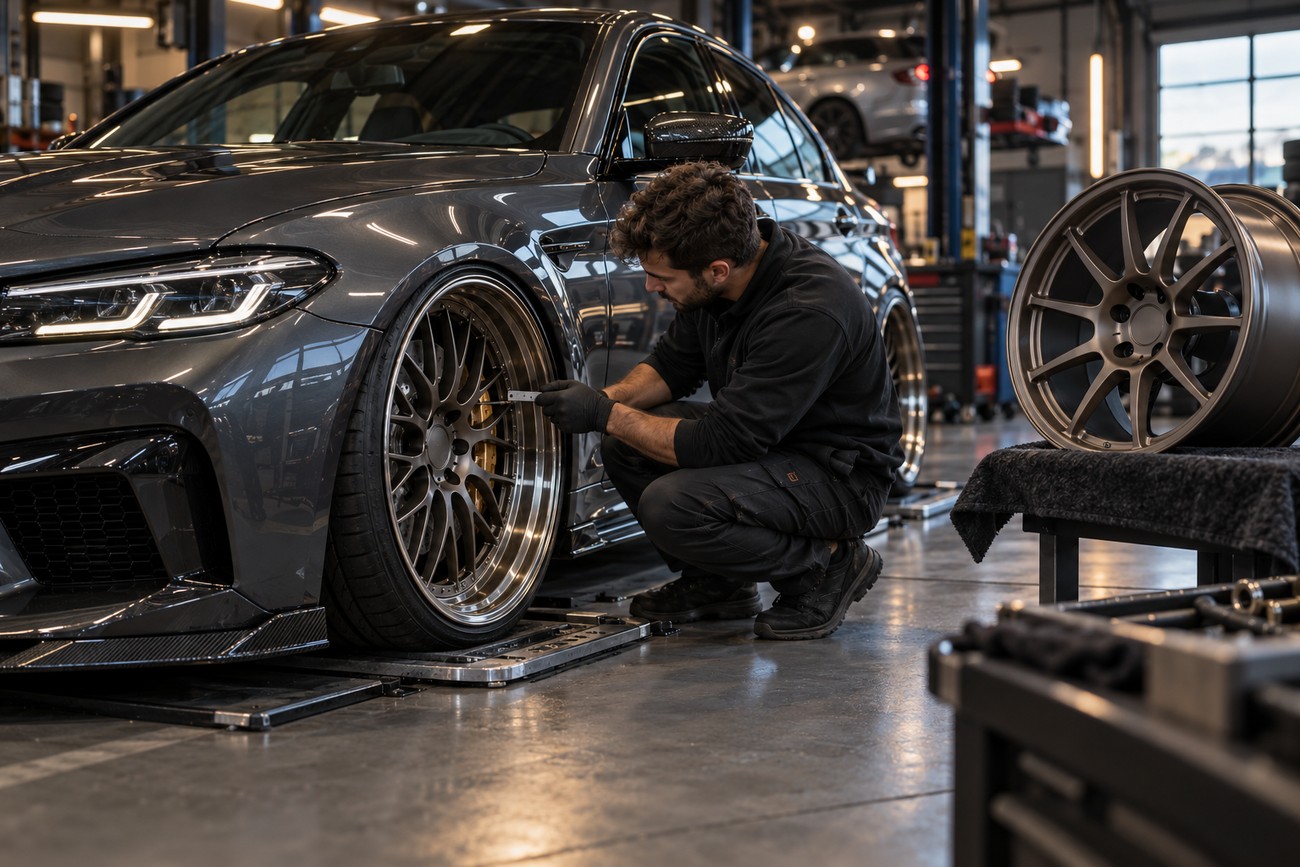
Rotiform generally gives buyers more visual configuration and custom-fitment variety. Its designs can create a strong stance with wide lips, concave profiles, dense spokes, or a deep-dish effect. This flexibility is useful for carefully planned builds, although aggressive styling can reduce clearance and increase exposure to potholes and curbs.
BBS usually follows a more engineering-led design language, with restrained shapes and a strong motorsport influence. Predictable geometry and a track-proven reputation are part of the appeal. The visual result may be less dramatic on some vehicles, yet the design often places more emphasis on brake clearance, structural consistency, and usable road manners.
Wheel fitment depends on more than width and offset. The inner-barrel shape, spoke profile, caliper radius, suspension clearance, and brake hardware all affect whether a wheel actually fits. Two wheels with the same diameter, width, and ET can have different clearance because their spokes and barrels occupy space differently.
A stance-focused choice can cause rubbing against the arch, contact with suspension components, unsuitable spacer requirements, or edge impacts from excessive poke. A wheel can also become impractical if its added mass affects steering response and ride quality. Confirming the complete fitment before ordering is more valuable than choosing a design from a vehicle photo.
Construction, Weight, Strength, and Quality Control
Cast wheels are formed by pouring molten alloy into a mold. They can be perfectly suitable for road use when the design, load rating, and testing are appropriate, although comparable cast wheels are generally heavier than flow-formed or forged alternatives. Their weight and impact behavior depend on the specific structure rather than the visual complexity of the spokes.
Flow forming reshapes the barrel under pressure after casting, allowing manufacturers to tune material distribution and achieve a useful balance of weight and stiffness. Forging starts with a highly worked material blank and can support lightweight designs with substantial structural performance. Forged and flow-formed wheels are generally lighter than comparable cast wheels when size and specification are otherwise similar.
Weight alone does not determine durability. Impact reserve depends on construction, material, section thickness, spoke design, dimensions, and intended use. A lighter wheel is not automatically indestructible, and a heavier wheel is not automatically safer; pothole resistance must be judged through the model’s engineering and approved load requirements.
Some Rotiform marketing and reseller descriptions use forged-like strength or performance-fitment language. Such wording does not establish equivalence to the reserve of a top-tier forged BBS wheel. The correct check is the actual construction method, certification information, load rating, and application approval for the vehicle.
For road use, verify JWL/VIA and TÜV/ABE where applicable, along with the wheel’s actual vehicle-specific load rating. A certification mark or a familiar brand still requires correct sizing and application. Confirm that the rating covers the loaded axle requirements, especially on heavier vehicles, performance cars, and vehicles carrying frequent passengers or cargo.
Rotiform vs. BBS: The Practical Comparison
The table shows broad tendencies only. Exact model, construction, dimensions, load rating, finish, and production details control the result.
| Category | Rotiform | BBS |
|---|---|---|
| Design focus | Custom styling, deep-dish looks, mesh and multi-spoke designs, and strong visual impact. | Engineering-led forms, restrained styling, OEM influence, and motorsport-inspired design. |
| Common construction | Substantial cast and flow-formed coverage, with the exact method depending on the series. | Cast, flow-formed, and forged wheel solutions; BBS is not always forged. |
| Weight expectations | Cast models may be heavier than comparable flow-formed or forged wheels; specification controls the result. | Weight varies widely by series; some forged and flow-formed models are light, while some cast or OEM-oriented models are not ultralight. |
| Fitment range | Broad custom-fitment variety, including stance-oriented widths, offsets, and visual configurations. | Often more conservative and engineering-led fitments, with some rare sizes or bolt patterns harder to source. |
| Finish considerations | Some owners report chips, fading, bubbling, and sensitivity to winter chemicals on certain designs or batches. | Finish quality depends on the model and use; replacement or refinishing can be costly. |
| Impact considerations | Some cast designs are reported by owners as more vulnerable to pothole and curb damage. | Construction varies; a premium or forged model still can be damaged by severe impacts. |
| Repair economics | Repairability and replacement cost depend on the model, damage, and available specialist support. | Purchase, repair, and refinishing costs are commonly higher, especially for rare or complex models. |
| Resale potential | Depends heavily on condition, popularity, authenticity, and completeness. | Original, undamaged, unstraightened wheels with correct markings and hardware generally retain value better. |
| Best use case | Owners prioritizing styling range, custom fitment, and visual impact, with careful specification checks. | Owners prioritizing predictable geometry, engineering credibility, high-speed confidence, and stronger resale potential. |
Daily Driving: Roads, Finishes, Brakes, and Repairs
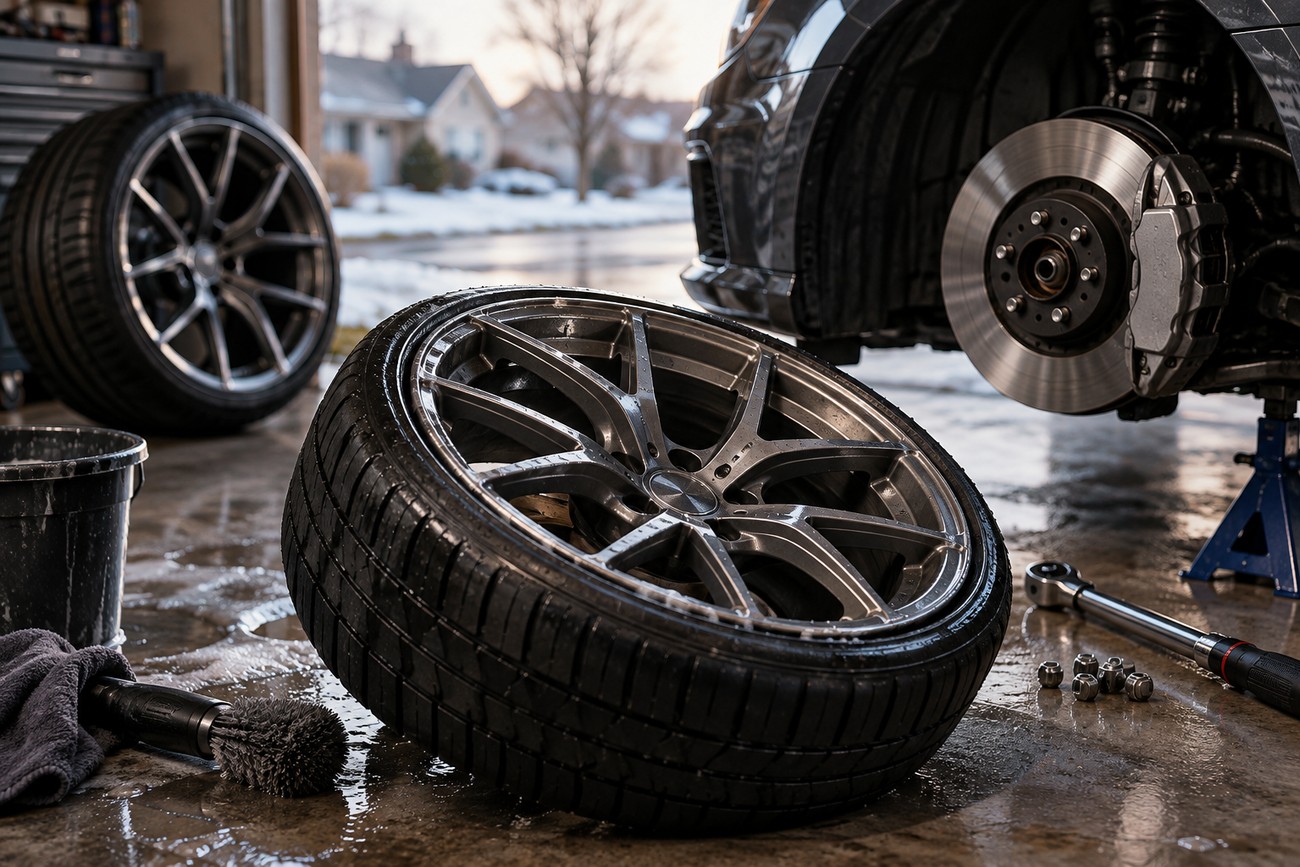
Daily use exposes differences that showroom photographs cannot show. Some Rotiform owners report greater susceptibility to pothole or curb damage on certain cast designs. The risk rises when a wide, low-profile setup leaves little sidewall protection or places the wheel edge outside the body line.
Finish complaints associated with some Rotiform wheels include chips, fading, bubbling, and sensitivity to winter chemicals. These reports should be treated as model- and batch-dependent rather than proof that every Rotiform finish will fail. Salt, harsh cleaners, trapped moisture, and neglected stone chips can accelerate damage on any aftermarket wheel.
Barrel and spoke clearance, runout, balance behavior, and repair history deserve inspection before a wheel is judged by its brand or finish. These checks often reveal a practical problem earlier than a visual review.
BBS ownership brings a different cost profile. The initial price is commonly higher, and serious impact damage can make repair or refinishing expensive. Rare BBS sizes, bolt patterns, and vehicle-specific fitments may also be harder to source, which can turn a single damaged wheel into a lengthy replacement problem.
Complex mesh and multi-spoke designs require more cleaning time because brake dust and road chemicals collect around the spokes and inner barrel. This matters during winter use, when residue can remain in narrow gaps after a quick wash. Before buying, check whether replacement wheels, center caps, hardware, and specialist repair services are realistically available in your market.
The Buying Mistakes That Make Either Brand Look Bad
The first mistake is buying from a photograph. A picture cannot confirm load capacity, construction, offset, width, brake clearance, suspension clearance, or inner-barrel shape. Request the exact part number and markings, then compare them with the manufacturer’s model information and the vehicle’s approved requirements.
Aggressive offset is another common trap. A stance that looks correct in a static image can cause rubbing, edge impacts, uneven tire wear, or compromised handling on the road. Spacers may solve one clearance issue while creating another, so the complete wheel-and-tire position should be checked through suspension travel rather than judged only with the car parked.
Winter conditions deserve a separate decision. Salt, aggressive cleaners, poor roads, and repeated impacts can expose weaknesses in finish and construction quickly. A complex design that is difficult to rinse thoroughly may require more maintenance than its owner expects, especially where winter chemicals remain around the barrel and spoke junctions.
Authenticity also requires verification. Replicas and look-alike wheels exist for popular Rotiform and BBS designs, and a familiar appearance, premium price, or brand badge does not prove originality. Check cast or forged markings, part numbers, size and load markings, finish details, seller documentation, and the relationship between the wheel’s physical features and official model information.
Which Brand Should You Choose?
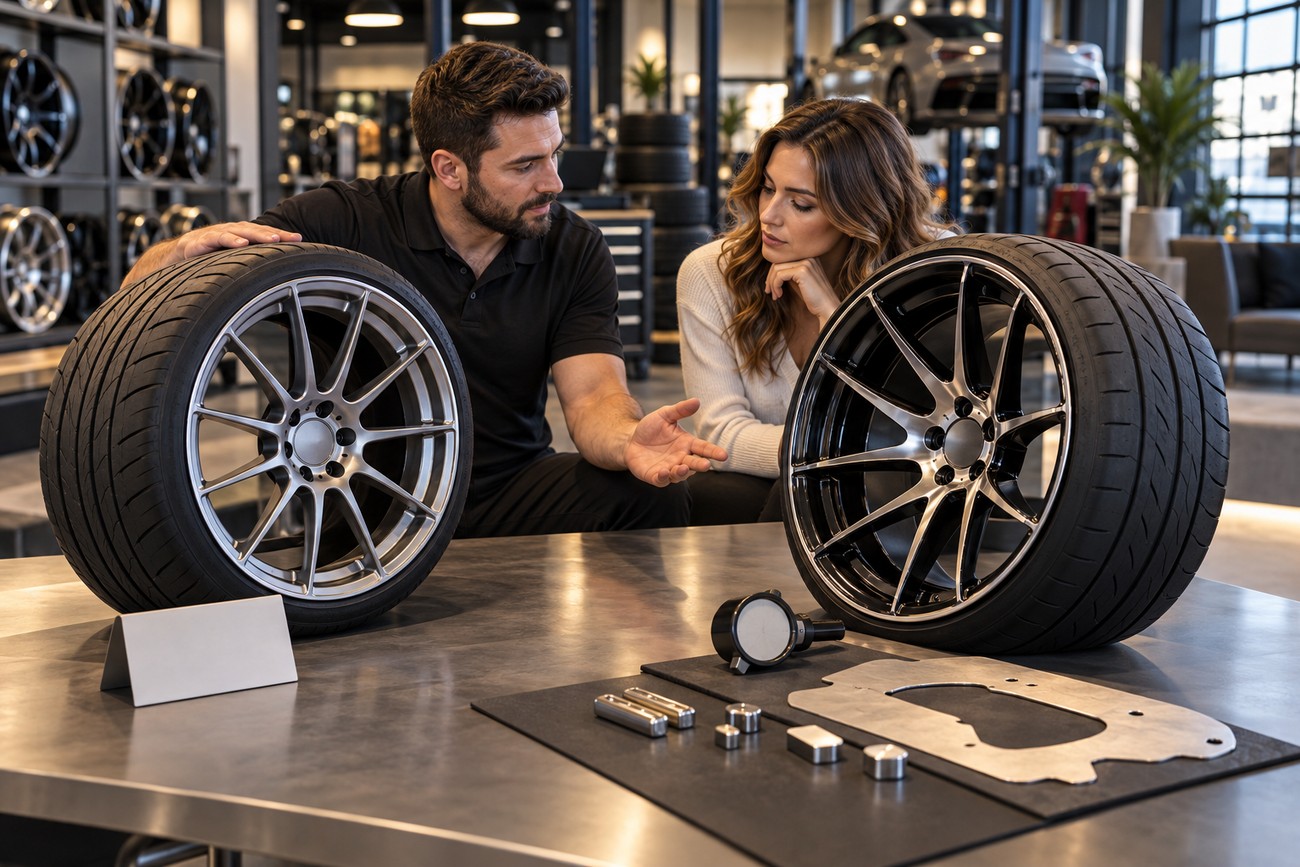
BBS is the safer default for buyers who prioritize predictable geometry, high-speed confidence, balancing stability, motorsport lineage, repair history, and resale. That recommendation still requires checking the exact series, because BBS offers cast, flow-formed, and forged solutions. A BBS badge does not remove the need to verify construction and load rating.
Rotiform is often the better choice for styling range, custom fitment, and visual impact. Many Rotiform wheels can work well on a daily vehicle when the construction, dimensions, finish, load rating, and clearance suit the application. The purchase becomes risky when aggressive fitment or a dramatic design is allowed to override road use and maintenance requirements.
Use this checklist before placing an order:
- Confirm authenticity and the exact model or part number.
- Identify whether the wheel is cast, flow-formed, or forged.
- Verify width, offset, bolt pattern, center bore, and vehicle-specific load rating.
- Check spoke, barrel, brake, and suspension clearance.
- Assess finish suitability for winter salt, cleaning products, and local roads.
- Confirm tire compatibility, replacement availability, and repair support.
- For used wheels, inspect runout, cracks, bends, welds, corrosion, and previous repairs.
The best quality wheel is the one correctly matched to the vehicle and its use. Brand reputation helps narrow the search, while model-level evidence determines whether the purchase is sensible.
Frequently asked questions
These checks help turn a broad brand comparison into a practical buying decision.
Who makes the best quality wheels: Rotiform or BBS?
BBS is the safer default for engineering consistency, predictable geometry, and motorsport-oriented priorities. A correctly specified Rotiform can be the better choice for custom styling and fitment, particularly when its load rating, construction, clearance, and finish suit the vehicle.
Quality depends on the exact model rather than the badge alone. Compare construction, dimensions, production details, and intended use before deciding.
How can I verify that a used Rotiform or BBS wheel is genuine?
Start with the wheel’s cast or forged markings, part number, size, load marking, and any manufacturer identification on the inner barrel or rear face. Compare those details with official model information, including spoke design, machining, center-cap fit, finish, and available specifications.
Ask the seller for purchase documentation and clear photographs of all markings. A premium price or familiar design is insufficient evidence, because replicas and look-alike wheels exist for both brands.
What should I inspect before buying a used wheel from either brand?
Inspect the inner barrel and spoke junctions for cracks, bends, welds, corrosion, and impact marks. Check the bead and valve-seat areas, look for missing hardware, and examine the finish for bubbling or deep corrosion.
Ask whether the wheel has been straightened or repaired, then check runout and balance behavior with appropriate equipment. A clean outer face can conceal damage on the rear barrel, where previous repairs often become visible.
How should I protect aftermarket wheel finishes during winter?
Use manufacturer-compatible cleaning products, rinse salt off promptly, and avoid harsh chemicals, abrasive tools, and stiff brushes that can damage the coating. Clean the inner barrel and tight spoke areas thoroughly so residue does not remain trapped.
Inspect chips, bubbling, fading, and corrosion before winter damage spreads beneath the finish. Repairing a small coating defect early is usually more practical than allowing salt and moisture to reach the underlying alloy.