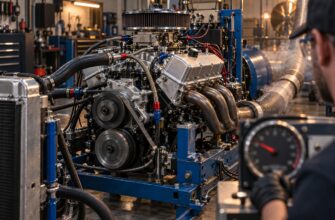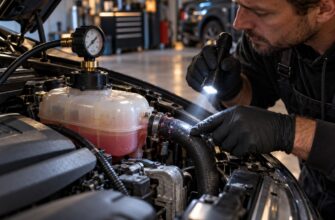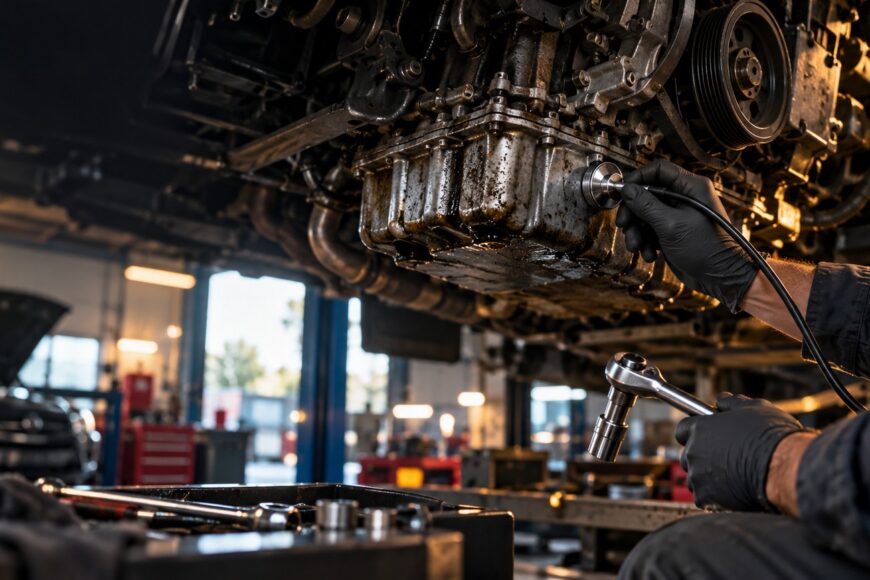
A deep metallic knock from the lower part of the engine may appear only when the engine is hot, under load, during a throttle change, or briefly after startup. These changing conditions do not make it harmless. Oil pressure, bearing temperature, and the stage of wear can alter the sound from one drive to the next.
Rod knock is a serious possibility because it usually involves excessive clearance between a connecting-rod bearing and its crankshaft journal, together with loss of the oil wedge that separates the parts. Stop driving and arrange a proper diagnosis rather than trying to quiet the noise with an oil change. Sound alone cannot confirm rod knock, and several external and internal components can produce a similar noise.
- What Rod Knock Sounds Like and What It Means
- Why Rod Knock Happens
- Rod Knock or Another Engine Noise?
- What to Do When You Suspect Rod Knock
- How Rod Knock Is Confirmed
- Repair Choices and How to Prevent a Repeat Failure
- Frequently asked questions
- What is the main cause of rod knock?
- What can be mistaken for rod knock?
- How is rod knock confirmed?
What Rod Knock Sounds Like and What It Means
Rod knock is usually a deep, metallic impact from the lower engine. It may sound like a heavy tap or knock that follows engine speed and becomes clearer when the engine is loaded or the throttle position changes. The sound often seems to come from the oil-pan area, although noise travels through the block and can make its apparent location misleading.
The usual mechanical link is increased clearance between a connecting-rod bearing and its crankshaft journal. As that clearance grows, the oil wedge becomes unable to maintain a stable film between the surfaces. The connecting rod can then load the bearing shell and journal with a sharp impact each time combustion force is transmitted through the piston and rod.
Connecting-rod knock is often described as sharper or more ringing than a main-bearing knock. Main-bearing noise is often duller and deeper because it involves the crankshaft support points. These descriptions help a technician choose where to investigate, yet neither tone nor location proves the fault.
A noise that fades as the engine warms up still deserves attention. Oil viscosity, clearances, and engine speed can change enough to hide the sound for a short period. The same applies when a knock is quiet at idle and becomes obvious under acceleration; an intermittent symptom can reflect a developing failure rather than a minor defect.
Why Rod Knock Happens
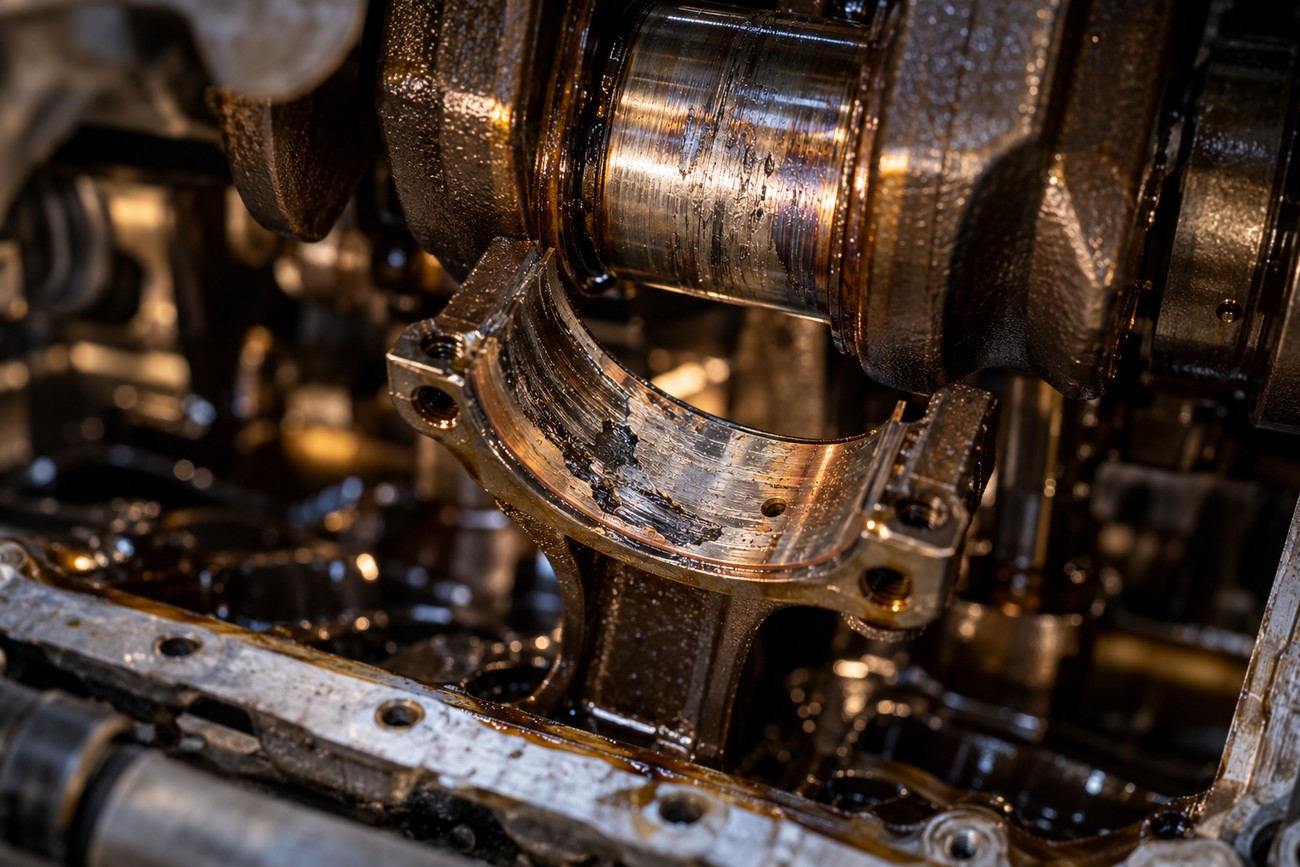
The immediate failure mechanism is usually loss of the oil film combined with excessive bearing clearance. The root cause may be oil starvation, dirty or degraded oil, an oil-pump problem, a blocked oil-pickup screen, overheating, or extreme engine speed or load. Once the bearing surface is damaged, more clearance can develop quickly, reducing oil pressure through the affected clearance and accelerating wear.
Oil starvation can occur with a low oil level, a restricted pickup, oil that has lost its protective properties, or a lubrication fault that prevents sufficient flow. Overheating can weaken the oil film and damage bearing material. Heavy loads and extreme engine speed raise the forces on the rod bearings, so a marginal lubrication problem can become a severe internal failure.
Some initiating faults are harder to see after the engine has been assembled. Poor assembly, insufficient fastener tightening, contamination, or installation misalignment can damage a bearing even when the owner follows the service schedule. Low oil pressure may be the first measurable symptom, while the underlying problem sits in the pump, pickup, passages, bearing, or assembly.
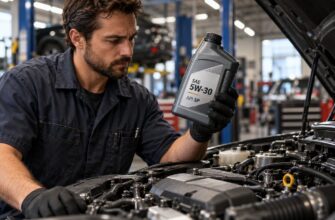
Fresh oil can make the noise quieter, and thicker oil can sometimes mask it for a limited time. That change does not restore worn bearing clearance or repair a damaged crankshaft journal. If the noise returns after an oil change, the temporary improvement should be treated as evidence that operating conditions changed, not as proof that the engine recovered.
Rod Knock or Another Engine Noise?
Several engine and drivetrain components can produce a metallic sound. Use the table as a first orientation only; operating clues can narrow the inspection, while a measured diagnosis must establish the failed component.
| Possible source | Likely location | Operating clues | Limits of sound-based diagnosis |
|---|---|---|---|
| Connecting-rod bearing | Lower engine or oil-pan area | Deep or ringing knock that may change with load, throttle changes, warm-up, or engine speed | Sound cannot establish bearing clearance, journal condition, or oil pressure |
| Main bearing | Lower center of the engine | Often a duller, deeper knock that may become clearer with load | Rod and main-bearing noises can overlap, and sound travels through the block |
| Valve train | Upper engine or cylinder-head area | Usually a faster, lighter tick or tap that follows engine speed | Oil-pressure problems can affect both the valve train and lower engine, so location alone is insufficient |
| Timing-chain tensioner | Timing-cover area | Rattle or clatter during startup, idle, or changes in engine speed | Chain noise can echo through the front of the engine and resemble a deeper fault |
| Water pump or idler | Accessory-drive side of the engine | Bearing rumble, whine, or roughness that follows belt speed | Remote listening can misidentify belt-drive noise as internal engine damage |
| Alternator or air-conditioning compressor | Accessory-drive side | Noise may change when electrical load or air conditioning is switched on | The component must be isolated safely; sound does not identify the exact bearing |
| Flywheel or related drivetrain component | Bellhousing or transmission side | Rattle or knock may vary with clutch operation, gear selection, or engine speed | Transmission-side noise can be heard as an engine knock from the driver’s seat |
Changes during acceleration, deceleration, warm-up, or load provide useful clues, yet the pattern depends on the wear stage and the failed component. A belt-driven accessory can sometimes be assessed separately during a controlled inspection, which helps distinguish an external noise from an internal one. That procedure is an isolation step, not a final diagnosis.
Do not authorize major engine work from a sound description alone. A rod knock diagnosis should be supported by oil-pressure measurements, inspection findings, and, where needed, direct measurements of the crankshaft and bearing clearance.
What to Do When You Suspect Rod Knock
If the low-oil-pressure warning light comes on, shut the engine off immediately. Do not drive to a repair shop with the warning illuminated, even if the engine still runs smoothly. The vehicle should be inspected where it is or transported by tow truck, because continued operation can turn a repairable bearing problem into crankshaft, block, or seizure damage.
Switch the engine off if you hear a new deep lower-engine knock, especially when it is accompanied by a pressure warning, loss of power, or metallic particles in the oil. Avoid repeated revving to “make the noise happen” and avoid test drives. Each loaded event can increase damage when the oil film and bearing surface are already compromised.
With the engine safely stopped and cool enough to inspect, check the oil level on a level surface. Look for metallic glitter or particles in the drained oil and filter if those items are being serviced, but treat the result as evidence of internal wear rather than a diagnosis. Clean oil does not rule out a bearing problem, and visible glitter can indicate active wear before complete failure.
A quiet cold start, a noise that disappears when warm, or a brief improvement after an oil change is not permission to continue driving. Arrange a professional inspection or towing. The cost and scope of the eventual repair can increase substantially if a bearing spins, the crankshaft journal is damaged, the engine seizes, or the block is affected.
How Rod Knock Is Confirmed
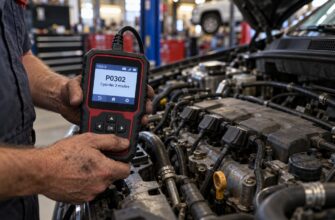
A reliable diagnosis begins with measured oil pressure, checked at the appropriate engine temperature and operating conditions. Oil level and dashboard warnings provide useful information, yet they do not show the actual pressure available at the bearings. The technician may also inspect the drained oil, cut open the filter, and check for bearing material or metallic debris.
Accessory noises should be isolated where appropriate, and the valve train, timing drive, flywheel area, and lower engine should be compared during inspection. If the evidence points inside the engine, removing the oil pan or bearing caps may be justified. The purpose is to inspect the bearing surfaces, crankshaft journals, rods, and signs of heat or movement.
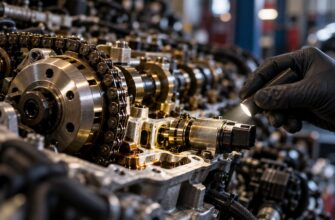
Technicians use a micrometer to measure crankshaft journal dimensions, including wear and variation, and Plastigage to check bearing clearance during an appropriate assembly check. A visual inspection can reveal scoring, wiped bearing material, or discoloration, but it cannot reliably establish journal size, ovality, or the exact operating clearance.
Replacing bearing shells without measuring the crankshaft journals and checking the oil-pickup and pressure system can leave the original failure mechanism in place. The engine may become quiet briefly while the same clearance or lubrication fault continues to damage the replacement parts.
There is no universal bearing-clearance specification. Examples reported for particular engines include approximately 0.028–0.047 mm or 0.055–0.115 mm, while dangerous values may be around 0.25–0.30 mm. These figures are engine-specific examples, not a general rule; the service manual for the exact engine controls the allowable clearance and measurement method.
Repair Choices and How to Prevent a Repeat Failure
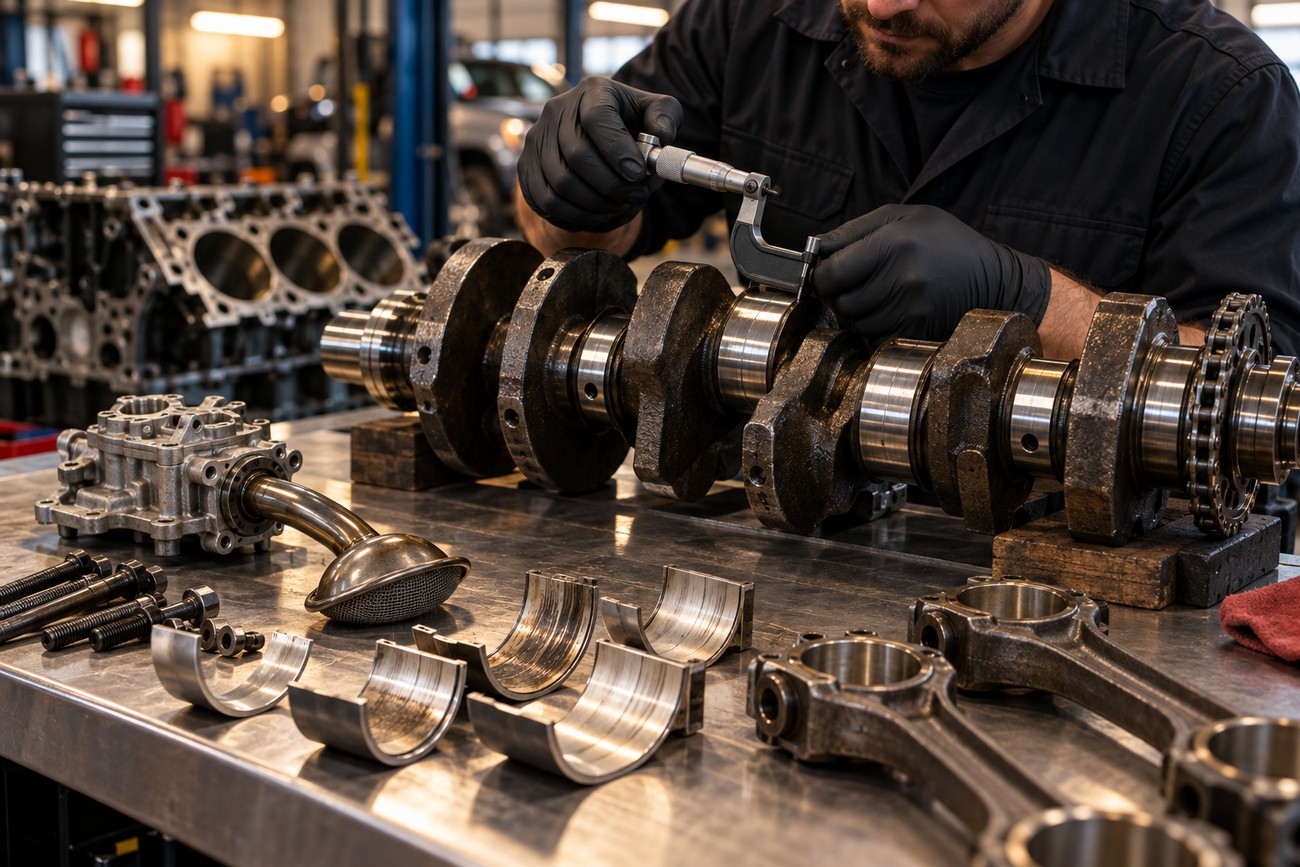
Repair scope depends on the condition of the bearings, crankshaft journals, connecting rods, oiling system, and block. Light bearing wear with usable journals may permit a measured repair, while a scored or undersize journal may require crankshaft machining or replacement. Severe wear can progress to a spun bearing, damaged journals, engine seizure, and sometimes block damage.
A durable repair includes finding why the clearance or oil film failed. The oil pump, pickup screen, passages, bearings, rods, and relevant fasteners should be checked, and the crankshaft should be measured before parts are selected. Replacing bearing shells alone can leave a worn journal, blocked pickup, weak pump, contaminated passage, or assembly error ready to cause another failure.
Reassembly also requires the correct bearing grade, clearances, torque procedure, and cleanliness for that engine. The cause of oil-pressure loss must be corrected before the engine returns to service. A replacement bearing can fail again if the lubrication system or the original assembly problem remains unresolved.
Prevention starts with maintaining the correct oil level and specification, following service intervals, and responding to overheating or pressure warnings immediately. Investigate metallic glitter, recurring hot-idle pressure symptoms, or any new lower-engine noise instead of masking them with thicker oil. Early measurement can preserve repair options that disappear after continued driving.
Frequently asked questions
Rod knock symptoms can overlap with noises from the valve train, timing system, accessories, and drivetrain. The following answers explain the main causes, common misdiagnoses, and the measurements needed for confirmation.
What is the main cause of rod knock?
The immediate mechanism is usually loss of the oil film combined with excessive clearance between a connecting-rod bearing and its crankshaft journal. Different root causes can create that condition, including oil starvation, contamination, overheating, low oil pressure, oil-pump or pickup faults, extreme load, and assembly errors.
This distinction matters during repair. Restoring oil pressure may address the cause, yet it cannot reverse a worn bearing or damaged journal. The engine still needs an inspection and measurements before the repair plan is chosen.
What can be mistaken for rod knock?
Timing-chain tensioners, the valve train, water pumps, idlers, alternators, air-conditioning compressors, flywheels, and main bearings can produce similar sounds. Belt-driven accessory noises can sometimes be assessed separately during a controlled inspection before committing to engine teardown, provided the procedure is safe for that vehicle.
That isolation only narrows the possibilities. A warning light, an oil change, or a compression result cannot by itself confirm or exclude rod knock. Actual oil pressure and internal measurements remain necessary when the evidence points to bearing damage.
How is rod knock confirmed?
Confirmation typically requires measuring oil pressure, inspecting the oil and filter for metallic debris, and isolating accessory or valve-train noises. If internal damage remains likely, a technician may inspect the bearings and crankshaft journals directly.
Micrometer measurements and an appropriate bearing-clearance check are needed to determine wear, journal condition, and whether the lubrication system or another fault caused the failure.