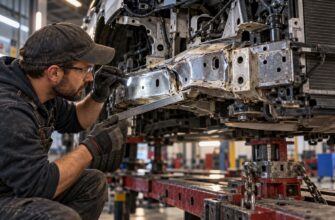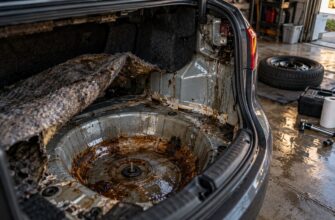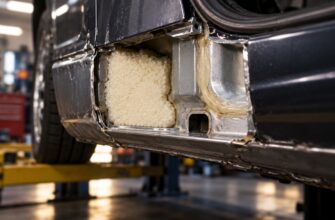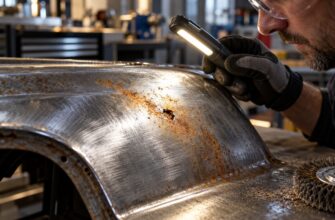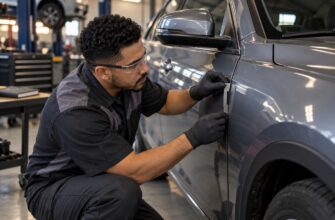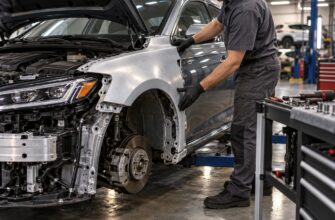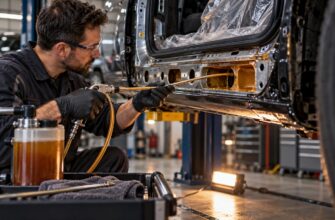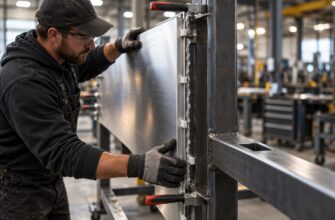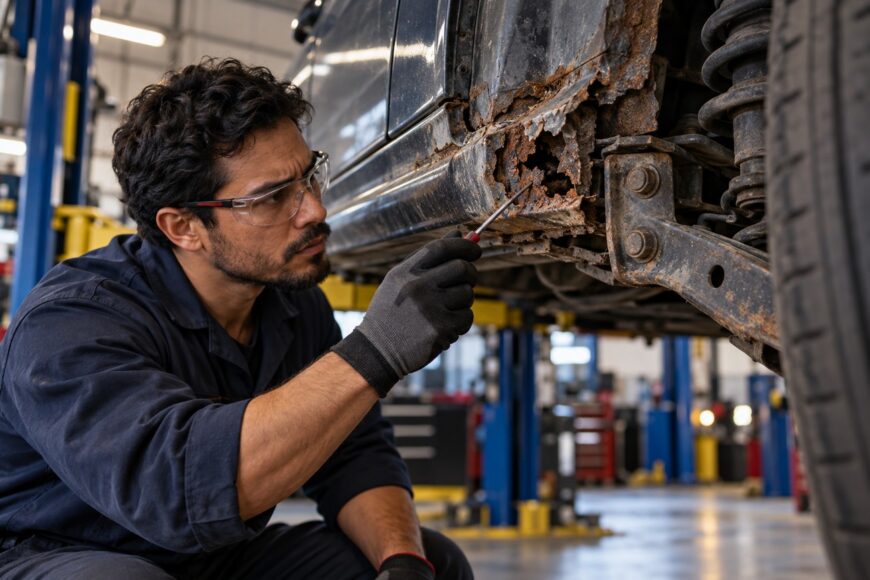
A rust hole is easy to underestimate, especially when welding equipment is unavailable. Fiberglass, filler, or a small metal patch can make the damage look closed, but appearance and strength are separate matters. The first job is to identify whether the panel is cosmetic or part of the vehicle’s load path.
A no-weld repair is limited to non-structural body metal with a sound foundation. In a structural area, a visible hole, significant loss of metal, or steel that can be depressed with a finger indicates a structural defect. Use a decision-based approach: inspect the location, remove all unsound metal, and stop if the repair involves strength, safety, or an uncertain hidden connection.
- First Decide Whether the Hole Is Safe to Repair Without Welding
- The Best No-Weld Method for a Non-Structural Panel
- Remove Rust Before You Build the Patch
- Fit and Seal a Temporary Metal Patch
- Fiberglass and Filler: What They Can—and Cannot—Do
- Why No-Weld Rust Repairs Fail—and How to Check Them
- Frequently Asked Questions
- What is the best way to repair a rust hole without welding?
- What is the best filler for rust holes?
- How can I tell if a rust hole is near a structural part?
First Decide Whether the Hole Is Safe to Repair Without Welding
Hole size alone does not determine the risk. A small opening near a suspension mounting point, seat-belt attachment, pillar, sill, reinforcement, or body seam may matter more than a larger hole in an outer fender. Look beyond the visible damage for distortion, split seams, crushed metal, and nearby fasteners or brackets.
A visible hole, significant loss of metal, or metal that can be pushed in with a finger is a stop sign in a load-bearing area. These symptoms indicate that the original steel has lost structural capacity. Fiberglass, body filler, adhesive, and brazing are not equivalent repairs for a structural defect, even if the finished surface looks smooth.
For structural damage, the repair needs suitable metal and a method that restores the strength of the original construction. British MOT practice generally requires a continuous welded seam for a structural repair, while inspection rules vary by country. A repair that passes a visual check in one market may still be unsuitable for another inspection system or for the vehicle manufacturer’s repair requirements.
The Best No-Weld Method for a Non-Structural Panel
For a sound, non-structural panel, the most credible no-weld approach uses a fresh piece of metal as the foundation. Remove the damaged section to solid edges, shape a patch to follow the panel, and give it adequate overlap onto clean metal. The patch can then be secured mechanically or with a suitable automotive body adhesive, according to the panel and the product instructions.
Once the metal foundation is stable, use reinforced filler to level the transition and restore the surface contour. The filler is a shaping material, so it should remain relatively thin and supported by the patch beneath it. A metal-backed repair generally holds the panel shape better than fiberglass mat alone because the metal carries the form through vibration and temperature changes.
This method remains cosmetic or temporary. It does not restore the original metal by the manufacturer’s structural repair method, and it should not be used on sills, suspension mounts, seat-belt anchors, strut towers, subframe attachments, or other load-bearing areas. If the hole reaches a reinforcement or a seam that controls body strength, arrange a proper metal repair instead.
Remove Rust Before You Build the Patch
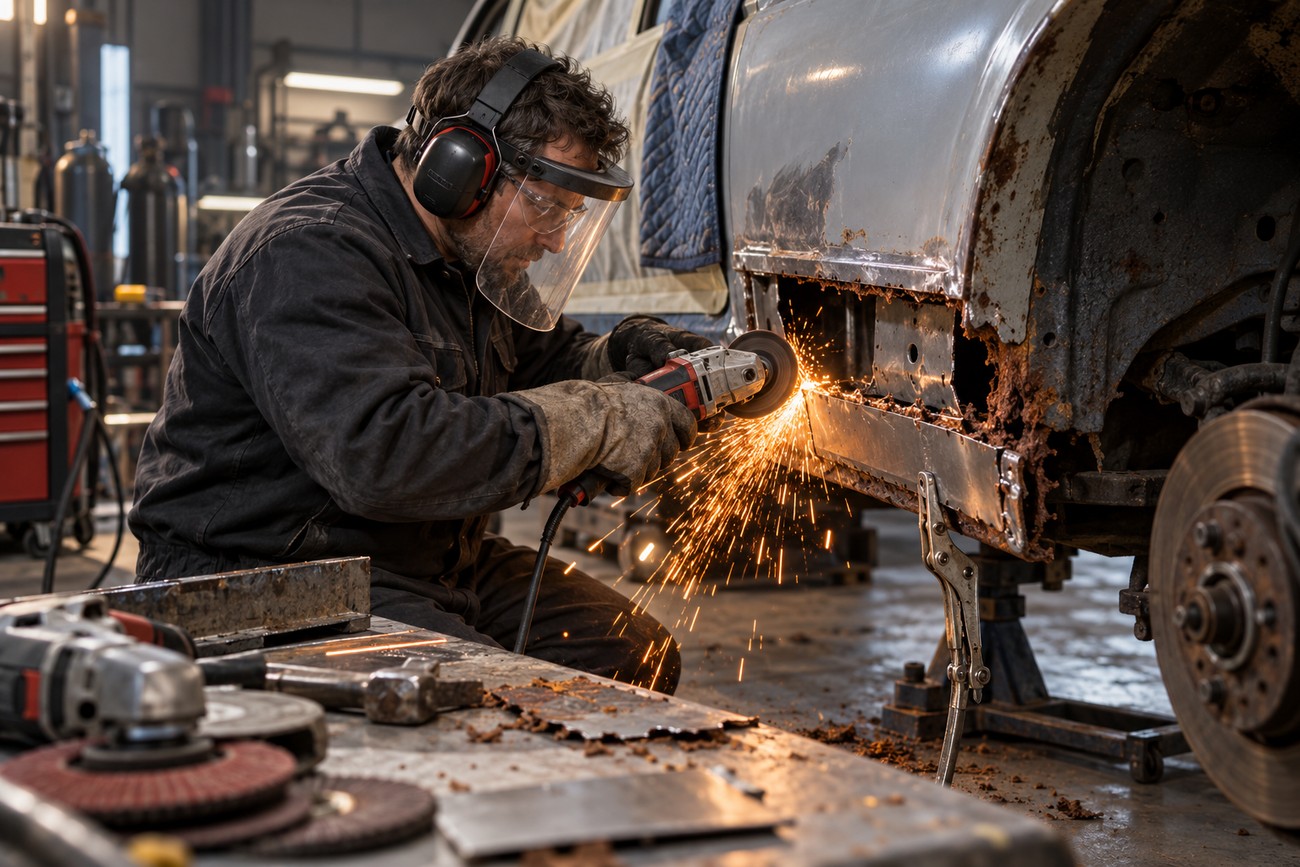
Preparation determines whether the repair has a sound foundation. Corrosion cannot be reliably sealed over while loose, porous metal remains; remove the affected metal to a sound base or cut it out. Grinding or cutting should continue until the edge is dense and non-porous. A hard-looking orange surface still needs careful assessment, because color alone does not prove that the steel is sound.
Do not leave thin, layered, or crumbly edges under the patch. Rust can continue between panel layers, behind the visible opening, and around a damaged seam sealer. Check nearby drains, folded flanges, and cavities before deciding that the visible hole is the full extent of the problem.
After removal, clean the exposed area and allow it to dry fully. Use a compatible primer or coating on the prepared metal, following the coating system’s instructions, and plan how the rear face will be protected. A converter or surface coating may help with a properly prepared surface, but it does not turn unsound metal into structural steel or make buried corrosion reliable.
Fit and Seal a Temporary Metal Patch
Make the patch from fresh metal and shape it so it follows the surrounding panel without forcing the body out of alignment. It should overlap sound metal around the opening and be supported evenly. On a non-structural panel, secure it with suitable mechanical fasteners or automotive body adhesive, then smooth the transition with reinforced filler.
Keep the adhesive or fasteners away from any area whose purpose is to carry crash, suspension, seat-belt, or body loads. Follow the selected adhesive system’s preparation and curing instructions, including surface cleanliness and compatibility. A thick filler layer without a correctly supported metal foundation is prone to edge cracking under vibration and temperature cycling.
Inspect the rear face before finishing the visible side. Trapped moisture, an untouched flange, or failed seam sealer can destroy a clean-looking patch from behind, where sanding and paint cannot reveal the developing corrosion.
Protect both faces where accessible. Use a compatible exterior primer or coating on the visible repair, and apply suitable rear-side corrosion protection after the repair is secure. Also correct the reason moisture reached the panel: blocked drainage, damaged seam sealer, salt accumulation, or a leaking adjacent joint can make any patch fail again.
Fiberglass and Filler: What They Can—and Cannot—Do
Fiberglass mat and resin can close or shape a hole in a cosmetic, non-loaded panel. They can provide a surface that is sandable and printable when the surrounding metal is stable and properly prepared. They do not restore the strength of body steel, so they have no place as a substitute for missing metal in a structural area.
Reinforced filler follows the same rule. It is for shaping over a prepared foundation, such as sound metal or a properly supported patch. It should not be used to bury loose rust, bridge a large unsupported gap, or replace structural steel. Applying a thick layer may hide the opening temporarily while leaving the corrosion and weak edges untouched.
Marketing instructions may describe a durable fiberglass repair, but structural rules can exclude fibre reinforcement, body filler, and adhesive bonding for load-bearing members. That difference matters because a cosmetic product claim usually concerns sealing and appearance, while a structural inspection concerns load transfer and crash performance.
Why No-Weld Rust Repairs Fail—and How to Check Them
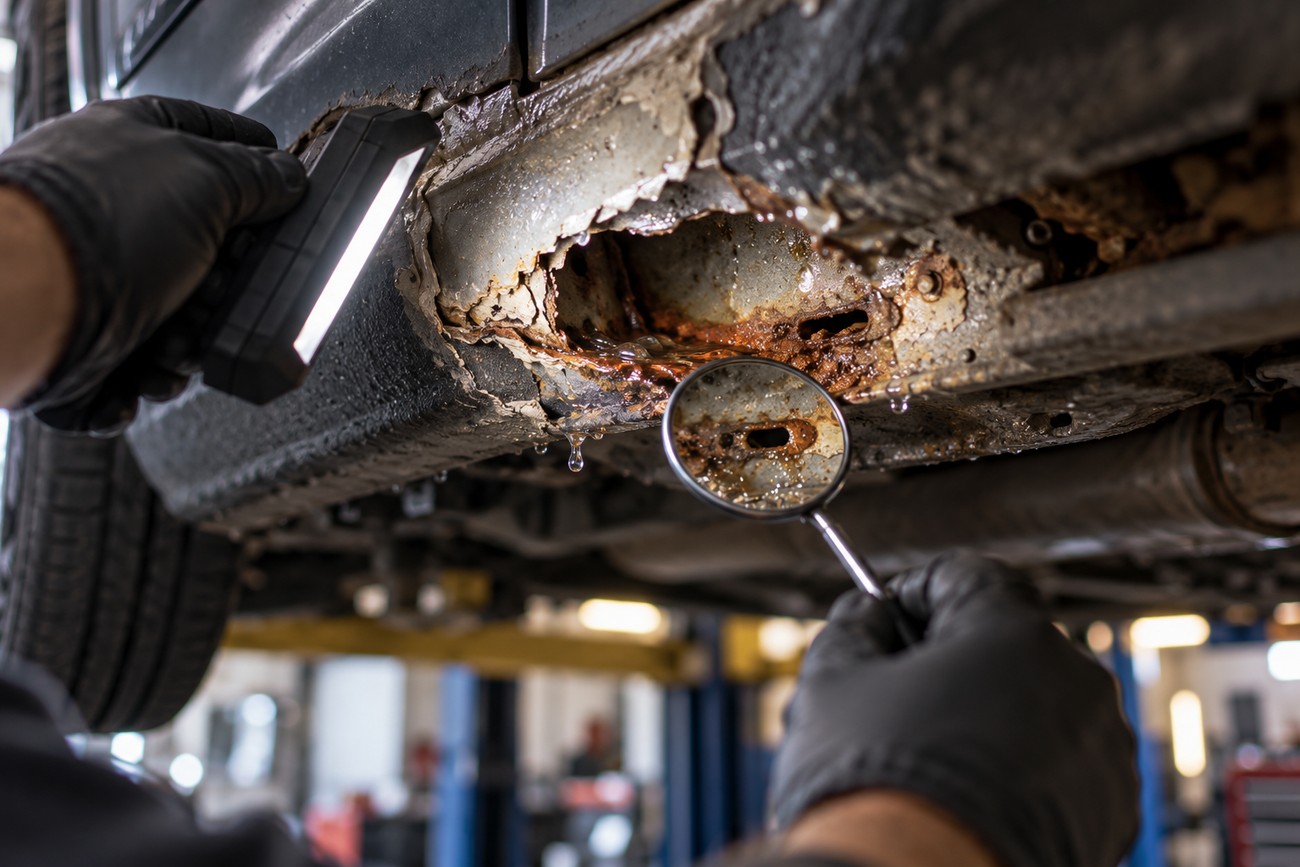
Returning rust is one of the most common failure patterns. Other complaints include repeated leaks, poor adhesion, peeling at the patch edge, cracks, waves, and a visible repair outline after painting. These defects usually point to unsound metal, moisture trapped behind the repair, movement between materials, or excessive filler thickness rather than a problem that another coat of paint can solve.
Check the repair from the rear wherever access allows. Look for damp cavities, rust on the reverse side, open seams, failed sealant, and blocked drain paths. Inspect nearby mounts and reinforcements as well; the visible opening may be only the outer edge of a larger corroded area that cannot be seen from the painted face.
A smooth painted surface proves appearance, not restored strength. If the panel flexes, the patch lifts, rust bubbles return, or water enters the cabin or cavity, remove the finish and reassess the foundation. When the defect affects a structural zone, stop cosmetic work and arrange a metal repair that follows the vehicle manufacturer’s method and the applicable inspection rules.
Frequently Asked Questions
The correct answer depends on the panel’s role, the condition of the remaining metal, and access to the rear side. These checks should be made before choosing a material, because no filler or adhesive can compensate for a structural defect or loose corrosion.
What is the best way to repair a rust hole without welding?
For a sound, non-structural panel, remove the rusted metal to solid edges, make a fresh metal patch, and secure it mechanically or with suitable automotive body adhesive. Finish the supported patch with reinforced filler, then protect both sides where accessible. This sequence gives the filler a stable base and controls the panel shape better than fiberglass alone.
If the hole is near a load-bearing part, the no-weld method is not an appropriate structural repair. A visible hole, major metal loss, or steel that can be depressed with a finger should move the job to a proper metal repair rather than a cosmetic covering.
What is the best filler for rust holes?
Reinforced filler is suitable for shaping over a stable, prepared foundation. It is not a foundation over loose rust and cannot replace missing structural steel. The affected metal must first be removed to a sound, dense edge, and a metal patch should support any area that needs more than a thin leveling layer.
Choosing a stronger filler does not solve hidden corrosion, poor adhesion, or movement in the panel. If the rear face remains wet or rusty, the repair can fail behind the filler even when the visible surface was prepared carefully.
How can I tell if a rust hole is near a structural part?
Inspect for nearby suspension points, subframe attachments, seat-belt mounts, pillars, sills, reinforcements, folded seams, and brackets. Check for deformation, split seams, thinning metal, or a section that moves when pressed lightly. Also inspect the reverse side and surrounding cavities, because the visible hole may not show the full corrosion pattern.
Stop DIY cosmetic work if the hole touches a mount or reinforcement, if the metal can be depressed with a finger, or if you cannot identify the panel’s structural role. Structural areas require restoration of the original metal strength, not a layer of fiberglass, filler, or adhesive.