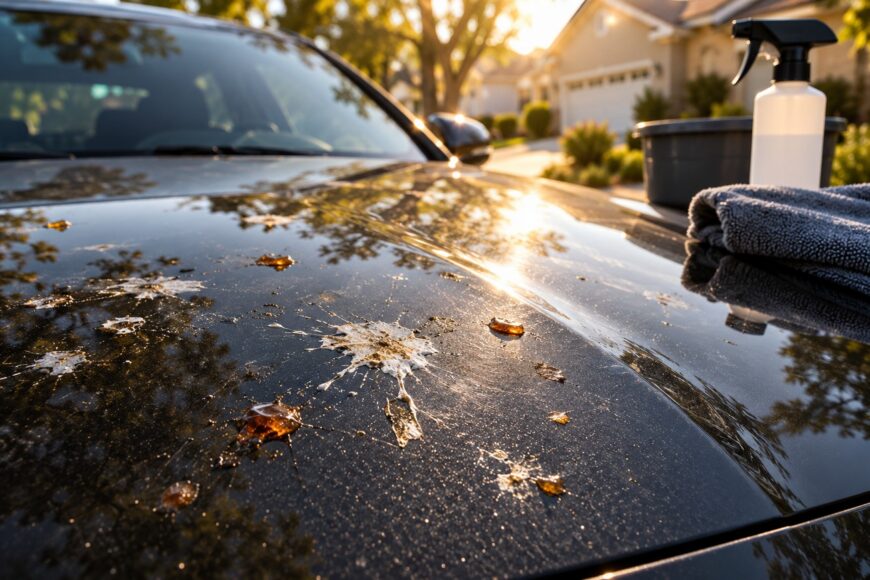
A spot of tree sap or bird droppings may look minor, yet dried residue can become an etched, hazy mark after exposure to heat and time. Bird droppings contain uric acid, while sap bonds to the surface as a sticky resin. On a horizontal panel, sunlight and heat make both problems harder to correct.
The safest approach is controlled softening rather than force. Aggressive scraping or a strong solvent may remove contamination quickly while also marking clear coat, plastic, rubber, wax, or ceramic protection. A slower process of soaking, product dwell, gentle wiping, and rinsing usually gives you a better chance of preserving the finish.
- Why Tree Sap and Bird Droppings Damage Car Paint
- Prepare the Surface Before You Touch the Spot
- How to Remove Bird Droppings Without Scratching Paint
- How to Remove Tree Sap Without Spreading It
- Choose Products by Surface, Not by Strength
- When Cleaning Leaves Haze, Rings, or a Sticky Film
- Frequently asked questions
- How long is bird poop contagious?
- How can I prevent sap and bird droppings from sticking again?
- What removes tree sap easily?
Why Tree Sap and Bird Droppings Damage Car Paint
Bird droppings contain uric acid, which can etch or dull paint and clear coat. Fresh contamination can still cause damage, especially when it sits in direct sun. As the material dries, it becomes harder to lift without friction, and heat can increase the speed of marking.
Horizontal panels such as the hood, roof, and trunk lid deserve particular attention. Residue remains in place longer, receives more solar heat, and can bake into the finish. A mark may seem to disappear after washing while a dull ring remains in the clear coat beneath it.
Tree sap behaves differently. It is often resinous and sticky, so water and ordinary car shampoo may remove surface dirt without dissolving the bonded residue. Rubbing a softened spot across the panel can spread the sap into a wider, oily film that attracts dust.
Water alone does not always make the surface safe. Rinsing may remove loose material, but an acidic bird-dropping trace or resinous sap film can remain. Prompt removal reduces exposure, although fresh residue still needs careful handling rather than a dry wipe.
Prepare the Surface Before You Touch the Spot
Work in the shade and let a hot or sun-heated panel cool before applying cleaner. Products evaporate quickly on hot paint, which increases the chance of spots, streaks, and uneven chemical action. If possible, rinse the vehicle first so loose grit does not become an abrasive layer under the towel.
Prepare separate, clean microfiber towels, a bucket of clean water, and a product intended for the surface you are treating. Keep one towel for soaking and lifting contamination and another for the final wipe. A dirty or stiff towel can create micro-scratches even when the cleaner itself is suitable.
For a small mark, place a warm, damp microfiber compress over it for several minutes. The moisture softens dried residue and reduces the pressure needed later. This is safer than scraping with a fingernail, plastic edge, or dry cloth, particularly if the dropping contains sand or grit.
Wear gloves when handling bird droppings, and provide ventilation when using solvent-based products. Do not flood seams, badges, rubber, or trim with a solvent. The goal is to keep the treatment local and controlled, then remove its residue rather than allowing it to sit on the panel.
How to Remove Bird Droppings Without Scratching Paint
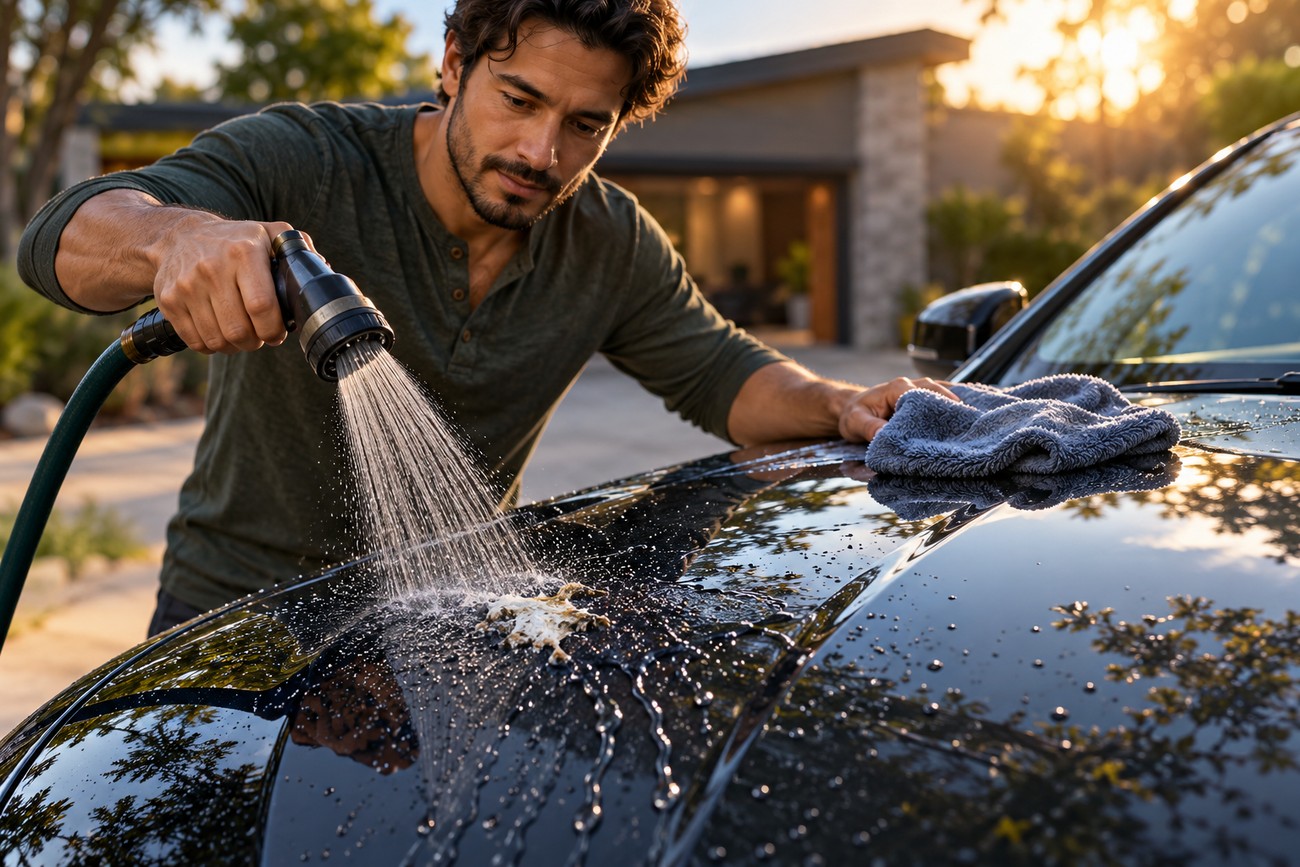
Start by rinsing away loose debris without directing a hard jet so close that grit is driven across the paint. Saturate the remaining dropping with water or a paint-safe cleaner, then let it dwell. The product needs time to dehydrate the material; immediate wiping often creates more friction than cleaning.
- Place a soaked microfiber towel over the spot and allow the contamination to soften.
- Lift the towel vertically or wipe in one direction with minimal pressure.
- Turn to a clean section of microfiber as soon as residue transfers.
- Rinse the area and repeat the soak-and-lift cycle if any material remains.
A circular scrubbing motion spreads grit in every direction and can leave visible micro-scratches, especially on dark paint. If one pass fails, use another gentle cycle rather than pressing harder. Older droppings often need several rounds of soaking, wiping, and rinsing instead of one forceful attempt.
After the spot is clean, rinse away the cleaner and inspect it in good light. Do not judge the finish through a remaining chemical film. If a faint matte halo remains after the surface is clean and dry, the problem may be etching or micro-scratches rather than leftover contamination.
How to Remove Tree Sap Without Spreading It
Begin with a warm, damp compress to soften the sap. Then apply a paint-safe sap remover or a carefully tested spot solvent to a small area. Dedicated sap removers are generally more predictable than household solvents, but any product can affect wax, sealant, ceramic protection, plastic, or an older finish.
Use a clean microfiber to lift dissolved sap rather than dragging it across the panel. Apply a small amount, allow the stated dwell time, and wipe with a fresh towel section. If the residue remains, repeat the short application instead of flooding the panel or immediately moving to a harsher solvent.
Several short solvent-and-wipe cycles give the residue less opportunity to spread and keep the chemical action localized. Fresh towel sections matter because a towel loaded with softened sap can redeposit it on the next pass.
Isopropyl alcohol and citrus-based or other solvent products can be useful for spot treatment, but test them first on a hidden area. Avoid acetone and unverified universal thinner unless the finish manufacturer specifically confirms compatibility. These products can harm paint, plastic, rubber, or weak refinished surfaces.
Once the sap is gone, wash or decrease the area as appropriate and rinse it thoroughly. Sap removers can leave an oily film that collects dust. They may also remove wax, sealant, or part of a ceramic coating, so the cleaned area may need compatible protection after it has been inspected.
Choose Products by Surface, Not by Strength
For painted panels and glass, pH-neutral products are generally the safer starting point. Acidic or alkaline formulas may act faster, but they increase the risk of dulling or staining, particularly when used on a hot surface or left to dwell too long. Follow the product instructions instead of extending dwell time to compensate for an unsuitable formula.
Glass usually tolerates more aggressive cleaning than painted panels, but that does not make every glass cleaner safe for clear coat. Use products according to their intended surface. A cleaner that removes baked residue from glass may affect paint, trim, rubber, or a coating.
Plastic trim and rubber can stain, dry, or soften when exposed to strong solvents. Treat them as separate materials and wipe off overspray immediately. Protected paint also needs care: a finish-safe cleaner may still remove wax, sealant, or part of a ceramic coating.
Older, weak, or repainted surfaces carry a higher risk of solvent lifting or coating failure. Test an inconspicuous area first, allow it to dry, and check for color transfer, gloss change, softening, or swelling. If the surface reacts, stop and use a milder method or seek professional assessment.
When Cleaning Leaves Haze, Rings, or a Sticky Film
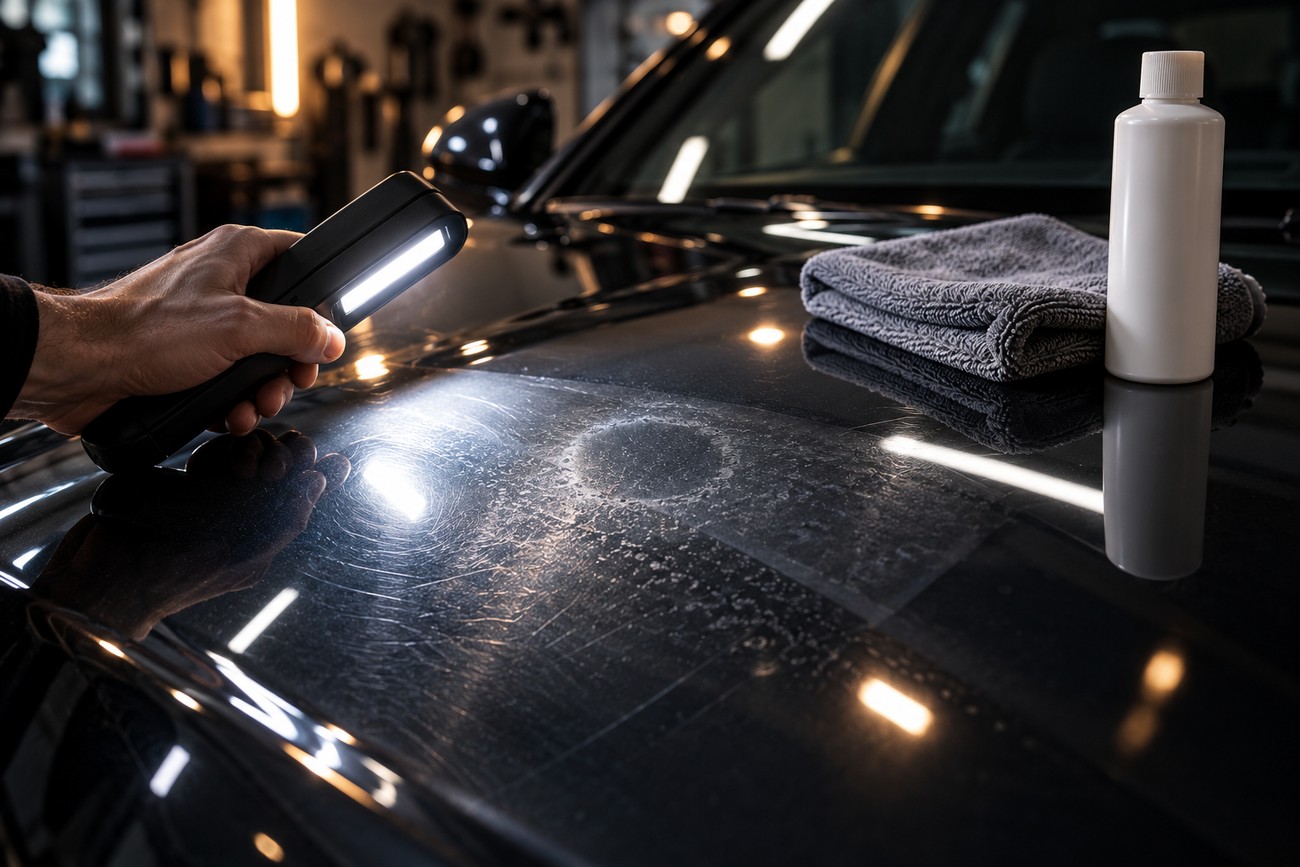
A clean-looking spot can still have a problem underneath. A matte ring or halo may indicate that the bird dropping etched the clear coat, while a web of fine marks may show that grit was rubbed across the surface. More solvent will not reverse either defect.
First rinse or wipe away all chemical residue, dry the area with a clean microfiber, and inspect it from several angles. A sticky film usually points to remaining sap remover or dissolved resin and needs gentle degreasing followed by rinsing. Avoid adding wax or coating until the surface is clean and stable.
If the haze remains after cleaning, a light polish may improve an etched or lightly scratched area. Polishing removes a small amount of finish, so it should be approached conservatively, especially on older or repainted panels. Deep etching, exposed color coat, or uncertain paint condition may require professional correction rather than repeated home treatment.
Cleaning can also remove existing protection even when the product is marketed as safe. Once the panel is fully clean, check whether water behavior and surface feel have changed, then reapply only a compatible wax, sealant, or coating product. Protection helps future cleanup, but it cannot replace prompt removal of fresh contamination.
Frequently asked questions
Safe removal depends on the material, the surface, and the condition of the residue. The answers below cover hygiene, prevention, and product choice without treating maximum chemical strength as the goal.
How long is bird poop contagious?
There is no fixed number of hours that makes bird droppings safe to touch. The hygiene risk concerns contact with potentially contaminated material, whether it is fresh or dried, so wear gloves and avoid creating dust or airborne particles from dry residue.
After cleaning, dispose of or wash contaminated materials appropriately and wash your hands thoroughly. Keep children and pets away from the work area, and avoid blowing, brushing, or pressure-washing dried material in a way that could spread droplets or dust.
How can I prevent sap and bird droppings from sticking again?
Remove fresh spots promptly, wash the vehicle regularly, and choose parking locations away from trees and areas where birds commonly gather when practical. A compatible wax, sealant, or ceramic coating can make contamination easier to release, although it does not prevent damage if residue is left in heat and sunlight.
Keep a clean microfiber towel and a suitable quick-cleaning product available for minor contamination. Store them so the towel stays clean; a towel that has picked up grit can cause the scratches you are trying to prevent.
What removes tree sap easily?
A dedicated, paint-safe sap remover is usually the most predictable choice. Warm dampening first, limited dwell time, and several small applications often work better than a large amount of strong solvent.
Isopropyl alcohol or a citrus-based solvent may help with a stubborn spot after a hidden-area compatibility test. Wash and rinse afterward, because dissolved sap and cleaner can leave an oily film, and check whether the treatment removed existing surface protection.