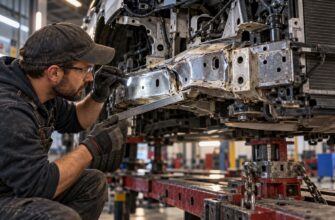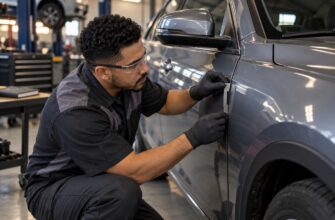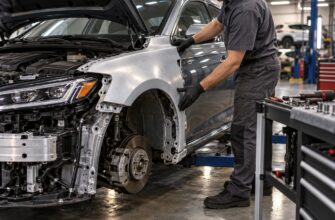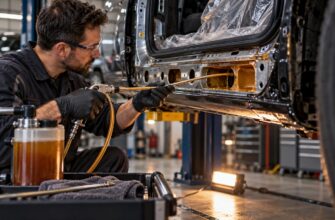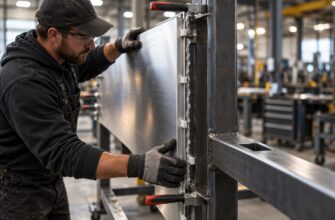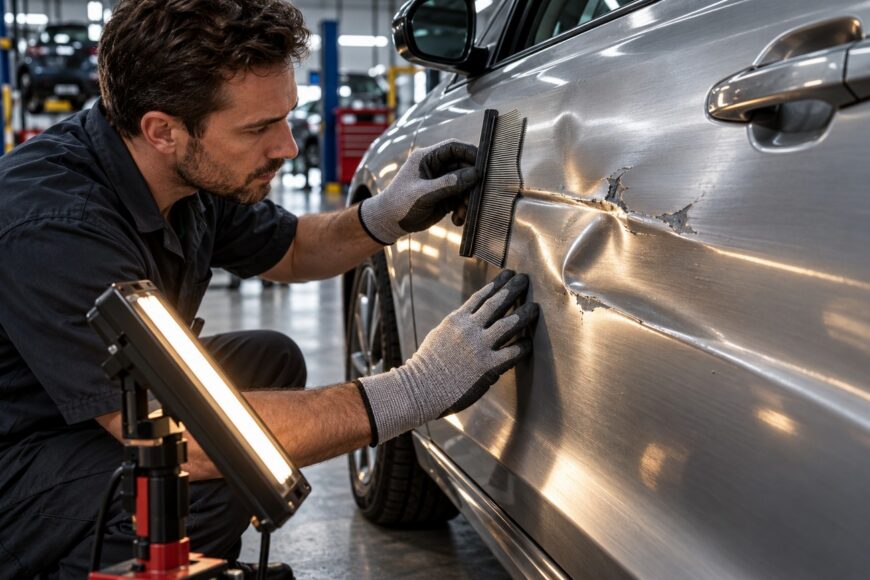
A small aluminum dent can behave worse than a comparable steel dent, especially after cold pulling or rough straightening. Aluminum may crack, tear, or stretch permanently instead of returning cleanly to its original shape. A panel that looks close to flat can still contain waves or tension that become visible after preparation and painting.
The correct repair depends on the depth and shape of the damage, the condition of the metal, access to the rear side, and the importance of preserving the factory coating. Controlled straightening, glue pulling, joining work, and panel replacement each have a proper place. No method can restore every aluminum dent invisibly, so the panel must be assessed before force, heat, or tooling is selected.
- Assess the Aluminum Panel Before Pulling the Dent
- Tools, Heat, and Surface Preparation for Aluminum
- How to Remove a Dent From an Aluminum Body Panel
- When Dent Repair Should Become Joining Work or Panel Replacement
- Aluminum Dent Repair Methods Compared
- Common Aluminum Dent Repair Mistakes and Myths
- What a Proper Aluminum Repair Should Include
- Frequently asked questions
- How can I tell whether a body panel is aluminum before choosing a repair method?
- What is the best dent puller for aluminum?
- What dents cannot be removed without replacing the panel?
Assess the Aluminum Panel Before Pulling the Dent
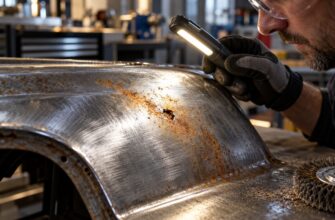
Assessment should come before tool selection because aluminum responds differently to force than steel. Inspect the depth of the dent, its edges, any sharp creases, and the surrounding panel for signs of stretched metal. A shallow depression with smooth contours may be suitable for controlled correction, while a sharp impact can leave permanent changes in the material even when the visible damage is limited.
Look for waves, oil-canning movement, torn areas, and paint disruption around the impact. Incorrect straightening can stretch aluminum, leaving a panel that appears mostly level but still carries low spots and ripples. Once the metal has stretched substantially, continued pulling may create more distortion instead of restoring the original geometry.
Access from the rear affects the repair path. If the inside of the panel is available, a technician may use suitable pushing and straightening tools while supporting the surrounding metal. If the rear side is difficult to reach or the factory coating there should remain undisturbed, glue pulling can be useful when the outer surface is accessible.
Edges, flanges, seams, mounting points, and attachments deserve special attention. Damage close to these areas can affect panel alignment or require joining work even when the dent itself appears small. Serious stretching, tearing, or damage that cannot be restored without compromising the panel favors replacement rather than increasingly forceful local repair.
Tools, Heat, and Surface Preparation for Aluminum
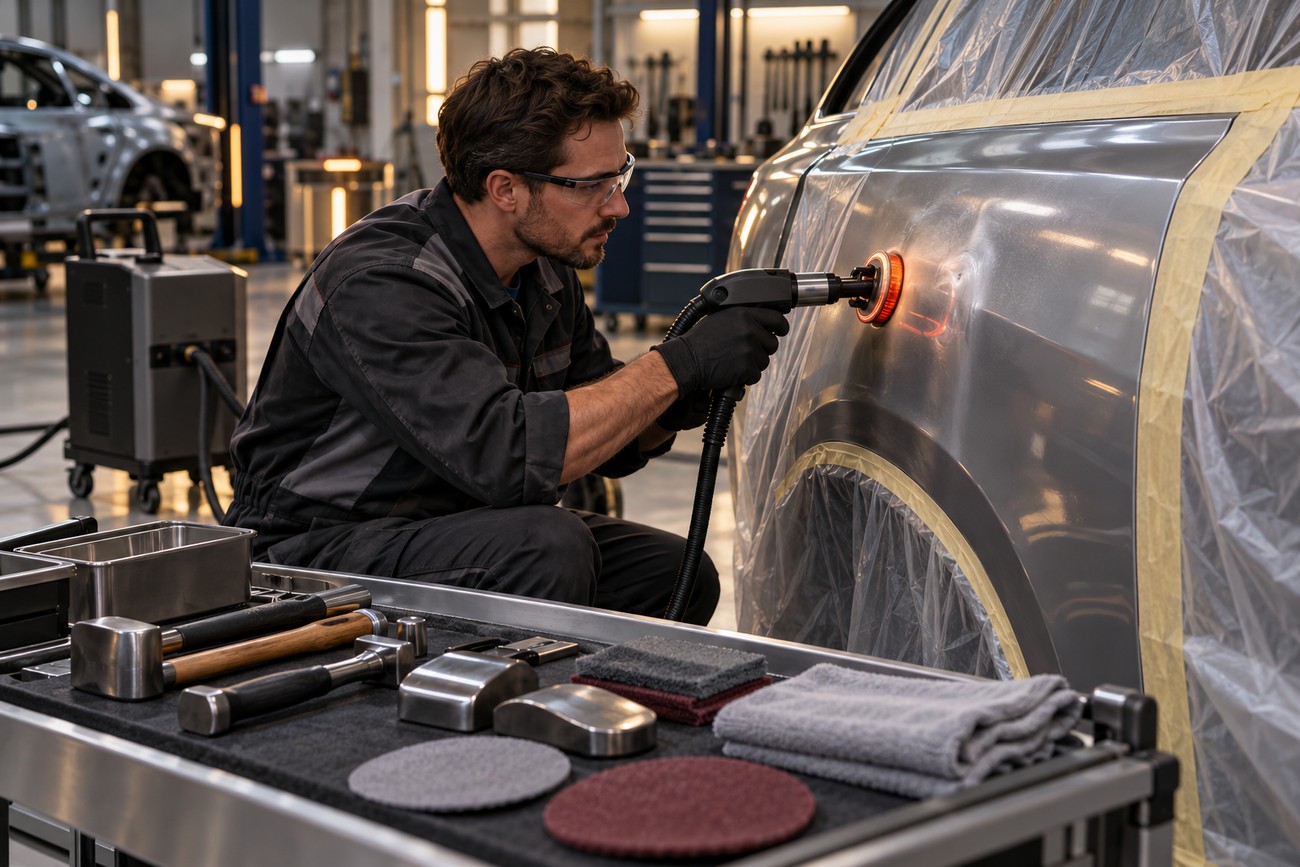
Aluminum repair should use a separate aluminum tool set and, where possible, a dedicated work area. Equipment that has been used on steel can carry particles or residue that contaminate the aluminum surface. Keeping tools, abrasives, and consumables separated helps protect later welding, bonding, and finishing work.
Heat can assist some aluminum repairs, but the principle is controlled heat input. Unrestricted heating can change how the metal behaves and can worsen distortion or damage the finish. The available research does not establish one universal temperature for aluminum dent repair; a reported range of 200–300 °C appears in some practical sources, but it should not be treated as an official standard for every panel or repair method.
Soft tips and polymer attachments can reduce surface damage compared with hard metal tools. They are useful when the repair requires repeated, measured corrections rather than a single heavy blow. The tool should support the intended movement of the metal and leave enough control to stop before the panel begins to stretch.
Oxide and contamination must be removed carefully before aluminum welding or bonding. Aluminum forms an oxide layer that can interfere with a sound connection, while grease, dust, and residue create additional defects. Cleaning is therefore part of the joining process itself, rather than a cosmetic step performed after the repair.
How to Remove a Dent From an Aluminum Body Panel
Start by stabilizing the panel and identifying the center of the deformation. Remove trim or other components only as needed to gain safe access and prevent damage during the repair. The panel should be supported so force is directed into the dent rather than into an unsupported edge, flange, or adjacent attachment.
Use small, controlled corrections from the center toward the edges. This direction is commonly recommended for aluminum because it allows the deepest part of the deformation to be relieved before the surrounding metal is brought back into shape. Work gradually, checking the panel from several angles and using reflection lines or a suitable contour guide to identify remaining low and high areas.
Stop pulling when the panel begins to stretch. Continuing force can convert a repairable dent into a wavy panel that requires shrinking, joining work, or replacement.
Choose soft tooling where direct access permits it, and keep each correction measured. If the outer surface is accessible and the rear coating should remain undisturbed, glue pulling may provide a cleaner route. The adhesive tab must match the shape and size of the area being corrected, and pulling should remain controlled rather than relying on a sudden high load.
Cold pulling increases the risk of cracking, tearing, and permanent stretching. If heat is appropriate for the particular repair, apply only controlled heat with temperature monitoring and a clear reason for using it. Heating should support a measured correction; it should not be used to compensate for excessive force or poor access.
After the main depression is relieved, inspect the panel for residual tension and waves before moving to filler or refinishing. A surface that is technically close to its original outline can still require further work if the metal has been stretched. When the panel no longer responds predictably, continuing to pull usually makes the repair less stable and may move the job toward shrinking, joining work, or replacement.
When Dent Repair Should Become Joining Work or Panel Replacement
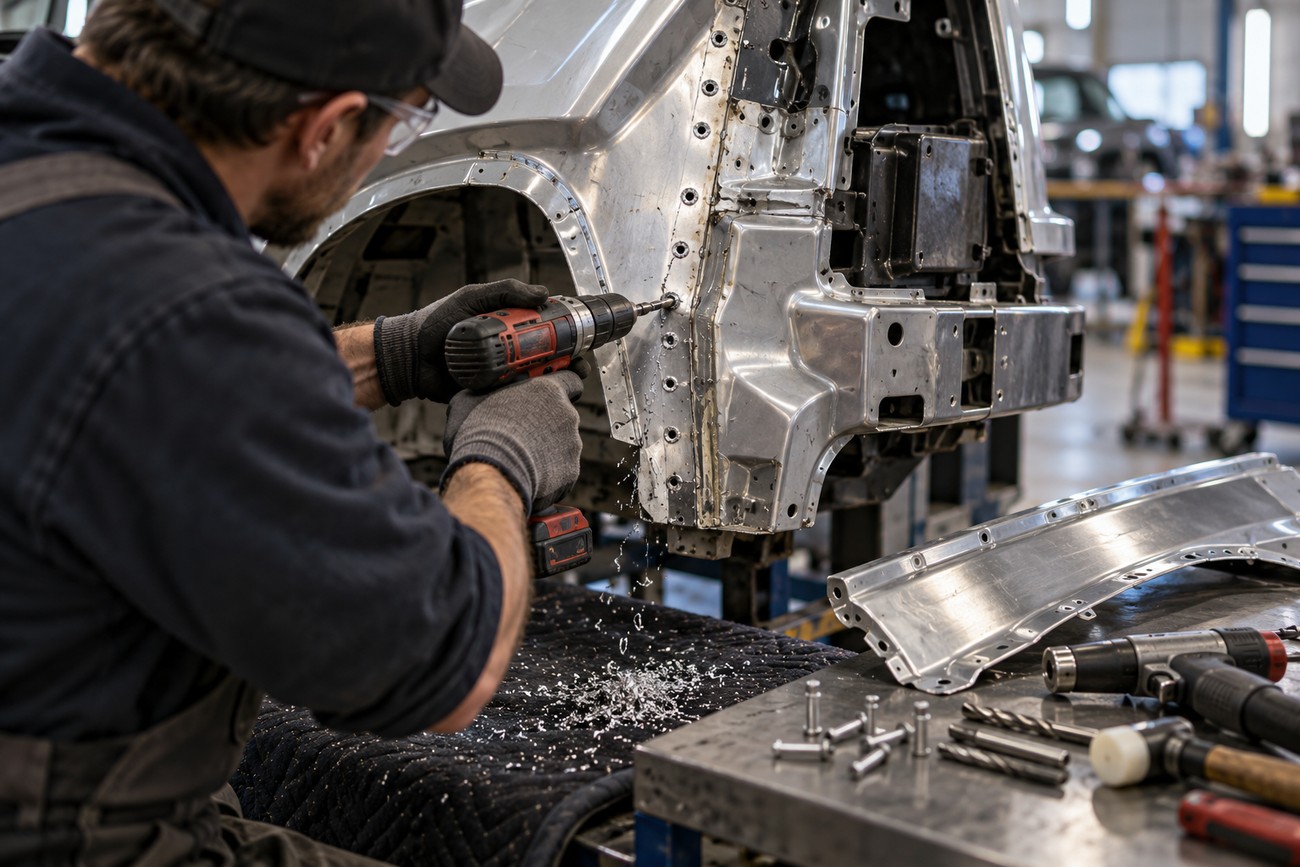
A local dent repair can expand into joining work when the impact has damaged a seam, attachment point, or section that cannot be restored through surface correction alone. Aluminum body repairs may include straightening, shrinking stretched metal, glue pulling, welding, bonding, riveting, and panel replacement. The appropriate combination depends on the panel design and the extent of the damage.
Riveted connections are a normal technology in aluminum body and panel construction. Removing and restoring these connections can be part of a proper repair rather than evidence of an improvised fix. The replacement fastener, preparation method, and access must suit the vehicle’s construction, and damaged attachment areas should not be forced back into alignment without checking the surrounding geometry.
Welding and bonding require oxide removal and thorough cleaning. A contaminated surface can produce a weak or defective connection even when the visible fit looks correct. The preparation process should also protect nearby areas from cross-contamination by steel tools, unsuitable abrasives, or residue from unrelated repair materials.
Replacement becomes more appropriate when the aluminum is severely stretched, torn, sharply creased through a critical area, or compromised around its attachments. Trying to save every panel can leave residual waves, weakened metal, or a finish that requires excessive correction. A sound replacement decision protects alignment and reduces the risk of concealing an unstable repair beneath paint.
Aluminum Dent Repair Methods Compared
No single repair method suits every aluminum dent. The choice depends on access, the amount of stretching, the condition of the finish, and whether the panel can be restored without compromising its shape or attachments.
| Method | Access requirements | Surface risk | Typical suitability | Main failure mode |
|---|---|---|---|---|
| Controlled straightening | Usually requires safe access to the rear or a supported working position | Can mark the surface if hard or contaminated tools are used | Smooth dents with manageable deformation and limited stretching | Cold pulling or excessive force causes cracking, tearing, or permanent stretching |
| Glue pulling | Requires access to the outer surface and a clean bonding area | Can preserve the factory coating on the rear side; the outer finish may still be affected | Dents where the outside is accessible and rear-side disturbance matters | Weak adhesion, unsuitable tabs, or excessive pulling leaves distortion or surface damage |
| Heat-assisted repair | Requires controlled access for heat application and temperature monitoring | Uncontrolled heat can damage the finish or worsen metal distortion | Repairs where measured heat input supports the chosen straightening process | Overheating or treating a reported temperature range as a universal rule |
| Joining work | Requires access for cleaning, welding, bonding, or riveting | Surface contamination can compromise the connection and later finish | Torn areas, damaged seams, attachments, or sections needing structural restoration | Oxide, grease, dust, or steel contamination produces a defective joint |
| Panel replacement | Requires removal and installation access, including attachment points | Introduces replacement-panel preparation and joining requirements | Severe stretching, tearing, or damage that cannot be restored reliably | Incorrect fit, attachment work, or failure to verify surrounding alignment |
Common Aluminum Dent Repair Mistakes and Myths
Cold straightening is one of the most damaging shortcuts. Aluminum can crack or tear when it is pulled aggressively without appropriate control, and the panel may stretch before the dent appears to move. A small visible improvement can therefore conceal a larger problem in the metal.
Starting at the edges can also increase stretching and damage. Many aluminum repair methods work from the center toward the edges, allowing the primary deformation to be relieved before the perimeter is corrected. Working in the opposite direction can push tension outward and make the final surface harder to stabilize.
Ordinary steel tools should not automatically be transferred to aluminum work. Steel-contaminated equipment can compromise later welding or bonding, while hard tips can leave marks that require additional refinishing. Separate aluminum tools, clean consumables, and soft or polymer attachments reduce these risks.
Skipping oxide removal is another common error, especially when a repair moves from dent correction to welding or bonding. PDR is also not a universal solution for serious aluminum dents; severe stretching, tears, sharp structural creases, and damaged attachment areas may require joining work or replacement. Heat is useful only as controlled heat input. Some practical sources report 200–300 °C, but that range is not confirmed here as a universal official standard.
What a Proper Aluminum Repair Should Include
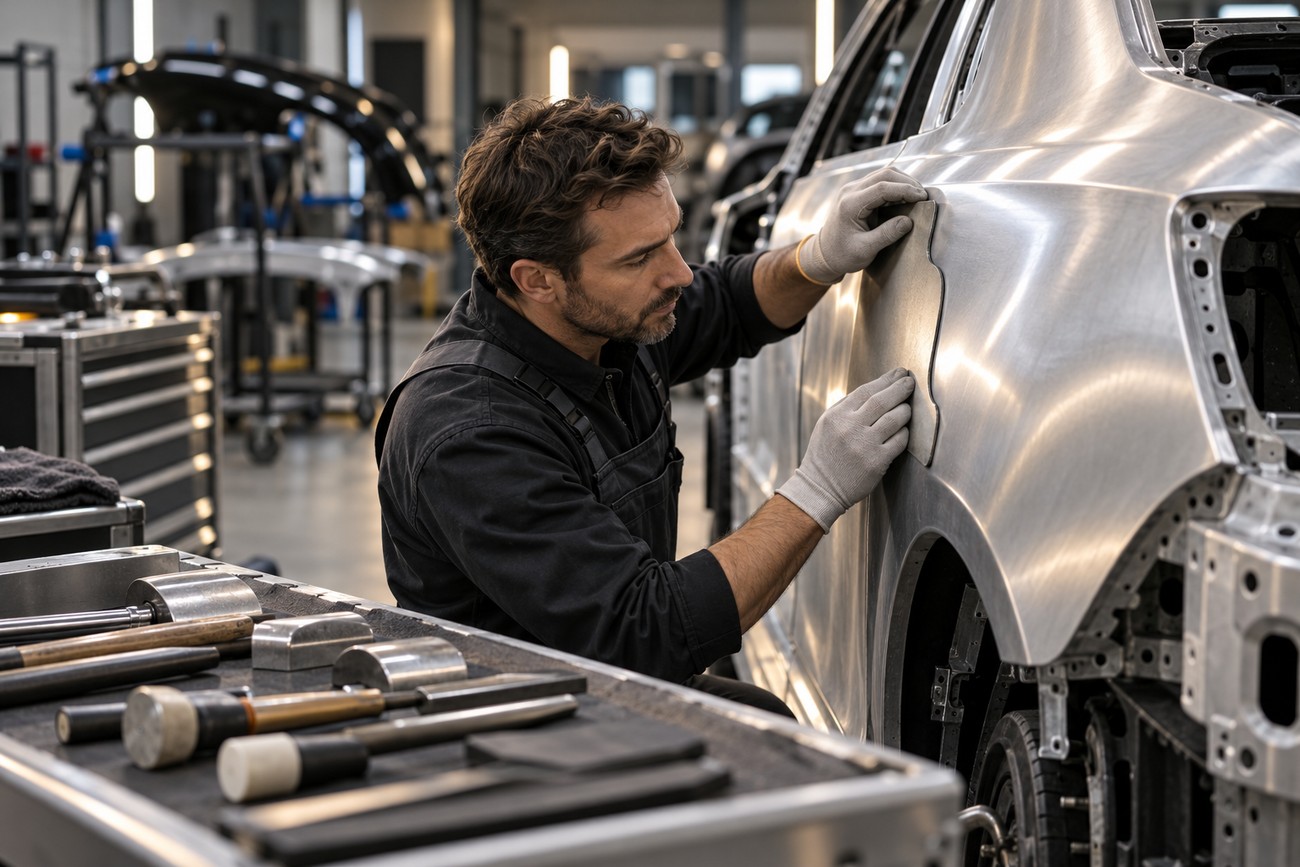
A proper repair begins with correct material identification and an inspection of the panel’s construction. The technician should confirm whether the damaged section is aluminum before selecting tools, abrasives, heat, or joining materials. Panel access, nearby steel components, factory coatings, and attachment methods should be considered before work starts.
The work should use a dedicated aluminum workspace and separate equipment where possible. Heat input must remain controlled, and the panel should be corrected with measured force rather than repeated heavy pulls. The finished shape should be checked for residual stretching, waves, tears, and low areas before refinishing conceals the underlying metal.
If welding or bonding is required, the oxide layer and contamination must be removed from the joining surfaces. Riveted connections should be treated as a normal aluminum-body technology and restored with a process suited to the panel construction. A clean visible seam does not by itself confirm that the joint was properly prepared.
The supplied research does not identify a specific official universal standard for aluminum dent-repair temperature or tolerances. GOST 31304-2005 concerns automotive services generally and is not identified here as a dedicated aluminum dent-repair temperature or tolerance standard. A responsible repair decision therefore relies on material identification, documented repair procedures where available, controlled technique, and replacement when local repair would compromise the panel.
Frequently asked questions
How can I tell whether a body panel is aluminum before choosing a repair method?
Check the vehicle’s repair documentation, body-repair information, or manufacturer service data first. Do not select heat, pulling equipment, or abrasives based only on the panel’s appearance. Aluminum and steel can have similar painted surfaces, and adjacent panels or structural parts may use different materials.
Confirm the material at the specific damaged panel before work begins, especially near seams, flanges, and attachments. Once aluminum is confirmed, use an aluminum-specific tool and consumable plan, with separate equipment where possible to prevent steel contamination.
What is the best dent puller for aluminum?
There is no single aluminum dent puller that suits every panel. Selection should consider whether the outside surface is accessible, whether the rear coating must remain undisturbed, how deep the dent is, and whether the metal has already stretched.
For suitable outer-surface dents, glue tabs with controlled pulling equipment can reduce disturbance to the rear side. For accessible rear surfaces, soft-tipped straightening tools may provide more precise support. The equipment should allow gradual force and a clear stopping point; a powerful puller cannot correct a panel that has already lost its original shape.
What dents cannot be removed without replacing the panel?
Replacement becomes more likely when the metal is torn, severely stretched, or sharply creased through a critical area. Damage that has compromised attachment points, flanges, seams, or the panel’s original geometry may also exceed a safe local repair.
A panel should not be repeatedly pulled after it begins forming waves or responding unpredictably. If restoring the shape would require excessive shrinking, extensive joining work, or a finish that hides unstable metal, replacement may provide the more reliable result.