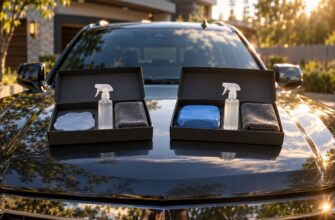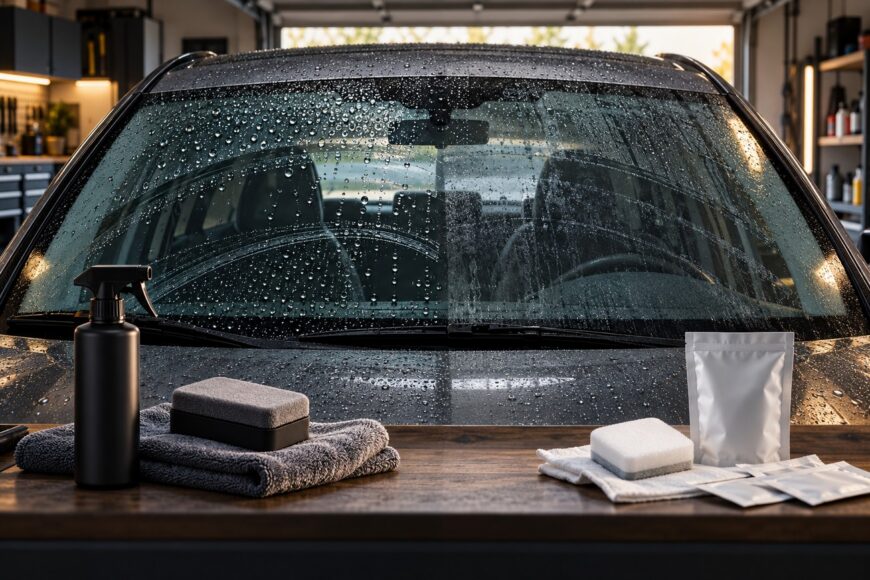
Rain-X is easier and cheaper to reapply, while Aquapel is positioned as a more durable treatment with a higher cost per windshield. The practical choice is between lower-commitment maintenance with a multi-application bottle and a single-use treatment intended to remain effective longer.
The product itself is only part of the result. Glass preparation, wiper condition, mileage, climate, washing chemicals, and the condition of the windshield can matter just as much as the formula. Neither Rain-X nor Aquapel is a universal winner for every driving pattern.
- What Actually Determines Rain Repellent Performance?
- Rain-X vs. Aquapel: Cost, Application, and Durability Trade-offs
- Which Treatment Fits Your Driving Pattern?
- Why Rain Repellents Fail—and Why Wipers Start Chattering
- How to Apply Either Treatment Without Creating New Visibility Problems
- The Hidden Trade-offs: Old Glass, Fine Mist, Sensors, and Night Driving
- The Practical Verdict: Choose by Maintenance Tolerance, Not Marketing
- Frequently asked questions
- What is the best rain repellent treatment for windshields?
- How can I tell whether an old rain-repellent layer is still on the glass?
- What should I do if haze remains after applying Aquapel or Rain-X?
What Actually Determines Rain Repellent Performance?
Both treatments need a clean, fully prepared surface. Wax, silicone, road film, grease, mineral deposits, and an old rain-repellent layer can prevent proper adhesion. Washing removes loose dirt, but it may leave behind polymers and oily contamination that interfere with the new film.
Rain-X is a consumer solvent- and silage-based hydrophobic treatment for exterior glass. Aquapel is commonly positioned as a professional or auto-glass fluoridated treatment. Their chemistry and application formats differ, yet both depend heavily on the glass being dry, residue-free, and free of incompatible products.
Glass condition sets another limit. A hydrophobic layer changes how water wets the surface; it does not repair worn wipers, scratches, pitting, or etched mineral damage. On a windshield with poor optical quality, stronger beading can make glare and surface defects more noticeable at night.
Preparation also affects how long the result appears to last. A coating applied over an uneven old layer may bead impressively in one area and smear in another, giving the impression that the product failed quickly. Removing the previous film and checking the glass under angled light usually provides more benefit than simply choosing a stronger-sounding formula.
Rain-X vs. Aquapel: Cost, Application, and Durability Trade-offs
The comparison below separates advertised durability from variable real-world experience. Neither duration should be treated as a fixed service interval.
| Factor | Rain-X | Aquapel |
|---|---|---|
| Product format | Consumer solvent- and silage-based treatment, usually sold in a multi-application bottle. | Professional or auto-glass fluoridated treatment, commonly sold as a single-use ampule or applicator for one windshield. |
| Application model | Suitable for repeat applications and occasional maintenance across exterior glass. | One application generally covers one windshield, so preparation and timing matter more per use. |
| Preparation demand | Requires removal of wax, silicone, road film, mineral deposits, grease, and old repellent. Washing alone may not be sufficient. | Requires the same surface preparation, with careful attention to the short dwell and polishing window. |
| Advertised durability | Marketing may describe durability lasting weeks or months; this is not a guaranteed service interval. | Often promoted as lasting up to 6 months. |
| Reported real-world durability | Field experience is variable and is often shorter than marketing claims, depending on wipers, climate, mileage, and washing. | Real-world reports range from several weeks to several months, depending on mileage, wipers, climate, and wash chemistry. |
| Chemical resistance | Performance can decline with repeated washing and strong cleaning chemicals. | Some profile discussions and user reports describe it as more resistant to alkaline shampoos and car-care chemicals than typical retail Rain-X; this is not a universal guarantee. |
| Common failure modes | Uneven beading, rapid loss after rain or washing, haze, smearing, and wiper chatter when preparation or removal is poor. | Stubborn haze or streaking if it is left too long, applied unevenly, or layered over contamination. |
| Likely best fit | Drivers who prefer accessible, repeatable, lower-cost maintenance and do not mind refreshing the coating when performance drops. | Drivers willing to pay more per windshield application for a potentially more persistent film and more deliberate application. |
Which Treatment Fits Your Driving Pattern?
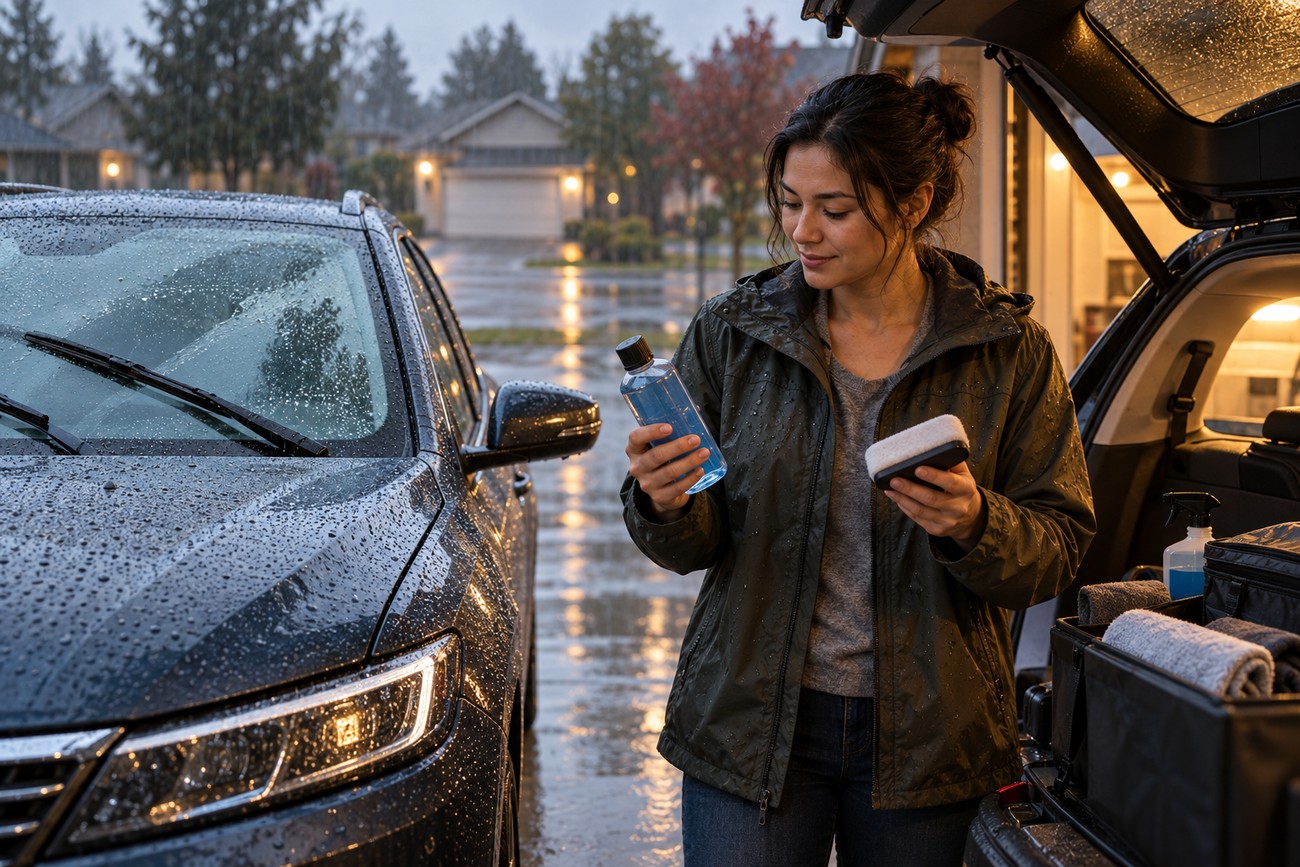
Rain-X suits drivers who want a readily available product that can be reapplied without committing to a single-use applicator. Its multi-application bottle makes experimentation and maintenance less expensive, especially when the windshield sees frequent rain, dirt, or wiper use. The trade-off is that the coating may need attention sooner than marketing suggests.
Aquapel can make more sense for a driver who prefers one carefully prepared application and accepts a higher per-windshield cost. It is often promoted as lasting up to 6 months, while real-world reports range from several weeks to several months. High mileage, frequent wiper use, winter chemicals, abrasive dust, and repeated touchless washes can shorten that range.
Commuters in harsh winter conditions should judge value by the actual maintenance cycle. Salt residue, alkaline cleaning products, scraper use, and dirty wipers place heavy mechanical and chemical stress on the windshield. A product that lasts longer in a sheltered, low-mileage routine may offer little advantage on a car driven through contaminated weather every day.
Side windows and mirrors usually retain treatment longer than the windshield because they face less mechanical load. A useful approach is to treat those surfaces separately and assess the windshield on its own. Price per application, washing routine, climate, and reapplication frequency can easily reverse the apparent value proposition.
Why Rain Repellents Fail—and Why Wipers Start Chattering
The complaint that the effect disappears after the first rain often points to poor bonding rather than an inherently useless product. Wax, silicone, old repellent, mineral deposits, or road film can leave the coating uneven from the start. A surface can look clean after washing while still carrying enough residue to cause rapid, patchy failure.
Smearing and nighttime haze usually come from an excessive or uneven film, incomplete polishing, or contamination trapped beneath the treatment. More product increases the amount that must be leveled and removed. It does not create a proportionally stronger or clearer coating.
Wipers may chatter, squeak, or jump when their blades drag unevenly across the treated surface. Applying a repellent within the active swept area can change the friction pattern, especially if the layer is patchy or the blades are already worn. The result may be worse visibility even though water beads more dramatically.
Winter chemicals, abrasive debris, repeated washing, and constant blade movement can reduce the remaining layer quickly. Fine drizzle can also expose a limitation of strong hydrophobicity: small droplets may break apart and scatter across the glass instead of forming larger streams that clear smoothly. Beading alone is therefore a poor measure of driving visibility.
How to Apply Either Treatment Without Creating New Visibility Problems
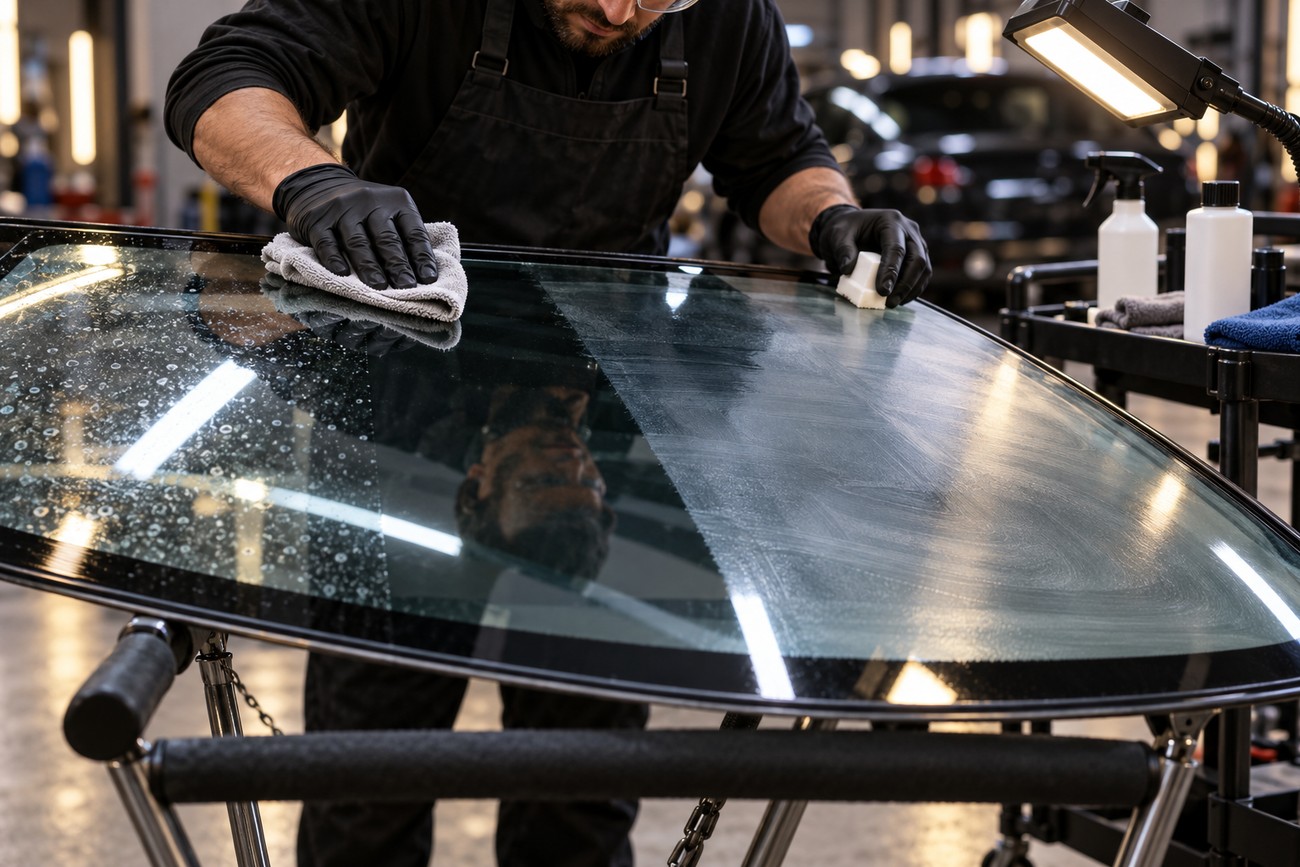
Start by washing the glass, then remove mineral deposits, old polymers, grease, and any previous repellent. Use the preparation method recommended for the product and inspect the surface under angled light. The glass must be fully dry before application because water or solvent residue can create uneven coverage.
Apply a thin, even film rather than a heavy layer. Aquapel and similar products generally require a short dwell or polishing period until a haze develops. Follow the product’s working window closely: premature removal can leave an incomplete film, while leaving it too long can create stubborn haze and streaks.
Testing a small area first can reveal leftover coating, poor compatibility, or abnormal wiper drag before the entire swept zone is treated.
After removing the residue, check the glass for optical clarity from inside and outside the vehicle at several angles. If haze remains, correct it before applying more product. A second layer over an unclear surface usually makes diagnosis and removal harder.
Test the wipers at low speed with washer fluid, then observe them in light rain if possible. Check for chatter, squeaking, jumping, or a smear that appears only on the return stroke. This cautious check is especially useful when an old coating may still be present or when the treatment has been applied near sensors or heated wiper areas.
The Hidden Trade-offs: Old Glass, Fine Mist, Sensors, and Night Driving
Hydrophobic treatments can emphasize scratches, pitting, chips, and etched deposits because water breaks into more distinct droplets across an already imperfect surface. Headlights then create additional glare and scattered reflections. Drivers with aging glass should assess optical clarity before expecting a coating to improve nighttime visibility.
Fine drizzle, mist, and fog can produce a different result from heavy rain. Small droplets may fragment and scatter rather than gather into large streams. The windshield can feel more active and visually noisy even while water is technically shedding faster.
Application around rain sensors and heated wiper zones may require careful selection of the treatment area or dosage. Compatibility is not identical across all formulations, and an overly broad application can change how water reaches a sensor or how the wiper clears its operating area. Product instructions should take priority over a generic application routine.
Aquapel and similar products do not fix poor visibility caused by worn wiper blades. Some users also report that Aquapel adheres more strongly, which can make an application mistake harder to correct without deeper cleaning. That potential persistence is useful only when glass preparation and application are accurate.
The Practical Verdict: Choose by Maintenance Tolerance, Not Marketing
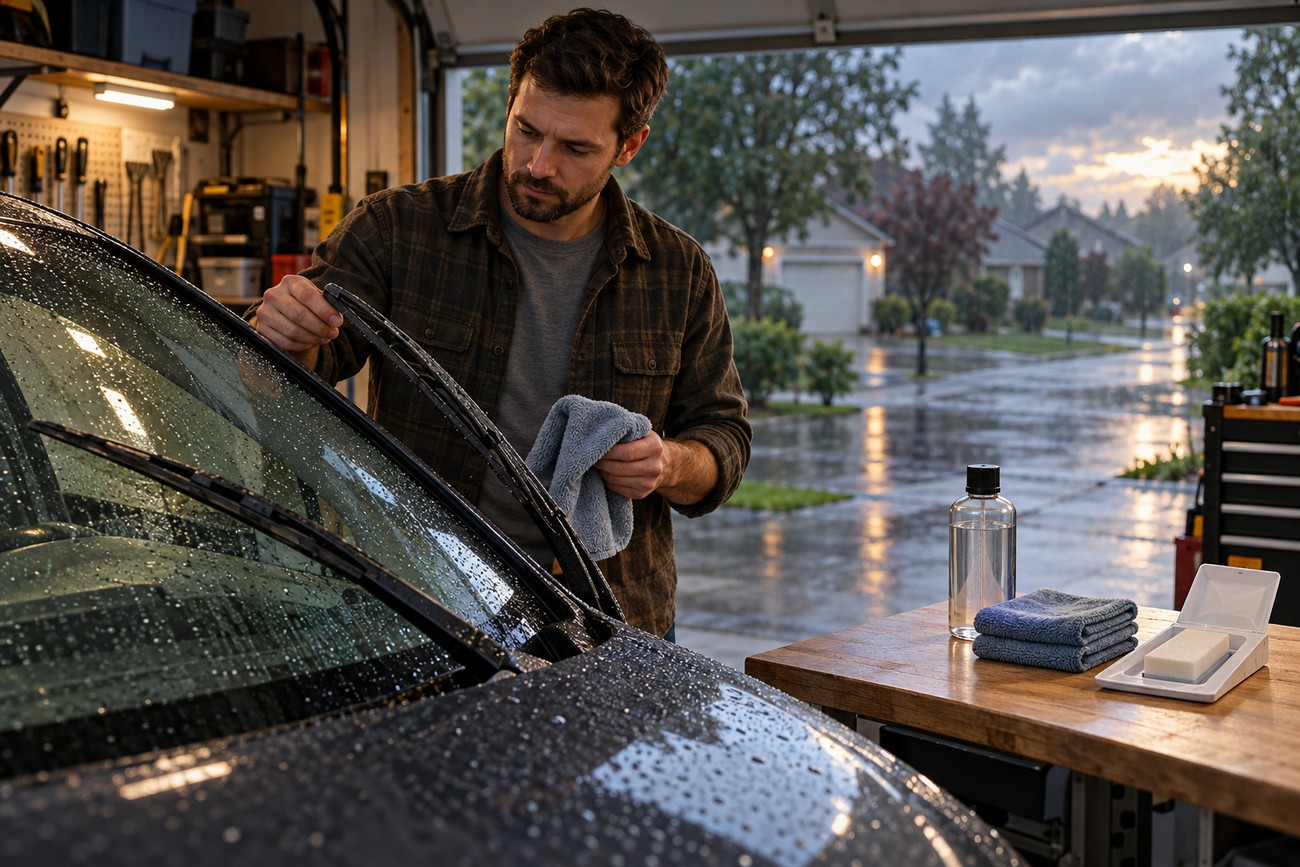
Choose Rain-X when accessible, repeatable, lower-cost maintenance matters most. Its multi-application format makes it easier to refresh the glass as conditions change, although reported durability can be shorter than marketing claims. This is often the sensible choice for drivers who regularly inspect and maintain their windshield.
Choose Aquapel when you are willing to pay more per windshield application for a potentially more persistent film and can devote time to careful preparation. It is often promoted as lasting up to 6 months, while reported durability varies from several weeks to several months. That range is wide enough to make a universal promise unreliable.
The claim that Aquapel always lasts several times longer than Rain-X does not hold across real-world conditions. Frequent wiper use, abrasive contamination, winter chemicals, mileage, and washing practices can narrow the difference. A well-prepared Rain-X application may outperform a poorly prepared Aquapel application in a demanding routine.
Reapply according to water behavior and visibility rather than a fixed calendar. If water still clears evenly and the wipers remain quiet, another layer may add residue without adding useful performance. The best practical result usually comes from correct preparation, sound wipers, and condition-based maintenance rather than the most expensive product.
Frequently asked questions
What is the best rain repellent treatment for windshields?
Rain-X is usually the better fit for lower-cost repeatability, while Aquapel is the better fit for a higher-cost application that may remain effective longer. Neither is the best choice for every windshield because preparation, wiper condition, climate, mileage, and washing chemicals can change the result substantially.
Choose based on maintenance tolerance. Rain-X allows easier refreshing from a multi-application bottle; Aquapel suits drivers who prefer a single-use windshield treatment and accept more careful application. Neither product compensates for damaged glass or worn blades.
How can I tell whether an old rain-repellent layer is still on the glass?
Spray clean water across different parts of the glass and watch how it behaves. Persistent beading in one area, broad sheeting in another, or sharp changes along the wiper path suggest that an uneven old layer may remain. Patchy water movement combined with smearing is a reason to clean and strip the surface rather than apply another coat.
Inspect the glass under angled light after it dries. Haze, streaks, and differing wipe behavior across adjacent sections can indicate residue or contamination. If the pattern is unclear, treat a small test area, restore it to optical clarity, and compare its water behavior with the untreated section.
What should I do if haze remains after applying Aquapel or Rain-X?
Do not add another coating. First, lightly re-wet or polish the affected area according to the product directions, using the stated removal method and working window. Remove the residue gradually, then inspect the glass from inside the vehicle under angled light.
If haze remains, check for grease, mineral deposits, an old coating, or an application layer that was left too long. Continue with appropriate glass correction only after confirming that the surface is optically clear, and test the wipers before returning to normal driving.