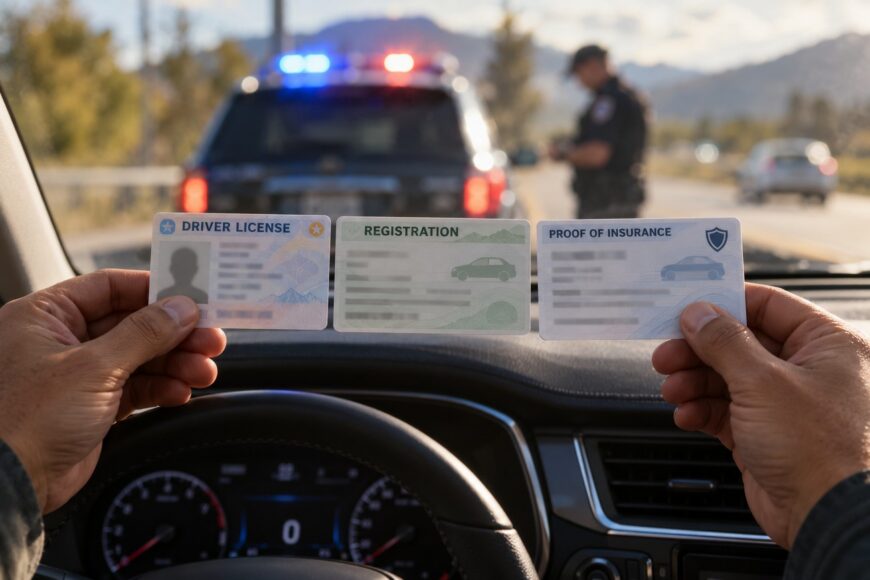
Forgetting a driver’s license, registration certificate, or insurance can turn an ordinary trip into a roadside delay, a fine, or a difficult conversation after a crash. The practical solution is not to fill the glove compartment with every paper connected with the vehicle. Carry the documents required for your particular trip and keep sensible backups for situations involving poor connectivity, damage, or loss.
The right set depends on whether you are driving privately, working, transporting cargo, crossing a border, or using a special parking entitlement. The basic domestic kit is small, while commercial and international journeys require a separate document routine.
- The Three Documents for an Ordinary Private Driver in Russia
- What Changes for Work, Health, and Special-Use Vehicles
- Required Paperwork by Driving Situation
- Mistakes That Turn Simple Checks into Delays
- Frequently asked questions
- What should I do if my vehicle documents are stolen from the car?
- What can I do if my electronic OSAGO policy does not appear in the database during a roadside check?
- What should a driver put in a small accident checklist?
The Three Documents for an Ordinary Private Driver in Russia
An ordinary private driver in Russia normally carries a driver’s license of the appropriate category, the original vehicle registration certificate (STS), and a valid compulsory motor third-party liability insurance policy, known as OSAGO. These documents cover the driver’s authority, the vehicle’s registration, and the required liability insurance.
An inspector may check the original driver’s license and STS. A valid electronic OSAGO policy is legally usable and can be verified through the official database. A printed policy is not generally required, although keeping one available can reduce delays if mobile service or database access is unreliable.
A Russian passport is not normally mandatory for an ordinary driver while driving on public roads. It becomes relevant in specific situations, such as identity procedures, border travel, employment, or some professional transport work. A medical certificate is also not routinely carried by a private driver unless a relevant health restriction is recorded in the driver’s license.
A phone photo, scan, or ordinary photocopy is useful as a backup reference, but it may be treated as the absence of the required original during an inspection. Check the validity of OSAGO before a long trip, and make sure the license category matches the vehicle you are driving.
What Changes for Work, Health, and Special-Use Vehicles
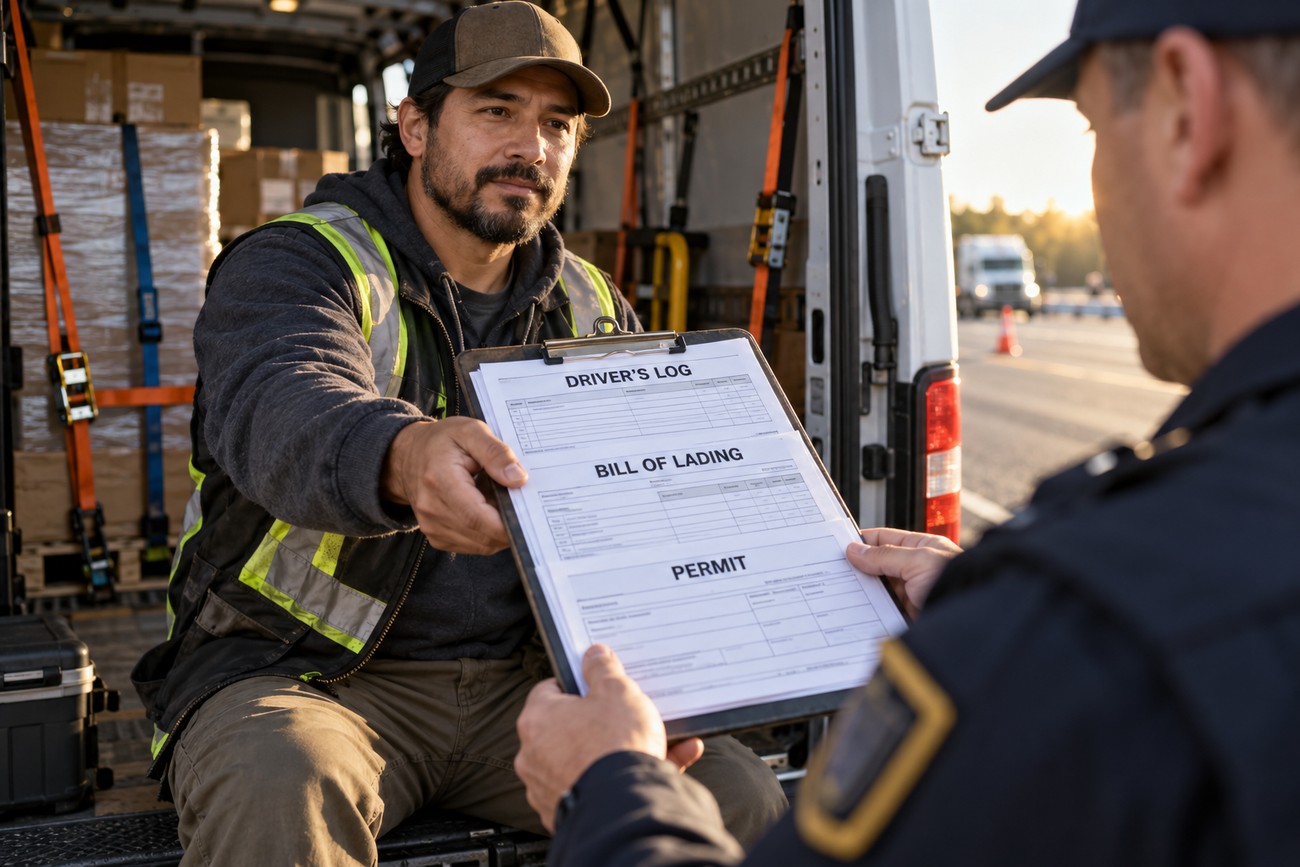
Work-related trips require more preparation because the documents describe the operation as well as the vehicle. Commercial or service transportation may require a waybill, cargo documents, and an applicable license or permit. The exact additions depend on what is being carried, who is being transported, and how the vehicle is used.
A waybill is a transport document for relevant commercial and service operations. Small-business status does not automatically remove that requirement. Passenger transportation, taxi work, oversize cargo, and dangerous-goods transportation can also require specific licenses, permits, or supporting documents.
A separate vehicle-and-cargo folder prevents a common handover failure: the driver receives the keys, but nobody confirms that the waybill, insurance, cargo papers, and technical-inspection records are current. Assigning one person to check the folder before each handover makes responsibility clear.
Taxi and other commercial vehicles may need a diagnostic card or other proof of technical inspection. For private passenger cars, technical-inspection duties depend on use and other conditions; an older car is not automatically subject to the same rule as a taxi or commercial vehicle.
A passport can be required in specific professional situations, including foreign professional drivers working under a contract or carrying out transport operations. A driver using a “Disabled” sign should also have a document confirming disability available, particularly if parking rights are challenged.
Required Paperwork by Driving Situation
Use the table as a planning checklist. It separates documents that are normally carried from records that may be electronic or needed only for a particular operation.
| Driving situation | Core documents | Conditional additions and format |
|---|---|---|
| Ordinary private trip | Driver’s license, original STS, valid OSAGO | OSAGO may be electronic; a printout is a useful backup. |
| Commercial or service trip | Driver’s license, STS, OSAGO | Waybill and cargo documents; carry applicable originals or approved electronic records. |
| Taxi or passenger work | Core vehicle documents | Passenger-transport license or permit, waybill, and possible diagnostic card or other inspection proof. |
| Oversized or dangerous cargo | Core vehicle documents | Applicable permit, cargo papers, waybill, and documents required for the specific load. |
| Disability parking | Vehicle documents as usual | “Disabled” sign and a document confirming disability if the entitlement is questioned. |
| International journey | Domestic documents where applicable | Border documents, permits, declarations, and transport or cargo papers required by the countries and route. |
Mistakes That Turn Simple Checks into Delays
Keeping every original in the vehicle seems convenient until the car is stolen or broken into. The loss can expose the owner to document misuse, fraudulent vehicle transactions, and identity-related problems. Carry the originals needed for the journey, store the rest securely at home or with the responsible transport manager, and keep protected scans for reference.
A screenshot of electronic OSAGO is not the policy itself. The policy’s legal status is confirmed through the insurer’s or official information system, while the screenshot or printout only helps locate the details. Poor phone service, a database error, or a dead battery can still make verification slower, so a printed policy with a QR code is a sensible practical backup.
Commercial operators face a different failure point: documents may exist, but no one knows who checked them. Shared vehicles need a clear person responsible for current insurance, technical-inspection records, waybills, and cargo paperwork before the vehicle is handed over. This is especially important where several drivers use the same car or van.
Keep a compact accident checklist with the insurer’s contact details, policy information, the main evidence and reporting steps, and the location of the electronic report or euro-protocol form. It should be accessible without searching through old messages. A short checklist cannot replace the formal procedure, but it helps prevent omissions when stress makes simple details easy to miss.
Frequently asked questions
What should I do if my vehicle documents are stolen from the car?
First, separate the vehicle risk from the document risk. Record the theft, preserve any evidence such as photographs or security-camera information, and report the loss through the appropriate police and vehicle-registration channels. Then begin replacing the STS and other affected documents rather than relying on old scans.
Notify the insurer and monitor for suspicious attempts to use the stolen details. A replacement document solves the immediate paperwork problem, but reporting the theft and keeping the evidence helps address possible fraudulent transactions later.
What can I do if my electronic OSAGO policy does not appear in the database during a roadside check?
Show the printed policy or QR code and check that the policy number, vehicle details, and dates match the car. Ask the insurer to confirm the policy status and correct any data error; save the insurer’s response and record the time and circumstances of the failed lookup.
Do not edit a screenshot or rely on a verbal assurance. The insurer and the official information system must clarify the discrepancy, while the printed document gives the inspector and the driver a concrete record to compare.
What should a driver put in a small accident checklist?
Include the insurer’s emergency contact, policy number, vehicle details, and a short sequence covering safety, evidence, the other driver’s details, photographs, and notification of the insurer. Add where the electronic report or euro-protocol form is stored and which information must be entered before submission.
Keep the checklist separately from the main documents so it remains usable if the glove compartment is damaged or the phone battery is low. Review it after an insurer or traffic-rule update, since an outdated sequence can create additional delays.