A dent with intact-looking paint presents an appealing choice: paintless dent repair (PDR) may restore the panel without repainting it. Yet a small mark is not necessarily an easy repair. A sharp crease can stretch metal, and a shallow dent can sit where a technician cannot position a tool behind it.
The promise of an invisible fix also depends on details you may not see at first: earlier paintwork, filler beneath the coating, or reinforcement behind the panel. A careful assessment establishes what can be moved, whether the paint can tolerate the work, and what finish is realistic. Those limits make more sense once you understand how the technician reshapes the metal.
- How paintless dent repair reshapes the panel
- Pushing from behind versus glue pulling
- Can your dent be repaired without paint?
- What happens during a professional PDR appointment
- The risks behind a promise of “no trace”
- What to confirm before authorizing the repair
- Frequently asked questions
- How much does paintless dent repair usually cost?
- How long does a PDR repair usually take?
- Can you explain how paintless dent repair works?
- What are the downsides of paintless dent repair?
How paintless dent repair reshapes the panel
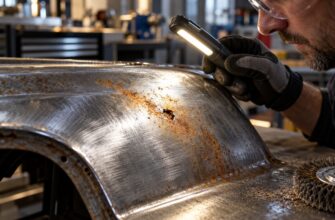
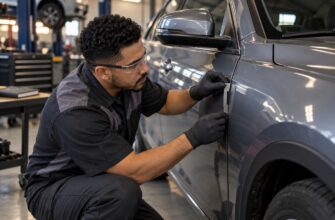
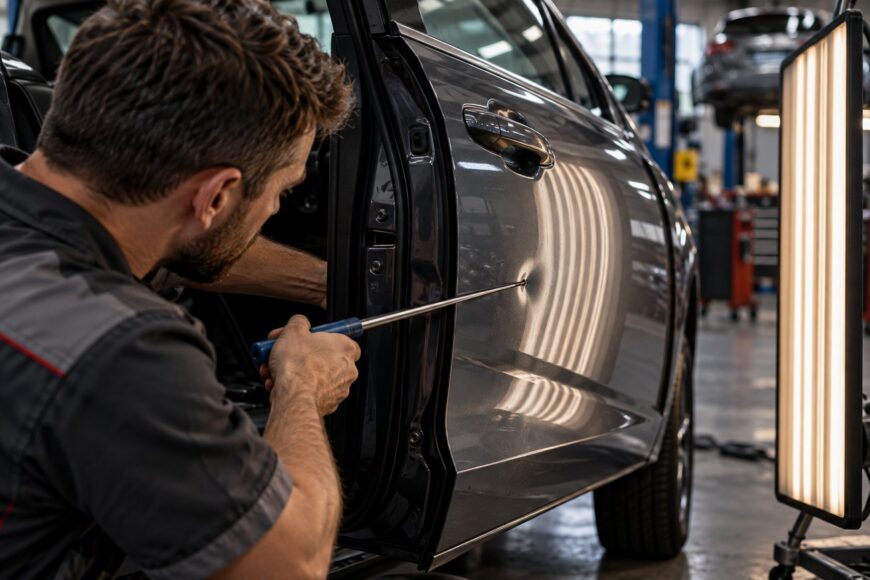
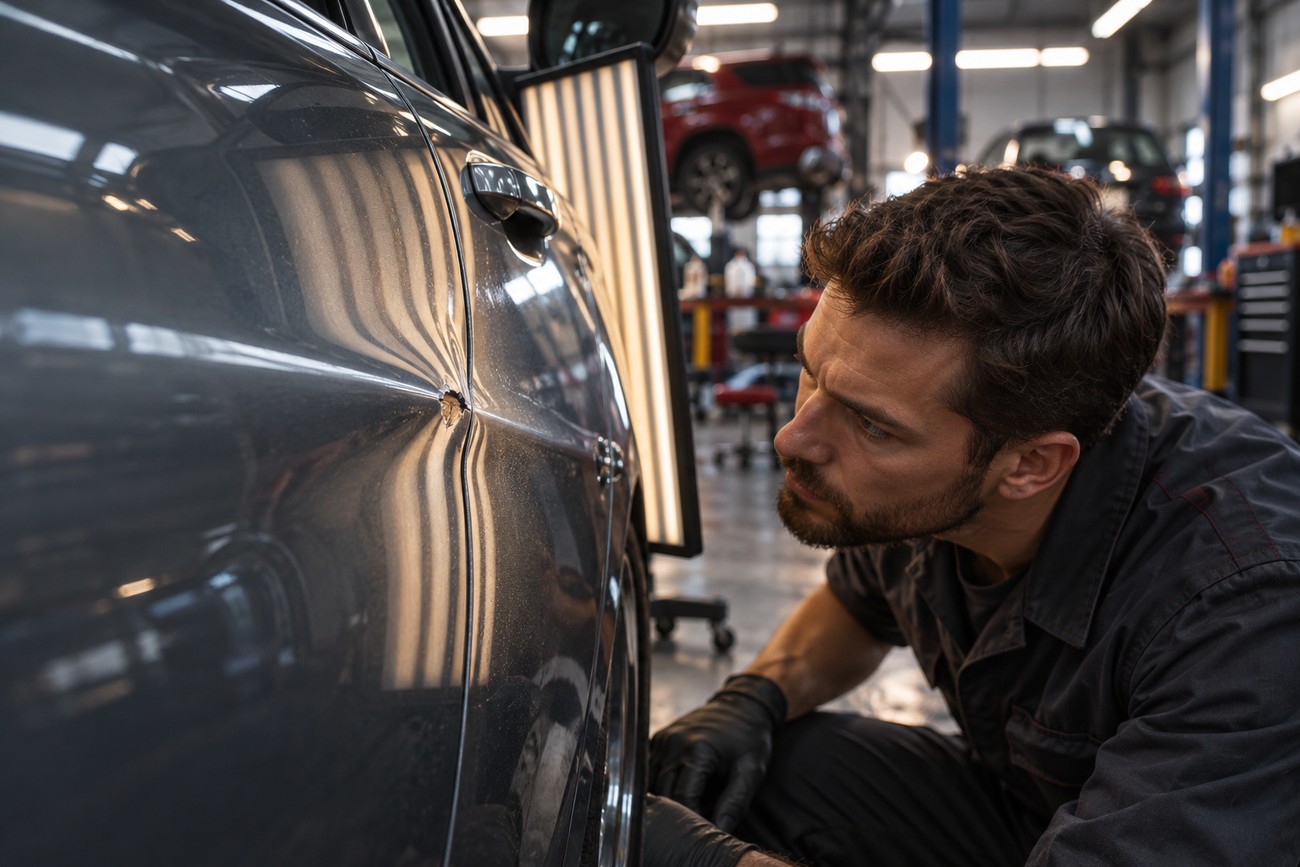
Paintless dent repair reshapes a panel without filler or repainting when the existing coating remains suitable. The technician first studies the dent under a reflection lamp or board. Lines reflected across the surface reveal low areas, raised edges, and small distortions that ordinary overhead light can hide.
With suitable access, the technician places a tool behind the panel and applies controlled pressure in small increments. The aim is to work the metal back toward its original shape while repeatedly checking the reflected lines. A dent rarely returns evenly from one push, especially if its edges have tightened around the low point.
As the low area rises, the technician may gently tap down localized high spots from the painted side. This knockdown work helps keep the surface level rather than trading a dent for a bump. Pressing too hard or too quickly can create new high spots or raised “crowns” around the repair, adding work and sometimes limiting the final finish.
The process changes the panel’s shape; it does not mend its coating. If the paint is chipped, cracked, or peeling, that damage needs separate attention even if the dent can be reduced.
Pushing from behind versus glue pulling
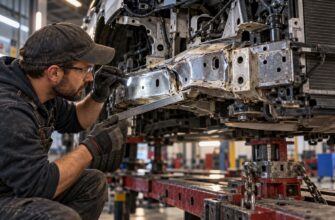
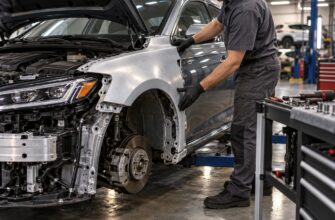
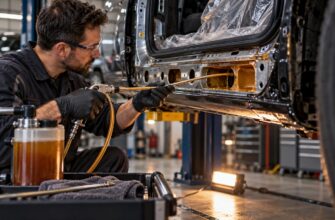
Rear access gives the technician direct control over where pressure is applied. Reaching the dent may require removing trim, a lamp, a wheel-arch liner, or another component. A reinforcement, window mechanism, or panel edge can still prevent a tool from reaching the right position.
When pushing from behind is impractical, a technician may attach an adhesive tab to the painted surface and pull the low area outward. Glue pulling can be considered for a light dent with intact paint if the repair can be completed without repainting. It is an alternative way to gain leverage, not an inherently gentler method for the coating.
A minor-looking dent can become a poor candidate for glue pulling once inspection reveals repainting or filler. The risk is that the adhesive tab will lift a weak coating layer before the metal reaches the desired shape.
After a pull, the technician may need to tap down high areas and repeat the process in smaller adjustments. Factory paint generally tolerates moderate movement better than a previously repaired coating, but even factory paint has limits. Existing chips, cracks, or weak adhesion make pulling riskier.
Access should be planned without drilling holes solely to reach the back of a panel for PDR. If removing existing components does not provide suitable access and glue pulling is unsuitable, the technician should reassess the repair method.
Can your dent be repaired without paint?
Start with the coating. A dent beneath intact-looking paint may be a candidate for PDR, while a chip, crack, peeling clear coat, or exposed primer needs a separate paint-repair plan. Moving the metal can also worsen a coating that is already fractured.
Next, consider the dent’s shape rather than its diameter alone. A broad, shallow low spot may offer more room for gradual reshaping than a small, deep impact with a sharp crease. Stretched metal, a hard fold, or a raised ridge around the dent can leave texture or a slight wave after repair.
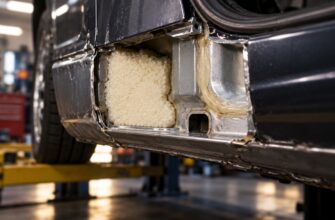
Location matters just as much. Panel edges and reinforced areas can restrict tool movement, even when the metal itself can be worked. A reinforcement may block the tool from approaching at a useful angle; removing nearby trim does not always solve that problem.
Earlier repairs change the assessment. A thickness gauge and close inspection can suggest repainting or filler that a photograph will not reveal. A panel may look sound while the adhesion between repair layers is weak, so a technician may revise the proposed method or decline glue pulling after inspecting it.
High-strength steel does not, by itself, settle whether PDR is appropriate. Material-related restrictions, including any limits on heating, depend on the vehicle’s specific repair documentation. A shop should check that guidance rather than apply a general rule to every steel panel.
What happens during a professional PDR appointment
The appointment begins with a close look at the dent, its edges, and the paint. The technician checks for signs of prior repair and works out whether tools can reach the back of the panel. This inspection is the point at which a promising photograph may turn into a more cautious assessment.
Before work starts, the shop should explain whether it intends to push from behind or use glue pulling, and what must be removed for access. Trim removal, a concealed reinforcement, or evidence of repainting can change the scope. For that reason, a photo-based estimate is provisional until the panel and access have been checked.
During the repair, the technician moves the metal gradually and reads its progress in reflected light. Low spots are raised in controlled steps, while any high spots are carefully reduced. The same lighting helps the technician review the result and show you distortion that might disappear in flat or dim light.
If inspection reveals unstable paint, substantial stretch, or no suitable way to reach the dent, the technician may recommend conventional body repair instead. That decision is preferable to continuing a PDR attempt that is likely to damage the coating or leave an unacceptable shape.
The risks behind a promise of “no trace”
Glue pulling can lift weak paint or a previously repaired coating, sometimes before the dent has been fully raised. Paint over old filler can also crack as the panel moves. An intact-looking surface offers some reassurance, but it cannot prove what lies beneath earlier bodywork.
A successful PDR repair may still show residual texture or a slight wave under inspection lighting, particularly where the metal was stretched. The improvement can be substantial without being invisible from every angle. Ask to see the panel in clear, reflected light if the expected finish matters to you.
Technique introduces another risk. Excessive pressure can leave small high spots or crowns that require careful correction; aggressive pulling can similarly move one area too far while a sharp crease remains. DIY attempts make those errors harder to control because the surface must be read and adjusted throughout the repair.
Restoring the dent’s shape does not restore paint protection. A chip, crack, or peeling area needs separate attention even if the panel looks straighter afterward. Leaving exposed or failing coating untreated can turn a cosmetic dent repair into an unfinished repair.
What to confirm before authorizing the repair
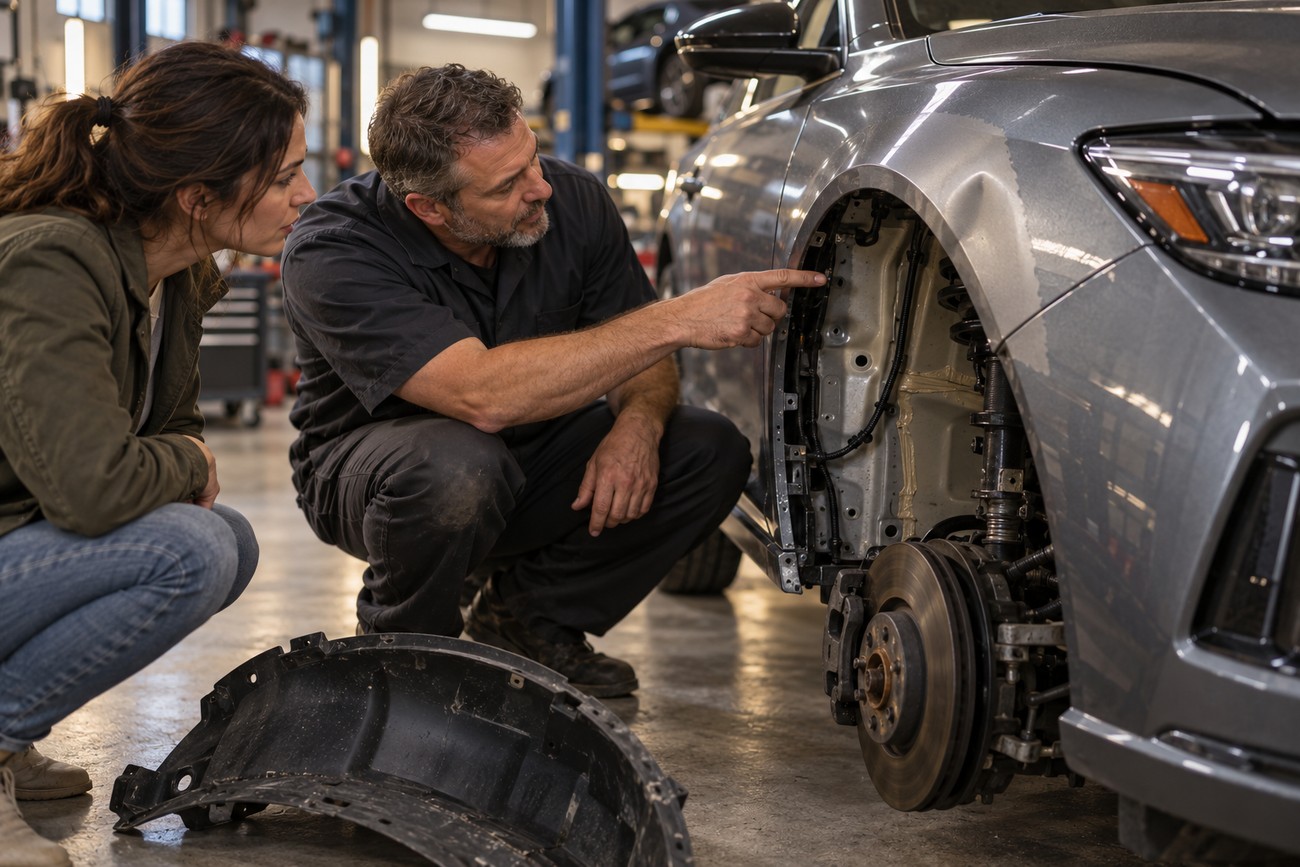
Ask how the technician plans to reach the dent and whether any trim, lamps, or liners must come off. Have the written scope identify that removal and reassembly, rather than assuming they are included. If someone proposes drilling a hole solely for PDR access, ask for another assessment.
Discuss the paint before approving a glue pull. Ask whether the panel shows signs of repainting or filler, how that affects coating risk, and whether a different method would be safer. A claim that every small dent is repairable overlooks depth, stretch, paint condition, and access.
Agree on the expected finish as well as the method. A shop should be able to explain whether a slight wave or texture may remain and when it would stop PDR in favor of conventional body repair. This is especially useful for a crease or a dent near a reinforced edge.
Finally, check whether any needed paint repair is included or excluded. PDR can preserve suitable existing paint, but it cannot fix a chip or crack. A clear written scope makes it easier to compare the proposed work with the result you are expecting.
Frequently asked questions
Cost and timing depend on what inspection reveals, while the basic repair method has clear limits. These answers can help you interpret an estimate and decide what to ask at an in-person assessment.
How much does paintless dent repair usually cost?
There is no reliable standard price based on dent size alone. Shape, panel construction, prior paintwork, and access can change the work required, so a photo quote should be treated as provisional. Request a written, itemized estimate that separates dent work from any trim removal and reassembly, and states whether paint repair is excluded.
How long does a PDR repair usually take?
Turnaround includes more than hands-on dent work. Inspection, access checks, component removal, reassembly, and shop scheduling can all affect when you get the car back. Ask for a timeframe after the technician has seen the vehicle, particularly if the dent is close to trim or a reinforcement.
Can you explain how paintless dent repair works?
A technician reads the dent using reflected light, then moves the metal in small steps, usually by applying pressure from behind the panel. Where rear access is limited and the coating is suitable, an adhesive tab may be used to pull the dent. High spots are then carefully tapped down, and the finish is checked again under the light; damaged paint requires separate repair.
What are the downsides of paintless dent repair?
PDR may be unsuitable when paint is damaged, access is blocked, or metal is sharply creased or stretched. Glue pulling can lift weak coatings, and an otherwise successful repair can leave a slight wave visible under inspection lighting. An in-person assessment is the best way to establish which of those risks applies to your panel.