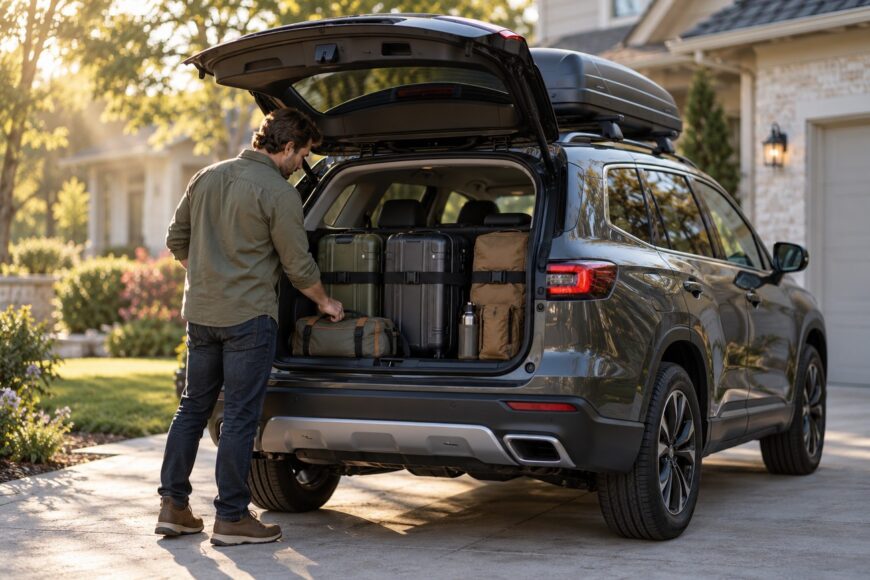
The car seems to fit every bag, yet a loose bottle rolls under a seat, the emergency kit disappears beneath the luggage, and the roof rack feels strained. A closed hatch tells you little about how the load will behave on the road.
Good packing balances weight, restraint, and access. Start with the car’s limits, then build a load that stays put during braking and leaves the things you may need at a stop within reach.
- Check your car’s load limits before filling it
- Build a stable load from the floor up
- Secure luggage for braking, corners, and bumps
- Keep roadside essentials within reach
- Use a roof box without treating it as extra capacity
- Make one final check, then check again on the road
- Frequently asked questions
- What should I do to my car before a long road trip?
- How should I pack when a pet is riding in the car?
- Where should I put medication and temperature-sensitive supplies?
- What changes if I fold down the rear seats for extra cargo space?
Check your car’s load limits before filling it
Find the Tire and Loading Information label, usually on the driver’s door pillar or door edge, and read its combined occupants-and-cargo limit. Subtract the weight of everyone riding in the car. What remains is the allowance for luggage, added accessories, and other cargo, including items carried on the roof.
Estimate the full load before you start packing. A roof box, rack components, and other additions have weight even when empty, and an extra passenger reduces the allowance for bags. If you cannot establish an item’s weight, weigh it rather than assuming it is negligible.
Also check the vehicle’s gross vehicle weight rating, or GVWR, in its documentation or on its certification label. GVWR is the maximum permitted loaded vehicle weight, including the vehicle, passengers, options, and cargo; it must not be exceeded. It is a separate limit, not another amount you can add to the allowance on the Tire and Loading Information label.
Available space is a poor measure of carrying capacity. A hatch may close easily while the car is overloaded, so reduce the load if your totals exceed the vehicle’s limits. Follow any additional instructions in the manual for your particular car.
Build a stable load from the floor up
Start with the heaviest bags on the cargo floor, low and toward the vehicle’s center. Spread them across the usable space instead of building a tall stack on one side or concentrating everything at the rear. Check the vehicle manual for any loading guidance specific to its cargo area.
Put lighter bags on top only where they will remain contained. Clothing and other soft items can fill gaps between secured pieces, reducing the space available for them to shift. Leave enough room to close the hatch without forcing it against the load.
Heavy items stacked high raise the load’s center of gravity; weight placed far back can change how the car responds. Either arrangement may affect stability and handling even when the total weight is within the permitted limit. A low, balanced layout gives you a better starting point for securing everything.
Before adding the last small bags, look at the load from the side as well as from behind. A soft bag wedged into a gap may stop a rattle, but it cannot restrain a heavy case during a sudden stop. Secure the case itself.
Secure luggage for braking, corners, and bumps
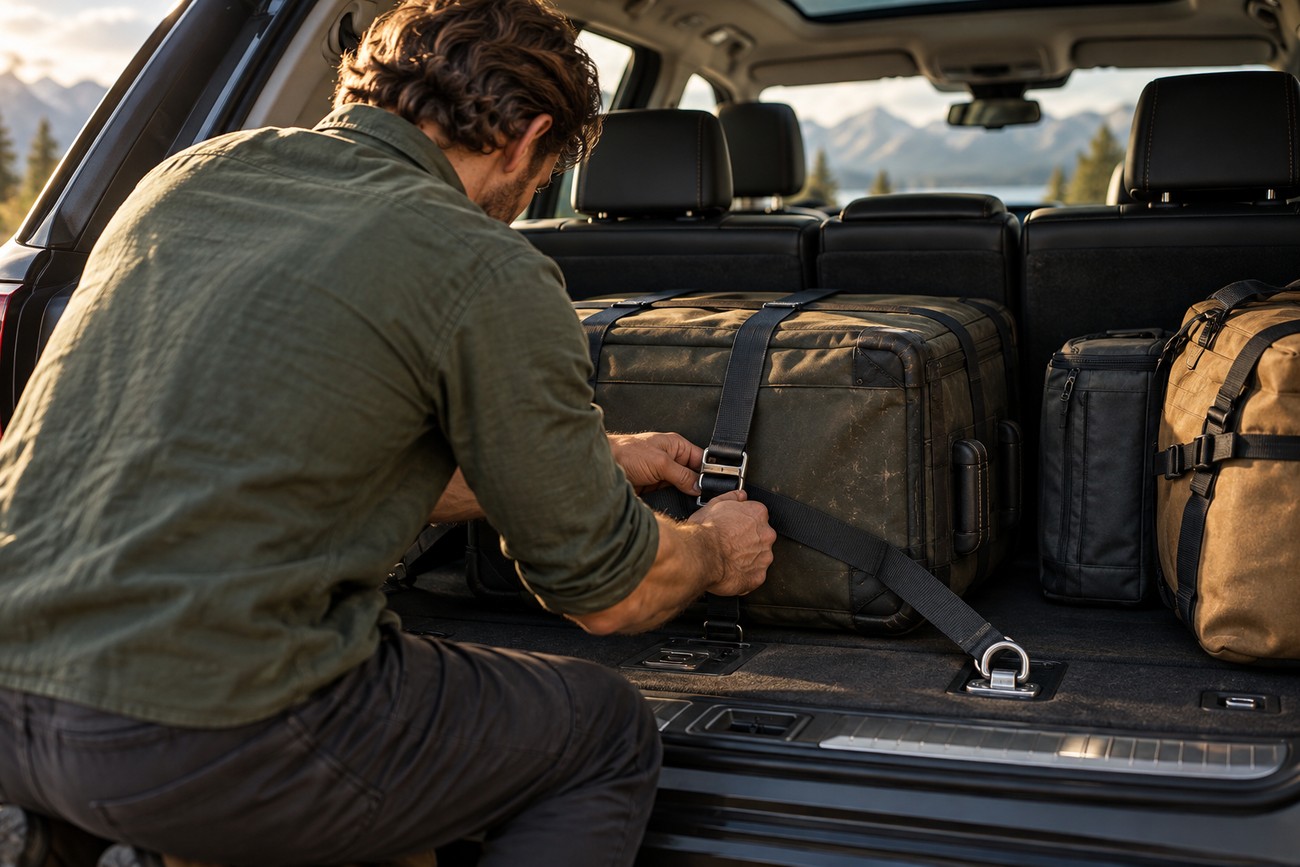
Test the packed load against a sudden stop, a turn, and a bump. It should not slide forward into the seatbacks, push backward against the hatch, move sideways, or lift upward. Cargo also needs to be contained so it cannot fall, leak, blow away, or shift in a way that affects stability or handling.
Fasten large or heavy items to the vehicle’s designated anchor points, following its instructions. Check where the restraint holds each item, rather than inspecting only the visible top of the pile. A cargo cover or net can help contain lighter belongings, but it does not automatically secure a heavy object.
A strapped bag can still allow a heavy object inside it to slide toward the hatch or seatbacks. Check the contents as well as the bag’s attachment.
Clear loose bottles, tools, and electronics from seats and footwells, and give them a secured place. Make sure luggage is not pressing on the hatch or glass: a door that latches can still have cargo bearing against it. Recheck the load after rearranging anything to reach an item.
Keep roadside essentials within reach
Pack in the reverse order of use. Bags you expect to open only at your destination can go deepest, while items needed during the drive belong in an accessible, secured place. That plan saves you from unloading the cargo area to find one cable or a first-aid kit.
Group bags by purpose—overnight items, food, clothing, and repair supplies—so you know which one to open. Keep water, first-aid supplies, documents, charging cables, and emergency gear where you can retrieve them at a safe stop without dismantling the load. Do not let accessibility turn into loose items in the cabin.
Check access after the car is fully packed. Open the hatch and retrieve the things you might need first; if a heavy case blocks them, revise the order. Keep anything needed from outside the vehicle reachable without reaching beneath a stacked load.
Organizers can make small items easier to find, though their compartments do not restrain contents by themselves. Close or contain anything that could spill, and secure the organizer so it cannot slide. A tidy arrangement is useful only if it stays intact during the drive.
Use a roof box without treating it as extra capacity
A roof box moves luggage out of the cabin, but it does not increase the car’s occupants-and-cargo allowance. For the roof itself, use the lowest applicable moving-load limit for the specific vehicle, rack, and box or other accessory. Count the box, bars, mounts, and cargo together, then include their weight in your overall load calculation.
Roof limits vary by model and equipment. One Honda manual specifies 75 kg including the rack, while a Kia manual specifies 100 kg while driving; neither number is a general allowance for those makes. Check the instructions for your exact vehicle and accessories. A rating for a parked vehicle may also differ from its permitted load while moving.
Distribute roof cargo evenly and keep it as low as the setup allows. Secure items inside the box so they cannot slide when you brake, and confirm that its lid and mounts close and lock as instructed. The box shell alone does not control loose contents.
Expect roof cargo to affect the drive: wind noise and fuel use can rise, and side winds may become more noticeable. If the car feels unsettled, slow down and stop safely to inspect the setup. Moving weight down into the vehicle, within its limits, may give you a more stable load.
Make one final check, then check again on the road
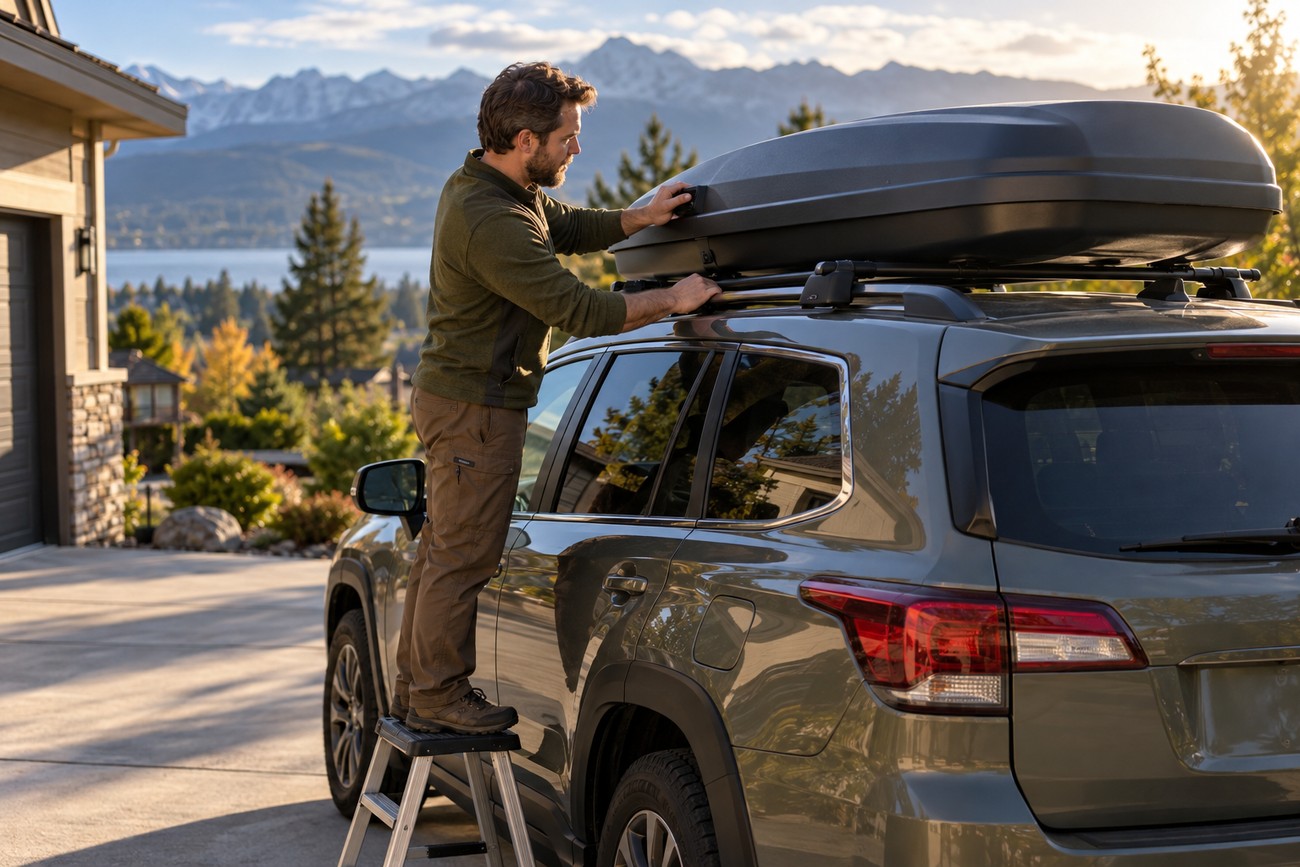
Walk around the packed car before departure. Confirm that the hatch closes without pressure from luggage, nothing blocks your view, and doors open normally. Inside, clear loose items from seats and footwells and check that the things you need at a stop are still reachable.
Inspect each anchor point and restraint, including the sides and rear of the load rather than only straps across its top. Check the roof box closure, mounts, and any exposed straps according to their instructions. Give contained items a careful movement check; they should not be free to shift forward, backward, sideways, or upward.
Repeat the attachment check after the first part of the drive and at stops. Vibration and temperature changes can loosen straps, even when they felt secure at departure. Look for a changed bag position or new pressure against the hatch as well as for visibly slack attachments.
If something has moved, pull over safely and repack it. Tightening the strap you can see may leave a loose item underneath or inside a bag. Restore the load’s balance and restraint before continuing, especially if its movement could affect the car’s handling.
Frequently asked questions
These situations call for checks beyond the luggage layout. Use your vehicle’s guidance and the instructions for anything you carry alongside the packing plan above.
What should I do to my car before a long road trip?
Check tire condition and pressure against the vehicle’s guidance, along with fluid levels, lights, wipers, and any warning indicators. Address a problem before departure rather than relying on a well-packed emergency kit to make up for missed maintenance.
How should I pack when a pet is riding in the car?
Reserve suitable, ventilated space for the pet before filling the car with bags. Use an appropriate vehicle restraint or secured carrier, following its instructions, and keep luggage from crowding or shifting into that space. Account for the pet and its equipment when checking the car’s load allowance.
Where should I put medication and temperature-sensitive supplies?
Follow each product’s storage instructions and protect it from temperature extremes; easy access alone is not enough. Keep supplies in suitable conditions during stops, and take them out of the car when leaving them there could expose them to unsuitable heat or cold.
What changes if I fold down the rear seats for extra cargo space?
Folded seatbacks no longer separate occupied space from the load. Secure long objects using the vehicle’s designated restraints, and check that they cannot slide into passengers during braking. Follow the manual’s instructions for the folded-seat layout and retain clear space around occupants.