Optima RedTop and Odyssey Extreme AGM batteries serve different priorities. RedTop focuses on engine starting and vibration resistance, while Odyssey Extreme AGM more often offers greater reserve capacity and stronger tolerance for repeated cycling. The right choice depends on how the vehicle is used, especially its accessory load and charging routine.
A brand-level comparison can produce a poor fit. Exact CCA, reserve capacity, case dimensions, terminal layout, polarity, temperature, vibration, and charging-system behavior all affect the result. A battery that starts a lightly equipped vehicle well may struggle in a truck running a winch, audio equipment, or auxiliary lights with the engine off.
- What You Are Actually Comparing: SpiralCell vs. TPPL AGM
- Optima RedTop vs. Odyssey Extreme: Model-Level Comparison
- Starting Power, Reserve Capacity, and Deep-Cycle Use
- Fitment and Charging: The Drop-In Replacement Trap
- Why Premium AGM Batteries Still Fail in Real Vehicles
- Which Battery Should You Choose?
- Frequently asked questions
- Which brand is the best AGM battery brand overall?
- Which battery is better, Odyssey or Optima RedTop?
- What is the best brand of AGM batteries?
What You Are Actually Comparing: SpiralCell vs. TPPL AGM
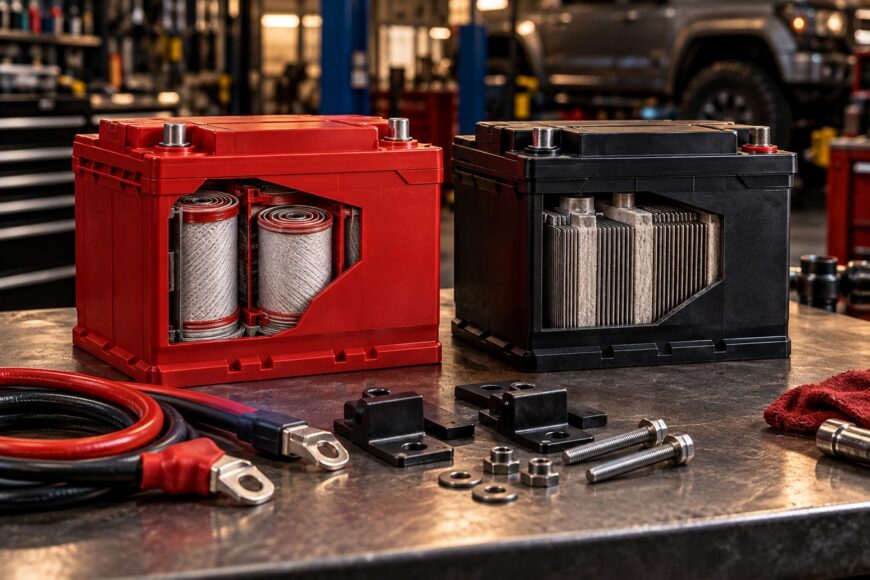
Both Optima RedTop and Odyssey Extreme AGM are sealed lead-acid AGM/VRLA batteries. Their electrolyte is held in an absorbed glass mat, which supports a sealed design and helps resist leakage under normal use. AGM construction alone does not define the battery’s ideal duty cycle or guarantee a longer service life.
Optima RedTop uses SpiralCell construction with wound cylindrical elements. This design emphasizes starting output and vibration resistance, making it relevant to vehicles exposed to rough roads, off-road movement, or demanding mounting conditions. Its strengths are most useful when the primary job is reliable engine starting.
Odyssey Extreme AGM uses thin plate pure lead (TPPL) technology. Thin plates provide a large active surface area, supporting high starting output and useful cycling capability when the battery is correctly charged. Odyssey’s design is often better suited to vehicles that place a sustained electrical demand on the battery.
Neither construction is universally superior. SpiralCell can be a sensible match for a vibration-heavy starting application, while TPPL can be a stronger match for higher reserve requirements and repeated accessory use. The exact battery model remains more important than the construction name alone.
Optima RedTop vs. Odyssey Extreme: Model-Level Comparison
Use the exact battery numbers for a meaningful comparison. CCA, CA, reserve capacity, physical dimensions, and terminal arrangements vary substantially within both product families.
| Factor | Optima RedTop | Odyssey Extreme AGM |
|---|---|---|
| Construction | AGM/VRLA with SpiralCell construction and wound cylindrical elements | AGM/VRLA using thin plate pure lead (TPPL) technology |
| Starting performance | Emphasizes engine starting; exact CCA and CA depend on the model | Often publishes higher CA/CCA than many comparable RedTop models; verify the exact rating |
| Reserve capacity | Varies by model and case size | Often offers higher published reserve capacity in a comparable case size |
| Cycling suitability | Primarily a starting battery; repeated deep discharge accelerates degradation | Generally better suited to heavier cyclic operation, while still requiring proper charging |
| Vibration resistance | A major design strength of the SpiralCell format | Strong AGM construction, with suitability depending on mounting and application |
| Charging requirements | Requires a charging profile appropriate for AGM batteries | Requires a charging profile appropriate for AGM batteries |
| Typical use case | Starting-focused vehicles and demanding vibration environments | Vehicles needing more reserve and heavier accessory cycling when fitment and charging are compatible |
Starting Power, Reserve Capacity, and Deep-Cycle Use
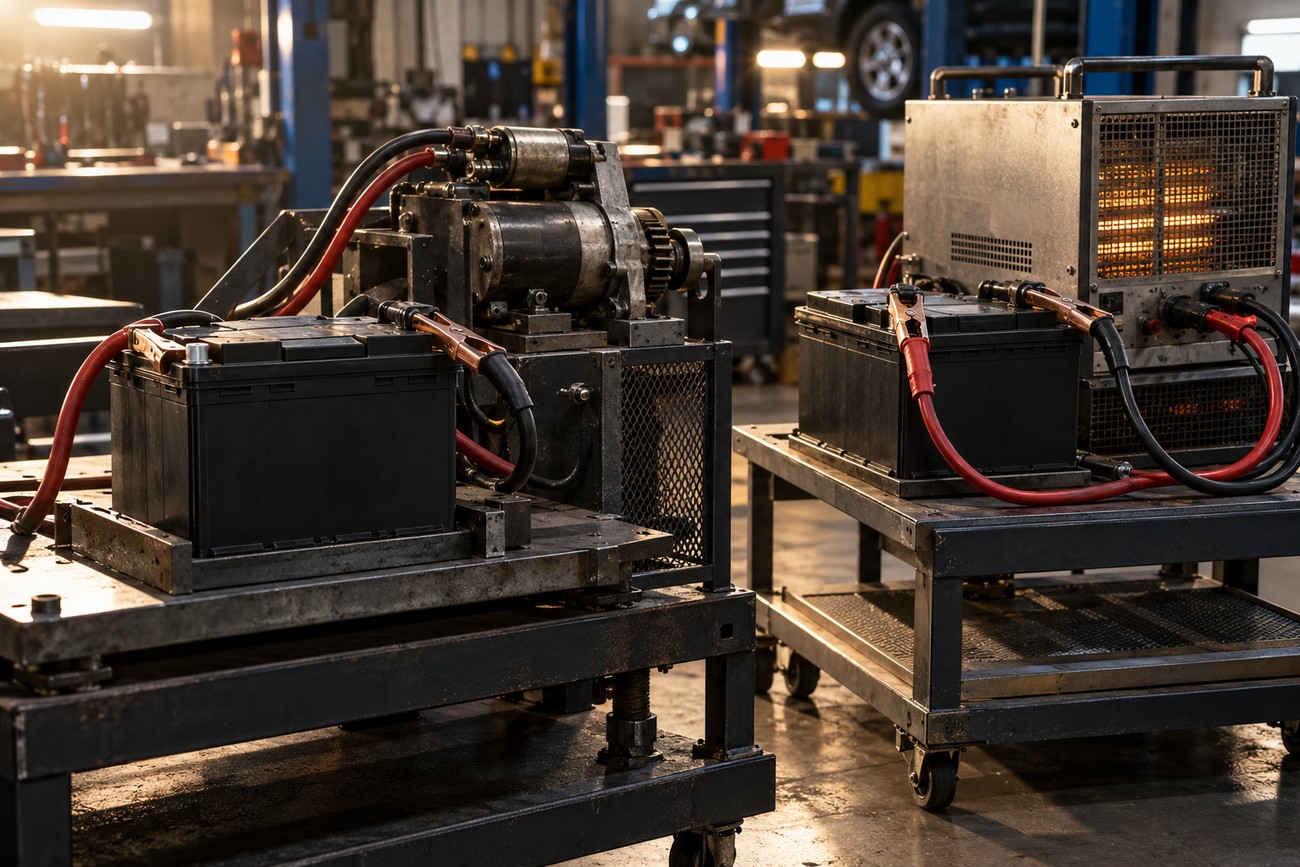
CCA and CA describe starting performance. CCA is associated with cold-starting conditions, while CA reflects starting output under a different test temperature. The values vary by exact battery model, so a RedTop or Odyssey label alone says little about the actual starting margin.
Reserve capacity indicates how long a battery can support a defined electrical load. It matters when accessories operate with the engine off, when a vehicle has parasitic draw during storage, or when the alternator needs time to restore energy after a heavy load. A battery with more reserve can provide more operating margin, provided the vehicle can recharge it.
Ah and starting performance describe different abilities. A higher Ah rating does not replace adequate CCA or low internal resistance for engine starting, especially in cold weather. Cold temperatures reduce available lead-acid capacity, so both starting output and reserve should be considered.
RedTop is primarily a starting battery. Its AGM construction and vibration resistance do not automatically make it suitable for repeated deep discharges. Odyssey Extreme AGM more often supports demanding cyclic use, although its actual performance still depends on charging quality, temperature, and depth of discharge.
Frequent winching, audio use, refrigeration, lighting, or auxiliary equipment with the engine off can exceed the reserve of either battery. If that pattern is routine, compare reserve capacity and the vehicle’s recharge capability rather than selecting based on CCA alone.
Fitment and Charging: The Drop-In Replacement Trap
A claimed drop-in replacement can fail if the case dimensions or terminal configuration differ. Check length, width, height, terminal position, polarity, hold-down hardware, and cable reach before ordering. A battery that fits the tray may still leave the cables too short or place the positive terminal near a grounded component.
Both batteries require a charging profile appropriate for AGM batteries. A charger intended only for conventional flooded batteries may charge an AGM battery incorrectly, while an automatic charger without a suitable AGM setting may leave it chronically undercharged or contribute to premature degradation.
A larger-capacity AGM battery should be installed only after checking the vehicle charging system and manufacturer requirements. The alternator, battery-management system, charging control, and factory replacement guidance may limit what the vehicle can properly support.
A stock alternator may not fully restore an AGM battery after heavy use or repeated short trips. A longer drive does not always correct a deeply discharged battery, particularly when the vehicle’s electrical load remains high. Correct charging equipment and a measured charging plan are safer than assuming the battery will recover automatically.
Why Premium AGM Batteries Still Fail in Real Vehicles
Accessory use with the engine off can exhaust reserve capacity in any premium AGM battery. A winch, amplifier, inverter, compressor, or auxiliary lighting system draws energy without the alternator replacing it. Repeating that cycle can leave the battery progressively less charged even when the engine still starts normally.
Short trips create a different problem. Starting consumes energy, while a short drive may provide too little charging time to replace it. Chronic undercharging is especially damaging in cold weather and in vehicles with substantial electrical demand; overcharging and unsuitable charging profiles can also accelerate degradation.
Repeated deep discharges can noticeably reduce RedTop performance because its intended duty profile emphasizes starting. Odyssey Extreme AGM generally tolerates heavier cycling better, yet it remains a lead-acid battery. Deep discharge, poor recovery charging, and excessive heat or cold can reduce its service life as well.
A battery can show acceptable resting voltage and still collapse under load. After repeated short trips or accessory use, a load test often reveals lost starting capacity that a simple voltage reading misses.
Resting voltage alone cannot establish battery health. A surface charge can make a weak battery appear normal until the starter or a controlled load exposes a sharp voltage drop. Test the battery under load and check the vehicle’s charging behavior before condemning the battery or replacing it with a larger model.
Degradation is often driven more by the number of deep discharges and charging conditions than by age alone. Winter storage, parasitic draw, and incomplete charging can shorten the life of an expensive AGM battery even when the battery has been used for a relatively short period.
Which Battery Should You Choose?
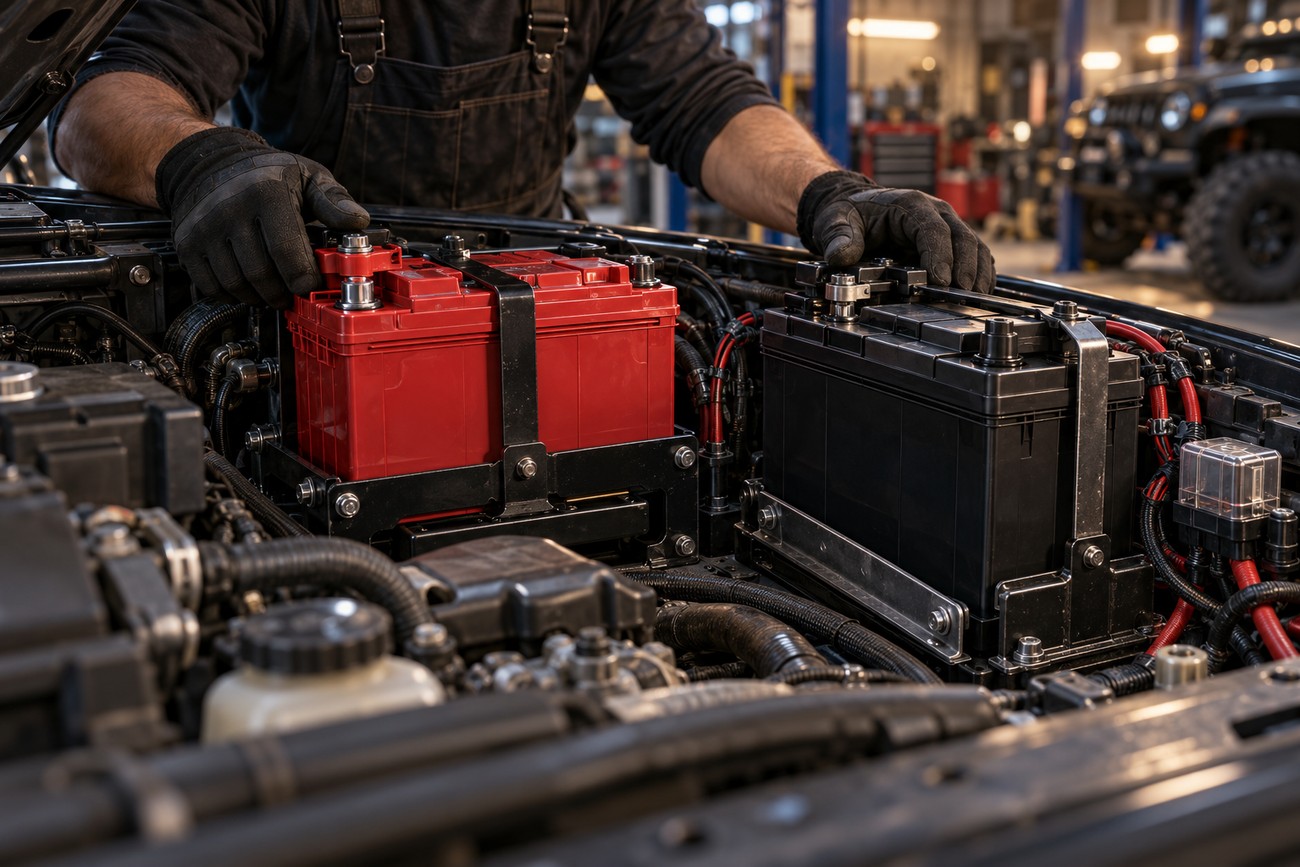
Choose RedTop when the vehicle’s main requirement is dependable starting and the installation is exposed to substantial vibration. It can suit an off-road or motorsport application where those characteristics matter more than repeated accessory cycling. Confirm the exact model’s CCA, reserve capacity, and mounting compatibility first.
Choose Odyssey Extreme AGM when the vehicle needs more reserve capacity or heavier cycling, such as regular auxiliary-equipment use. Its higher published CA/CCA and reserve capacity in many comparable case sizes can provide useful margin. That advantage only applies when the battery fits and the charging system can maintain it correctly.
Neither brand is automatically better in every vehicle. A lightly equipped daily driver may gain little from extra capacity, while a work vehicle with frequent engine-off loads may expose the limits of a starting-focused battery. Climate, trip length, vibration, storage, and accessory use should shape the decision.
- Compare the exact model number, CCA, CA, and reserve capacity.
- Confirm case dimensions, terminal configuration, polarity, hold-down requirements, and cable reach.
- Check that the vehicle supports the battery’s charging requirements.
- Assess cold-weather use and the frequency of short trips.
- Match the battery to the intended duty cycle, including engine-off accessory loads and deep-discharge risk.
Frequently asked questions
The exact model, vehicle fitment, electrical load, and charging system determine the better choice. Compare specifications rather than relying on brand reputation alone. Proper charging and the intended duty cycle also affect AGM battery life.
Which brand is the best AGM battery brand overall?
There is no universal best AGM brand without the exact model, vehicle, load profile, and charging system. Optima RedTop and Odyssey Extreme AGM use different constructions and emphasize different operating strengths, while model-level CCA and reserve capacity can vary substantially.
Choose by verified fitment and duty cycle. A battery with suitable starting output, reserve capacity, charging compatibility, and correct mounting is a better choice than a higher-priced battery that does not match the vehicle’s electrical system.
Which battery is better, Odyssey or Optima RedTop?
Odyssey Extreme AGM is generally the stronger option for heavier cycling and higher accessory demand when its dimensions and charging requirements are compatible. Optima RedTop is often the more appropriate choice for starting-focused vehicles and applications where vibration resistance is a priority.
The exact model can change the result. Compare CCA, CA, reserve capacity, polarity, case size, and intended use instead of treating the brand names as direct equivalents.
What is the best brand of AGM batteries?
The best brand is the one offering a model that matches the vehicle’s electrical demand and charging system. AGM service life depends on charging, temperature, depth of discharge, and operating pattern, so brand reputation cannot compensate for chronic undercharging or repeated deep discharge.
For a final check, test the existing charging system and battery under load. A normal resting-voltage reading does not prove that the battery can deliver its rated performance, and storage claims remain conditional on full charge and suitable storage conditions.