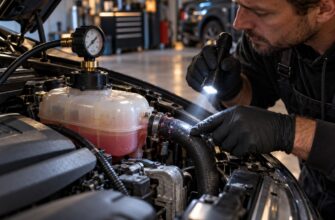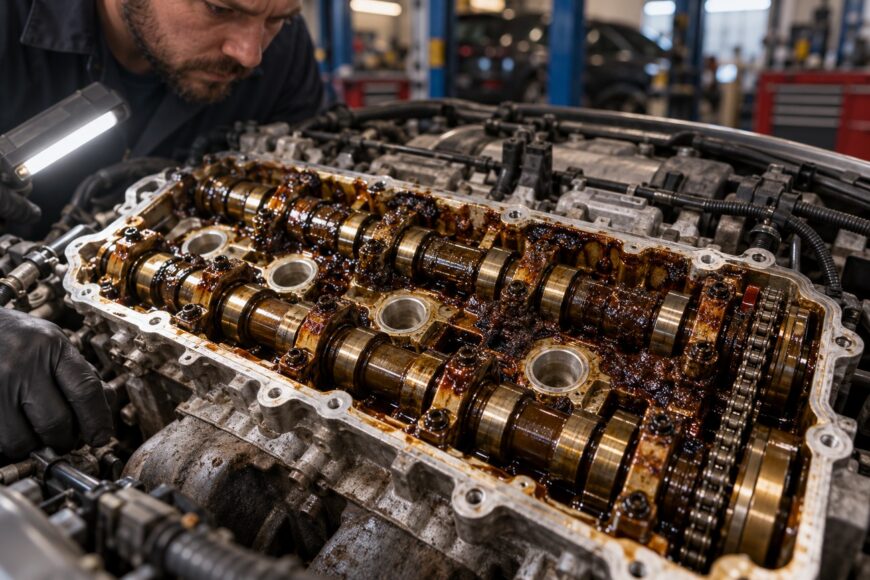
Finding sticky deposits under the oil filler cap after routine oil changes or repeated short trips creates an awkward choice: flush the engine, change the oil again, or arrange a repair inspection. The safest response depends on how extensive the deposits are and what caused them. A light film may call for corrected maintenance and monitoring, while heavy sludge can threaten oil flow and requires a more cautious assessment.
Oil sludge is not simply old, dark oil. It is degraded oil mixed with contaminants, which can include water, fuel, combustion by-products, and particles. Understanding how those contaminants entered the oil is essential because cleaning the deposits without correcting the cause can allow them to return.
- What oil sludge is and why it forms
- Signs of sludge—and when to stop driving
- Prevent sludge with the right oil and service routine
- Choose a removal approach that matches the severity
- Clean cautiously: the risks of flushes and quick fixes
- Fix the conditions that make sludge return
- Frequently asked questions
- How much does it cost to remove sludge from an engine?
- How long does it take for engine oil to turn to sludge?
- How should removed oil sludge and used oil be disposed of?
What oil sludge is and why it forms
Sludge is a soft, sticky, or semi-solid deposit formed as oil degrades and combines with contamination inside the engine. Heat and oxygen accelerate oil oxidation, while combustion by-products add acids and particles. The result may collect beneath the valve cover, around the filler opening, in the sump, or in narrow oil passages.
Frequent trips that do not bring the engine fully up to operating temperature can leave moisture and fuel in the oil. Water may form an emulsion, while fuel dilution reduces the oil’s ability to protect moving parts. Stop-and-go driving, extended idling, and winter operation can make this pattern more likely, particularly if the engine has little opportunity to evaporate those contaminants.
Excessive heat creates a different stress. High temperatures accelerate oxidation and can produce stubborn deposits in areas exposed to heat, such as the cylinder-head oil channels and piston-ring grooves. Poor crankcase ventilation, overheating, and an incorrect operating temperature can intensify both contamination and oxidation.
Sludge and varnish are related concerns, but they are not the same deposit. Sludge is generally a softer, lower-temperature, moisture-associated material; varnish is a harder film produced by high-temperature oil degradation. A dirty filler cap therefore cannot show the full condition of the engine, and a clean-looking opening does not prove that the sump or oil passages are clear.
Signs of sludge—and when to stop driving
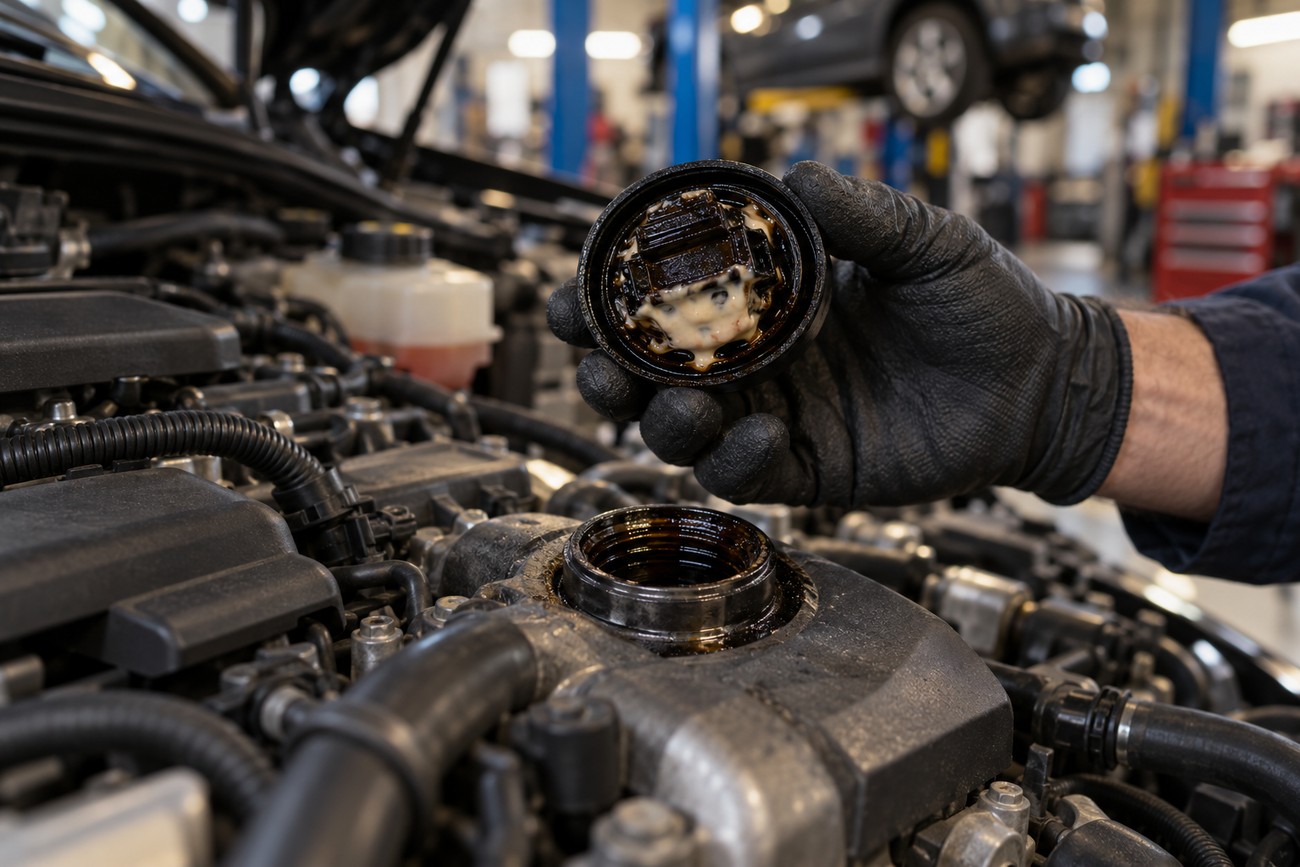
An initial inspection can include the underside of the oil filler cap and the visible area inside the opening. Brown or black sticky material, thick deposits, or a mayonnaise-like emulsion may suggest contamination, especially after repeated short trips. These observations are clues rather than proof, because condensation and normal oil discoloration can produce similar appearances.
Dark oil alone does not confirm sludge. Modern detergent-dispersant additives can hold contaminants in suspension, and fresh oil may darken quickly while still circulating correctly. Noise, reduced performance, or an oil warning message also needs proper diagnosis; those symptoms can arise from several faults unrelated to the amount of visible sludge.
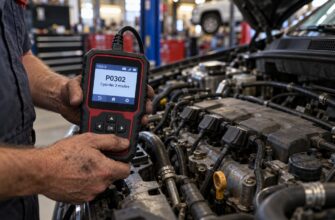
A technician may inspect the oil filter, measure oil pressure with a mechanical gauge, check the sump and pickup, and look for deposits in accessible areas. The condition of the drained oil, service history, and evidence of coolant or fuel contamination can help establish severity. Sludge can obstruct oil passages or the filter and impair lubrication, so symptoms that appear after an oil change deserve attention.
If the oil-pressure warning appears, stop safely, shut down the engine, and seek professional assessment. Do not continue driving to “work through” a cleaner or wait for the next service. An engine can suffer serious damage while running with inadequate oil pressure, even if the oil level on the dipstick appears normal.
Prevent sludge with the right oil and service routine
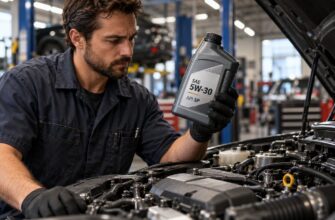
Use the viscosity, performance specification, and approval listed for the vehicle. The manufacturer’s severe-service guidance may call for a more demanding maintenance schedule when the vehicle sees frequent short trips, long idling, heavy traffic, dusty conditions, or high heat exposure. The correct interval depends on the vehicle and its operating conditions, rather than on a universal mileage rule.
Change the oil filter with the oil at the specified service interval. Detergent-dispersant additives help keep contaminants suspended, while antioxidants slow oil oxidation. Those additives support cleanliness during normal service, but neither guarantees removal of established deposits. A filter also has a finite capacity, so postponing both oil and filter changes increases the burden on the lubrication system.
Total base number, or TBN, indicates an oil’s acid-neutralizing reserve. It can be useful when assessing oil degradation, particularly in demanding service, but it is not a stand-alone measure of sludge risk or the sole criterion for selecting oil. Approval, viscosity, formulation, engine design, contamination, and the actual service interval all matter.
Premium synthetic oil often offers stronger oxidation resistance and may perform well under heat, but it cannot compensate for fuel dilution, moisture, a blocked crankcase ventilation system, or neglected maintenance. It also is not a guaranteed cure for existing sludge. A sound routine combines the specified oil, a suitable filter, a realistic severe-service interval, and attention to the engine’s operating temperature.
Choose a removal approach that matches the severity

Light deposits may be managed by correcting the cause, fitting the specified oil and filter, and monitoring the engine through properly timed service. This approach is more appropriate when oil pressure is normal, the engine has no evidence of restricted flow, and inspection does not reveal thick deposits throughout the lubrication system. The aim is controlled improvement rather than instant visual cleanliness.
An oil change helps prevent further degradation but may not remove established sludge. Fresh oil can carry away loose contamination, yet dense deposits may remain under covers, in the sump, around the pickup, or inside passages. If the material is substantial, professional inspection may include removing the sump or other components so the technician can judge the actual oil-flow risk.
Heavy deposits or suspected restricted oil flow warrant professional assessment. Physical cleaning may be needed, but the extent of disassembly depends on the engine’s design and condition. Cleaning can also expose worn rings, hardened seals, or other faults that the deposits had partly concealed, so a complete restoration cannot be promised in every case.
Gradual cleaning is generally less disruptive than a sudden aggressive flush in a heavily sludge engine. It may require follow-up service and cannot guarantee complete removal, but it gives the technician an opportunity to monitor pressure, filter loading, and the condition of the drained oil. No additive should be presented as certain to clear a blocked passage.
Clean cautiously: the risks of flushes and quick fixes
A rapid flush can loosen deposits faster than the oil system can safely carry them away. Dislodged material may obstruct the oil pickup, load the filter, or restrict a narrow passage. The risk is greater when the engine already has thick deposits and the condition of the sump or pickup is unknown.
Any cleaning approach should be followed by monitoring for changes in oil pressure, warning lights, unusual noise, and filter condition. If symptoms worsen, stop the engine and arrange an inspection rather than adding another product. Follow-up service may be necessary because gradual cleaning can move contamination into the filter or sump over time.
Oil-flow concerns should be checked before attempting to loosen heavy deposits. A cleaner is a chemical aid, not a substitute for confirming that the pickup, filter, and lubrication passages can continue to supply the engine.
Thicker oil may alter noise or consumption, but it does not repair oxidation, contamination, or restricted passages. A single additive cannot reliably overcome a mechanical fault, and a more aggressive solvent is not automatically safer. Do not run an engine on fuel or household solvents; such experiments can remove lubrication and create a separate failure.
Fix the conditions that make sludge return
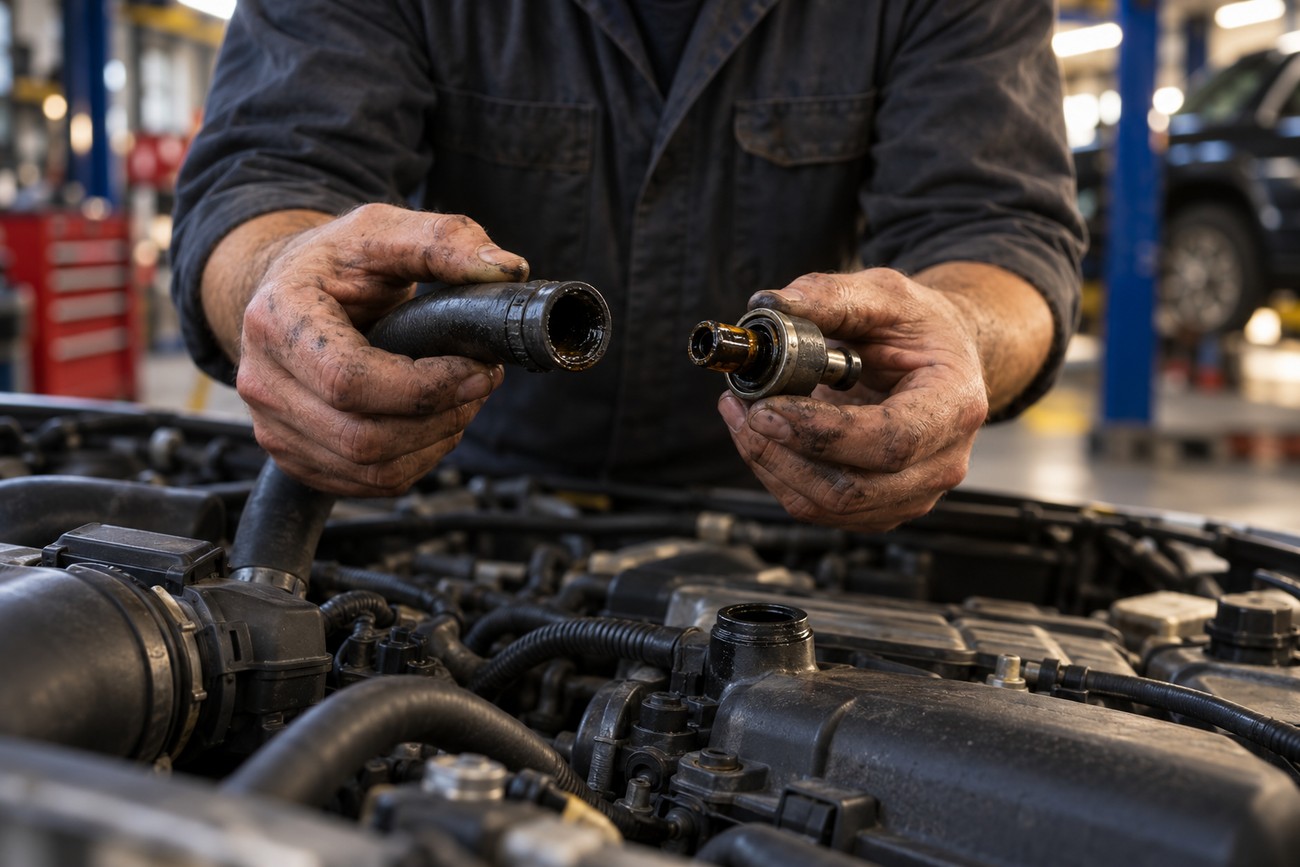
Crankcase ventilation should be checked when sludge is recurring. A faulty or restricted system can raise crankcase vapor and pressure, allowing moisture and combustion contaminants to remain in the oil or forcing vapor and oil mist into places where they should not be. The system’s hoses, valve, and related passages must suit the engine and be assessed for blockage or malfunction.
Operating temperature is another important clue. A thermostat or temperature-control fault may keep the engine too cool, allowing moisture and fuel to remain in the oil. Overheating creates the opposite problem by accelerating oxidation. Coolant contamination and fuel dilution also require prompt diagnosis because cleaning the engine without stopping either source leaves the oil vulnerable to renewed degradation.
Short trips and stop-and-go driving can recreate the problem even after a successful service. Where practical, the vehicle needs regular operation that allows it to reach its normal operating temperature, while the service schedule should reflect the actual use. This does not replace repairs for a cooling, fueling, or ventilation fault.
A sensible owner–technician sequence is straightforward: confirm that the deposits are genuinely sludge, identify the contributing condition, choose a proportionate cleanup, and verify lubrication afterward. The result may be improved cleanliness and reliable oil flow, but no method can promise that every heavily affected engine will be fully restored.
Frequently asked questions
How much does it cost to remove sludge from an engine?
There is no universal price. A quote may include diagnosis, oil-pressure testing, oil and filter service, inspection through an opening or removed sump, chemical cleaning, or substantial disassembly. The cost rises when deposits are extensive, access is difficult, or restricted oil flow requires parts to be removed and cleaned.
Ask the repairer to separate diagnostic work from the proposed cleanup and to explain what would trigger further disassembly. This makes it easier to compare a monitored service approach with a deeper repair while avoiding payment for an additive that has not addressed the engine’s condition.
How long does it take for engine oil to turn to sludge?
There is no fixed time or mileage threshold. Sludge formation depends on operating temperature, short-trip frequency, moisture, fuel dilution, overheating, ventilation, oil specification, and service history. Oil color alone cannot establish how quickly the process is occurring or how severe the deposits are.
An engine used mainly for short cold trips may develop contamination sooner than one covering longer, fully warmed journeys, even if both receive similar calendar servicing. The manufacturer’s severe-service schedule and evidence from inspection are more useful than a universal deadline.
How should removed oil sludge and used oil be disposed of?
Take used oil and removed sludge to an appropriate collection point, recycling facility, or service facility that accepts automotive oil waste. Keep the materials in sealed, labeled containers and prevent them from entering soil, drains, or household rubbish.
Waste requirements and classification can differ by location, so check local rules or ask the facility before transport. A repair shop may already have the required handling arrangement; if you clean the engine yourself, confirm acceptance in advance rather than disposing of the material with general waste.