A brake bleeding tool can look compatible by brand or nominal size and still fail at the caliper. The usual causes are a bleeder that needs a different size, recessed access, a wrench shape that cannot seat fully, or a hose connection that admits air. A leaking valve creates the same problem in a solo setup.
Motion Pro versus Lisle is therefore a fit-and-task decision rather than a simple brand contest. Motion Pro listings include several bleeding-tool formats, while Lisle offers dedicated brake-service tools such as the 11000 wrench. Both require you to verify the actual bleeder before opening the system.
Bleeding tools also need to be separated from piston tools. A wrench, hose, and one-way valve help move fluid through a bleeder. A caliper-piston tool retracts or winds back the piston, and it serves a different operation entirely.
- Motion Pro vs Lisle: What Is Actually Being Compared?
- Motion Pro Options: Where the Valve and Size Choices Help
- Lisle Options: Dedicated Wrenching and Adjacent Brake Tools
- Motion Pro vs Lisle: Fit, Valve, Access, and Intended Task
- The Fit Check That Matters More Than Brand
- Common Failures: Stripped Bleeders, Air Leaks, and False Confidence
- Which One Should You Buy for Your Job?
- Frequently asked questions
- Who makes the best brake bleeding kit: Motion Pro or Lisle?
- How should I check a one-way valve before starting a solo bleed?
- What is the best tool to bleed brakes by yourself?
- What is the best brake bleeding method?
Motion Pro vs Lisle: What Is Actually Being Compared?
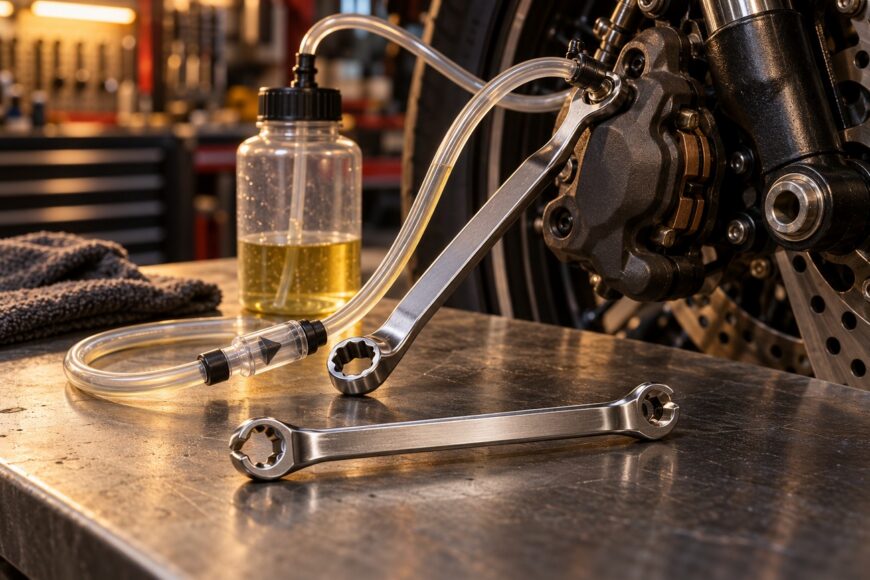
Motion Pro bleeding tools appear in 8 mm, 10 mm, and 11 mm versions. Some listings describe a combination tool that brings together a wrench, hose, and one-way valve for one-person bleeding. That format can reduce the need for a second person at the pedal or lever, provided the size and hose fit the caliper.
Lisle 11000 is listed as an 8/10 mm brake bleeder wrench. The marking should be read as two supported wrench sizes, rather than proof that one shape fits every bleeder with an 8 mm or 10 mm head. Access around the nipple, the depth of the recess, and the available swing can decide whether the tool works.
A dedicated bleeder wrench and a piston tool belong on different parts of the job. Lisle also sells a Brake Piston Wind Back Tool with 2- and 3-pin configurations, while Motion Pro 08-0591 is specified for caliper pistons with a central opening of 15–28 mm. Neither piston tool replaces a wrench and hose for bleeding.
The practical comparison is between a Motion Pro format that may combine wrenching and one-way flow control, and a Lisle purchase aimed at a specific brake-service operation. Brand reputation matters less than the bleeder size, the tool’s access geometry, and a connection that seals without admitting air.
Motion Pro Options: Where the Valve and Size Choices Help
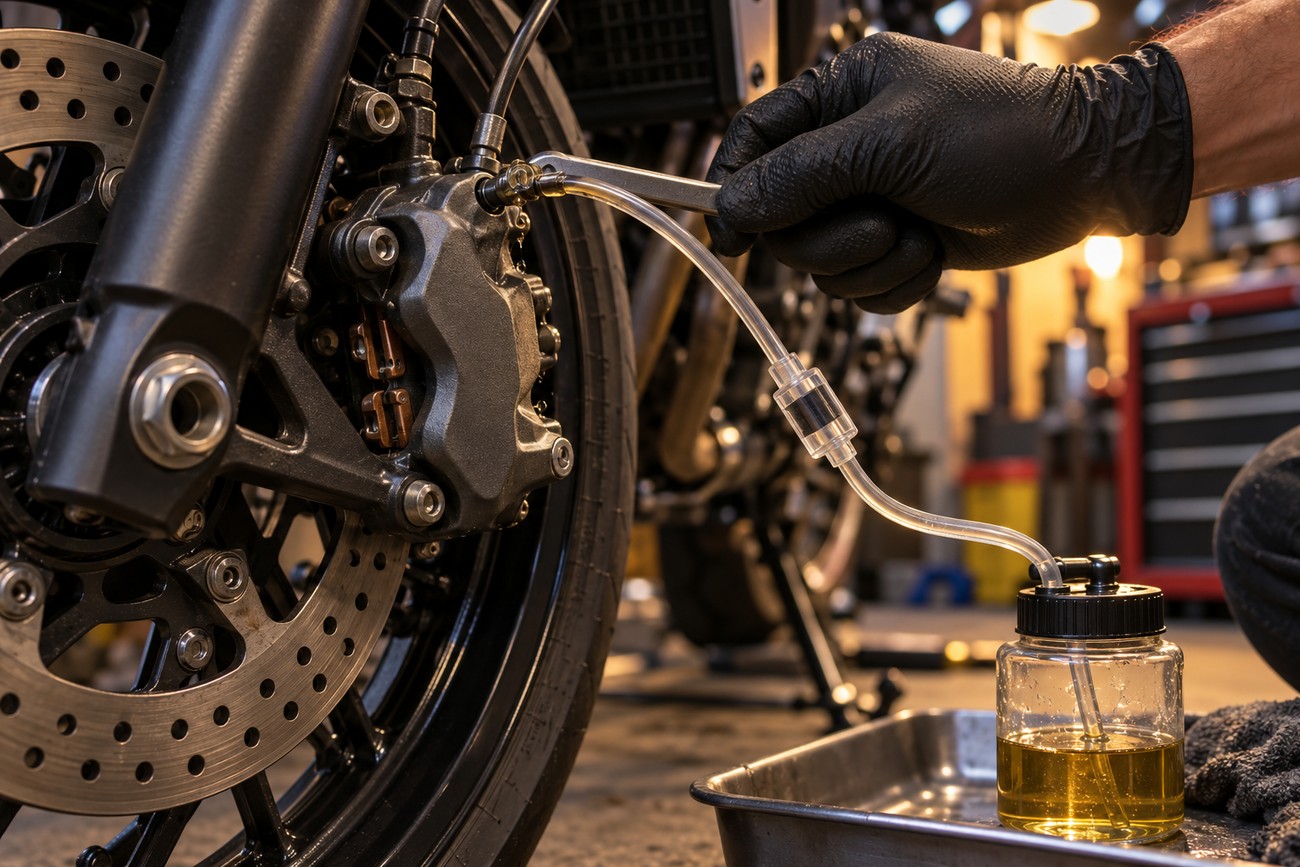
Motion Pro’s combination bleeding tool is positioned for one-person use. Its hose carries fluid away from the bleeder, while the one-way valve helps limit reverse fluid or air movement when the pedal or lever is released. That makes the process easier to manage when no helper is available.
The valve does not make the procedure error-proof. The hose still needs to grip the bleeder securely, the valve must seal, and the system must be prepared correctly. If the valve leaks, air can move through the setup and make the fluid appear aerated or keep the lever feeling soft.
Separate 8 mm, 10 mm, and 11 mm versions are important because the size is part of the tool’s basic compatibility. Buying an 8/10 mm product on the assumption that it covers every nearby application can leave the wrong tool on the nipple or prevent the wrench from seating fully.
Some Russian retail listings describe Motion Pro for motorcycles, cars, ATVs, and snowmobiles. That wording is marketing language, not a formal compatibility specification. Confirm the bleeder size and access on the actual vehicle, especially on compact motorcycle, ATV, and snowmobile calipers.
Lisle Options: Dedicated Wrenching and Adjacent Brake Tools
A Lisle buyer may be choosing a specific wrenching tool rather than a complete solo-bleeding setup. Lisle 11000 is identified as an 8/10 mm brake bleeder wrench, so its main value is secure access to a matching bleeder. The listing should be checked before assuming that a hose or one-way valve is included.
A dedicated wrench is useful where the main risk is poor engagement on the bleeder flats. It still cannot solve a size mismatch or a recessed nipple that the tool cannot reach. The nominal marking and the physical shape both matter.
Lisle’s adjacent brake tools can make product pages confusing. The Brake Piston Wind Back Tool uses 2- and 3-pin configurations for piston retraction or winding back. That operation prepares the caliper for certain brake jobs; it does not open the bleeder or remove air from the hydraulic circuit.
Read the package contents and photographs carefully. Check for the actual hose, valve, wrench profile, and any stated access limitations instead of treating a general brake-tool category as proof of a complete bleeding kit.
Motion Pro vs Lisle: Fit, Valve, Access, and Intended Task
The useful comparison is limited to documented formats and the conditions that determine whether either tool will work on your caliper.
| Point of comparison | Motion Pro | Lisle |
|---|---|---|
| Documented size options | Bleeding-tool versions appear in 8 mm, 10 mm, and 11 mm. | Lisle 11000 is listed as an 8/10 mm brake bleeder wrench. |
| One-person valve setup | A combination format includes a wrench, hose, and one-way valve and is positioned for one-person bleeding. | Do not assume the 11000 listing includes a hose or valve; verify the package contents. |
| Tool category | Bleeding tools are available alongside separate caliper-piston tools. | Dedicated bleeder wrenches and adjacent tools, including a 2- and 3-pin piston wind-back tool, serve different operations. |
| Access concerns | The correct nominal size still may not suit a recessed or obstructed bleeder. | The 8/10 mm marking does not establish universal access across different calipers. |
| Sealing requirement | The hose and one-way valve must seal reliably to limit reverse fluid or air movement. | A separate hose and valve, if needed, must also grip and seal reliably. |
| Likely use case | A suitable choice when the correct size and integrated one-way-valve format support solo bleeding. | A suitable choice when the priority is a specific 8/10 mm bleeder-wrench task. |
The Fit Check That Matters More Than Brand
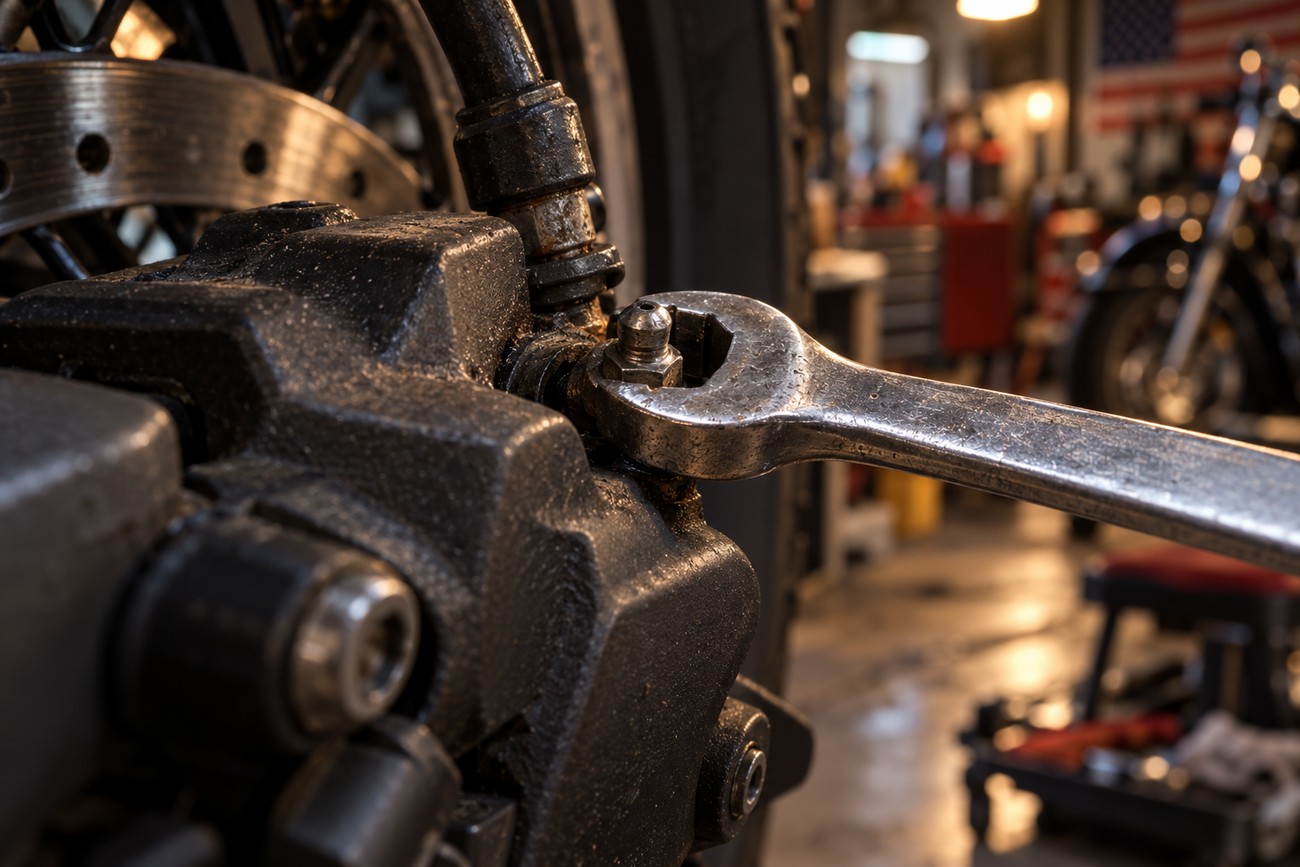
Start with the bleeder, not the product title. Verify its size from the vehicle documentation, a reliable parts reference, or a careful measurement, then inspect the flats for corrosion or previous rounding. A size mismatch can make the tool unusable and can damage the bleeder if force is applied.
Look at the approach angle and the space around the nipple. A matching wrench may still fail if the bleeder is recessed, partly shielded by the caliper, or positioned where the tool cannot swing. The wrench must seat fully on the flats rather than catch only an exposed edge.
Test-fit the wrench and hose on the actual bleeder before opening it. The dry fit reveals recessed access and a poor hose seal before brake fluid makes the inspection messy.
Check the hose separately. It should grip the bleeder firmly enough to stay in place and form a sealed path for fluid. A loose hose can admit air and make it difficult to distinguish a tool problem from air remaining in the brake system.
An 8/10 mm label describes nominal size, not every detail of access or sealing performance. Compare the tool’s profile with the caliper, and confirm whether the valve is built into the supplied assembly or must be added separately.
Common Failures: Stripped Bleeders, Air Leaks, and False Confidence
A regular open-end wrench often engages less securely than a dedicated bleeder wrench. If it slips, the flats can become rounded, making later service harder and reducing the chance that a correctly sized tool will seat cleanly. Use the tool that matches the bleeder and apply force only after checking full engagement.
Wrong-size purchases create a quieter failure. The wrench may appear close enough to use, or an 8/10 mm format may be assumed to cover the vehicle without inspection. That approach can damage the bleeder or leave the system unbled when the tool cannot reach the fitting properly.
A one-way valve is another potential failure point. Its role is to reduce reverse flow, yet a valve that leaks can pull air through the hose during the release part of the cycle. Inspect the valve and hose before starting fluid work, and replace or reseat a connection that does not hold securely.
The valve also does not replace correct bleeding technique. You still need the correct order for the vehicle, adequate fluid, a controlled pedal or lever cycle, and attention to the reservoir level. A sound valve cannot remove air that remains in the system because the process was interrupted or the reservoir was allowed to run low.
Avoid excessive force on the bleeder or hose connection. Over-tightening can damage threads or sealing surfaces, creating a leak that the new tool cannot correct. Tighten only enough to establish the required seal and follow the vehicle or component guidance where available.
Which One Should You Buy for Your Job?
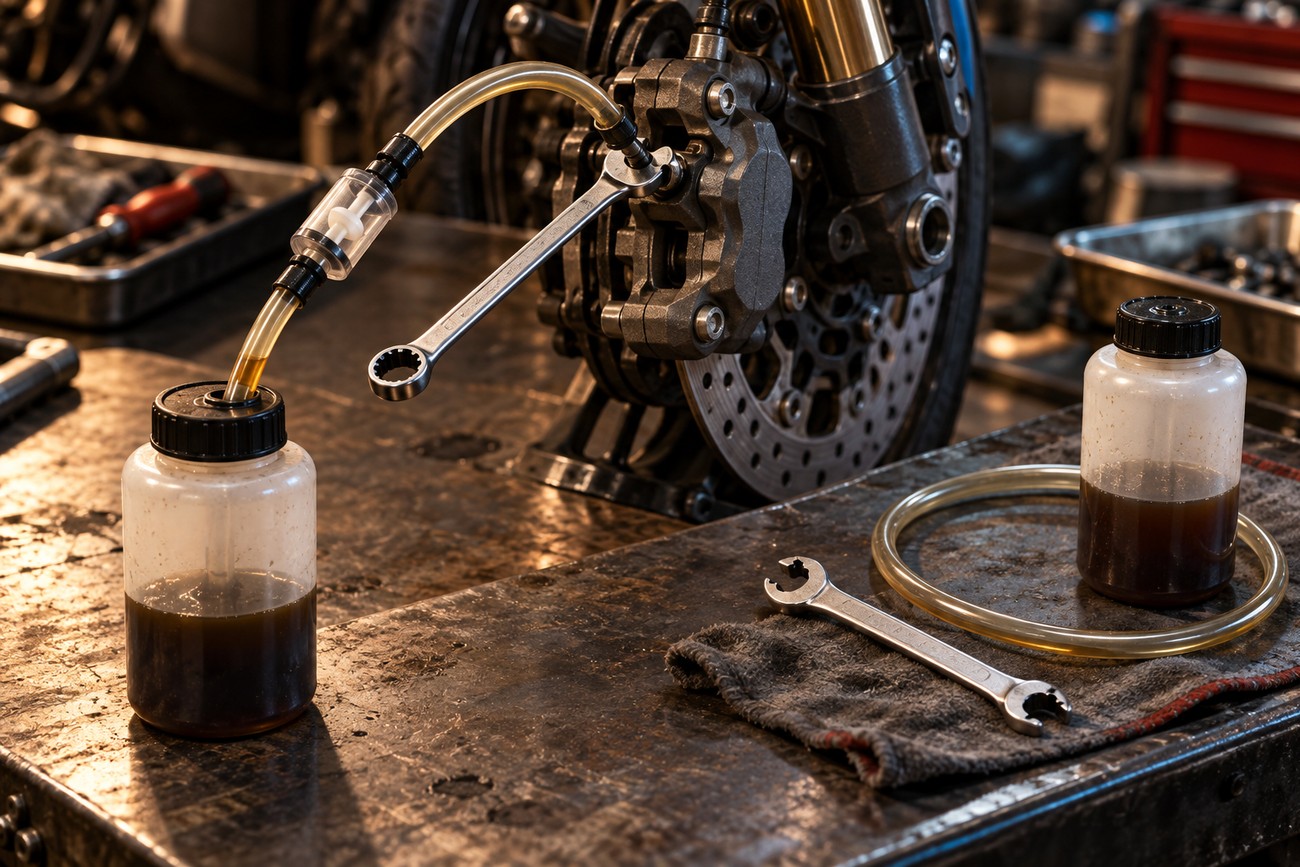
Choose Motion Pro when its exact size matches the bleeder and the integrated hose-and-one-way-valve format solves a real one-person need. That choice depends on all parts of the setup working together: the wrench must seat, the hose must seal, and the valve must control reverse movement.
Choose Lisle 11000 when the job calls for a specific 8/10 mm brake bleeder wrench and you already have, or plan to source, the hose and fluid-containment arrangement separately. It suits a targeted wrenching task more clearly than it proves a complete solo-bleeding system.
Choose neither until the access and size are verified if the bleeder is recessed, obstructed, or of an uncertain size. A different size or shape can save the bleeder from damage and prevent a second purchase after the first tool fails to reach the fitting.
The correct size and access matter more than the brand name. Treat the valve as a useful control feature, not as a substitute for sealed connections, proper preparation, and a method suited to the vehicle.
Frequently asked questions
Who makes the best brake bleeding kit: Motion Pro or Lisle?
Neither brand is the universal winner. Motion Pro is the more direct fit when the required size matches and a one-person combination tool with a hose and one-way valve is useful. Lisle is the clearer choice for a specific 8/10 mm bleeder-wrench task, provided the rest of the bleeding setup is available.
Decide by operation first: identify the bleeder, confirm access, then check whether the package includes the parts you need. This avoids buying a piston tool for a bleeding job or a wrench that cannot reach the nipple.
How should I check a one-way valve before starting a solo bleed?
Inspect the hose for splits, hardening, or a loose connection, then push it firmly onto the bleeder and check that the valve is held in the intended flow direction. Before opening the bleeder, test the assembly with a small controlled movement and look for a loose fit or air path around the hose.
If the valve allows obvious reverse movement, leaks fluid around its joints, or repeatedly lets the hose lose its grip, correct that fault before working on the brake system. A defective valve can make a sound hydraulic system appear to contain air.
What is the best tool to bleed brakes by yourself?
A correctly sized combination tool with a securely attached hose and a sound one-way valve is usually the most practical format for solo bleeding. It helps limit reverse fluid or air movement while you release the pedal or lever.
The tool still needs a stable bleeder connection and correct system preparation. If access is poor, a dedicated wrench in the correct shape may matter more than the presence of a valve.
What is the best brake bleeding method?
The best method is the vehicle-approved sequence performed with a correctly fitted bleeder wrench, a sealed hose, and a controlled pedal or lever cycle. Keep the reservoir supplied with the correct fluid and monitor the fluid stream for continuing air before closing the bleeder.
A one-way valve can make solo work easier, but it does not correct a loose hose, a leaking valve, a wrong sequence, or air introduced through poor preparation. Follow the vehicle’s service information where it specifies a particular bleeding procedure.