Chemical Guys often delivers a highly foamy, premium-feeling wash experience, while Meguiar’s is commonly chosen for predictable, uncomplicated cleaning. That difference can matter, especially if you care about the feel of the wash mitt, the look of the foam, or the fragrance left in the garage. It does not establish a universal winner.
A fair comparison has to be product-to-product. Both brands sell several formulas with different priorities, so the useful criteria are soil removal, clean rinsing, lubricity, pH, compatibility with waxes or coatings, water conditions, washing method, and cost per wash. A soap that performs well in soft water and a foam cannon may be a poor choice for a hard-water bucket wash.
- What Actually Matters in a Car Wash Soap
- Meguiar’s and Chemical Guys Do Not Each Have One Formula
- Meguiar’s vs. Chemical Guys: Side-by-Side Comparison
- Cleaning Power, Slickness, and the Residue Problem
- Wax, Sealants, Ceramic Coatings, and pH Claims
- Bucket Washing and Foam Cannons: Why Results Vary
- The Complaints, Hidden Trade-Offs, and Buying Mistakes
- Which One Should You Buy?
- Frequently Asked Questions
- What brand is better than Chemical Guys?
- What is the lawsuit against Chemical Guys or Detail Garage?
- What is the lawsuit against Chemical Guys Detail Garage?
What Actually Matters in a Car Wash Soap
Car shampoos are primarily surfactant-based products. Surfactants help loosen and suspend road dirt so it can be carried away by the wash solution and rinse water. In practical use, the important tests are how quickly the soap helps remove ordinary soil and whether it rinses cleanly without leaving a film on paint or glass.
pH-neutral or pH-balanced formulas are generally safer for waxes and paint coatings than harsher chemistry, but they are not automatically stronger cleaners. A gentle shampoo can be a sensible maintenance product for a lightly soiled, protected vehicle. Heavy road film, traffic residue, and oily contamination may require better pre-rinsing or a separate cleaner rather than simply adding more of a mild shampoo.
Lubricity affects how easily a mitt or microfiber wash pad glides across the surface. This can reduce drag and make hand washing feel more controlled, particularly on coated paint. Lubricity does not replace pre-rinsing, clean wash media, or a two-bucket method; it only improves one part of the contact-washing process.
Foam volume is an unreliable measure of cleaning power. Abundant suds can improve visual coverage and create a slick-feeling layer, but the foam mainly changes perception, dwell behavior, and sometimes the feel of the wash media. A thinner-looking soap that loosens dirt and rinses without residue may be the better product for your car.
Meguiar’s and Chemical Guys Do Not Each Have One Formula
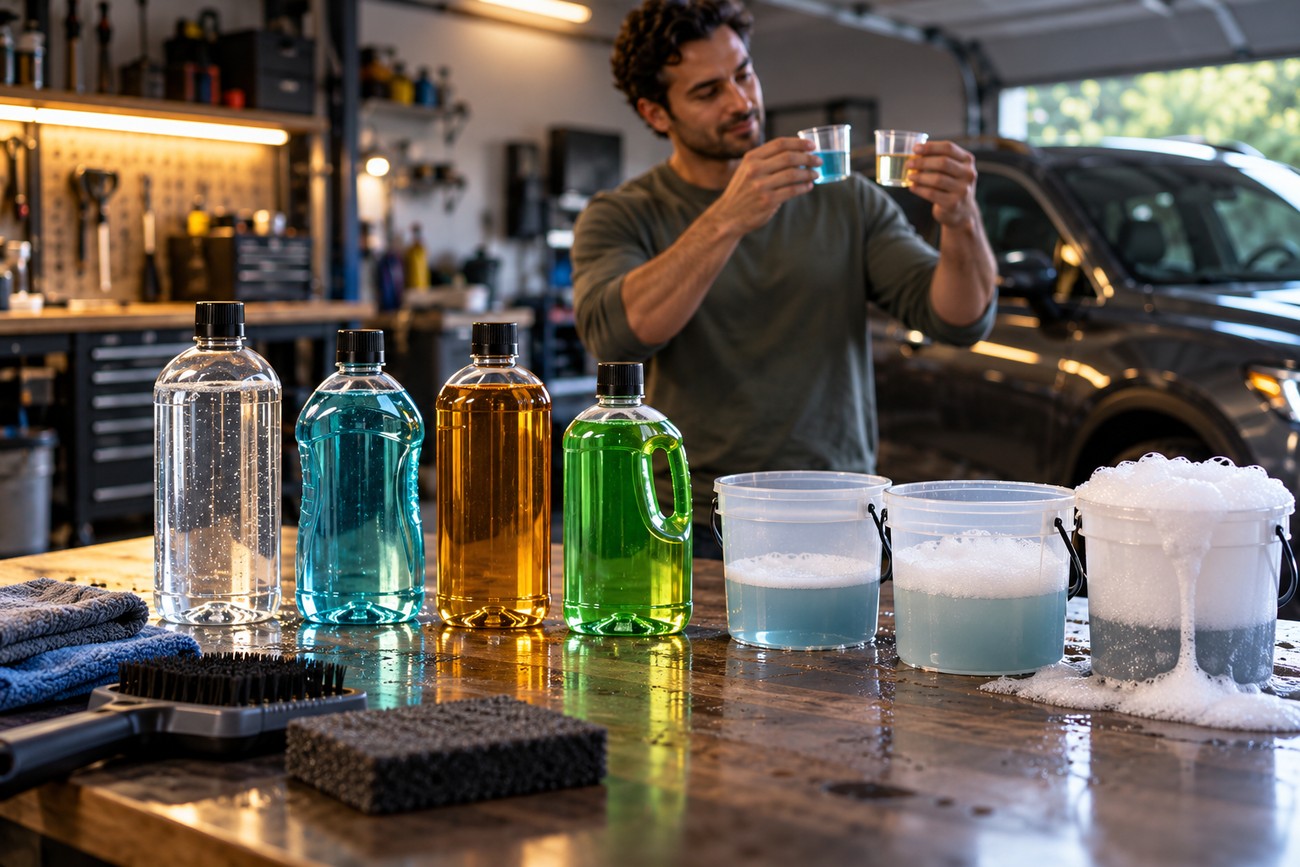
Meguiar’s has both pH-balanced or wax-safe shampoos and products that emphasize a smoother, slicker wash feel. Chemical Guys also sells multiple lines aimed at different preferences, including foam, lubricity, scent, and particular washing methods. Those differences make brand-level statements useful only as broad tendencies.
Meguiar’s is more often perceived as predictable, consistent, mainstream, and uncomplicated. That reputation appeals to owners who want a formula that behaves similarly from wash to wash and is easy to find. It does not mean every Meguiar’s soap is the mildest or the best match for every protected surface.
Chemical Guys offers a wider range of washing experiences. One buyer may value a thick foam profile or a strong scent, while another may prefer a less perfumed formula with cleaner rinsing. The range creates more room to find a good fit, but it also makes it easier to buy a product based on packaging or marketing rather than the actual job.
For a fair test, record the exact product, dilution, water source, wash media, and equipment. Comparing one Meguiar’s bottle with one Chemical Guys bottle and then applying the result to both brands is unreliable. The same soap can also feel different after a change in water hardness, drying towel, or pre-rinse quality.
Meguiar’s vs. Chemical Guys: Side-by-Side Comparison
The table describes typical tendencies, not guarantees. Exact formula, dilution, water, and equipment can change the result substantially.
| Category | Meguiar’s tendency | Chemical Guys tendency | What it means in practice |
|---|---|---|---|
| Basic cleaning | Predictable maintenance cleaning across mainstream formulas | Formula-dependent, with a wider range of intended experiences | Pre-rinse and chemistry matter more than brand image |
| Foam | Moderate to high depending on the product | Often emphasizes a large, visible foam profile | More foam does not prove better soil removal |
| Lubricity | Available in smoother-feeling concentrates and maintenance soaps | Often a prominent selling point in selected lines | Useful for wash-media glide, especially on coated paint |
| Rinse behavior | Commonly perceived as straightforward and consistent | Can vary more between formulas and water conditions | Judge the surface after rinsing and drying |
| Residue risk | Usually controlled by correct dilution and rinsing | Can increase with overdosing, hard water, or a heavily scented formula | Any product can leave haze if the conditions are wrong |
| Scent | Generally less central to the buying decision | More prominent and varied across the range | Fragrance does not improve cleaning |
| Consistency | More often viewed as predictable | Opinions vary more between individual lines | Choose by exact product and current instructions |
| Wax or sealant compatibility | Includes wax-safe and pH-balanced options | Also includes gentle and protection-compatible options | Wax-safe means gentler chemistry, not wax replenishment |
| Equipment use | Products exist for bucket washing and foam equipment | Products exist for bucket washing and foam equipment | Gun, injector, pressure, dilution, and water are decisive |
| Value per wash | Often attractive when predictable dilution and availability matter | Can be worthwhile when a specific formula fits your priorities | Compare concentrate use and cost per wash, not bottle price alone |
Cleaning Power, Slickness, and the Residue Problem
A soap can look impressive in the bucket and still leave road film behind. This is the source of the familiar complaint that “the foam was great, but the car was not clean.” Road grime may need a thorough pre-rinse, additional dwell time, or a dedicated pre-wash step before the contact wash begins.
Lubricity and cleaning power are related only indirectly. A slick solution helps the wash media move with less drag and can make the process feel safer. It does not prove that the surfactants have removed all traffic film. Detailers often notice the meaningful difference between products in rinse residue, foam quantity, water behavior, and surface feel rather than in dramatic differences in basic cleaning strength.
Residue or haze on glass and paint can have several causes. Common ones include too much concentrate, incomplete rinsing, mineral-heavy water, a warm panel, or a formula that does not suit the local conditions. Overdosing is especially counterproductive: the extra soap can make the surface harder to rinse and leave more material behind.
Meguiar’s is commonly regarded as the safer choice for predictable rinsing, while Chemical Guys may offer a more noticeable slick or foamy experience in selected products. That is a qualified comparison, not a verdict on every bottle. Test either product on a cool panel, follow the stated dilution, and inspect the glass and paint after drying rather than judging the wash while the foam is still covering the vehicle.
Wax, Sealants, Ceramic Coatings, and pH Claims
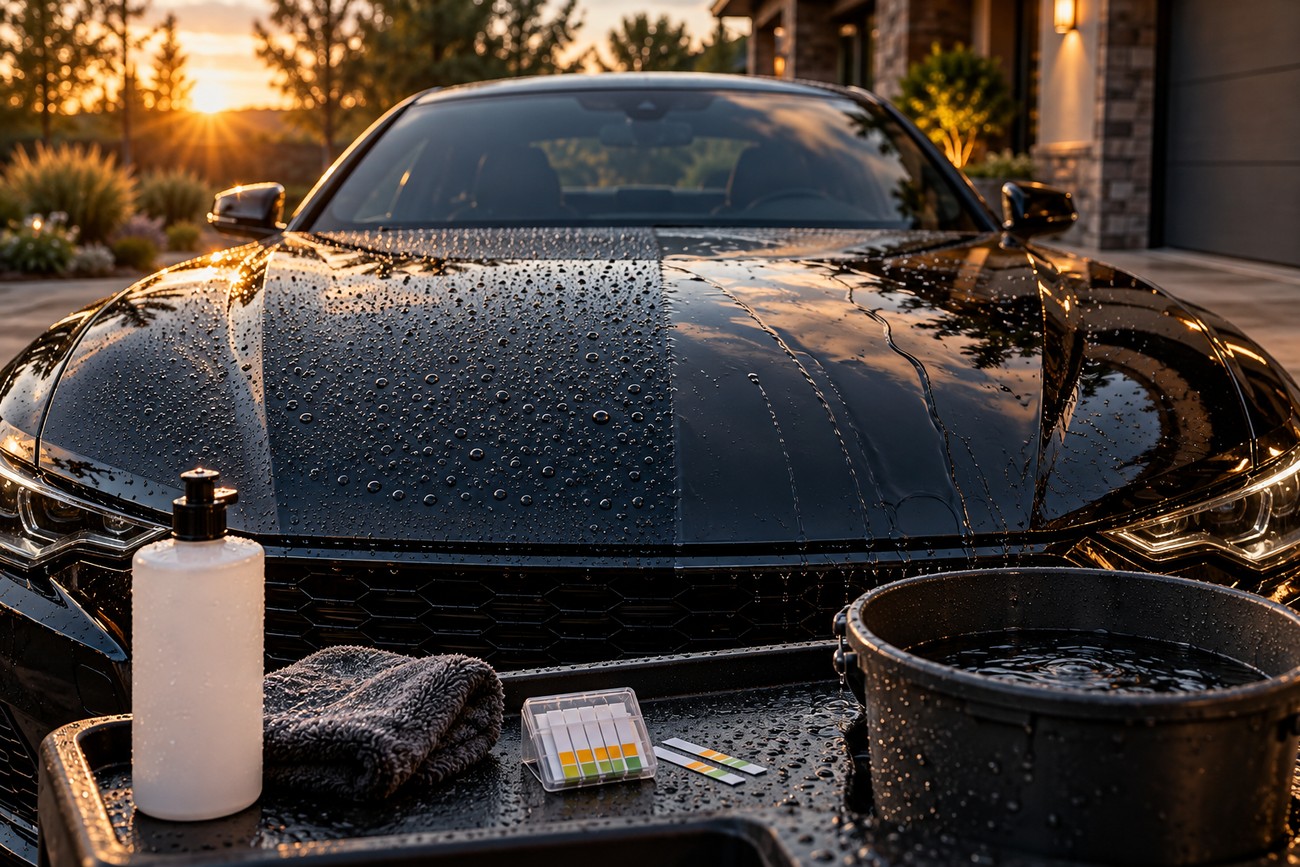
pH-balanced or pH-neutral formulas are generally safer for waxes, sealants, and ceramic coatings than harsher chemistry. That makes them appropriate for routine maintenance when the vehicle has light to moderate soil. The label still describes the chemistry; it does not guarantee a particular protection lifespan.
“Wax-safe” generally means that the formula is gentle enough for normal use over an existing wax or sealant. It does not mean that the shampoo restores, strengthens, or replenishes that protection. A product may make paint feel slick after washing because of its lubricating ingredients, but that temporary feel should not be confused with a new protective layer.
Ceramic-coated vehicles often benefit more from good lubricity and easy rinsing than from dense foam. Coatings can make routine soil easier to remove, yet they do not eliminate the need for careful contact washing. Frequent washing, unsuitable chemistry, mineral deposits, and poor drying technique can still reduce the perceived performance of the coating over time.
Protection is also affected by the whole process. Washing a hot panel, allowing shampoo to dry, or repeatedly using too much concentrate can create problems even with a gentle formula. If a wax or sealant appears to fade quickly, examine wash frequency, water quality, drying, and contamination removal before blaming the brand name on the bottle.
Bucket Washing and Foam Cannons: Why Results Vary
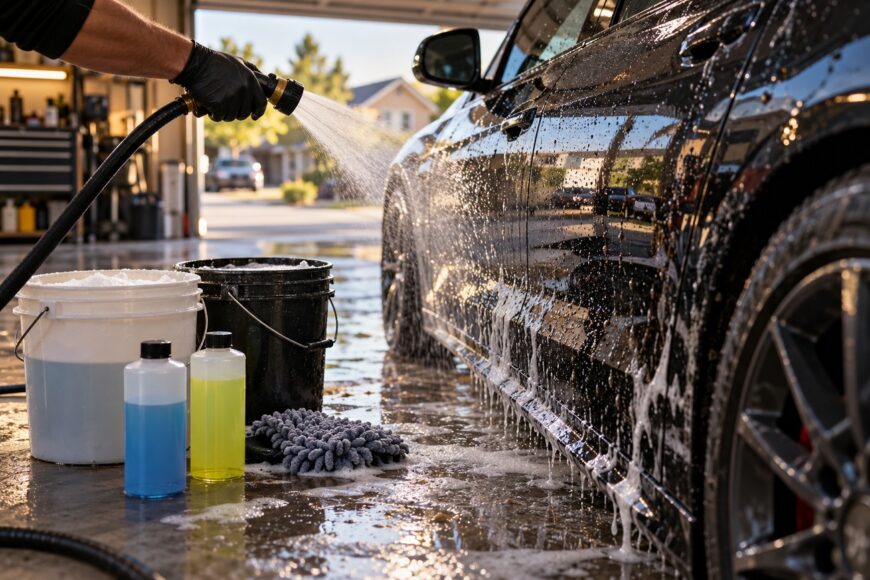
Both brands include products intended for bucket washing and foam-cannon use. A bucket shampoo is judged by its dilution, lubricity, soil release, and rinse behavior. A foam-cannon product also has to work with the gun or injector, pressure washer, water supply, and the particular amount of product being drawn into the solution.
Foam-cannon results depend on water hardness, dilution, pressure, equipment compatibility, and pre-rinse quality as well as the soap. A product that produces thick foam on one setup can look thin on another. Increasing the concentration to chase a denser blanket may raise residue risk without improving the removal of bonded road film.
The safer workflow is simple. Remove loose grit and traffic film with a thorough pre-rinse or pre-wash, then use clean wash media and preferably a two-bucket method. Wash a cool panel in manageable sections, rinse before the solution dries, and dry with a clean towel or suitable air method.
Dark paint can make foam look especially persuasive because the contrast is dramatic. Heavy suds can also hide a missed spot until the vehicle is rinsed. The useful test is whether the surface is clean with minimal contact, whether the towel moves freely during drying, and whether the soap leaves the water behavior you expect from the existing protection.
The Complaints, Hidden Trade-Offs, and Buying Mistakes
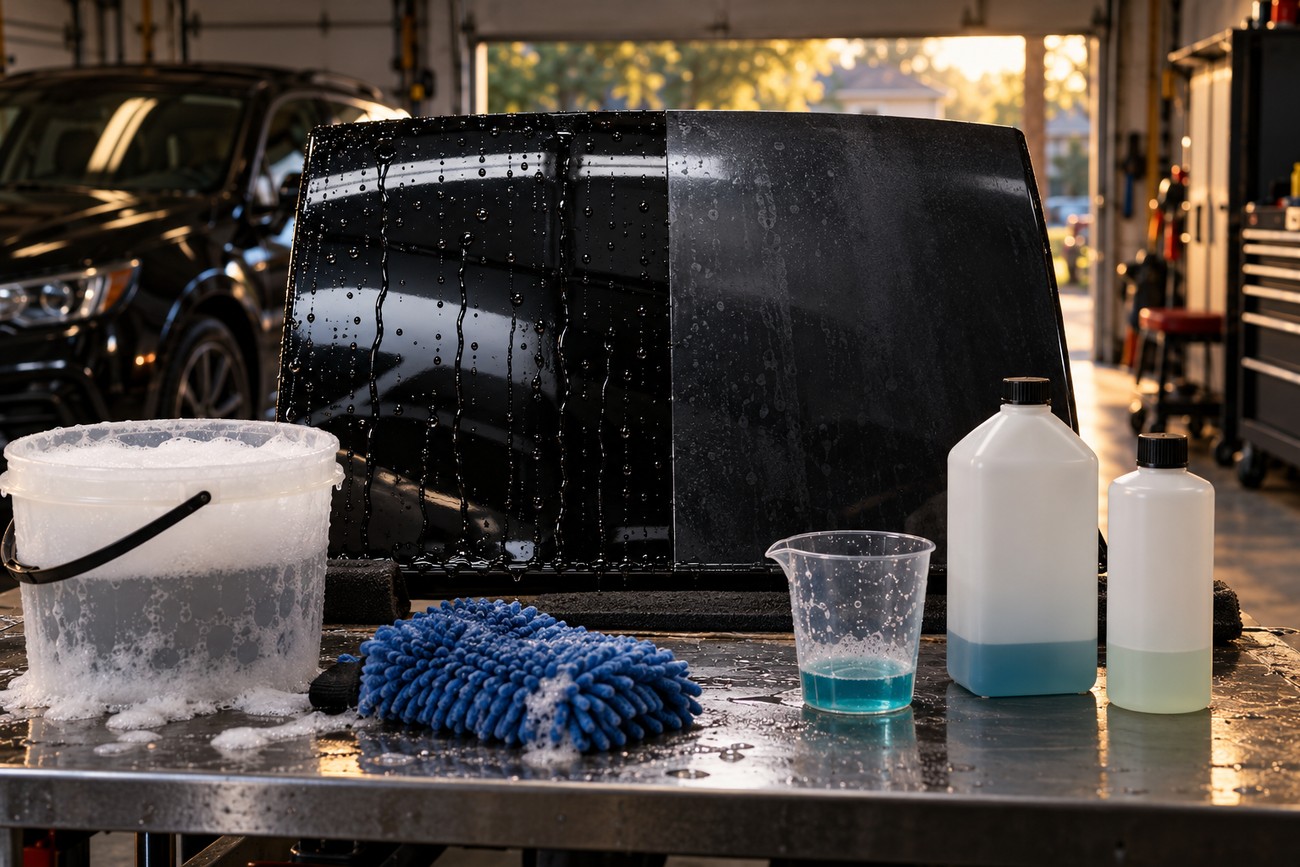
Recurring complaints about both brands include residue or haze, high cost per wash, and attractive foam that does not translate into better cleaning. Chemical Guys is more often criticized for strong fragrance and for the difficulty of choosing among many variants. Those concerns do not make the line defective; they show why a product should be selected for its function rather than its presentation.
Fragrance and dye can make a wash feel distinctive, but they do not improve soil removal. A strong scent may become tiring in a small garage or unpleasant for users who prefer a neutral product. Super-foamy marketing has a similar trade-off: a thick blanket can improve coverage and perceived slickness, while using extra soap to create that appearance can make rinsing slower and more expensive.
Some users report inconsistent behavior in Chemical Guys batches or scented lines. These are subjective user reports, not a verified universal defect or a reliable reason to reject the entire brand. A better response is to keep the product sealed correctly, follow the current instructions, and evaluate the exact formula under the same conditions as the alternative.
Common buying mistakes are easy to avoid:
- Do not choose a soap by foam volume alone.
- Do not compare one bottle with an entire competing brand.
- Do not overdose concentrate to chase cleaning or foam.
- Do not skip the pre-rinse because the shampoo is labeled premium.
- Do not treat wax-safe as a claim that the product enhances or replaces wax.
Which One Should You Buy?
Lean toward Meguiar’s when predictable behavior, straightforward use, and consistent mainstream availability matter most. It is a sensible default for routine bucket washing when you want a maintenance shampoo without making fragrance or dramatic foam the central feature. The exact formula still determines whether it suits your paint, protection, and water.
Consider Chemical Guys when a specific formula’s lubricity, foam profile, scent, or equipment fit is the reason for the purchase. The broader range can work well when you already know which characteristic you value. It also requires more attention to the exact product, dilution, and likely residue in your water.
Neither brand is automatically superior for every vehicle. A protected car washed with clean media and a thorough pre-rinse can perform well with either a suitable Meguiar’s or Chemical Guys formula. A poorly prepared wash can leave scratches, film, or water spots regardless of the label.
Use this decision rule: choose the exact product that matches your water, wash method, drying process, paint protection, and acceptable cost per wash. If those factors are equal and you want the lower-risk recommendation, Meguiar’s generally has the advantage in predictability. If a Chemical Guys formula clearly fits your preferred foam, slickness, scent, or equipment, it can be the better personal choice.
Frequently Asked Questions
What brand is better than Chemical Guys?
No brand is universally better than Chemical Guys because the formula and washing conditions change the result. Meguiar’s is the narrower recommendation for buyers who prioritize predictable, uncomplicated behavior, consistent availability, and a less complicated product choice. Chemical Guys may be preferable when a particular formula offers the foam profile, lubricity, scent, or equipment fit you specifically want.
Compare the exact products at the same dilution and with the same wash process. Evaluate cleaning, rinsing, residue, and cost per wash after the vehicle is dry rather than ranking brands from bottle appearance or foam height.
What is the lawsuit against Chemical Guys or Detail Garage?
An online allegation or search snippet is not enough to identify a verified lawsuit. The parties, court, jurisdiction, filing date, and current case status must be checked against current court records or reliable legal reporting before naming a case or describing its claims.
An unverified legal claim should not determine a car-soap purchase. Even a real dispute may concern advertising, business practices, ownership, or another issue unrelated to the cleaning performance and paint compatibility of a specific shampoo.
What is the lawsuit against Chemical Guys Detail Garage?
There is no responsible single answer without a current, verifiable case record. “Chemical Guys” and “Detail Garage” can appear together in online discussions, but repeated comments do not establish that a particular lawsuit exists, what it alleges, or how it was resolved.
Check an official court database or a reputable report that identifies the case and its present status. For choosing soap, rely on the exact formula, instructions, rinse behavior, and cost per wash rather than an unverified legal-search result.