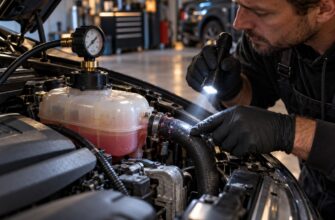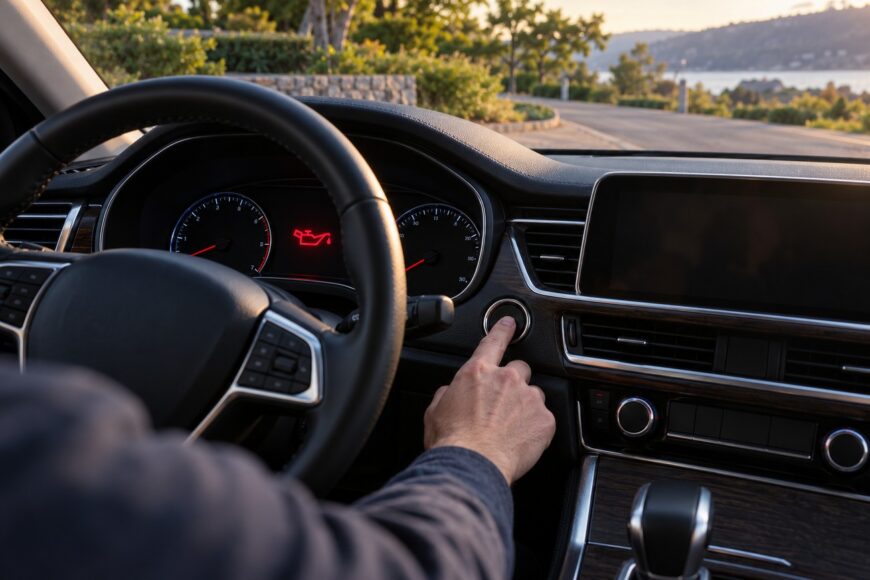
Treating a low oil pressure warning as a minor dashboard glitch can cost an engine. The light may mean oil pressure has fallen to a dangerous level, though a faulty sensor or wiring can produce the same warning. From the driver’s seat, you cannot safely tell which it is.
The immediate choice is whether to shut the engine down or keep it running while critical parts may be losing lubrication. Stop safely, switch it off, and check the oil level and visible leaks. Even if the light later disappears, the cause needs to be assessed before you drive again.
- What to Do the Moment the Low Oil Pressure Light Comes On
- What the Warning Light Actually Measures
- Common Causes of Low Oil Pressure
- How to Check and Diagnose the Problem Safely
- When the Light Flickers, Disappears, or Returns After an Oil Change
- Mistakes That Turn a Warning Into Engine Damage
- Frequently asked questions
- How do I fix my low oil pressure?
- What is the most common cause of low oil pressure?
What to Do the Moment the Low Oil Pressure Light Comes On
Ease off the accelerator, avoid hard braking where possible, and pull over somewhere safe. Once stopped, shut the engine off. If the warning appears in traffic, prioritize reaching a safe stopping place rather than stopping in a live lane.
Allow the engine to sit before checking the oil level so oil can drain back to the sump; follow the vehicle handbook’s checking procedure. Look underneath and around the engine for obvious leaks. A low dipstick reading gives you a useful clue, but it does not, by itself, establish why the warning came on.
If the light stayed on, or if you heard ticking, knocking, or unusual timing-system or valvetrain noise, do not restart the engine. Those sounds alongside a pressure warning raise the risk of damage. Arrange towing or professional help rather than running the engine to see whether the noise clears.
There is no universally safe distance you can drive to a repair shop when genuine low oil pressure is possible. Even a short trip keeps the engine operating under an unresolved warning. A warning that goes out after stopping still deserves a level check and diagnosis before further driving.
What the Warning Light Actually Measures
The oil pressure switch or sensor usually reacts to pressure at a threshold. It does not test oil quality or tell you whether the correct oil was fitted. Depending on the vehicle, the dashboard may display a simple light or a more detailed message, but neither identifies the underlying cause on its own.
Low pressure can be real: the oil supply may be inadequate, or internal clearances may allow pressure to escape. A failed switch or sensor, damaged connector, or wiring fault can also imitate low pressure. Until actual pressure is checked, assuming an electrical fault is a gamble with the engine.
The light may activate only after pressure has reached a critically dangerous level. It is therefore a warning to stop, rather than a gauge showing how much margin remains. Its going out does not prove pressure is adequate at every engine speed and temperature.
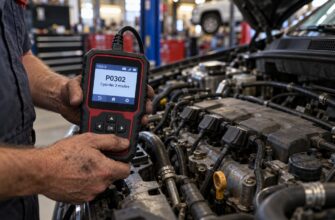
A scan tool can help identify some electrical faults, but no stored fault code does not prove mechanical oil pressure is normal. The decisive distinction is a pressure measurement compared with the specification for that engine. Electrical checks then help explain a warning when measured pressure is within specification.
Common Causes of Low Oil Pressure
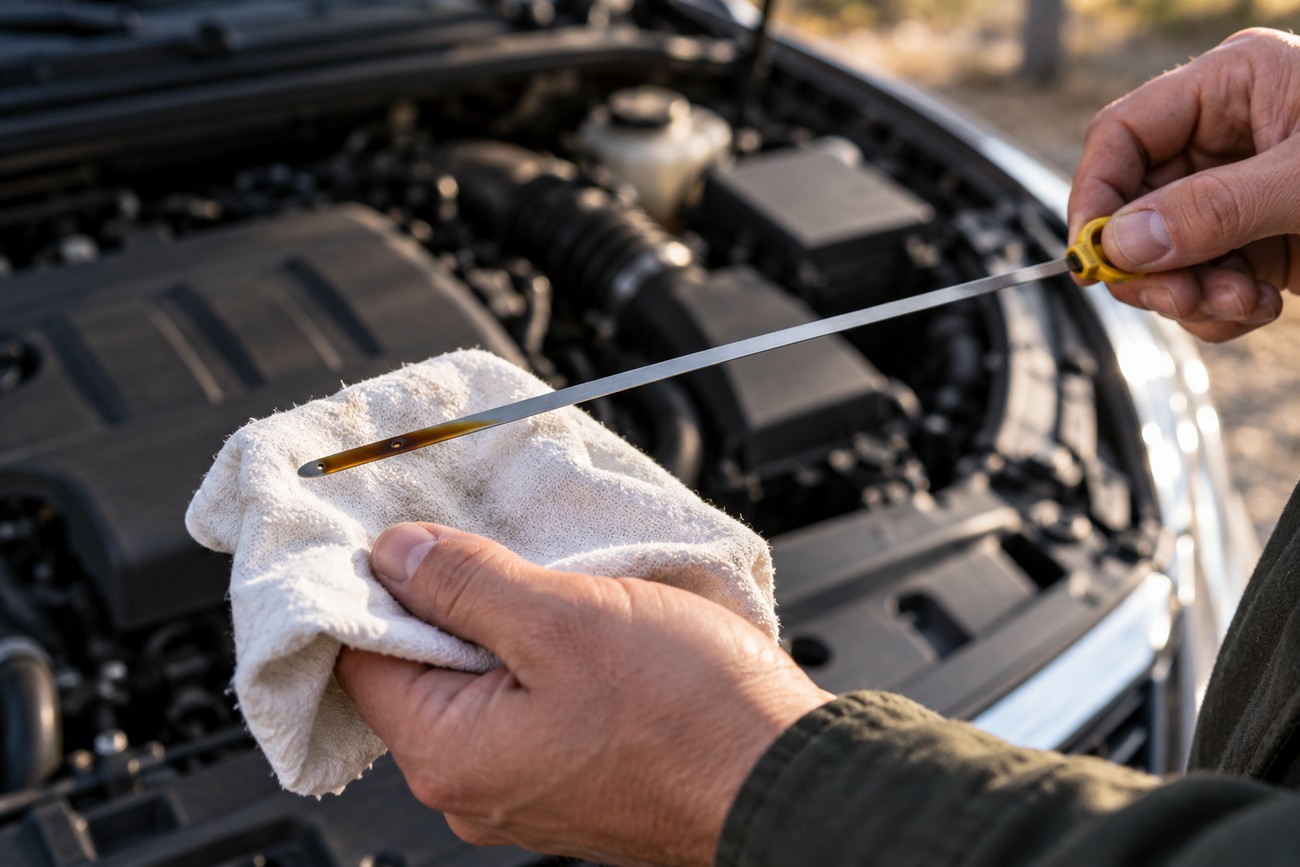
Low oil level is an important first check because the pickup needs a reliable supply of oil. Leaks or oil consumption may leave too little in the sump, particularly when the car turns or brakes. Excess oil is also a problem: overfilling can cause foaming or aeration and make pressure less stable.
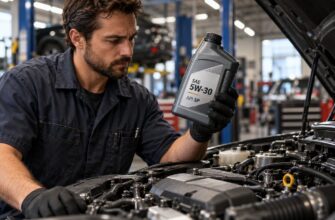
Oil that is too thin for the engine, or diluted, may struggle to maintain pressure when hot. Use the viscosity specified for the engine and operating climate. Hot oil is less viscous than cold oil, so a marginal problem may first show up after a drive, especially at idle.
A restricted oil pickup can limit supply to the pump, while a faulty pump may fail to deliver the required pressure. A filter problem also merits attention, particularly if the warning began immediately after an oil change. The fitted filter, its installation, and the oil used should be checked against the vehicle’s requirements.
Internal bearing wear can produce a similar warning even with a functioning pump. As clearances grow, oil escapes more readily and pressure may fall mainly at hot idle. Replacing the pump alone will not correct pressure loss caused by worn internal parts.
How to Check and Diagnose the Problem Safely
With the engine off, park on level ground and check the dipstick using the procedure in the vehicle handbook. Check for visible leaks around the engine, filter, and drain area, as well as beneath the car. If the level is low, add only the specified oil in measured amounts and recheck the dipstick; avoid an unmeasured top-up or an overfill.
Note when the warning began and whether the oil or filter was recently changed. Confirm that the oil viscosity suits the specific engine and climate, and that the correct filter was fitted. These details give a workshop a useful starting point without treating a recent service or a low reading as a complete diagnosis.
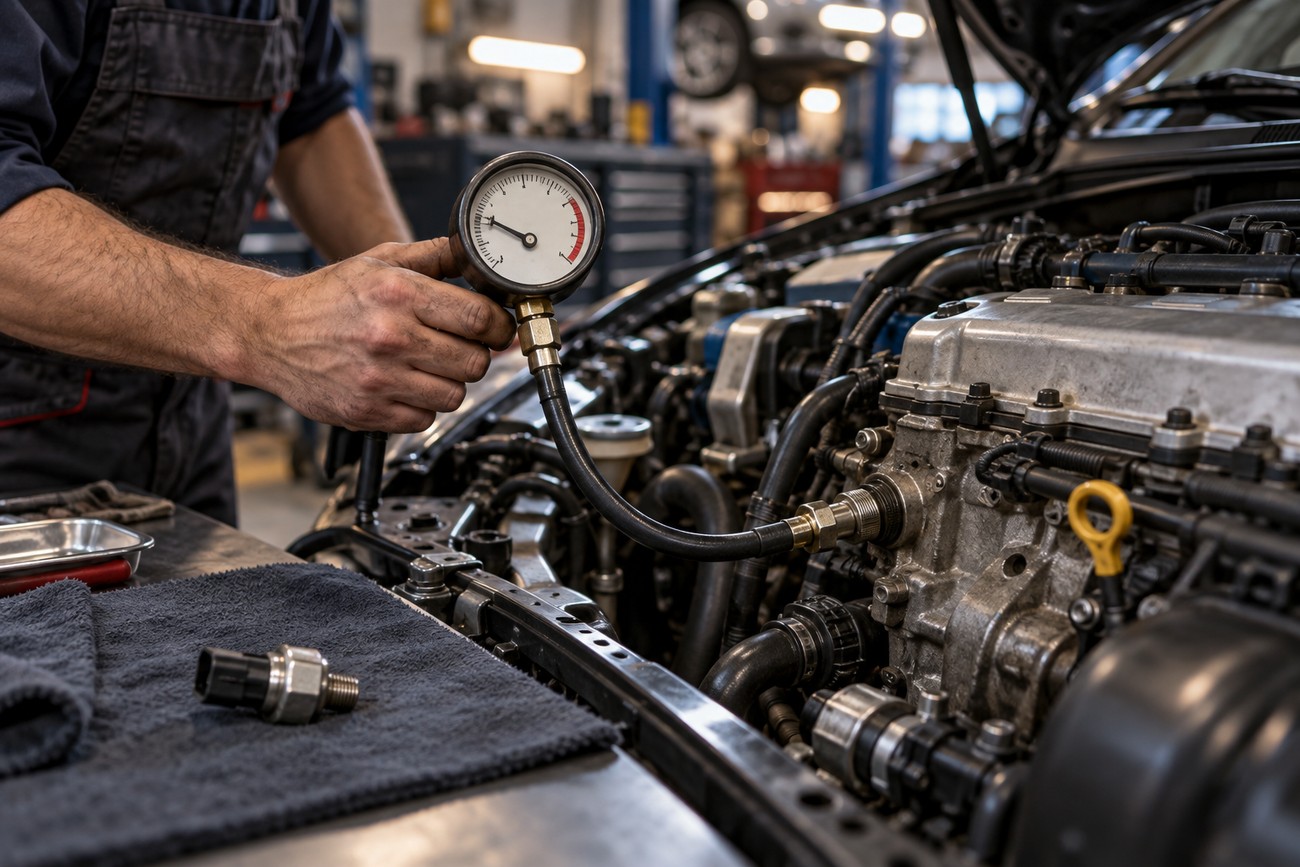
Testing pressure with a mechanical gauge before ordering major parts can separate a weak pump from pressure lost through worn bearing clearances or a restricted pickup.
A workshop can connect a mechanical pressure gauge and compare its readings with the engine service manual. For many passenger-car engines, a typical hot-idle minimum is about 0.5–1.0 bar; at 2000–3000 rpm, pressure is often about 2–4+ bar. These are illustrative ranges, not pass-or-fail limits for your engine. Pressure that fails to rise with rpm is concerning.
Once measured pressure is known, diagnosis can move in the right direction. If it meets the vehicle-specific specification, the switch or sensor, connector, and wiring deserve closer testing. If it is low, fitting a new sensor will not restore lubrication; the oil supply and engine’s mechanical condition need investigation.
When the Light Flickers, Disappears, or Returns After an Oil Change
A light that appears at hot idle and goes out when you raise engine speed can indicate marginal pressure at low rpm. Hot oil is less viscous, which can expose wear or an oil-supply restriction that is less apparent when the engine is cold. The change with throttle is a diagnostic clue, not permission to keep driving.
Flickering during a turn or under braking can happen when the oil level is low enough for the pickup to uncover briefly. Check the level before assuming the movement disturbed a wire. A brief cold-start flicker on an older or worn engine also warrants investigation rather than being accepted as normal.
If the warning started after an oil change, check the measured level, specified viscosity, correct filter, and signs of leakage. An incorrect or faulty filter can be relevant even when the amount of oil added appears right. If a replacement sensor has not solved the problem, actual pressure still needs to be measured.
Intermittent warnings can also come from a faulty connector or wiring. Equally, a light that has gone out may return at a different temperature, engine speed, or driving condition. Keep the engine off until the level and cause have been assessed rather than using a clear dashboard as proof that pressure is safe.
Mistakes That Turn a Warning Into Engine Damage
Driving on the assumption that the problem is “just the sensor” is the most consequential mistake. The light may come on only after pressure has fallen to a critically dangerous level. Silence from the engine does not provide a reliable safety margin.
Adding oil without reading the dipstick can hide a leak or create an overfill. Choosing a thicker or supposedly universal oil as a cure may change the symptom temporarily, but it cannot repair worn bearings or restore flow through a restricted pickup. Oil selection should follow the engine and climate specifications, not an attempt to silence the lamp.
Clearing a warning or replacing a sensor without finding the cause leaves a real pressure problem in place. Continued operation can damage bearings, including a spun bearing. The repair decision should follow a verified pressure reading and the checks that explain it.
Consequences are not always immediate. After low-pressure operation, engine noise, increased oil consumption, or reduced compression may appear later. If the car was driven with the warning on, tell the workshop how it behaved and whether any noise occurred, even if it now seems to run normally.
Frequently asked questions
A low oil pressure warning has no single repair because the same light can be triggered by a lubrication problem or an electrical fault. The safest starting point is to leave the engine off, record what happened, and have actual pressure checked. The answers below explain how that result guides the repair.
How do I fix my low oil pressure?
Fix the cause identified by the level check and a mechanical pressure test. If pressure is within the engine’s specification, the repair may involve the switch or sensor, connector, or wiring. If pressure is genuinely low, the next checks should address the measured oil level, specified oil and filter, pickup, pump, and internal wear as appropriate.
Ask the workshop to confirm pressure against the service manual after the repair, under the conditions that produced the warning. A replaced part or an extinguished light alone does not confirm that the engine now maintains adequate pressure.
What is the most common cause of low oil pressure?
Low oil level is a frequent first finding, but there is no single most common cause that applies to every engine and vehicle. The likely cause changes with the engine’s condition and service history: a warning immediately after an oil change points toward checking the level, oil, filter, and leaks, while pressure that falls mainly at hot idle can make internal wear or restricted supply more relevant.
Check the dipstick first because it is accessible and may reveal an urgent shortage. If the level is correct, do not keep adding oil or assume the sensor is responsible. A gauge reading and the vehicle-specific specification provide a sounder basis for the next repair.