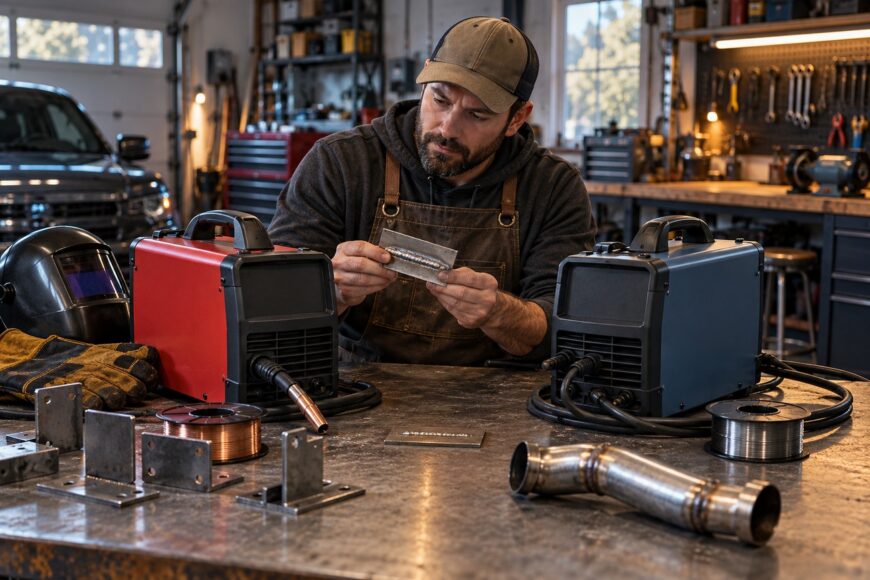
For a hobbyist, the real choice is between convenient 115/120 V MIG welding for sheet metal and repairs, and the risk of expecting a compact household machine to behave like a 240 V welder. Lincoln Electric and Hobart both make credible tools for garage work, yet neither removes the limits imposed by household power, duty cycle, or joint preparation.
These are close competitors in the same practical class. The useful differences are found in control layout, wire-feed range, duty cycle, setup tolerance, and realistic material thickness. Peak amperage and a bold maximum-thickness figure tell only part of the story, especially when a short repair weld is compared with repeated fabrication on heavy steel.
Lincoln often appeals to buyers who want straightforward controls and familiar garage usability. Hobart attracts users who prefer more voltage positions and a broader listed wire-feed range. The better choice depends on the work in front of you, the quality of your electrical access, and how quickly your projects may grow beyond thin steel and short welds.
- What Hobbyists Actually Need from a MIG Welder
- Lincoln vs Hobart: Specification Comparison That Matters
- Lincoln Electric for Hobbyists: Where It Makes Sense
- Hobart Handler 140 for Hobbyists: The Practical Differences
- Real-World Welding Performance: Thin Sheet vs Thick Steel
- Controls, Wire Feed, and Setup: The Differences Beginners Feel
- Common Buying Mistakes and Hidden Ownership Costs
- Which One Should You Buy: Lincoln or Hobart?
- Frequently asked questions
- What is the best MIG welder for a hobbyist: Lincoln or Hobart?
- What is the best MIG welding machine for home use if I only have a household outlet?
- How good are Lincoln Electric welders for beginners?
- When should a hobbyist skip both machines and buy a 240 V welder?
What Hobbyists Actually Need from a MIG Welder
Most hobby MIG work has a modest scale. It includes bodywork, exhaust repairs, thin steel brackets, small repairs, and occasional projects where the machine may sit for weeks between uses. For this workload, predictable low-current behavior often matters more than the highest number printed on the front panel. A welder that starts cleanly and lets you control heat can save more work than one with a larger headline output.
Thin sheet exposes poor setup quickly. Excess heat can create burn-through, while an unstable arc leaves a cold-looking bead or excessive spatter. Smooth wire feeding, sensible voltage steps, a sound liner, and a clean contact tip all contribute to control. The operator also needs room to make short tacks and brief stitch welds instead of trying to lay one long bead across a heat-sensitive panel.
Both Lincoln and Hobart hobby MIG models are commonly used for bodywork, thin steel, exhaust work, and small garage repairs. MIG is often easier to learn than several alternatives, and it can be faster and less expensive per weld over a series of home projects. That advantage assumes the machine is set up correctly and the material is cleaned and fitted properly.
A 115/120 V machine is convenient because it works from household power, but it reaches its limits sooner on thick material and sustained welding. Short garage jobs can hide that limitation for a long time. Someone who later starts welding heavy frames or laying long beads may find that a compact unit is quickly outgrown, even if it remains useful for sheet metal.
Lincoln vs Hobart: Specification Comparison That Matters
The figures below are model-specific and should be read as a starting point for setup decisions. They do not make every Lincoln 140-class model identical, and advertised thickness is not a guaranteed single-pass result.
| Specification | Lincoln SP-140T | Lincoln Easy MIG 140 | Hobart Handler 140 | Practical meaning |
|---|---|---|---|---|
| Input power | 115 V household power | Household 115/120 V class | Household 115/120 V class | Easy to use in a home garage, with less headroom than a 240 V machine. |
| Stated steel capacity | Up to 3/16 in steel | Model-specific rating; verify the manual | Commonly listed up to 1/4 in soft steel | Preparation, joint design, position, wire, gas, and pass count determine the usable result. |
| Conditional higher claim | No higher figure assumed here | No higher figure assumed here | Some descriptions claim up to 5/16 in | Treat this as a marketing claim, not a confident single-pass guarantee. |
| Output range | Model-specific; do not infer from another Lincoln model | Model-specific | 25–140 A | Maximum amperage matters less than the arc’s behavior at the setting you actually use. |
| Duty-cycle reference | Check the model documentation | Check the model documentation | About 70 A at a 20% duty cycle | Long or repeated welds require pauses and expose the limits of a compact unit. |
| Voltage control | Two-knob control | Four voltage levels | Five voltage positions | More positions can make fine-tuning easier, though they do not guarantee a better arc. |
| Listed wire-feed range | Model-specific | 50–500 IPM | 40–700 IPM | A wider range gives more adjustment space; actual feeding quality remains critical. |
Lincoln Electric for Hobbyists: Where It Makes Sense
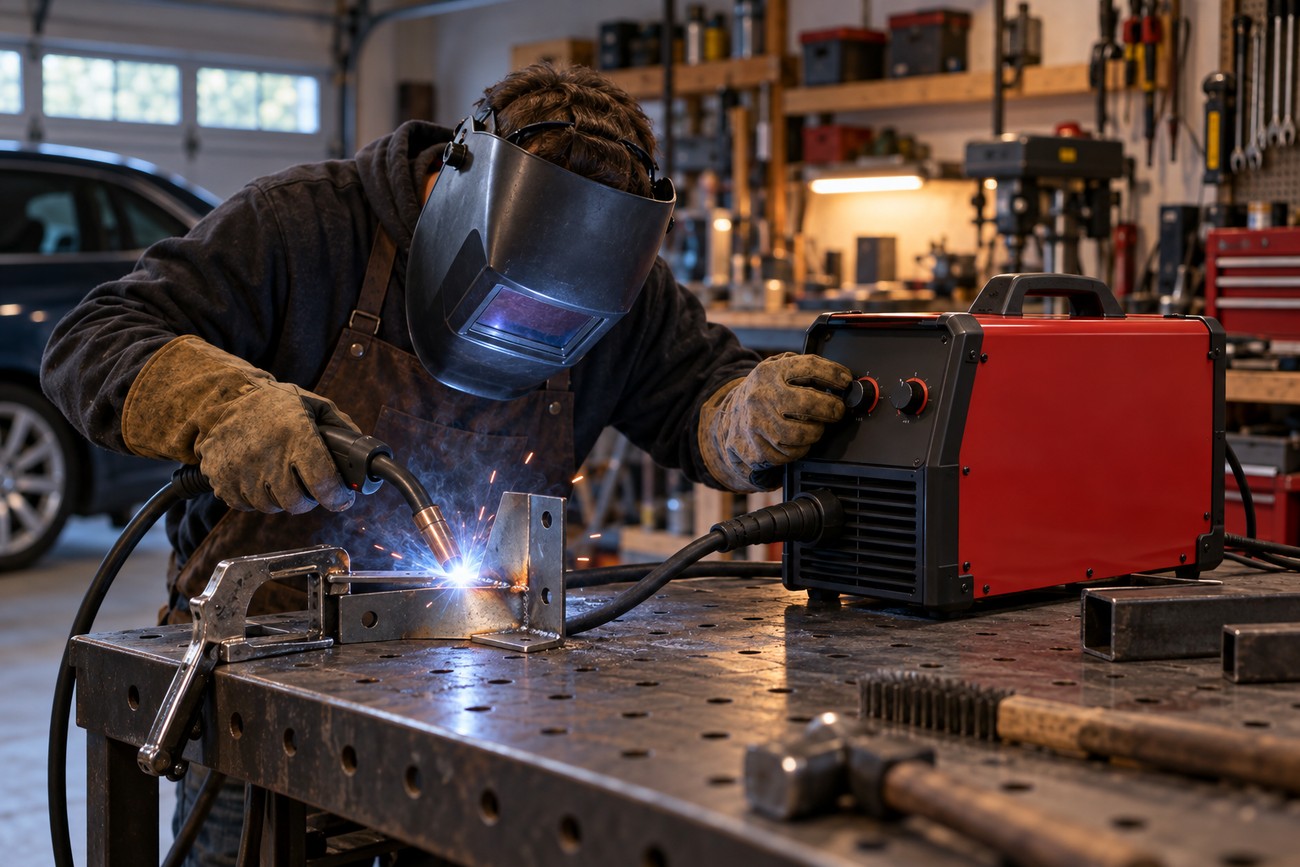
The Lincoln SP-140T fits the basic garage requirement well: it uses 115 V household power, has two-knob control, and carries a stated capacity of up to 3/16 in steel. That combination suits small repairs where the machine must be connected and used without arranging a dedicated 240 V circuit. Its appeal is practical rather than industrial.
The two-knob layout gives the operator a direct relationship between voltage and wire feed. That simplicity can make early practice less intimidating, especially when the work is limited to short welds on thin or light-to-medium steel. The Lincoln Easy MIG 140 is commonly compared directly with the Hobart Handler 140 for the same home-use role, although its exact specifications should be checked separately from the SP-140T.
Easy MIG 140 listings commonly show four voltage levels and a 50–500 IPM wire-feed range. Four levels are workable for many garage tasks, yet the steps can feel coarse when a thin panel sits between two useful settings. A novice may find one position too cold and the next too hot, then compensate with travel speed or stitch technique rather than finding a perfect dial position.
Lincoln’s 140-class machines are better framed as short-run hobby and repair tools than as continuous heavy-fabrication machines. Their results depend on the wire diameter, shielding gas, liner, contact tip, and drive-roll condition. If feeding becomes erratic, changing voltage or buying a larger spool will not correct a worn liner, poor tension, spool drag, or a contaminated tip.
Hobart Handler 140 for Hobbyists: The Practical Differences
The Hobart Handler 140 is specified with a 25–140 A output range and is commonly listed with five voltage positions. That extra position gives the operator more room to tune the arc between broad steps. The difference is modest on a simple bracket, yet it can be useful when thin steel needs a narrow heat window.
Hobart’s listed wire-feed range is 40–700 IPM, which is broader than the 50–500 IPM range commonly listed for the Lincoln Easy MIG 140. A wider adjustment range can accommodate more combinations of wire and technique. It does not automatically create a smoother arc, because the gun liner, drive rolls, contact tip, spool drag, and consumable quality still control whether the wire arrives consistently.
The Handler 140 is commonly described as capable of welding soft steel up to 1/4 in. Some descriptions reach 5/16 in, but that higher figure should be treated as a conditional marketing claim. It may depend on favorable preparation, joint fit-up, position, wire, gas, cooling, and multiple passes. It should not be read as a promise of a confident single-pass weld in ordinary garage conditions.
Its listed duty-cycle reference is about 70 A at a 20% duty cycle. That figure matters because the machine may feel capable during a short test bead and then require frequent pauses during a larger repair. The five-position control can be a useful beginner feature, though it does not make the Handler 140 a substitute for a 240 V machine used regularly on heavy steel.
Real-World Welding Performance: Thin Sheet vs Thick Steel
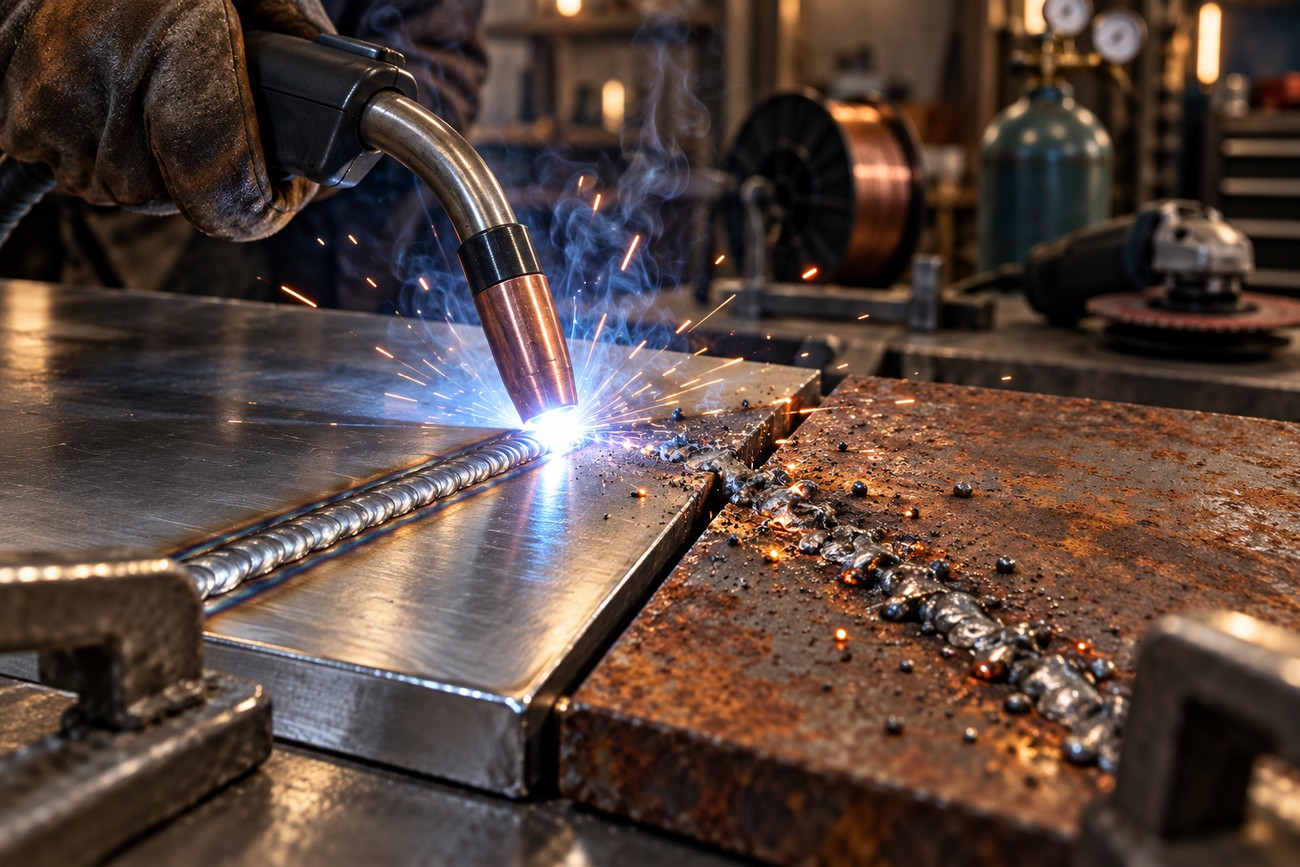
A thickness rating describes a defined test or favorable operating condition, while a repeatable workshop result includes far more variables. Edge preparation is one of the largest. Clean, correctly fitted edges transfer heat and allow the weld to reach the joint. Rust, paint, mill scale, gaps, and poor alignment consume heat before the joint is properly fused.
Wire diameter and shielding gas also change the working window. The correct combination affects arc stability, penetration, spatter, and how easily the operator can control heat. Travel speed matters just as much: moving too slowly can burn through thin sheet, while moving too quickly across thicker material can leave inadequate fusion.
Joint position changes the result again. A flat joint gives the operator more control over the puddle than an awkward vertical or overhead repair. When a thicker joint approaches the practical limit of a 115/120 V machine, beveling the edges, improving fit-up, and using multiple passes may produce a sounder result than simply selecting the highest available setting.
Both Lincoln and Hobart are most convincing on short welds and light-to-medium hobby work. A series of small tacks may cool between operations, while a long continuous bead brings the duty-cycle limit and heat management into view. This is why a machine can perform well on an exhaust repair and feel underpowered on a heavy bracket made from poorly prepared stock.
Thin metal is usually won with heat control, fit-up, and stitch timing rather than maximum amperage. Turning the machine up can make a weak setup hotter without making the joint stronger.
The practical answer to the thickness dispute is therefore conditional. Lincoln’s stated capacity of up to 3/16 in steel is a useful reference, and Hobart listings commonly cite up to 1/4 in soft steel, with some descriptions claiming 5/16 in. Neither figure should override the actual joint design, number of passes, position, and expected repetition. If thick steel is a regular part of the plan, the electrical and duty-cycle headroom of a 240 V class machine is more relevant than a favorable maximum on a product page.
Controls, Wire Feed, and Setup: The Differences Beginners Feel
Voltage steps are felt most clearly on thin material. Hobart’s five voltage positions provide a finer choice than the four levels commonly listed for the Lincoln Easy MIG 140. That may reduce the need to compensate with travel speed, torch angle, or stitch length. It still takes practice to recognize whether a poor bead comes from voltage, wire feed, contamination, or technique.
The listed feed ranges are also useful only in context. The Hobart Handler 140 is commonly listed at 40–700 IPM, while the Lincoln Easy MIG 140 is listed at 50–500 IPM. A broader range can help with different wire choices and operating preferences, but an unstable feed can make every setting unreliable. The operator should begin with clean material and short test welds on similar scrap before judging the machine.
Setup problems often look like a weak power source. Check the polarity required for the wire and process, the spool’s ability to turn, drive-roll tension, liner condition, contact-tip fit, and cable routing. Confirm shielding-gas flow and protect the weld area from drafts. Correcting these details can change the arc more than moving between neighboring control settings.
Inconsistent arc behavior is usually diagnosed from the wire path first: liner, drive-roll tension, contact tip, spool drag, and cable routing deserve inspection before the power section is blamed.
On thin metal, wire choice, gas, feed speed, voltage, and short tack or stitch technique work as a group. A beginner who changes several controls at once loses the ability to identify the cause of improvement or failure. Make one adjustment, lay a short test bead, and inspect the bead profile and the reverse side when access allows.
Common Buying Mistakes and Hidden Ownership Costs
The most common buying mistake is treating maximum thickness as the main selection number. A machine advertised for a particular thickness may achieve that result under favorable conditions, with suitable preparation and more than one pass. A buyer who regularly welds thick steel should evaluate duty cycle, outlet requirements, and the length of expected beads before looking at the maximum figure.
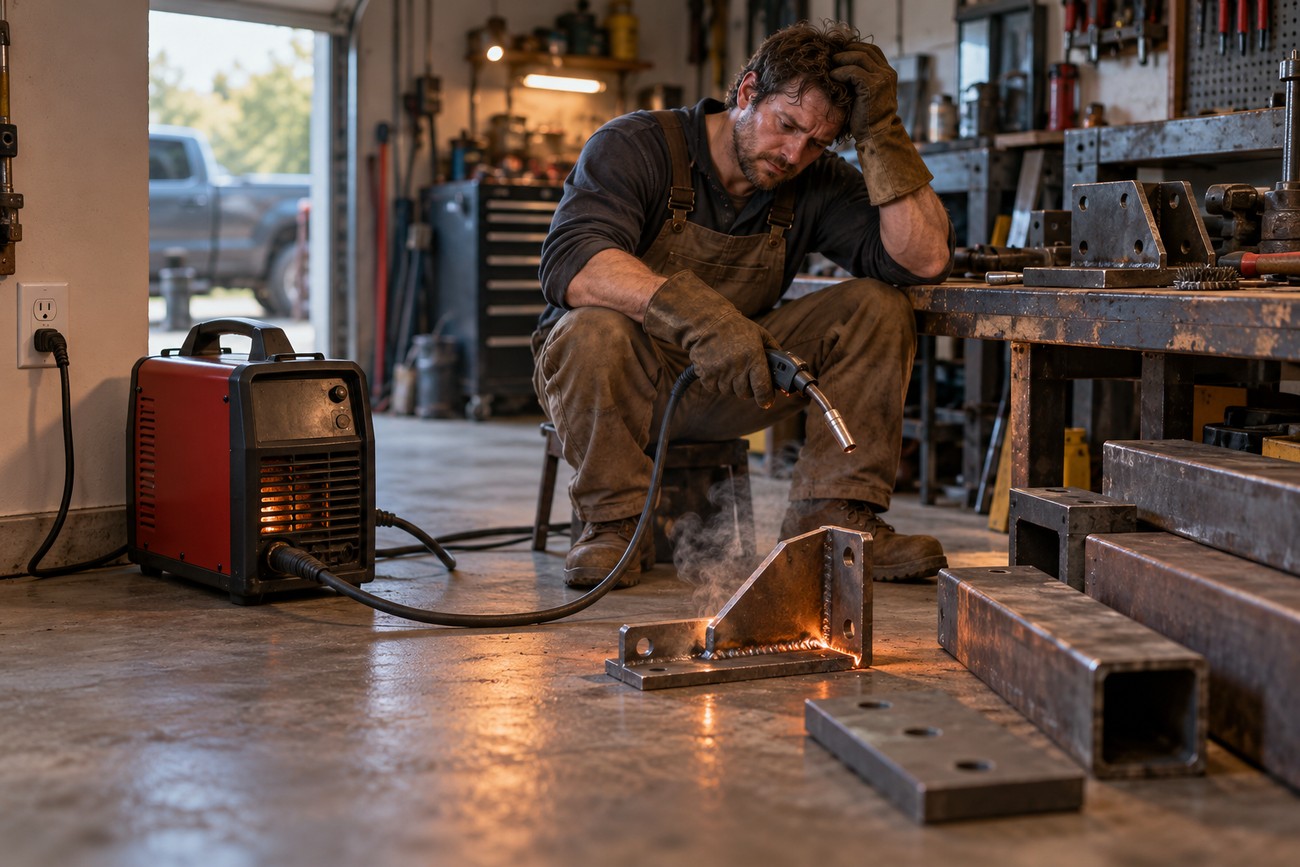
A second mistake is choosing a household-voltage MIG for work that is already known to be heavy or repetitive. A 120 V hobby MIG may handle an occasional bracket, then become frustrating when the same user starts building frames or repairing thick equipment every weekend. The machine has not suddenly failed; the project has moved into a class where 240 V headroom is more appropriate.
Duty cycle is easy to overlook because many home repairs are short. A few tacks and a brief bead give the machine time to recover, while sustained work makes pauses obvious. Hobart’s Handler 140 reference of about 70 A at a 20% duty cycle illustrates why output and endurance should be considered together.
Ownership also includes the parts that keep the arc stable. A basic package may still require additional wire, shielding gas, a regulator, contact tips, and other consumables for comfortable operation. Liners, drive rolls, torch parts, and electrical access add practical costs over time. Budgeting only for the welder can turn a seemingly simple setup into a series of avoidable interruptions.
Which One Should You Buy: Lincoln or Hobart?
Choose Lincoln when your priority is straightforward garage use, thin steel, and the specific control approach of the SP-140T or Easy MIG 140. The SP-140T uses 115 V household power, two-knob control, and carries a stated capacity of up to 3/16 in steel. Easy MIG 140 listings commonly show four voltage levels and a 50–500 IPM feed range.
Choose Hobart when five voltage positions appeal to your tuning preferences, or when the Handler 140’s specified 25–140 A range and broader 40–700 IPM listed feed range better match your intended setup. Its commonly listed capacity of up to 1/4 in soft steel remains conditional, and the 20% duty-cycle reference of about 70 A should temper expectations for long welds.
For bodywork, exhaust work, brackets, and occasional repairs, either brand can be a sensible household-voltage choice. Lincoln may feel more direct to someone who values a simple control layout. Hobart may feel easier to fine-tune when the extra voltage position matters. Neither brand universally wins, because the material and working pattern determine the useful advantage.
- Choose a compact 115/120 V model for occasional thin-steel work and short garage welds.
- Check the actual model manual rather than assuming every 140-class machine shares the same rating.
- Give duty cycle equal attention to maximum amperage when planning repeated welds.
- Allow for wire, gas, regulator, tips, liner condition, and electrical access.
- Move to a 240 V welder if thick steel, long beads, or frequent fabrication is already part of the plan.
Frequently asked questions
What is the best MIG welder for a hobbyist: Lincoln or Hobart?
For bodywork and thin sheet, either can be suitable if the model’s controls and consumables fit your working habits. Lincoln is a sensible choice when simple two-knob or four-level control suits your projects. Hobart has a stronger case when five voltage positions and its broader listed wire-feed range are useful for tuning occasional brackets and repairs.
If heavier future projects are likely, compare the cost of outgrowing a household-voltage unit before choosing between brands. A buyer who expects regular thick-steel fabrication may be better served by planning for a 240 V machine rather than selecting a compact model based on its maximum thickness claim.
What is the best MIG welding machine for home use if I only have a household outlet?
A 115/120 V MIG is the appropriate class when a household outlet is the firm electrical limit and the work consists mainly of thin steel, bodywork, exhaust, and short repairs. Check that the outlet is suitable, avoid treating a long or inadequate extension cord as a harmless substitute for proper electrical access, and keep the work area close enough to reduce cable and torch complications.
Project frequency matters as much as outlet convenience. Occasional short welds are a good match for a compact machine. Repeated thick-steel work may justify arranging suitable 240 V access or changing the project plan, even if a household-voltage welder can complete an isolated job.
How good are Lincoln Electric welders for beginners?
Lincoln hobby MIG welders can be beginner-friendly because the household-power format and straightforward controls make initial setup manageable. Beginner-friendly means the operator can establish a repeatable process, make small adjustments, and learn from short test welds. It does not mean the machine has the capacity of professional fabrication equipment.
A new user still needs clean metal, correct polarity, sound wire feeding, suitable gas, and controlled tacks. The learning curve becomes harder when the operator blames the machine for a worn contact tip, poor fit-up, or excessive travel speed.
When should a hobbyist skip both machines and buy a 240 V welder?
Skip both compact household-voltage options when thick steel, long beads, or frequent fabrication is a predictable part of your work. Repeatedly operating near a small machine’s limits creates pauses, extra passes, and frustration. A 240 V welder is the more appropriate class for regular heavy-steel work.
A future upgrade may also be sensible when a current project list already includes frames, substantial brackets, or other joints that require reliable penetration across thicker material. Buying a compact unit first can still make sense for thin-sheet work, provided you accept that it may remain a secondary tool rather than a complete shop welder.