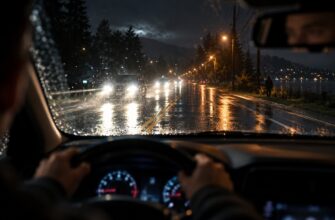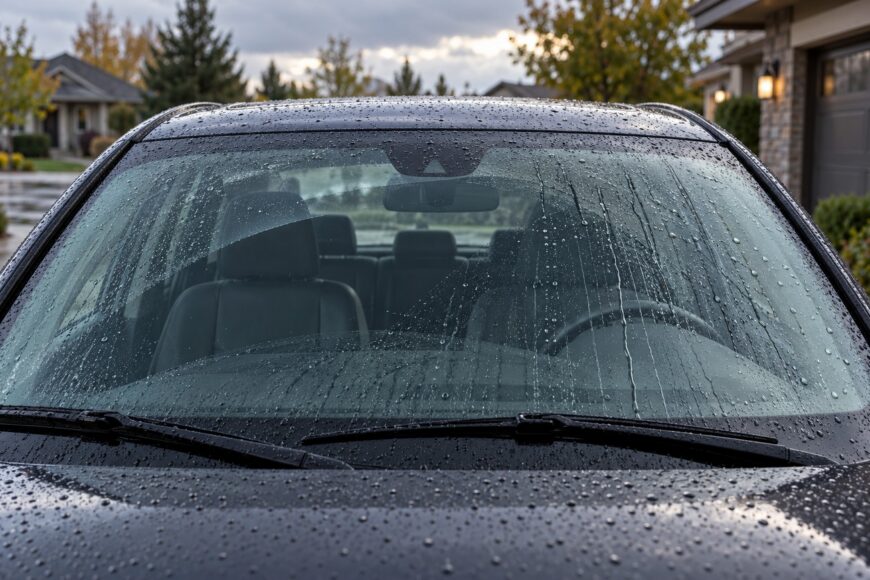
A windshield can look clean while the car is parked, then smear as soon as the wipers cross wet glass. Against oncoming headlights at night, a thin film can turn into distracting glare. The temptation is to fit new blades immediately, but the cause may be on the glass, along the rubber edge, or in the washer fluid.
Work from the simplest checks before replacing parts. Notice when the streaks appear and whether they began after a car wash, a glass treatment, or a fluid change. That timing helps you choose between cleaning, changing fluid, and replacing blades without assuming one fix will suit every vehicle.
- Find the source of the streaks before changing the blades
- Clean the wiper edges and windshield without spreading residue
- Match washer fluid to the weather and your vehicle
- Why coatings, car-wash wax, and new blades can disappoint
- Test the result and decide when the blades need replacing
- Frequently asked questions
- Why does Windex leave streaks on my windshield?
- How can I tell whether windshield glare is on the inside or outside?
- What should I do if my washer nozzles have frozen?
Find the source of the streaks before changing the blades
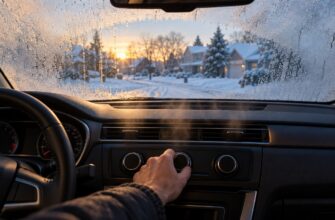
Wet the windshield and run the wipers while the vehicle is safely stationary. Watch whether water is left in missed areas, spread into a hazy film, or dragged across the glass. A windshield that looks clear when dry may reveal a film only when it is wet and the wipers run; judge the problem under those conditions.
Check what changed before the smearing started. GM identifies insects, road grime, tar, and car-wash wax residue among possible contributors to windshield smearing. Streaks appearing after a wash or coating application give you a reason to inspect the glass for residue, though timing alone does not prove the cause.
Look at the blade edges as well. Dirt on the rubber can be carried across otherwise clean glass, while a hardened or deformed edge may leave areas uncleared. No single wipe pattern identifies the fault with certainty, so clean both surfaces before judging the blades.
New blades may still streak when contamination or an old coating remains on the glass. If a fresh set immediately produces the same haze, repeated replacement is unlikely to address transferable wax, road film, or coating residue.
Clean the wiper edges and windshield without spreading residue
Start with the vehicle parked and the wipers positioned as its manual allows. Lift each arm only as far as it safely moves, hold the raised arm, and clean the rubber edge with a suitable cleaner and cloth. Return the arm gently to the glass; letting it snap down risks damage.
Windshield washer fluid, isopropyl alcohol, and nonabrasive cleaners compatible with automotive glass and rubber are cleaning options. Follow the cleaner’s directions and use a fresh part of the cloth as dirt comes off the edge. Do not use gasoline, kerosene, or other petroleum products to clean wiper rubber.
Clean the wiper edge before the glass so the blade does not promptly transfer dirt back. Then clean the windshield and lift away loosened residue with a separate, clean cloth, changing to a fresh area as needed. Wiping everything with one dirty, damp cloth can redistribute film rather than remove it.
Pay attention to areas where the blades reverse direction or park, where residue can remain after a quick wipe. Once the surface is clean, wet it and run the wipers to check the result; a dry-glass inspection alone can miss the film you are trying to remove.
Match washer fluid to the weather and your vehicle
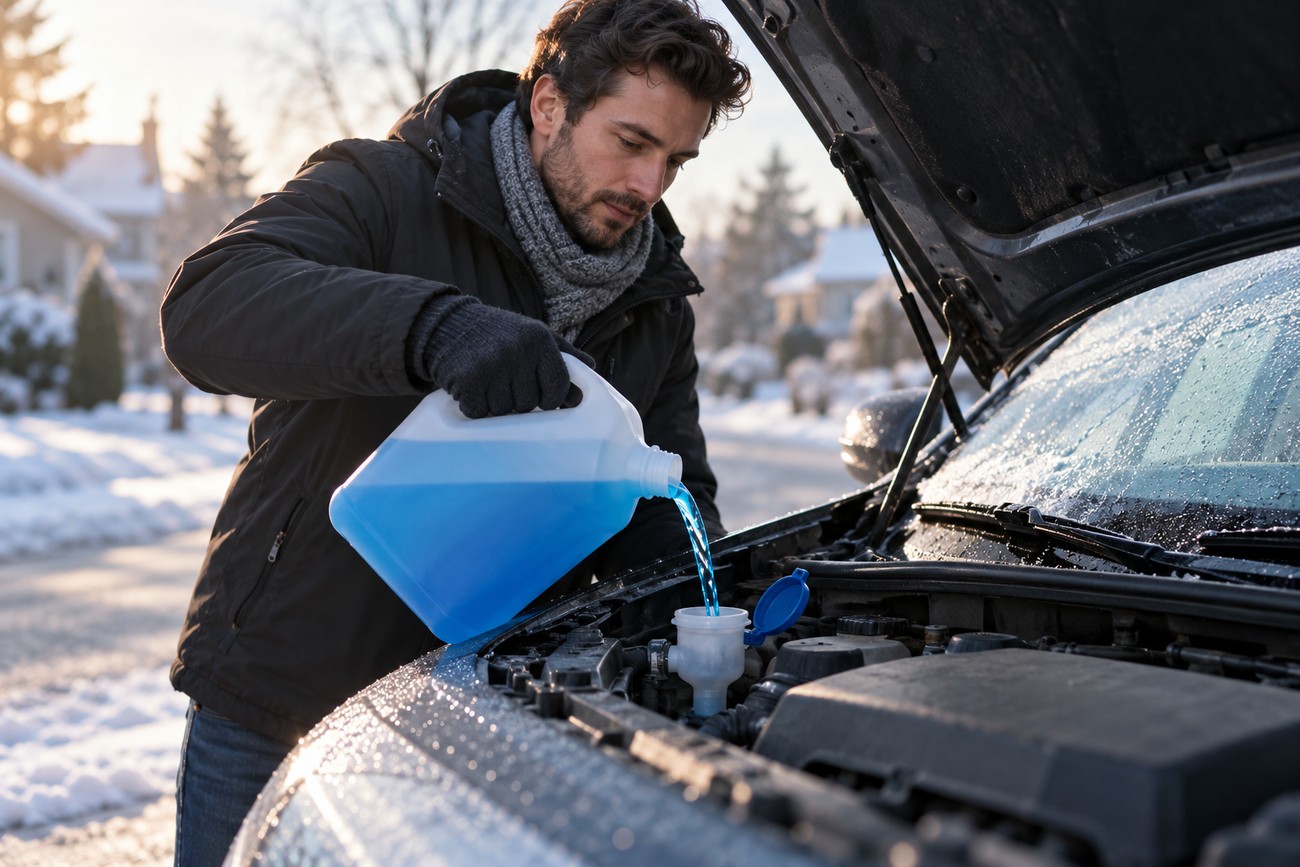
If streaking begins soon after you refill the washer reservoir, treat the new fluid as a clue. Check your vehicle’s recommendation before switching to another formula or scrubbing the glass repeatedly. Residue already on the windshield can also be involved, so a fluid change is a lead to investigate rather than a certain diagnosis.
Read the manual before choosing additives. Tesla warns that fluids with water-repellent or bug-removal additives may cause streaking, smearing, squeaking, or wiper noise. That warning is manufacturer guidance for its vehicles, not proof that every additive behaves the same way in every wiper system.
Below 4 °C, use freeze-resistant washer fluid rather than summer water or fluid without adequate freeze protection. Check the product’s stated protection for the temperatures you expect: a “winter” label does not make every fluid suitable for the same conditions. Fluid that freezes can leave you without an effective washer when you need it.
Follow the label instead of guessing how much water to add. Dilution is product-specific: one Liqui Moly concentrate specifies 1:100, while some ready-to-use seasonal Rain-X fluids are poured in without dilution. Diluting a ready-to-use winter fluid can reduce its intended freeze protection.
Why coatings, car-wash wax, and new blades can disappoint
A water-repellent treatment may sound like a direct answer to poor visibility, but the result depends on what is already on the glass and how the wipers interact with it. GM service guidance discourages applied glass coatings and washer additives; Rain-X markets water-repellent products as improving visibility. Neither position establishes one outcome for every vehicle, so check your manual before applying a treatment.
Car-wash wax and an older coating can remain after an ordinary wash. A clean-looking dry windshield may show a film only after wetting and wiping. Cleaning needs to address that residue rather than only the water visible on the surface.
If compatible cleaning does not remove a stubborn deposit, nonabrasive glass polishing may help remove residue or an old coating. Use a product intended for automotive glass and follow its instructions, including any vehicle guidance for treated glass. Polishing does not repair deep scratches or chips; those are separate visibility and glass-condition problems.
Test the result and decide when the blades need replacing
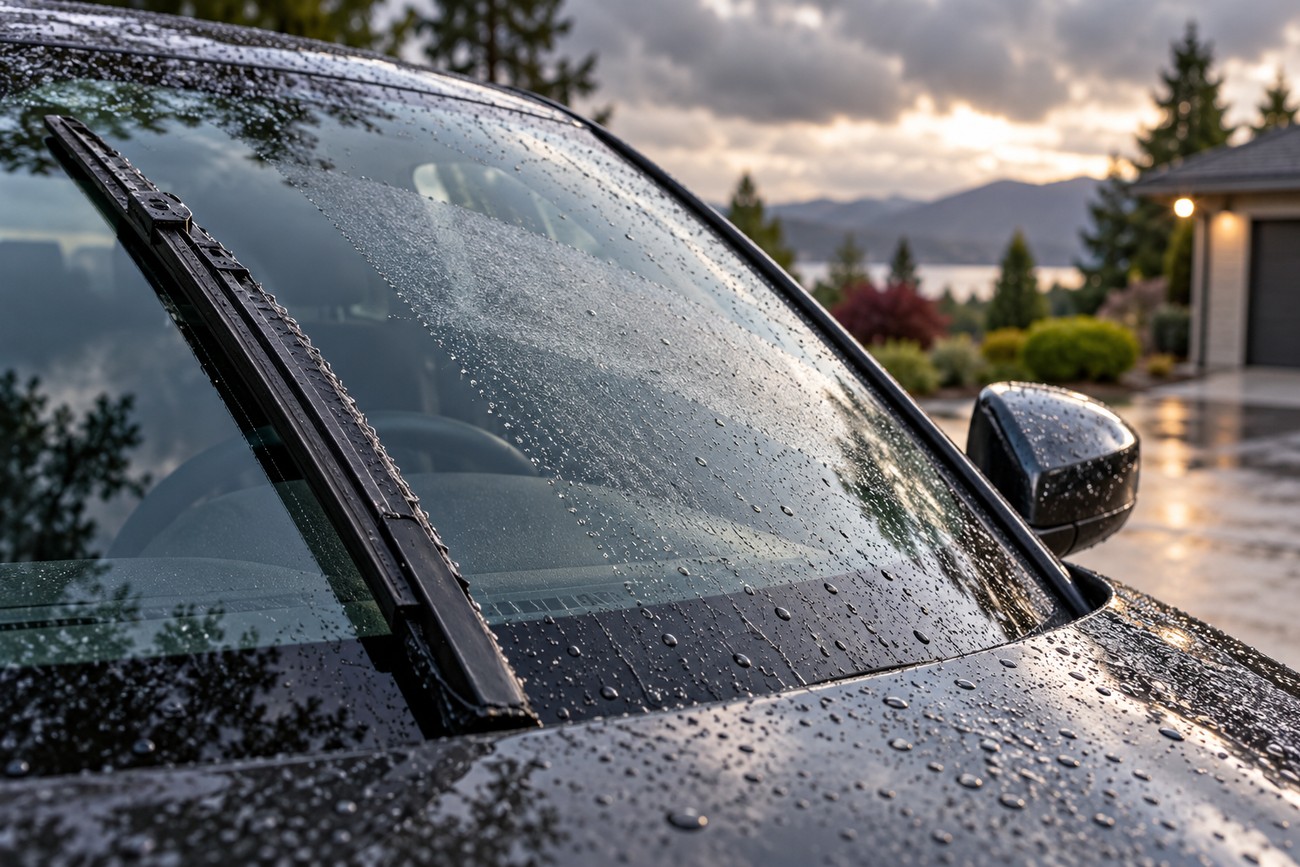
After cleaning the glass and blade edges, wet the windshield and operate the wipers with the vehicle safely stationary. Judge the result on wet glass, looking for persistent missed areas, smearing, or noise. Dry glass can appear clear even when a film remains.
If the same haze returns, revisit recent fluid, car-wash, or coating changes before cleaning the same surface again. If the smear moves with dirt picked up at a blade edge, clean that edge once more with a fresh cloth. A repeated missed area after cleaning may instead point toward blade condition.
Inspect the rubber for hardening or deformation, and replace a blade that remains ineffective. Tesla recommends replacing a blade if it still clears poorly after the glass and rubber have been cleaned. Use a blade specified for your vehicle and handle the arm gently during replacement.
Keep glass damage separate from a cleaning diagnosis. If damage itself obstructs your view, have the glass assessed rather than continuing to polish it.
Frequently asked questions
Some streaks call for a more specific check than another full cleaning. A household cleaner, glare on the cabin side, or a frozen washer system each changes the next sensible step. Identify which situation you have before applying more product or operating the wipers again.
Why does Windex leave streaks on my windshield?
Do not assume every Windex formula is the cause. Excess cleaner, a contaminated cloth, or residue already on the glass may leave a film that becomes apparent when the glass is wet and the wipers run. Check whether the specific product is suitable for automotive use, then try a small area with a clean cloth and remove the loosened residue with a fresh one. Windshield washer fluid, isopropyl alcohol, and nonabrasive cleaners compatible with automotive glass and rubber are other cleaning options.
How can I tell whether windshield glare is on the inside or outside?
Clean a small patch on the cabin side and a separate patch directly opposite it on the outside, then compare them in the lighting that reveals the glare. If the clearer patch is on the inside, focus on the interior surface; exterior wiper cleaning will not remove an interior film. If the outside patch improves the view only after wetting and wiping, inspect the exterior glass and blades.
What should I do if my washer nozzles have frozen?
Let the system thaw in a suitably warm place before trying the washer again; do not keep forcing a frozen system. Once it works, check the fluid’s stated freeze protection against the temperatures you expect. Below 4 °C, use freeze-resistant washer fluid rather than summer water or fluid without adequate freeze protection.