You clean the car, drive with the windows open, and everything smells fine. Then it sits in the sun, and the stale odor returns. Heat can make food residue and other organic smells more noticeable, while a freshener may only cover them until its scent fades.
A lasting fix starts with finding what smells. A spill can soak into a seat, a damp floor mat can hide wet material below it, and a musty burst from the vents may have a separate cause. Notice where and when the odor appears before applying another product; that pattern is often more useful than how strong the smell is.
- Find the source before adding a scent
- Build a cleaning routine that does not leave moisture behind
- Stop musty smells at the carpet and vents
- Handle smoke and deeply absorbed odors realistically
- Choose odor treatments without trading one problem for another
- Keep the fresh result between deep cleans
- Frequently asked questions
- How do dealerships make cars smell so good?
- How can I stop my car interior from getting so dusty?
- How can I keep my car fresh when traveling with a dog?
- Why is the new-car smell stronger on hot days?
Find the source before adding a scent
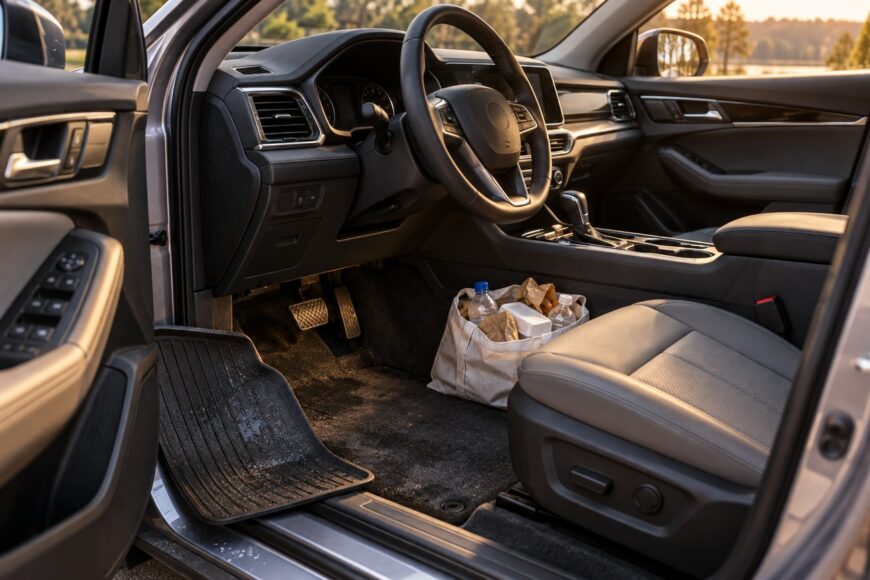
Start by removing food packaging, bottles, tissues, and anything damp. Check the seats, footwells, and trunk separately, then smell near the vents with the climate system off and again when it starts. This comparison helps narrow the search without spraying fragrance over the evidence.
A sour note near a seat may follow a drink spill; body oils and food crumbs can also linger in upholstery. Smoke settles into fabric and porous trim. Around the floor, check for damp carpet or a mat that was put back wet, particularly if the smell is strongest after the car has been closed up.
Heat can intensify odors from organic residue, so a smell that returns on a warm day deserves another look at the material beneath the visible surface. Fragrance can mask a smell but does not remove the spill, residue, moisture, or contaminated material causing it.
Pay attention to timing as well as location. An odor that arrives mainly when ventilation starts points toward the climate system, while a constant smell near one footwell suggests checking that area first. Mustiness alone does not prove there is mold; persistent dampness or a recurring vent odor calls for closer inspection.
Build a cleaning routine that does not leave moisture behind
Take waste out after trips, especially food scraps and drink containers. Remove floor mats regularly, shake out dry debris, and let wet mats dry completely before replacing them. Keeping these easy-to-reach items clean prevents small spills and damp items from becoming persistent odor sources.
Vacuum seat seams, the space under seats, and the edges of the floor covering, where crumbs and pet hair collect. Wipe suitable hard surfaces with a product intended for the finish, applying it to a cloth rather than soaking the dashboard. Use a clean cloth so you do not spread old residue around the cabin.
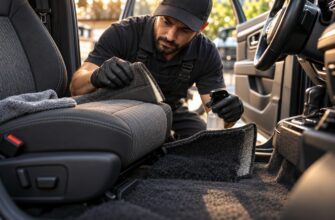
Blot fresh spills promptly, then follow the upholstery or carpet cleaner’s directions and test it in a hidden spot. Use only as much liquid as the material needs. A heavily soaked carpet can feel clean on top while water remains beneath it, leaving a worse smell once the car is closed.
Give cleaned areas enough airflow and time to dry before fitting mats or closing up the vehicle for an extended period. If a spill has reached seat foam or under-carpet padding, repeated surface cleaning is unlikely to reach all of it. That is a reason to assess the affected material, not to keep adding water.
Stop musty smells at the carpet and vents
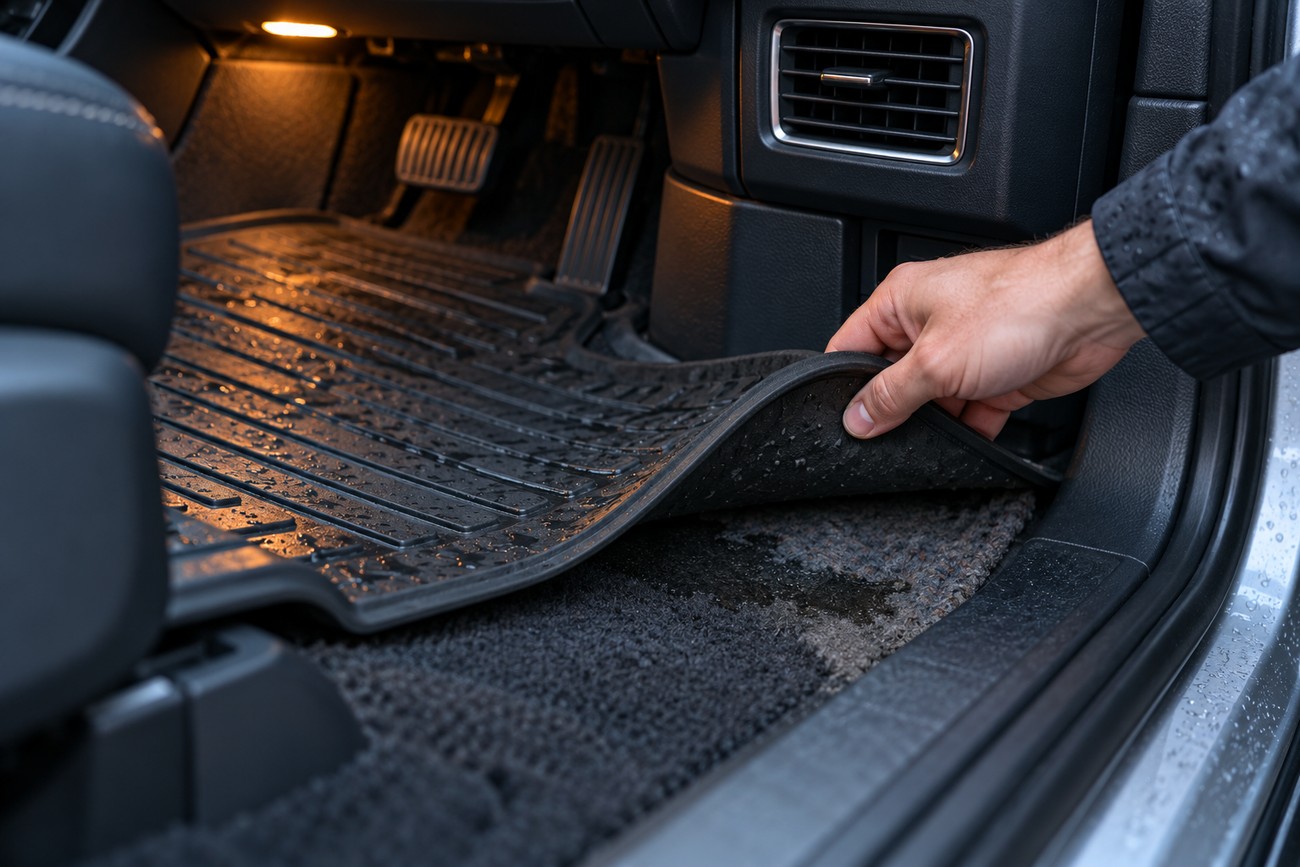
A damp-footwell smell and a burst of mustiness when the fan starts merit different checks. Lift the mats and feel for moisture around the carpet edges, especially after rain or cleaning. If the same area becomes damp again, arrange an inspection to find how water is getting in.
Carpet may appear dry at the surface while padding or sound insulation underneath remains damp and retains odor. The visible floor covering can therefore smell better after cleaning even though the source is still present. Drying and resolving persistent moisture may require access below it.
Replace the cabin filter on your vehicle’s maintenance schedule. At least annual replacement, or replacement around every 10,000–15,000 km under heavier-use conditions, is a general reference, but the specific vehicle schedule takes precedence. A neglected filter deserves attention, though a new one is not a guaranteed cure for odors from the vents.
Persistent mustiness when the climate system starts can indicate evaporator contamination or an AC drainage issue; inspection determines the cause. If the odor repeatedly returns after the first minutes of airflow, ask a service provider to check the system rather than repeatedly scenting the cabin.
Handle smoke and deeply absorbed odors realistically
Vacuuming removes loose debris, but it may barely change a smoke smell that has settled into fabric fibers and porous trim. The same limitation applies to an “old car” odor held in aging seat foam or insulation beneath the carpet. Airing out the cabin changes the air; it does little for material that still carries the odor.
Clean accessible upholstery with a product suited to its material, and give the surfaces time to dry. If the smell returns, a detailer can assess whether targeted extraction or cleaning of less accessible areas is worthwhile. Explain where the odor is strongest and what has already been cleaned so the work focuses on the likely source.
Ask for low-fragrance products if scents bother you, and ask how the interior will be dried before the car is returned. Strong perfume can obscure whether the underlying smell has improved, while residual vapors may trouble sensitive occupants. Excess moisture introduced during deep cleaning can create another odor problem.
Set expectations according to how far contamination may have traveled. Smoke and other persistent odors can remain in fabric, seat foam, porous trim, and under-carpet materials after surface cleaning. Severe cases may need more than one targeted treatment, and some affected material may need repair or replacement.
Choose odor treatments without trading one problem for another
A lightly scented freshener can make an already clean cabin more pleasant, but use it sparingly. If the original odor returns as the scent fades, look for its source again.
An unscented odor treatment suited to the affected material may be preferable to heavy perfume. Read its intended use and test it in an inconspicuous place; products labeled “neutralizer” do not all work the same way. Avoid spraying finished surfaces indiscriminately, since some solvents can mark trim or delicate leather.
Ozone may reduce some odors, but it does not remove spills, dirt, or damp, contaminated material. Any treatment belongs in an unoccupied vehicle with appropriate ventilation afterward. Frequent or prolonged use may harm rubber and soft plastics, so treat it as a specialist option after physical cleaning, not routine upkeep.
Skip household bleach and heavily perfumed room sprays in the cabin. Products unsuited to automotive materials may damage finishes, and strong fragrance or residual vapors can bother sensitive occupants. After any interior treatment, allow the car to dry and air out before relying on its smell to judge the result.
Keep the fresh result between deep cleans
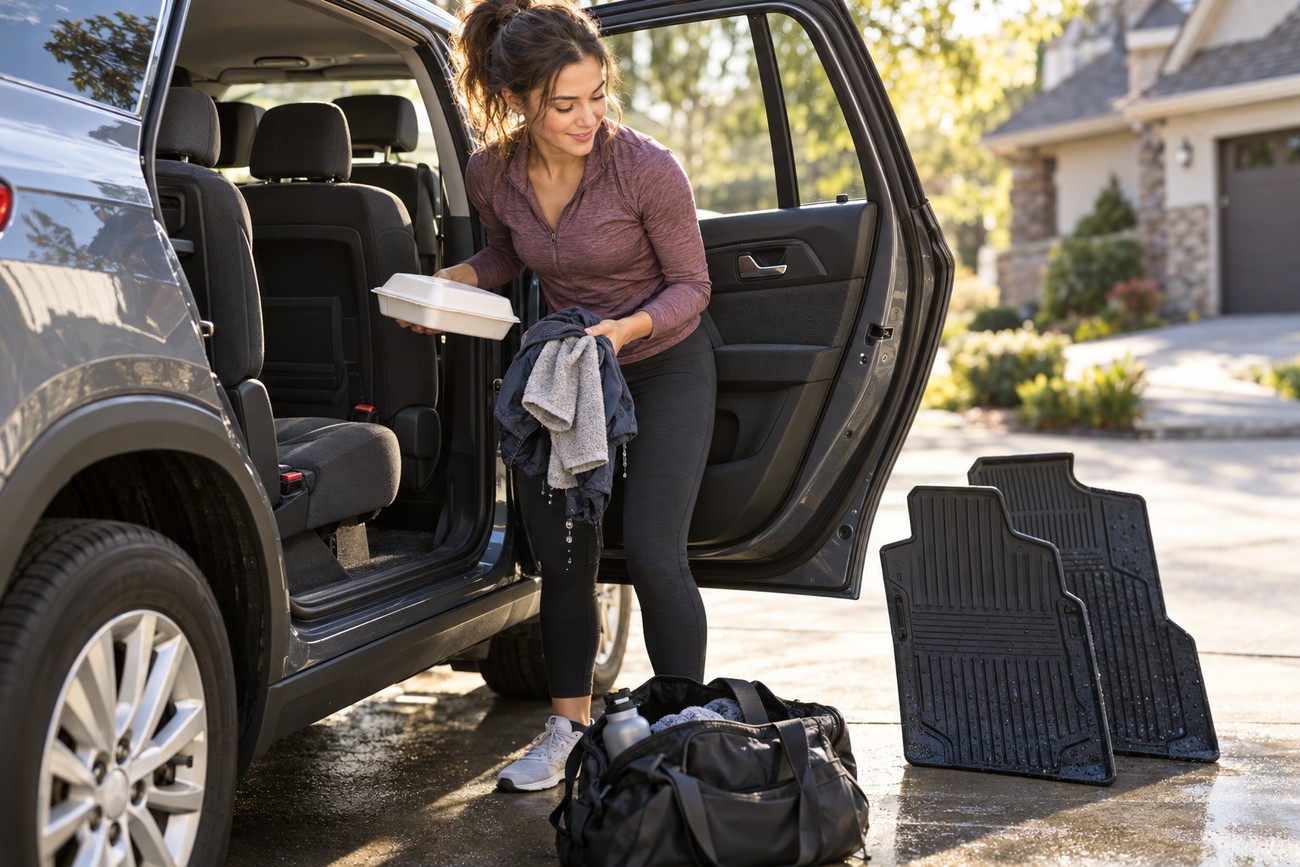
Make the end of a trip the point when food waste leaves the car. Keep wet sports gear and damp pet bedding off the upholstery, and dry floor mats before putting them back. These small habits prevent residue and moisture from settling into materials that are harder to clean later.
Notice changes rather than waiting for a strong odor. A footwell that repeatedly feels damp needs a water-entry check; a new smell each time the ventilation starts warrants attention to the climate system. Cleaning more often will have limited effect if either cause remains.
Dry vacuuming and wiping up fresh marks are useful between deeper cleans. After rain or a wash, check that mats and the floor beneath them have dried, particularly where shoes bring water into the cabin. If moisture keeps returning, arrange an inspection instead of covering the smell.
A neutral-smelling cabin is a better sign of success than a constant fragrance. If an odor reappears after cleaning, note its location and whether heat, rain, or the fan brings it out. That pattern helps you decide whether the next step is a small cleanup, targeted deep cleaning, or a repair.
Frequently asked questions
These questions cover finishing touches and everyday conditions that can change how a clean cabin smells. Keep any added scent restrained so it remains easy to notice a new spill or damp patch.
How do dealerships make cars smell so good?
Presentation often combines thorough cleaning, removal of odor sources, and a restrained finishing scent. A fragrance alone cannot reproduce that result: if residue remains in the upholstery or floor, its smell can return after the finishing scent fades.
How can I stop my car interior from getting so dusty?
Wipe surfaces with a clean microfiber cloth, and wash the cloth regularly so it does not put dust back. Avoid greasy dashboard dressings that attract grime. Check that the cabin filter is fitted correctly when it is replaced; a loose or poorly seated filter may let more debris through.
How can I keep my car fresh when traveling with a dog?
Use a washable seat cover, and dry your dog before travel where possible. Remove hair and damp bedding promptly after the trip, then wash the cover as needed. This keeps moisture and pet residue from spending days against the upholstery.
Why is the new-car smell stronger on hot days?
Heat can make odors released by new interior materials more noticeable. Park in shade when practical and ventilate the cabin before driving rather than adding another scent. The smell alone does not establish whether the air is safe or unsafe.