Finding swirl marks on a freshly washed car is frustrating, especially when they show up across dark paint in the sun. The wash may have removed the dirt, yet a few grains caught in a mitt or drying towel can leave fine marks as they move across the finish.
The priority is to remove loose grit before you touch the paint, then keep it out of your wash tools. Scrubbing harder only increases the risk when dirt remains. A repeatable routine—thorough rinsing, light washing in small areas, and careful drying—can reduce fine marring and swirl marks, though no contact wash can eliminate that risk.
- Why a careful wash can still leave swirl marks
- Set up clean tools and separate the dirtiest areas
- Pre-rinse thoroughly before touching the paint
- Wash from the top down, one small area at a time
- Loosen stuck-on dirt instead of scrubbing harder
- Rinse and dry without dragging leftover grit
- Adjust the routine for pressure washing and delicate finishes
- Choose a wash method without trusting scratch-free claims
- Frequently asked questions
- What if I have only one bucket?
- What should I do if I drop my wash mitt?
- How often should I wash my car to limit scratches?
Why a careful wash can still leave swirl marks
Swirl marks are fine surface marks that often become most obvious under direct light, particularly on dark-colored cars. They can appear after a wash that looked gentle throughout. The usual problem is abrasive material caught between the paint and something moving over it: a mitt, a sponge, or a drying towel.
One grain of sand may travel across several panels if it stays trapped in a wash mitt. Repeated passes then give it more chances to mark the clear coat. A dirty rinse bucket, an overloaded mitt, or pressure applied to a stubborn spot can all keep grit in contact with the finish longer than necessary.
Drying deserves the same attention as washing. If a panel still has dust or grit near a trim edge, pulling a towel over it can create marks after the shampoo has been rinsed away. A towel can also pick up contamination from a lower panel and carry it onto a cleaner one.
Light, short, straight passes make it easier to control where a mitt has been and to spot resistance. They do not make contact harmless, and circular motions are not the sole cause of marks called “swirls.” The aim is to limit abrasive contact at every stage, rather than promise a scratch-free result.
Set up clean tools and separate the dirtiest areas
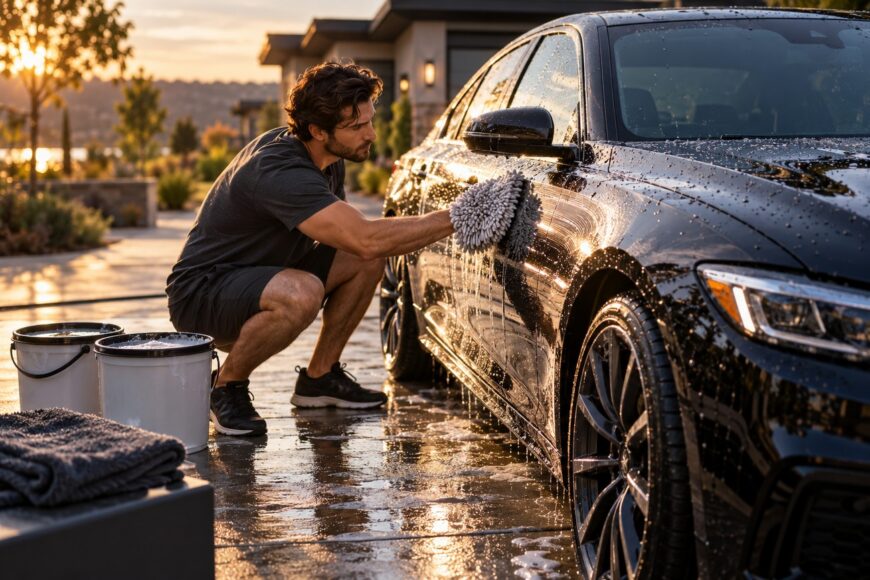
Start with a clean, soft wash mitt and clean, soft towels reserved for painted surfaces. Check them before use: a towel that feels stiff, has collected debris, or has been stored where grit can settle should stay off the paint. Set aside different tools for wheels, tires, and heavily soiled lower panels so their dirt cannot move onto the roof or hood.
PPG recommends two buckets with grit guards. Put wash solution in one bucket and plain rinse water in the other; after each area, rinse the mitt before reloading it with shampoo. This helps limit grit recirculation, while the guards help keep some settled debris away from the mitt. Neither measure makes a contaminated mitt safe to keep using.
Choose a cleaner that suits the finish and any protective film. Axalta recommends a neutral, nonabrasive, water-based cleaner; acidic or alkaline cleaners can increase the risk of finish damage. A shampoo with wax or other additives may also be unsuitable for a particular matte finish or film, so check the relevant care instructions rather than relying on a broad “car-safe” label.
Place the tools where you can keep clean and dirty items apart during the wash. If a mitt used on a gritty rocker panel goes back into the soap bucket, clean solution becomes a route for dirt to reach the next panel. Having a spare clean mitt makes it easier to retire one that feels contaminated instead of trying to wash through the problem.
Pre-rinse thoroughly before touching the paint
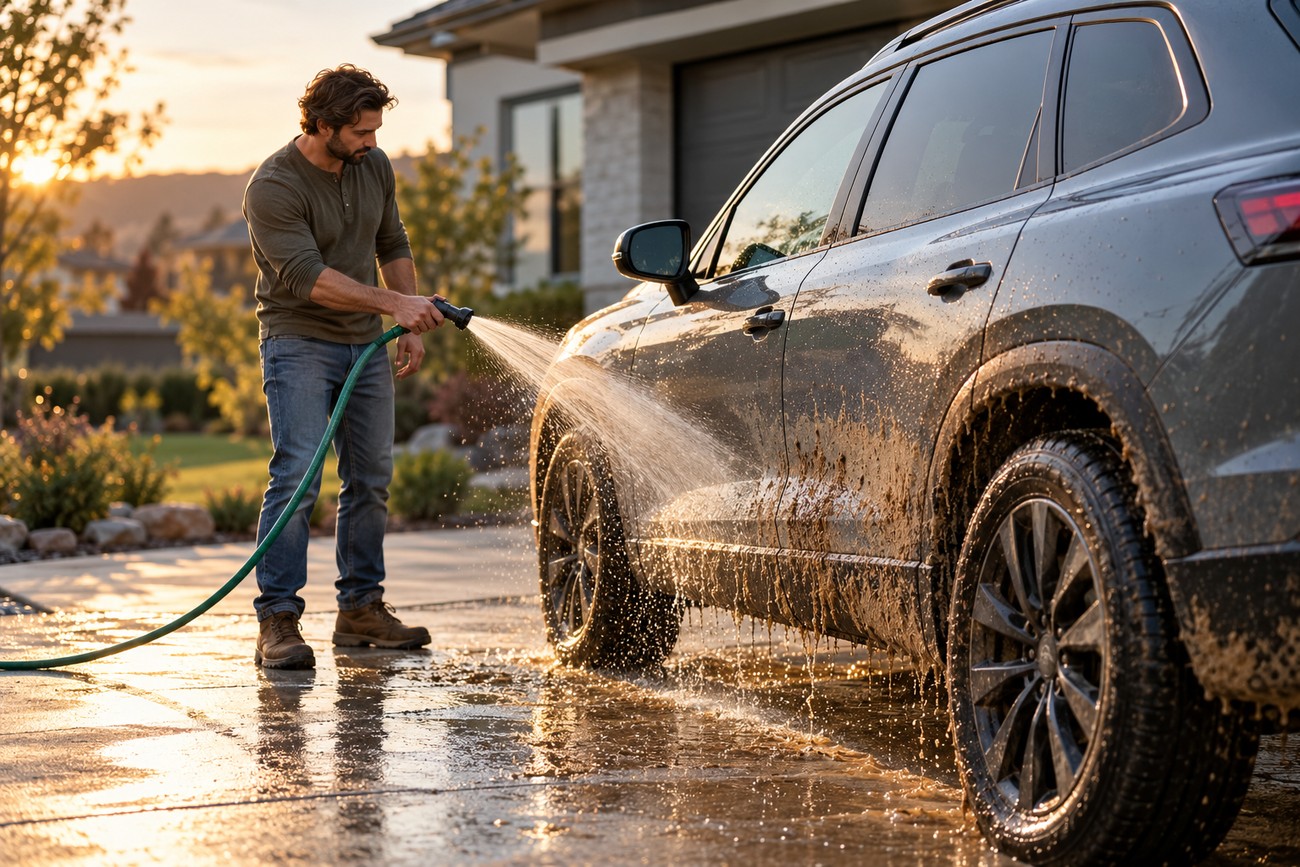
Look over the car before reaching for the mitt. Loose sand on the hood, grit along the lower doors, and mud behind the wheels all call for a thorough rinse first. PPG recommends rinsing away coarse dirt before contact washing because material removed by water cannot be dragged across the paint by your wash tool.
Rinse the entire exterior, giving the lower panels, wheel arches, and rear of the car particular attention. Let the water carry loose soil away rather than immediately rubbing at a patch that still looks sandy. If runoff continues to bring grit from a seam, flush the area again and check it before washing the adjacent paint.
A pressure washer can help dislodge loose abrasive dirt, but its usefulness depends on how it is aimed. Avoid directing a close, forceful jet into loose trim, peeling paint, film edges, badges, or damaged seals. A vulnerable edge may be harmed even when an intact panel nearby shows no problem; follow the finish-specific instructions covered later.
Pre-rinsing will not necessarily remove the thin road film that clings to paint. That does not make the rinse optional: it still reduces the loose particles present when contact begins. If a panel remains visibly gritty afterward, continue rinsing or loosen the contamination by a suitable method before putting a mitt on it.
Wash from the top down, one small area at a time
After the pre-rinse, load a clean mitt with plenty of wash solution and begin on the upper surfaces. PPG recommends working from the top down in small sections. The roof and upper glass generally give the mitt a cleaner start than the lower doors, while small sections let you rinse shampoo before it dries.
Move the mitt in light, short, straight passes without pressing to chase a mark. Let the shampoo and the mitt do the work, and turn to a clean face of the mitt when needed. Straight passes help you control your work and see where a mark may have come from, but grit can still cause fine marring in any direction.
After each section, rinse the mitt in the rinse bucket, then reload it from the wash bucket. Rinse the washed panel promptly; do not soap the entire car and leave the first panels drying while you finish the last. On warm or breezy days, make each working area smaller if that is what it takes to keep shampoo wet until it is rinsed.
Leave the lower panels and rear bumper until last, and use separate tools for the wheels. Once a mitt has contacted heavy grime, thoroughly clean it or switch to another clean mitt before returning to cleaner paint. If the mitt begins to drag, stop and inspect the panel and the mitt rather than adding pressure.
Loosen stuck-on dirt instead of scrubbing harder
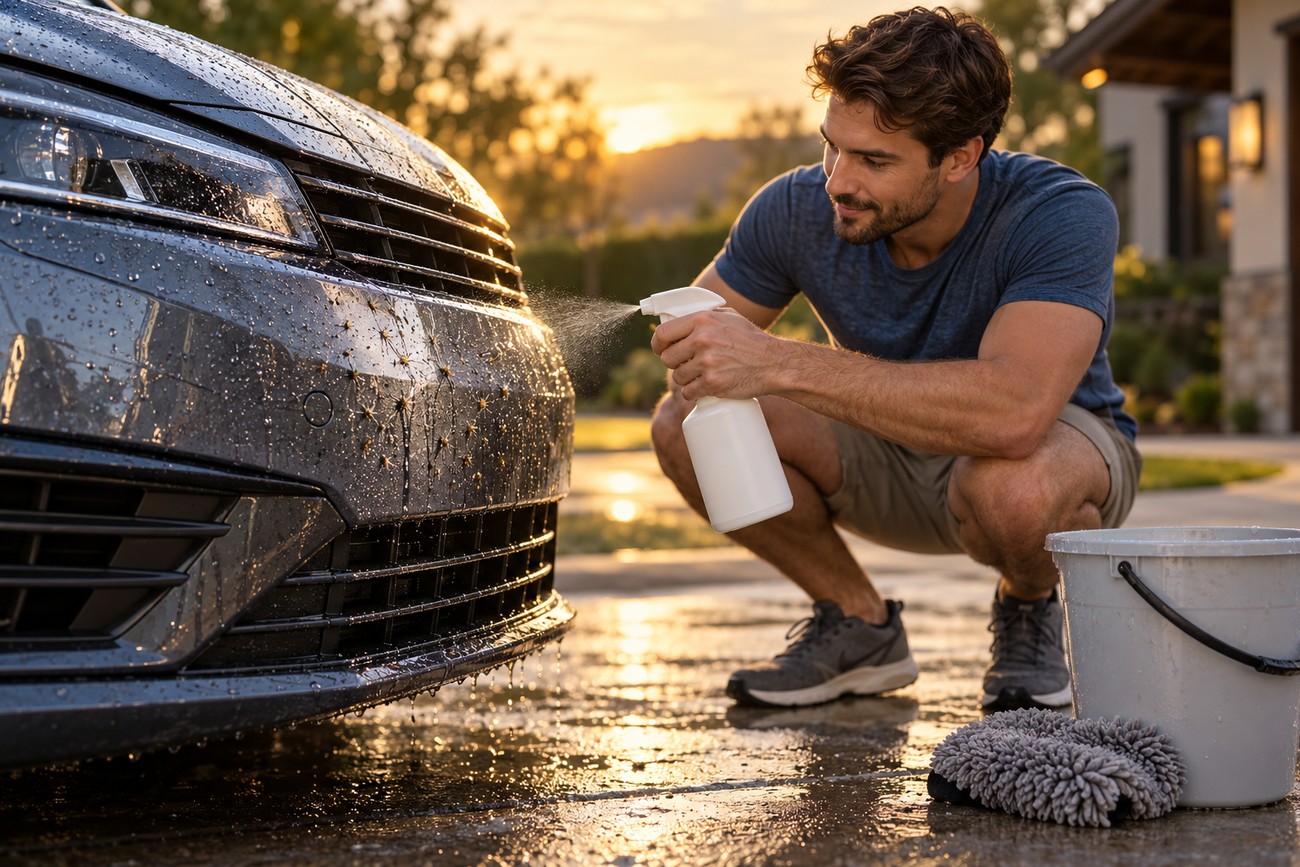
A pre-rinse or touchless wash may leave road film, insects, or greasy contamination behind. These deposits can feel fixed in place even though the surrounding loose dirt has washed away. Forcing the mitt across them adds friction, and a stuck-on patch may contain grit you cannot see.
Re-wet the area and use a cleaner appropriate for the paint or protective film, following its label for application and working time. Give it a chance to loosen the deposit, then try a gentle wash and rinse. Keep the surface wet throughout; allowing cleaner to dry can leave residue and prompt another round of rubbing.
If you still feel resistance, pause. Rinse away what has loosened and check whether a particle is caught in the mitt or remains attached to the panel. Another carefully chosen cleaning step is safer than repeatedly grinding at one spot, particularly near panel edges or an existing paint defect.
Some contamination needs more than an ordinary maintenance wash. Treating every remaining speck as something to remove immediately can turn a minor blemish into visible marring. If the finish has special care requirements, consult them before using a stronger product or a more aggressive cleaning tool.
Rinse and dry without dragging leftover grit
Give the washed car a thorough final rinse, including seams that may release shampoo or dirt afterward. Before the first drying pass, look for missed soil on lower panels and around trim. Drying should begin only where the surface is clean enough that a towel will not pick up loose abrasive material.
Use clean, soft drying towels and minimal pressure, or use suitable air drying to remove water trapped around mirrors and trim. Replace a towel if it touches a dirty area or falls on the ground. An old, stiff, or contaminated towel can undo a careful wash by dragging remaining grit over the paint.
Water escaping from a trim gap can carry grit onto a panel you have already dried. Rinse the gap again if the runoff looks dirty before using a towel there.
Work before water evaporates on hot paint. Sun and warm panels speed the drying of both water and shampoo, increasing spotting and the temptation to wipe a panel again. Moving the car into shade or washing when the body is cooler gives you more time to rinse and dry without rushing.
If you notice dirt while drying, put the towel down and rinse that area again. Trying to lift a grain with the corner of the towel still puts it in contact with the finish. A clean final pass matters more than finishing without interruption.
Adjust the routine for pressure washing and delicate finishes
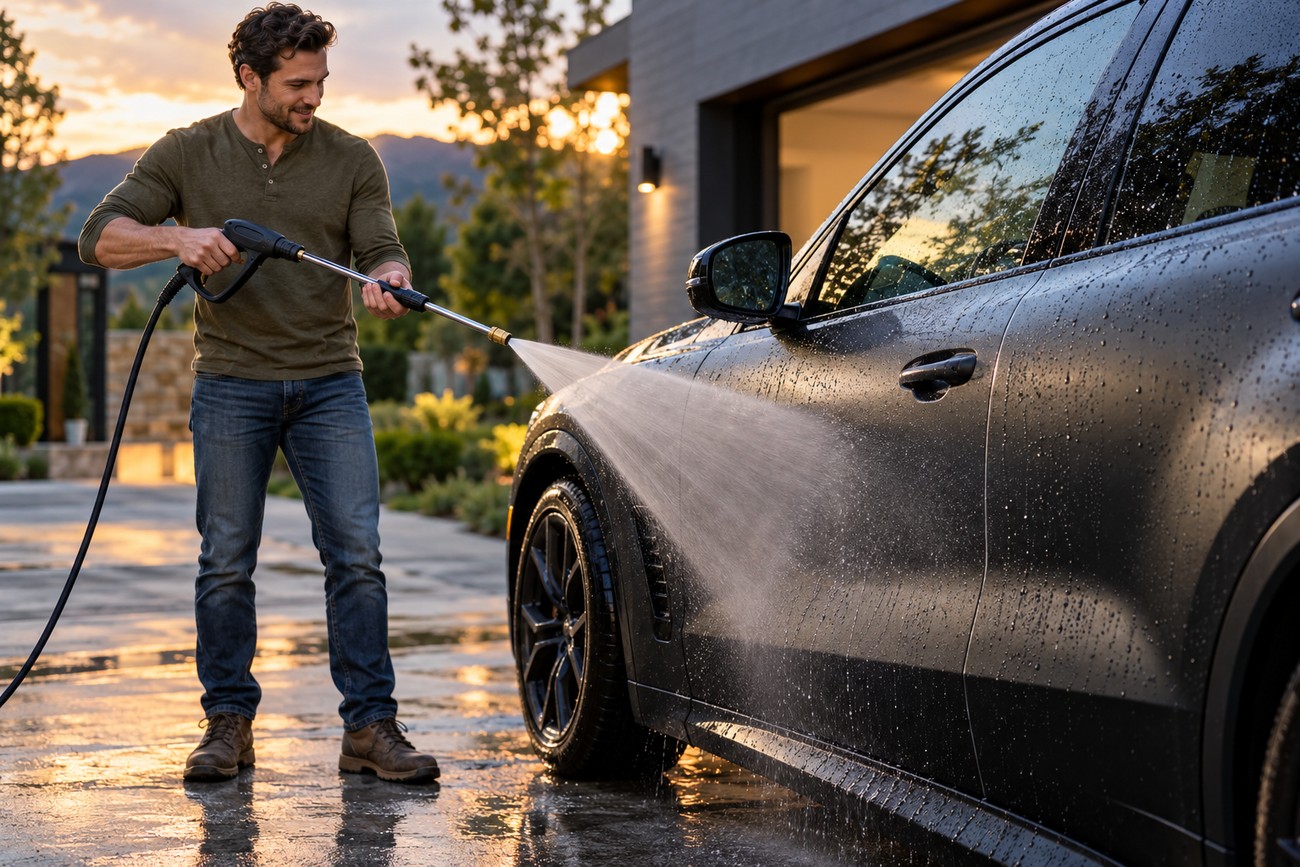
Use the instructions for your car’s finish before adopting a general pressure-washing setting. Axalta guidance calls for less than 1700 psi and more than 4 inches between the nozzle and surface. PPG’s guidance for matte finishes is more restrictive: no more than 1200 psi, a 45° fan tip, and at least 12 inches of distance. These are guidelines for different contexts, not interchangeable universal limits.
Keep the spray moving and avoid aiming it into PPF edges, loose trim, compromised paint, or a repair that may have weak edges. A jet that removes grit from sound paint may lift material at a vulnerable point. If you do not know what finish or film is on the car, use the gentler applicable approach and seek its care instructions before using pressure up close.
Axalta specifies wash water below 120°F (approximately 49°C). It also advises avoiding high-pressure washing of fresh factory paint for the first 30 days. Do not automatically apply that factory-finish interval to repaired paint: ask the repairer for its curing and washing guidance, which may differ.
Matte paint needs particular care after the wash, too. Ordinary polishing can alter its sheen, so a mark that would be polished on gloss paint may require a different response on matte paint. Follow the finish manufacturer’s cleaning and correction instructions before trying to remove a stain or mark.
Choose a wash method without trusting scratch-free claims
A careful hand wash lets you inspect dirt, change a contaminated mitt, and adjust your approach panel by panel. It also puts wash media in direct contact with the finish. Its safety depends on the pre-rinse, tool cleanliness, pressure, and drying technique—not simply on the fact that a person is doing the washing.
Touchless washing reduces wash-media contact, which can be useful when loose grit is the main concern. It may leave road film, insects, or greasy deposits, however. If those deposits remain, avoid treating a partly cleaned, drying panel as ready for a quick wipe; rinse and use a suitable cleaning step before making contact.
A contact automatic wash introduces another set of variables, including the condition of its equipment and the dirt it may have collected. You generally have less control over what touches each panel than you do at home. That trade-off does not make every hand wash safer than every automatic wash: a gritty home mitt and dirty drying towel can leave marks, too.
Two buckets help limit grit recirculation, but they cannot guarantee a mark-free finish. Likewise, claims that touchless washing followed by air drying prevents every swirl overlook existing marks, remaining contamination, and differences between vehicles. Choose the method whose contact and cleaning limits you can manage for the car’s condition, rather than trusting an absolute scratch-free promise.
Frequently asked questions
Small changes to the setup can affect how much grit reaches the paint. The safest decision depends on what happened to your tools, how dirty the car is, and whether you can complete the wash and drying without dragging contamination across the finish.
What if I have only one bucket?
You can still reduce grit transfer by rinsing the mitt thoroughly with clean running water outside the soap bucket before reloading it. Keep a separate mitt or other dedicated tools for wheels and heavily soiled lower panels, and replace the soap solution if it becomes visibly dirty. This is less protective than keeping rinse water separate, because any grit left in the mitt can enter your only bucket.
What should I do if I drop my wash mitt?
Stop using it on the paint until you have inspected and thoroughly cleaned it. Rinse it well, check its fibers and seams for trapped grit, and use another clean mitt if you cannot confidently remove what it picked up. A quick dip in the bucket is a poor test: embedded particles may stay in place until the mitt moves across a panel.
How often should I wash my car to limit scratches?
Wash according to accumulated dirt and exposure rather than an arbitrary schedule. Visible grit calls for removal before it is repeatedly brushed against the finish, while a lightly dusty car may not justify a rushed contact wash. If you cannot pre-rinse properly, keep tools clean, and dry safely, wait until you can do the job carefully or choose a lower-contact option; neither choice guarantees that new marks will never appear.