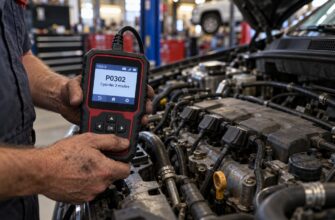
A long service interval can look reasonable on paper while your car spends much of its time in stop-and-go traffic. A shop may advise changing the oil sooner, leaving you to weigh that advice against the schedule in the owner’s manual. Another driver may cover so few kilometers that the calendar deadline arrives long before the mileage limit.
Start with the schedule specified for your vehicle, including any separate requirements for severe use. Then consider how you actually drive and track both distance and time since the last oil change. That gives you a sounder decision than adopting one mileage figure for every car.
- How often should you actually change engine oil?
- Oil-change intervals by driving pattern
- Why city miles can be harder on oil than highway miles
- Does synthetic oil or a turbo engine change the answer?
- What if you drive very little or your car is older?
- Make your next oil-change decision
- What should be replaced along with the oil?
- Frequently asked questions
- What should I do if my oil change is overdue?
- How often do I really need an oil change?
- How long does engine oil actually last?
- How often should you change your synthetic oil in months?
How often should you actually change engine oil?
Change engine oil at the interval specified for your vehicle, when the applicable mileage or time limit comes first. Check the maintenance schedule for your model and engine rather than relying on the interval printed on an oil container or recommended for a different car.
Some manufacturer schedules specify 10,000–15,000 km or one year, whichever comes first; the vehicle-specific schedule takes precedence. Those figures are examples, not a standard that applies to every vehicle. If you reach the calendar limit after relatively little driving, the mileage remaining does not extend the deadline.
Read the schedule’s conditions as carefully as its numbers. Many manuals distinguish normal service from severe service, which can require a shorter interval. A car used mainly for short trips in traffic may fall under different instructions from one driven steadily on longer journeys.
Where the manual provides an oil-life monitor, follow its instructions for use and reset it after service as directed. Keep a record of the change as well: a monitor is easier to interpret when you also know when the oil and filter were last replaced.
Oil-change intervals by driving pattern
Use these references to identify which part of your vehicle’s schedule deserves a closer look; the shorter figures are examples from practical recommendations, not universal manufacturer limits.
| Driving pattern | Interval reference | What to verify in your maintenance schedule |
|---|---|---|
| Normal use | Some manufacturer schedules specify 10,000–15,000 km or one year, whichever comes first. | Find the interval for your model and engine, and confirm that your driving meets its normal-service definition. |
| Severe use or an older vehicle | Practical recommendations sometimes cite 7,000–8,000 km; this is not a universal interval. | Check the severe-service criteria and interval, and consider whether the engine’s condition calls for closer attention. |
| Turbocharged engine or aggressive driving | Practical guidance sometimes cites 7,500 km or even 5,000 km; these are conditional examples. | Confirm the required oil specification and the vehicle-specific schedule, including any severe-use provisions. |
| Low-mileage use | A one-year limit often applies even when the mileage limit has not been reached. | Check the calendar limit and the date of the last oil change. |
The pattern matters more than the label alone. An older car used gently on long trips and a newer car making repeated short trips can place different demands on their oil. Use the table to find the relevant instructions, then let the vehicle-specific schedule guide the deadline.
If advice from a shop differs from the manual, ask which operating condition or engine concern supports the shorter interval. A reason tied to your car is more useful than a mileage figure offered to every customer.
Why city miles can be harder on oil than highway miles

Stop-and-go traffic gives an engine running time without much distance on the odometer. Frequent cold starts and short trips add another concern: the oil may spend much of each journey warming up rather than operating through a sustained drive. As a result, distance alone can give a poor picture of how the car has been used.
Engine hours help explain that mismatch. A vehicle can accumulate substantial running time while creeping through traffic or idling, even though its next mileage-based change appears far away.
Ordinary passenger-car schedules generally specify mileage and time instead of an engine-hour change interval. Unless your vehicle’s instructions say otherwise, use hours to understand your driving pattern, then apply the schedule the manufacturer provides.
Dust and towing can also qualify as severe-service conditions, alongside stop-and-go traffic, short trips, and frequent cold starts. Check the manual’s wording against your regular use; avoid assuming that every occasional traffic jam or towing trip calls for an improvised reduction.
Does synthetic oil or a turbo engine change the answer?
Synthetic oil does not guarantee a maximum-length interval regardless of driving conditions. Start with the oil specification required for your engine, then follow the vehicle’s change schedule. An oil described simply as “synthetic” may still be the wrong choice if it does not meet that specification.
Turbocharged engines and hard driving can place greater demands on oil. Practical guidance for turbocharged or aggressive use sometimes cites 7,500 km or even 5,000 km, but these are cautious examples rather than blanket instructions to override a vehicle-specific schedule.
Look first for severe-service provisions that match how you drive. If the manual gives no clear answer and a shop recommends a shorter interval, ask it to explain the recommendation in terms of your engine, operating conditions, or observed condition—not the oil’s base type alone.
Likewise, a claim that an oil can last for a long distance does not establish the right change date for your car. Its required specification, the manufacturer’s instructions, and your use all matter to that decision.
What if you drive very little or your car is older?

A little-used car can reach its calendar limit while covering very few kilometers. For a little-used vehicle, a one-year limit often applies even when the mileage limit has not been reached. Check the date of the last change rather than waiting for the odometer to catch up.
Low mileage does not always mean easy use. Repeated short trips may involve frequent cold starts without a sustained drive, so check whether they meet your manual’s severe-service definition. A car that mostly sits between brief errands deserves a different assessment from one that occasionally makes a long journey.
Age alone does not assign an older vehicle a new oil-change interval. Engine condition and use matter: an engine with known wear or contamination concerns may warrant closer attention. Practical recommendations sometimes cite 7,000–8,000 km for older vehicles or severe use, but that is not a universal interval.
If a service shop advises an earlier change than the manual’s normal-service schedule, ask which condition it has identified. Compare that reason with the manual’s criteria, including stop-and-go traffic, short trips, frequent cold starts, dust, and towing. You can then decide whether the severe-service schedule applies or whether the shop is making a recommendation specific to the car’s condition.
Make your next oil-change decision
First, find the maintenance schedule for your vehicle and confirm the required oil specification. Use the instructions for its engine and service conditions; a general mileage rule cannot replace them. If previous service records are available, check what oil was used and when the last change took place.
Next, identify whether your regular driving meets the schedule’s normal- or severe-service criteria. Stop-and-go traffic, short trips, frequent cold starts, dust, and towing may call for a shorter interval where the manufacturer says they do. If a shop suggests changing sooner still, ask for the reason tied to your use or the car’s condition.
Track both the distance traveled and the time elapsed since the last change. Change the oil when the first applicable limit comes due. This prevents a low-mileage car from quietly passing its calendar deadline.
After service, record the date, odometer reading, oil specification, and whether the filter was replaced. Note the next applicable mileage and calendar deadlines, and reset any oil-life monitor according to the vehicle’s instructions. That leaves a clear starting point for the next decision.
What should be replaced along with the oil?
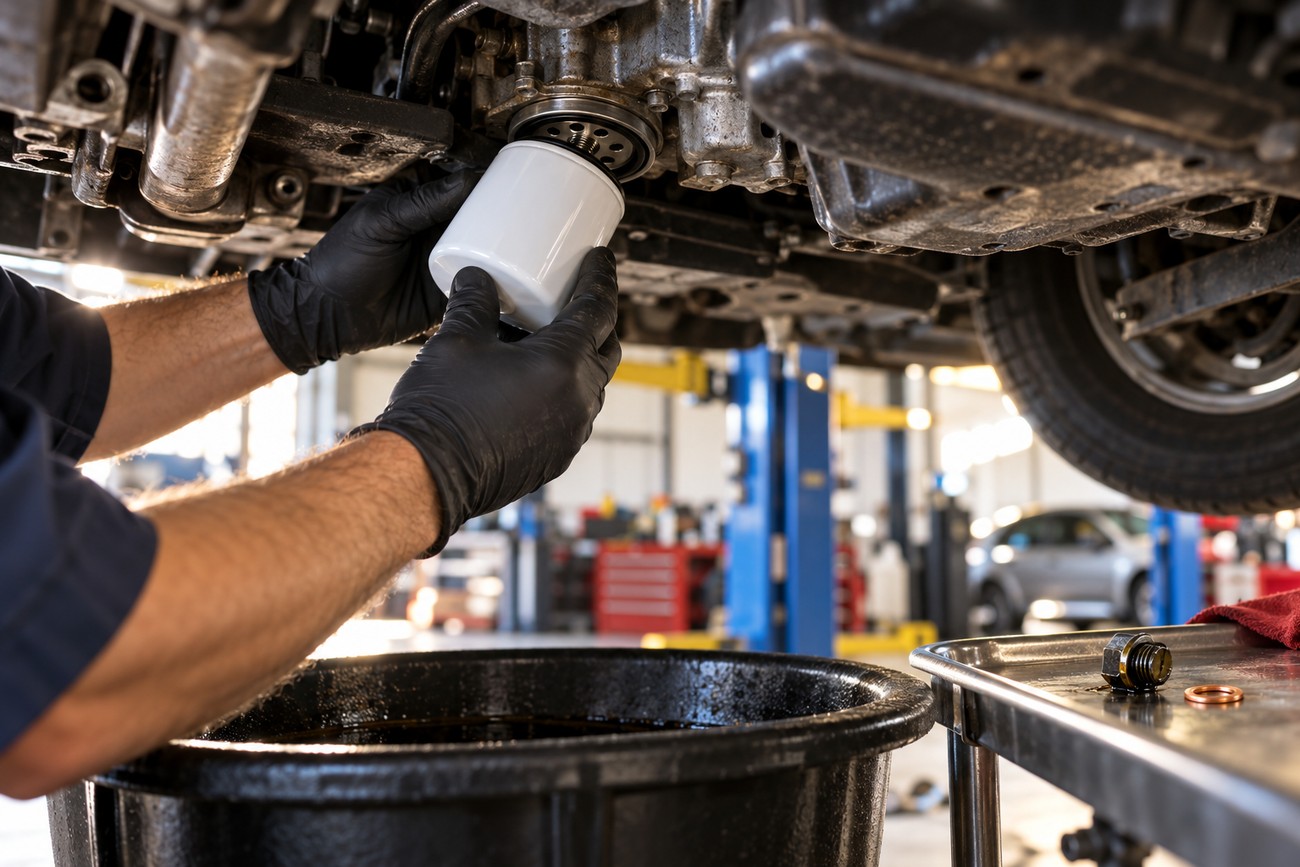
The oil filter is normally replaced with the engine oil. A new filter avoids leaving the old filter’s collected contaminants in service through a fresh fill. Check that the replacement filter is correct for the vehicle.
The drain-plug washer may also need replacement, depending on the plug design and the vehicle’s service instructions. It is worth checking during the job because failing to renew a washer when required can contribute to a leak. That does not mean every unrelated part needs replacing at each oil change.
An oil change is also a useful opportunity to inspect the engine air filter and cabin filter. Replace them when their condition or the maintenance schedule calls for it; inspection alone does not make replacement necessary.
Before the car leaves the service bay, confirm the oil level and check for leaks around the drain plug and filter. Keep the service record with the oil specification and parts used, especially if more than one person maintains the vehicle.
Frequently asked questions
The following situations call for a practical next step rather than a new universal interval. Your vehicle’s instructions remain the reference for service timing and dashboard messages. If a warning indicates an immediate operating problem, deal with that warning separately from routine scheduling.
What should I do if my oil change is overdue?
Check the oil level using the method in your owner’s manual and arrange an oil and filter change promptly. Avoid treating an overdue change as proof of damage, but do not keep postponing it simply because the engine seems to run normally.
An oil-pressure warning is a separate, urgent issue. Stop safely, switch off the engine, and follow the vehicle’s instructions rather than driving on to an oil-change appointment.
How often do I really need an oil change?
Use your vehicle’s applicable service schedule and change the oil when its mileage or time limit comes first. For your next decision, find the last service date and odometer reading, then check whether your driving fits the manual’s normal- or severe-service description.
How long does engine oil actually last?
There is no reliable lifespan you can judge from oil color alone. Oil can darken during normal use, while oil that still looks clean may already have reached its scheduled time limit. Check the service record and vehicle instructions rather than using the dipstick’s color as a change indicator.
How often should you change your synthetic oil in months?
Follow the calendar limit in your vehicle’s maintenance schedule; synthetic oil does not cancel it. Some schedules specify one year or a mileage limit, whichever comes first. Check the date of the last change and the required oil specification before setting your next deadline.