A repair estimate can change after the car is already in the bay, a diagnosis can remain vague, and a fault can return soon after the invoice is paid. Those outcomes create more than frustration: they make it difficult to know whether the original problem was identified, whether extra work was authorized, and whether the repair should be covered.
Choosing a trustworthy mechanic requires checking evidence, controlling authorization, and matching the technician to the vehicle and repair. The lowest quote, a polished waiting room, or a long warranty cannot replace a clear diagnosis and written accountability.
- Start With the Repair, Not the Shop
- Verify the Shop Before You Discuss Price
- Demand a Diagnosis You Can Audit
- Put Scope, Price, and Timing in Writing
- Use Reviews and a Small Job as Evidence
- Spot the Sales Tactics That Create Expensive Surprises
- Dealer or Independent Shop: Choose by Capability
- The Handover Checklist Before Work Begins
- Frequently asked questions
- What is the $3,000 rule for car repairs?
- How can I avoid getting scammed when my car is already in the shop?
- What records should I keep after a repair?
- How do I vet a mechanic for an EV or hybrid?
Start With the Repair, Not the Shop
The best mechanic for brake work may be a poor choice for a transmission fault or an intermittent electrical problem. Start by identifying the system involved, then look for a shop that regularly handles that type of repair. A specialist by repair type is often a better choice than a self-described generalist.
Before contacting a shop, write down what the vehicle does, when the symptom appears, and what makes it better or worse. Include warning lights, unusual sounds, vibration, temperature, road speed, weather conditions, and whether the problem occurs during starting, braking, turning, charging, or acceleration. This gives the technician usable information instead of a general complaint such as “the car feels wrong.”
A trustworthy mechanic usually asks about symptoms, operating conditions, and service history before proposing work. Be ready to provide previous repair records, recent parts replacements, accident history, software updates, and any earlier diagnostic results. A mechanic who immediately names an expensive part without gathering this context deserves careful scrutiny.
Modern vehicles also require more specific knowledge than a general reputation can show. Manufacturer-specific training and access to OEM service information can matter more than general certification for ADAS, EV, hybrid, and complex electronic repairs. For a camera calibration, high-voltage fault, or network communication problem, the right tools and procedures are part of the repair itself.
Verify the Shop Before You Discuss Price
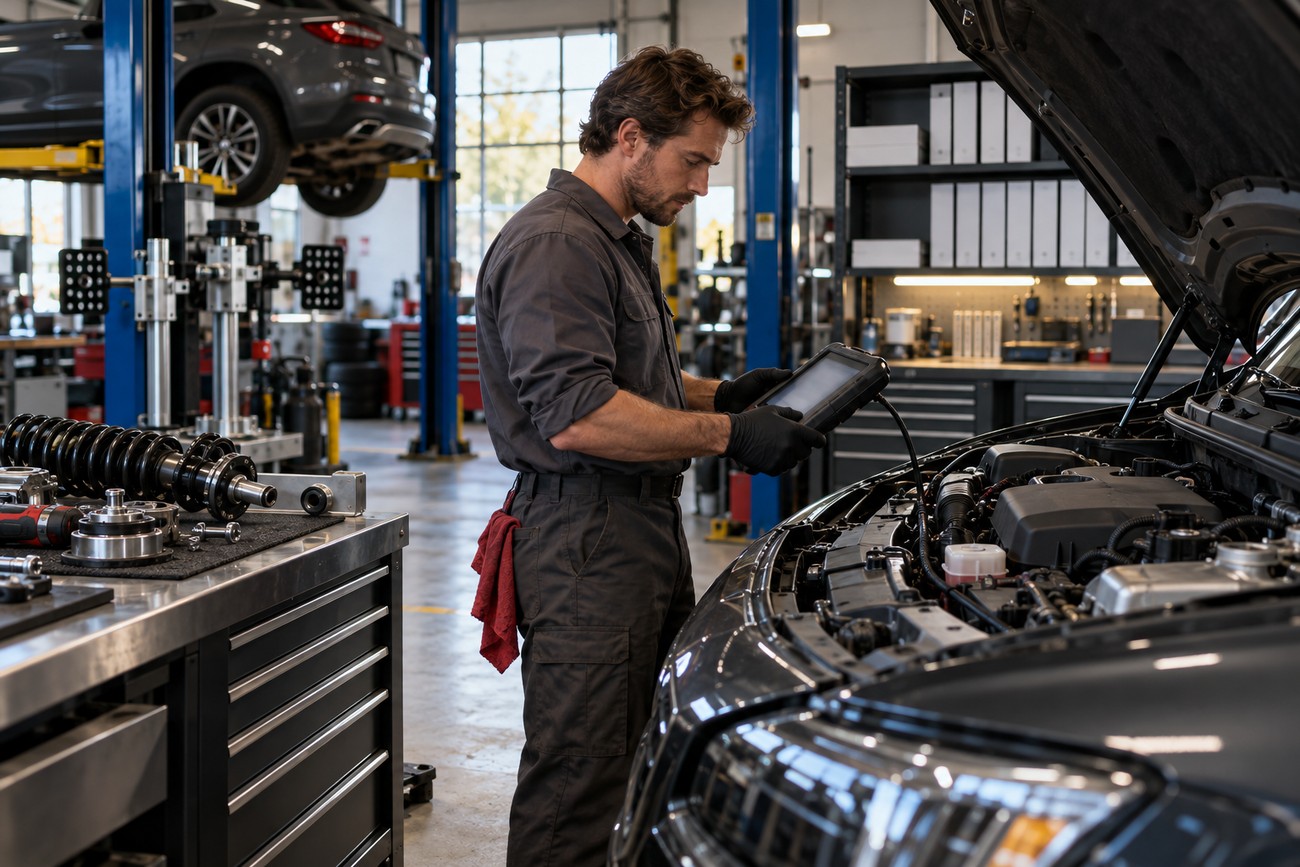
Begin with basic business verification. A current business license, repair-shop registration, and relevant insurance are basic risk filters, subject to local rules. Requirements vary by location, so check the relevant government or industry authority rather than relying on a sign, online profile, or verbal assurance.
Ask whether the shop regularly works on your vehicle’s make, model, age, and powertrain. Confirm that it has the diagnostic equipment, service information, and special tools required for the proposed job. A shop that can replace conventional suspension parts may still be unsuitable for ADAS calibration, EV isolation testing, or complex electronic diagnosis.
ASE certification in the United States is voluntary professional certification, not a government license and not proof of honesty or repair quality. It can support a qualification claim, especially when the certification matches the work, but it does not establish transparent pricing or guarantee that every repair will be diagnosed correctly.
Manufacturer-specific training and access to OEM service information can be more important than general certification for ADAS, EV, hybrid, and complex electronic repairs. Ask whether the shop can access manufacturer procedures, service bulletins, diagnostic databases, and required factory tools. These answers reveal actual capability more reliably than a wall of generic certificates.
Demand a Diagnosis You Can Audit
OBD-II diagnostics using SAE J1979/J1979-DA provide codes and parameters but do not identify the failed part by themselves. A code may point to a circuit, sensor range, system condition, or communication issue. It is a starting point for testing, not an instruction to order the first component associated with the code.
A good mechanic uses scan data as a starting point and confirms the cause with additional tests. Depending on the fault, that may include a visual inspection, voltage and resistance checks, pressure testing, wiring checks, physical measurements, road testing, or comparison with manufacturer specifications. The shop should be able to explain what was tested, what result was found, and why the proposed repair addresses the cause.
Preserving the pre-repair scan results and test evidence gives both sides a reference if the fault returns. Without a before-and-after record, a follow-up can become an argument about changing symptoms instead of a traceable review of the diagnostic process.
Photos or video of the defect and saved scans before and after repair are useful evidence of what was found and changed. Ask whether the shop can provide them where practical, particularly for damaged components, leaks, broken wiring, warning messages, or electronic faults. Some shops charge for diagnostic time even when the fault is not confirmed, so agree in advance on the diagnostic scope, fee, and result the shop will deliver.
Put Scope, Price, and Timing in Writing

A written estimate or work order should define the approved work before repairs begin. It should identify the vehicle, the reported symptom, the recommended operation, parts, labor, taxes or fees where applicable, and the expected completion window. Verbal promises are difficult to compare or enforce once the vehicle is disassembled.
Set an approval limit for additional expenses and require contact before that limit is exceeded. A request to replace another part may be reasonable after inspection, especially if access reveals a related defect, but the shop should explain its condition, urgency, and separate cost. “While everything is apart” is a reason to discuss the work, not automatic authorization.
Labor and parts may have separate warranty terms, so both should be stated clearly. Check the duration, exclusions, requirement to return to the original shop, and treatment of consequential damage. A long warranty does not compensate for poor diagnosis and is not proof of technical quality.
Clarify who will perform the work: the shop’s own technician, a dealer team, or a subcontractor. Ask when the vehicle will enter the bay and what could delay completion. A realistic queue is easier to manage than an attractive promise followed by unexplained days of silence.
Use Reviews and a Small Job as Evidence
Read reviews for patterns tied to the repair you need. Comments about brake service are weak evidence for an electrical diagnosis, while repeated complaints about unexplained add-ons, missed deadlines, poor communication, or returning faults apply across many repair types. A single angry review may lack context; repeated descriptions of the same process deserve attention.
Look for evidence that customers received explanations, itemized invoices, updates, and follow-up support. Many independent shops regard showing replaced parts as a sign of transparency, although the customer should request this in advance. Removed parts and supporting diagnostic evidence help confirm what was actually replaced and why.
A well-regarded mechanic may have a longer queue. Immediate availability can mean an opening in the schedule, while a long wait can reflect demand for a particular skill; neither fact proves quality on its own. Ask whether the delay is caused by diagnosis, parts availability, specialist workload, or work already authorized for other customers.
A small, clearly defined trial repair can reduce the risk of handing a new shop a large or technically complex job immediately. Choose work with a clear symptom, scope, and expected result, then evaluate communication, documentation, timing, and follow-through. This approach provides more useful evidence than relying on a star rating alone.
Spot the Sales Tactics That Create Expensive Surprises
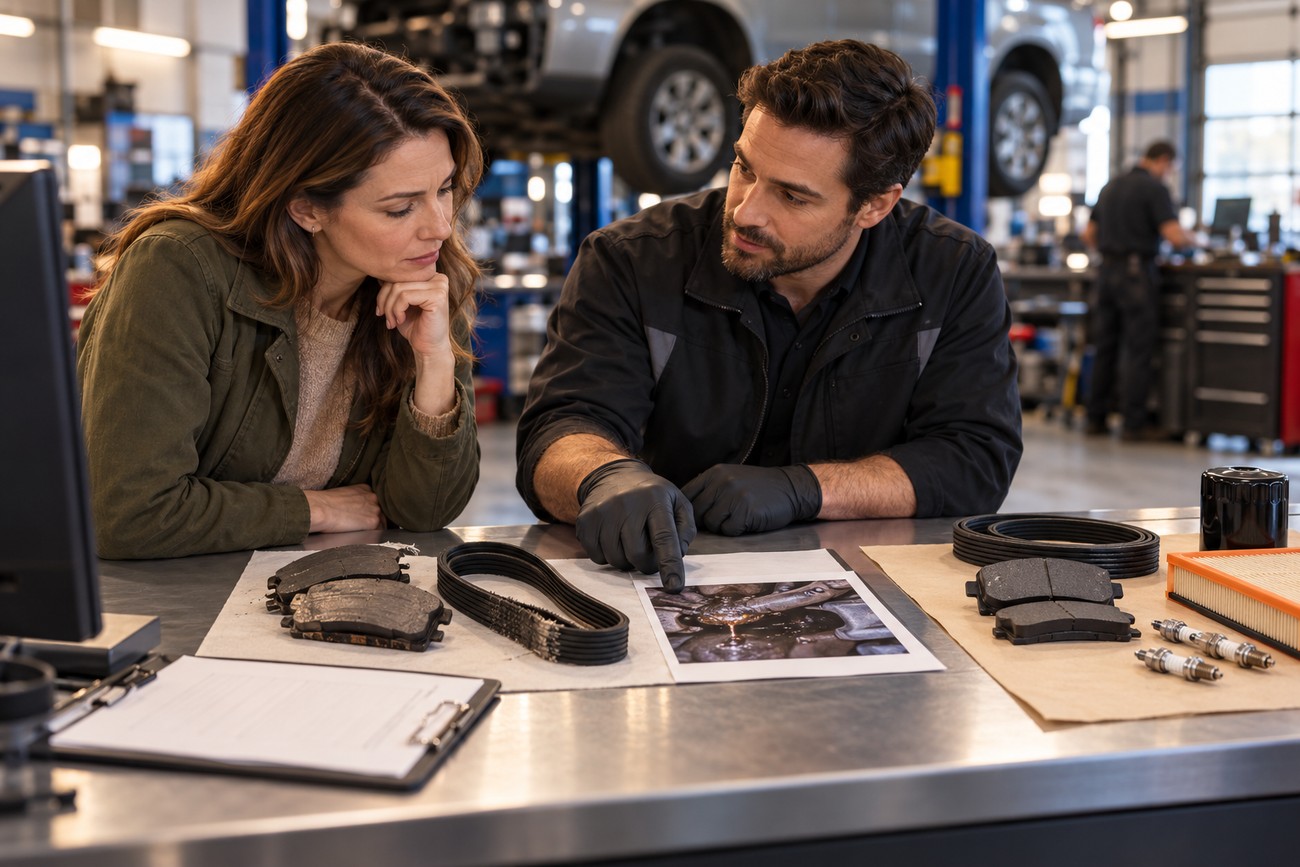
A free diagnostic may be subsidized through the repair price or additional recommended work, so the total estimate matters more than the diagnostic label. Ask what the free service includes, whether testing stops after an initial code scan, and what fee applies if the fault requires deeper investigation. Compare the complete proposed repair rather than one advertised line item.
Three newly identified “mandatory” repairs should be separated into categories: required to restore the reported fault, required for safety, recommended preventive work, and optional convenience work. Request the evidence for each item and ask what could happen if a non-urgent job is postponed. This allows you to prioritize without treating every recommendation as dishonest.
OEM parts are not automatically the most expensive choice over the full repair lifecycle. Correct fit, compatibility, durability, and avoiding repeat work can affect total cost. Ask whether the quote uses OEM, aftermarket, remanufactured, or used parts, and confirm how each option changes the warranty.
If the repair does not resolve the stated problem, pause further authorization and request a documented follow-up conversation about the diagnosis, warranty, and next test. A shop should explain whether the original finding was confirmed, whether a separate fault is now suspected, and whether any additional charge applies. A second opinion is sensible when the explanation remains vague or the added work is substantial.
Dealer or Independent Shop: Choose by Capability
A dealer often has stronger access to OEM data, factory tools, and manufacturer-specific procedures, but the quality of the individual team still matters. A dealership can be a strong choice for warranty work, software-related faults, recalls, ADAS procedures, or a model-specific issue that requires factory information.
An independent shop may be the better fit when it has demonstrated expertise in the specific system or repair. Independent technicians often focus on particular makes, transmissions, electrical faults, climate systems, or performance problems. Their advantage depends on actual training, equipment, diagnostic discipline, and documented results.
Use the repair as the decision rule. Choose the facility that can explain the required test procedure, identify who will perform it, provide written authorization, and support the work afterward. Brand loyalty and a low initial quote are weaker indicators than capability matched to the fault.
ASE certification supports a qualification claim but does not guarantee ethical conduct, transparent pricing, or a successful repair. For EVs and hybrids, appropriate training or authorization for high-voltage systems is an essential safety criterion. General automotive experience does not by itself demonstrate that a shop can safely isolate, test, and repair high-voltage components.
The Handover Checklist Before Work Begins

Use the initial conversation to establish a record. Describe the symptom and its conditions, ask what has been tested, and request the written scope and price before authorizing repairs. Confirm whether the diagnostic fee is separate and what information you will receive if the cause remains unconfirmed.
Set the extra-cost limit in writing and require approval before additional work begins. Confirm parts selection, expected completion timing, and separate labor and parts warranty terms. Ask who will perform the repair and when the shop will contact you with an update.
For an EV or hybrid, ask the shop to demonstrate appropriate high-voltage training or authorization. Confirm that it has the required isolation procedures, tools, and manufacturer-specific information for your vehicle. General certification or a claim of EV experience is not enough to establish high-voltage capability.
Arrange the handover before collecting the vehicle. Request the removed parts and supporting diagnostic evidence where practical, including photos or saved scans. Do not authorize additional work without evidence and explicit approval, even when the vehicle is already disassembled.
Frequently asked questions
Good repair decisions depend on the quality of the information available at each stage. These answers address common judgment calls that require more than a price comparison.
What is the $3,000 rule for car repairs?
The $3,000 rule is an informal decision heuristic for weighing a major repair against the vehicle’s condition, expected remaining life, and alternatives. It is not a universal cutoff, technical standard, or legal requirement.
Use the figure, if you use it at all, as a prompt to compare the complete situation: confirmed repair cost, other known faults, maintenance needs, vehicle reliability, replacement cost, financing, and the value of keeping a familiar vehicle. A sound diagnosis matters before making that comparison.
How can I avoid getting scammed when my car is already in the shop?
Pause authorization for added work and request the written diagnosis, itemized estimate, and evidence supporting each recommendation. Ask which item addresses the original symptom, which items are safety-related, and which can wait. Document calls, messages, approvals, and revised estimates.
If the explanation remains unclear, ask for the vehicle to be released or seek a second opinion before approving substantial additional work, subject to applicable storage or inspection terms. A written estimate, authorization record, and diagnostic evidence make any later repair dispute easier to manage.
What records should I keep after a repair?
Keep the final invoice, written estimate, authorization record, parts and labor warranty terms, diagnostic scans, photos, and notes identifying replaced parts. Record the repair outcome, including whether the warning light disappeared, the symptom stopped, and any conditions under which the fault still occurs.
These records show what the shop promised, what it charged, and what changed afterward. If the fault returns, provide the original documents before authorizing another repair so the shop can assess the warranty and revisit the diagnostic path.
How do I vet a mechanic for an EV or hybrid?
Ask directly: “Who is authorized to work on the high-voltage system, what model-specific training do they have, and what isolation procedure and tools will they use?” Confirm whether the shop can access the manufacturer’s procedures and whether the technician assigned to the vehicle has the relevant authorization.
General automotive experience or a broad certification does not answer those questions. If the shop cannot explain its high-voltage safety process clearly, choose a facility that can demonstrate the required training and equipment before allowing work on the battery, inverter, high-voltage cables, or related systems.