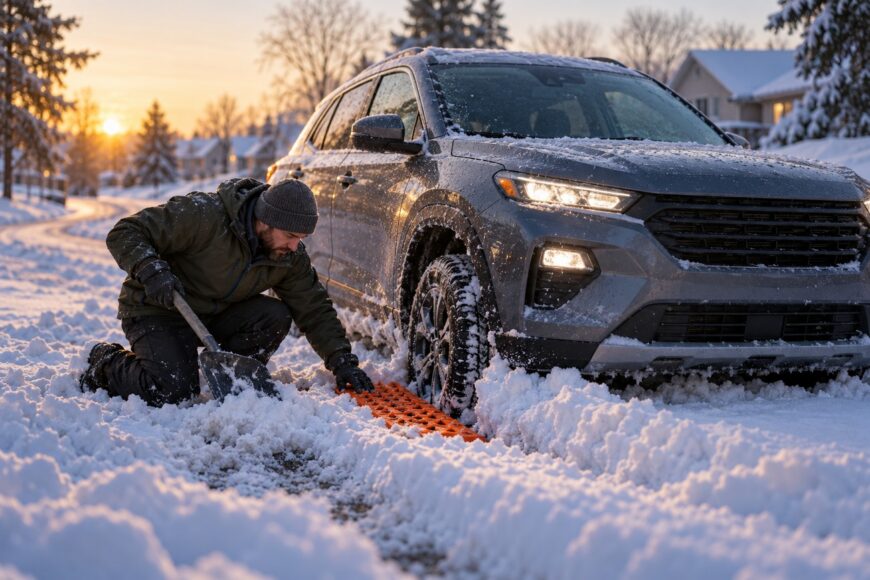
The wheels spin, the vehicle sinks deeper, and pressing the accelerator only makes the hole worse. Stop as soon as forward motion gives way to sustained wheelspin. More power can bury the tires, overheat the drivetrain, and make recovery harder.
Traction, ground clearance, tire condition, and recovery technique matter more than a four-wheel-drive badge. A controlled attempt may get you out if the wheels can still find firm ground. If the vehicle is resting on its underside or the area is unsafe, stop before a minor delay becomes damage or injury.
- Why Your Vehicle Gets Stuck Despite Four-Wheel Drive
- A Controlled Self-Recovery Sequence
- Towing and Recovery Without Breaking the Car
- When to Stop Trying and Call for Recovery
- Frequently asked questions
- What should I do if I smell burning during a recovery attempt?
- How should I position people around a recovery rope?
Why Your Vehicle Gets Stuck Despite Four-Wheel Drive
Driving force reaches the ground through the tires. Tire-to-surface friction is approximately 0.7–0.9 on dry asphalt, 0.2–0.3 on packed snow, and 0.05–0.15 on ice or mud. Those figures explain why even powered wheels can spin without moving the vehicle.
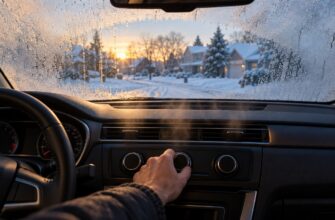
All-wheel drive can spread power across more wheels, but each tire still needs grip. Ice, clogged tread, and poor tires limit what the system can do. A non-studded winter tire performs noticeably worse than a studded tire on ice and wet packed snow and does not provide a major advantage in deep slush or mud.
Ground clearance creates a different limit. When the sills, skid plate, or underbody rests on snow or mud, underbody drag becomes the main resistance, and wheel traction is largely ineffective. The vehicle may need material removed from beneath it before any driving technique will help.
A Controlled Self-Recovery Sequence
Stop spinning the wheels and check that you can work safely around the vehicle, clear of traffic and unstable ground. Look at the tires, the space ahead and behind them, and the underside. If the vehicle is supported by packed snow or mud, dig beneath it as well as around the wheels.
Clear clogged tread and remove the ridge immediately in front of the tires. Dig a shallow, sloped channel in the direction you plan to move, avoiding a steep edge the tires must climb. A short reverse route may be easier than pushing farther into untouched snow or mud.
Following your own compacted track reduces resistance at the tires; a shallow exit ramp then gives them a gradual path onto firmer ground. That preparation often matters more than a stronger run at the obstacle.
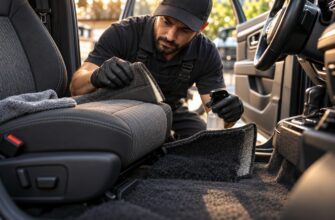
Place traction boards or firm, rough materials such as boards, branches, or sandbags securely in the intended wheel path. Keep people clear while the wheels turn: a loose, smooth floor mat can shoot out from under a tire. Apply gentle throttle for a short attempt, stop if the wheels spin, and reassess the path.
Use the manufacturer’s Snow or suitable low-traction setting, or temporarily reduce traction control only as the manual permits. Snow, Mud, and Sand modes mainly alter throttle response, gear selection, and electronic traction control; they cannot supply missing grip. Most vehicle manuals warn against repeated high-rev rocking because it can overheat an automatic transmission or damage the drivetrain. Allow short pauses between attempts, especially with automatic and dual-clutch transmissions in deep mud or wet snow.
Reducing tire pressure by about 20–30% can enlarge the contact patch and improve traction, but it increases the risk of bead unseating and rim damage. Consider it only if you know the vehicle and tire limits, can drive slowly once free, and can reinflate the tires immediately. Otherwise, leave the pressure alone and concentrate on clearing a path.
Towing and Recovery Without Breaking the Car
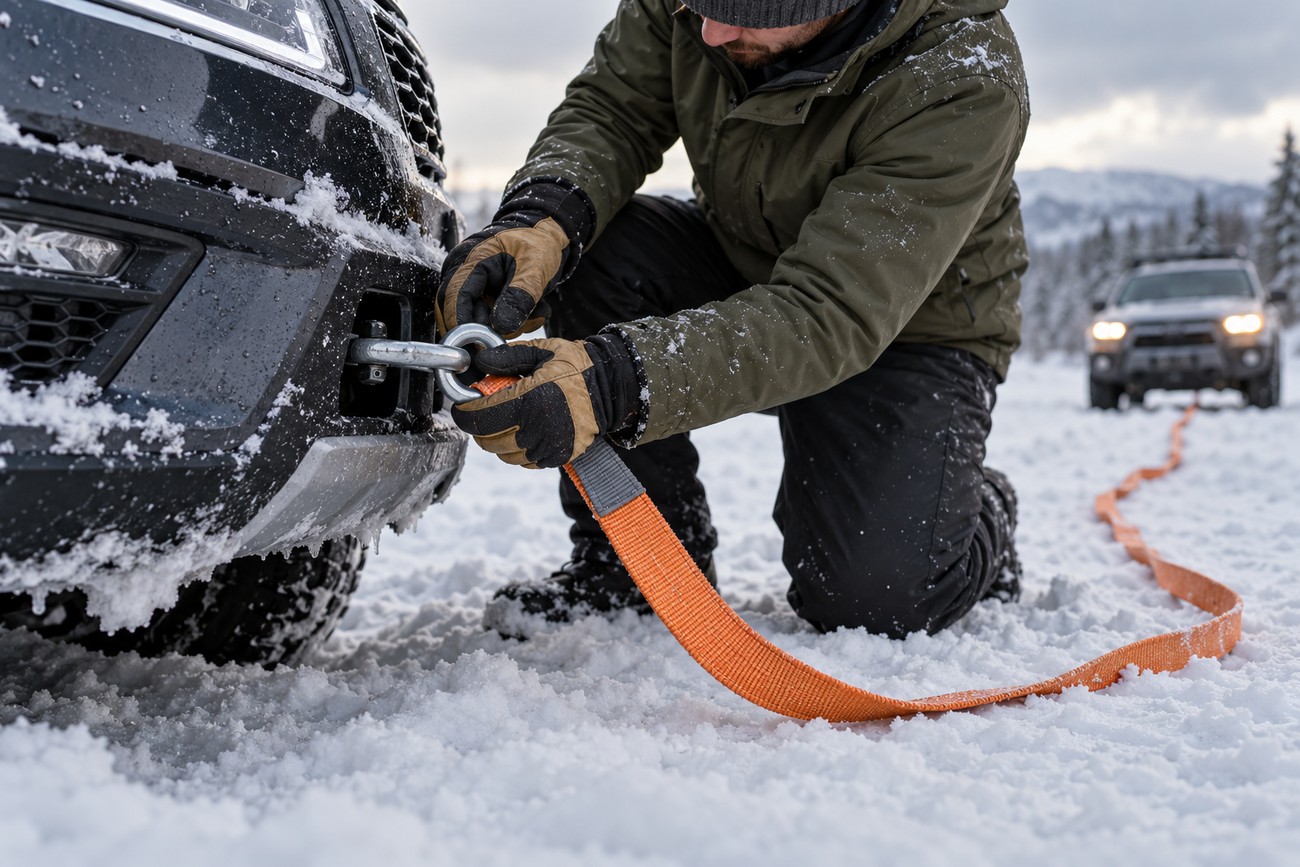
Before a helper pulls, identify the manufacturer-approved recovery point and inspect it for damage or corrosion. Check the vehicle manual for the correct attachment and pulling direction. Decorative loops, suspension arms, and a hitch ball are unsafe choices unless the manufacturer specifically rates that point for recovery.
Use compatible, inspected equipment with a suitable rating. A passenger-car recovery rope is commonly selected with at least 5–7 tonnes of breaking strength; an SUV commonly needs 8–12 tonnes. These figures do not make an unknown-strength strap, a worn rope, or an unsuitable attachment point safe.
Agree on signals and a clear route before either driver moves. Keep everyone out of the line of pull and away from both vehicles’ attachment points. Apply steady tension where the equipment and vehicle instructions allow it, rather than taking a high-speed run at a stuck car.
Factory tow eyes and ECE-related attachment points are intended for short-duration loads, not aggressive dynamic jumps by a heavy vehicle. Dynamic straps may reduce shock in controlled use, but a failed strap, hook, or attachment point can cause severe injury. If the correct connection or method is uncertain, leave the pull to a recovery operator.
When to Stop Trying and Call for Recovery
Stop if the vehicle is sitting on its underbody, the tires are buried to the axles, or digging has not made a clear exit path. A grounded vehicle usually needs more digging, lifting, or professional recovery rather than additional wheelspin. Call for help if the tow point is uncertain or you cannot keep people safely away from the work area.
Burning smells or rising temperature warnings are further reasons to stop. Repeated attempts may overheat the clutch, transmission, or other drivetrain parts; more throttle increases the risk of damage. Secure the vehicle and let it cool before inspecting it or following the manual’s guidance.
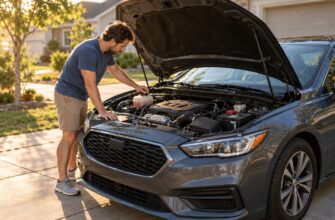
Check for loose plastic around the bumper and underneath the vehicle. Snow, ice, or mud can break protective parts, leaving them to drag or block a wheel. Do not drive through resistance you cannot identify, especially where visibility or footing makes an inspection unsafe.
Crossovers and terrain modes have limits that are easy to overlook once the wheels start spinning. These modes do not turn road tires into mud tires or add ground clearance. Stopping early may preserve the vehicle and leave the recovery crew a simpler, safer job.
Frequently asked questions
Once an attempt stops working, decide whether another move is safe before adding power or attaching a rope. Heat, attachment-point strength, and the direction of force matter as much as available engine power.
What should I do if I smell burning during a recovery attempt?
Release the accelerator and stop loading the drivetrain. Select park or neutral as appropriate for the vehicle, apply the parking brake when safe, and let the components cool. Check for warning lights, leaks, and anything caught near the wheels before considering another attempt; if the smell persists or a warning remains, arrange recovery instead of driving on.
How should I position people around a recovery rope?
Keep everyone out of the line of pull and never allow a person between the vehicles while the rope is under tension. Move bystanders well away from hooks, straps, and attachment points, where a failure could send hardware flying. Drivers should agree on a signal to stop and begin pulling only after the area is clear.