Paying for a fuel-system cleaner and then feeling the idle turn rough again is frustrating. The same applies when hesitation returns after a short improvement. Those symptoms may come from a mildly dirty injector, a stubborn blockage, or a fault that cleaning cannot correct.
Choose the method only after checking the cause. Fault codes, fuel trims, cylinder-specific data, fuel pressure, and pump operation help separate injector trouble from ignition, air, or fuel-supply problems. A bottle may suit light deposits; a measured bench service is more appropriate when performance is uneven or the spray pattern is suspect.
- Check the cause before cleaning the injectors
- Tank additives, on-car flushing, and bench cleaning: which fits?
- When a cleaner in the fuel tank is enough
- What an on-car solvent flush can and cannot do
- Removal, ultrasonic cleaning, and a measured bench test
- How to judge the result and avoid repeat problems
- Frequently asked questions
- How much should fuel injector cleaning cost?
- What is the most effective way to clean fuel injectors?
- How do I tell if my fuel injectors are clogged?
- How do I unblock clogged injectors?
Check the cause before cleaning the injectors
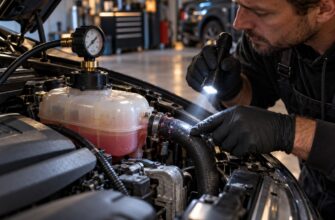
Misfires, hesitation, rough idle, hard starting, and increased fuel use can occur with restricted injectors, yet symptoms alone do not establish that an injector is clogged. A weak ignition coil, vacuum leak, low fuel pressure, failing pump, or sensor fault can produce a similar driving complaint.
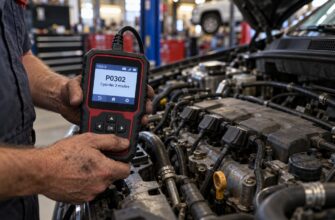
Start with stored fault codes and live data. Fuel trims show how much correction the engine computer is making, while cylinder-specific data can identify whether one cylinder behaves differently from the others. Fuel pressure and pump operation also matter because an injector cannot deliver correctly when its supply is unstable.
A temporary improvement after treatment is useful information, but it is not proof of a lasting repair. If rough running or hesitation returns after a short distance, repeat the diagnosis instead of reaching immediately for a stronger solvent. The original issue may be mechanical wear, an electrical fault, or contamination returning from the tank or fuel system.
Cleaning cannot reverse mechanical wear or repair a damaged spray nozzle. The most useful next step may therefore be removal and testing, especially when one cylinder has a persistent misfire or fuel trims remain abnormal after other causes have been checked.
Tank additives, on-car flushing, and bench cleaning: which fits?
The three core options differ in how deeply they work and how clearly they prove the result. Use the table as a selection guide, rather than as a promise that any method will cure a misfire.
| Method | Best-fit condition | What it can reach | Individual flow and spray measurement | Chief limitation |
|---|---|---|---|---|
| Tank additive | Mild deposits with sound injector mechanics | Fuel-system path reached during normal operation | No | Limited effect on severe coking, wear, or a damaged nozzle |
| On-car pressurized solvent flush | Deposits requiring a controlled service through the rail | Areas reached depend on engine and injection design | No | Requires pressure, leak, and chemical compatibility control |
| Removal, cleaning, and bench testing | Uneven performance, suspected blockage, or uncertain injector condition | Each removed injector during dedicated testing | Yes; flow, spray pattern, and leaks can be compared | Requires removal, suitable equipment, and possible seal replacement |
When a cleaner in the fuel tank is enough

Tank additives are most suitable for mild deposits when injector mechanics are sound. They can support gradual cleaning as the engine runs, provided the product is compatible with the fuel system and used at the stated dose. This approach suits preventive maintenance better than an established cylinder-specific misfire.
Severe coking, a distorted spray pattern, or a worn injector calls for testing rather than repeated bottles. Cleaning cannot reverse mechanical wear or repair a damaged spray nozzle. Direct-injection engines also deserve caution: a tank additive may have limited influence on injector deposits and does not remove intake-valve carbon caused by the engine’s injection design.
Do not estimate the dose by eye or mix several products in one tank. Excess solvent can stress seals and other fuel-system materials, while repeated treatment can obscure the real fault. A preventive interval of roughly 30,000–40,000 km is a conditional recommendation cited by some services, not a fixed manufacturer requirement.
A healthy engine with clean fuel and stable data does not automatically need treatment at that interval. If a bottle produces only a brief improvement, record the symptoms and return to diagnosis. The result may indicate contamination elsewhere, injector wear, or an unrelated ignition or air-metering problem.
What an on-car solvent flush can and cannot do
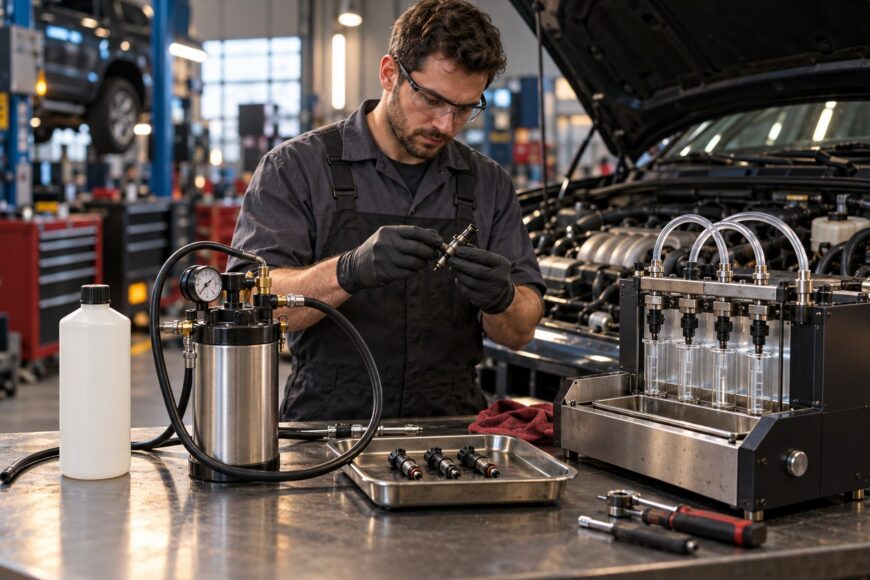
An on-car flush connects a service canister to the fuel rail or the specified fuel-supply point, allowing the engine to run on a controlled solvent instead of its normal fuel supply. Some procedures use approximately 15–20 minutes of running followed by 15–20 minutes of soaking, with repeated cycles as directed. Those timings are examples, not universal requirements.
What the flush reaches depends on the engine and injection design. It may clean injector passages and other parts of the fuel path, and in some systems the solvent reaches the rail, inlet valves, or combustion chambers. It does not provide individual injector flow or spray measurements, so an apparently smoother engine does not prove that every injector is balanced.
Pressure must be controlled, connections must remain leak-free, and seals and hoses must be compatible with the solvent. An improvised pressurized setup creates fuel-leak and fire risks. Aggressive or unregulated household solvents can swell, shrink, or split rubber components and may damage coatings or plastics.
The solvent can also alter the mixture during service. Oxygen-sensor or catalyst-related faults may appear if the procedure is poorly controlled, and dissolved deposits can move farther into the cylinders or oil. Follow the vehicle and product procedures, and leave rail equipment to a technician with the correct adapters and pressure controls.
Removal, ultrasonic cleaning, and a measured bench test
Removing the injectors allows visual inspection, seal replacement where required, and a controlled test of each unit. A suitable bench can compare individual flow, spray pattern, and leakage before and after cleaning. Those measurements show whether the service restored a usable result or merely changed how the injector behaves for a short time.
Ultrasonic cleaning can remove stubborn deposits when the injector is compatible with the process. It is not automatically safe for injectors with ceramic elements or delicate coatings, and direct-injection hardware may have specific handling rules. The injector maker’s procedure should take priority over a generic ultrasonic cycle.
Ask for recorded before-and-after flow and spray results. An ultrasonic bath without measurement cannot show whether the faulty injector was restored.
The test should also include leak checking because an injector that drips after cleaning can cause hard starting, rich running, or oil contamination. If measured performance remains outside the required range, more cleaning may add risk without solving the problem. Repair or replacement may be the appropriate outcome.
How to judge the result and avoid repeat problems
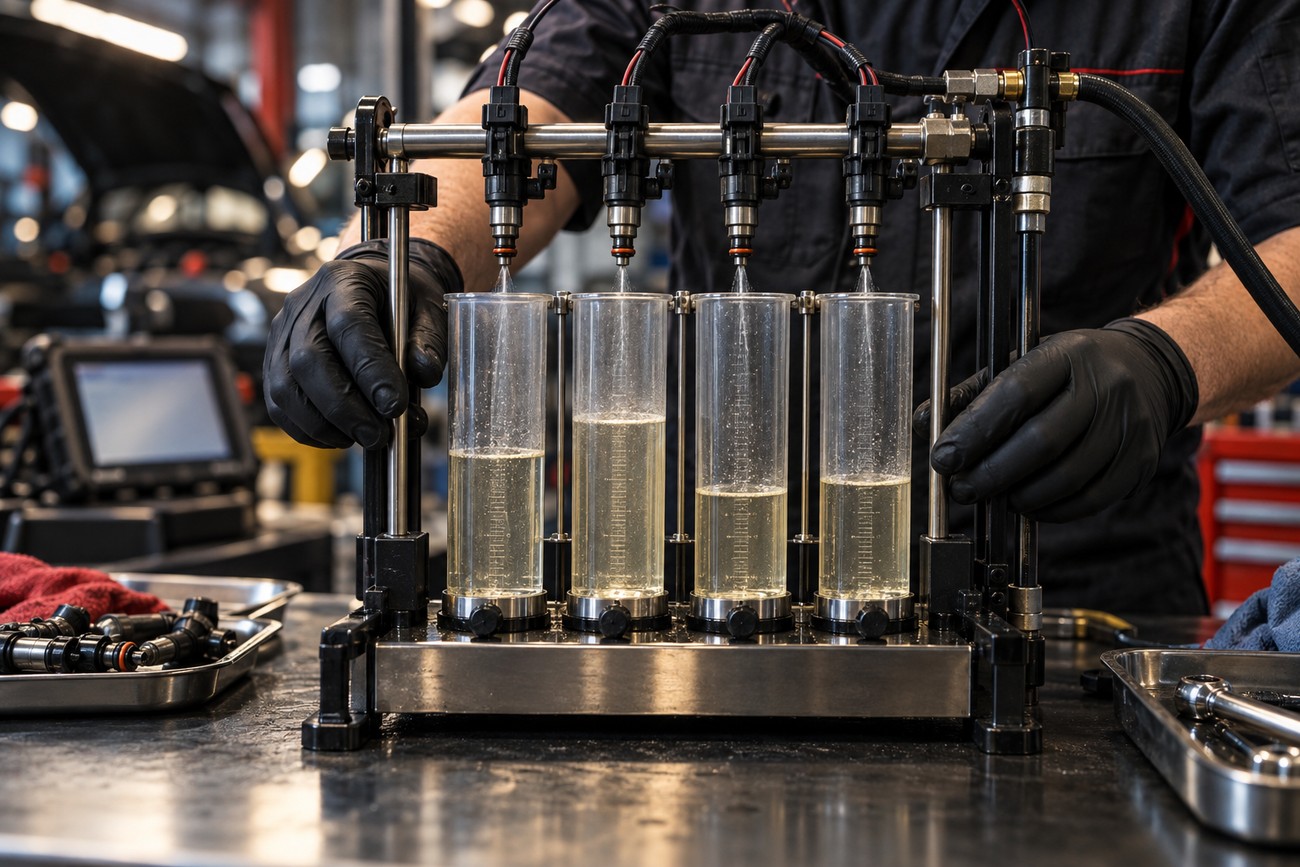
Judge the service against evidence collected before and after it. Compare symptoms, fault codes, fuel trims, and cylinder-specific data; where possible, compare the bench readings for each injector. When the injectors were removed, the service should document individual flow and spray findings before and after cleaning.
Immediate rough running or smoke deserves assessment rather than automatic dismissal as a normal cleaning effect. It may reflect solvent residue, a mixture problem, a leaking connection, or a fault that the cleaning exposed. Continued misfire can also put extra stress on the catalytic converter, so the vehicle should not be driven casually while the cause is unclear.
Frequent cleaning without a diagnosis increases chemical exposure to seals, plastics, and emissions components. Roughly 30,000–40,000 km is a conditional preventive recommendation cited by some services, not a fixed service requirement. Fuel quality, engine design, operating conditions, and measured data should determine whether treatment is justified.
Oil replacement after a correctly performed on-car solvent flush is disputed. Some product procedures do not require it, while some technicians recommend it as a precaution if contamination is suspected. The decision depends on the procedure, solvent control, evidence of fuel or solvent entering the crankcase, and the condition of the oil.
Frequently asked questions
The right approach depends on the diagnosis, the injector’s condition, and whether you need measured results. Costs vary with the work involved, from an additive to removal and bench testing. Symptoms alone cannot confirm a blockage, so test persistent problems before choosing a cleaning method.
How much should fuel injector cleaning cost?
The price depends on the method and the work included. A bottle costs far less than an on-car service, while removal with bench testing includes labor, seals, cleaning equipment, measurements, and possible replacement. Request an itemized quote covering diagnosis, injector removal, seals, testing, cleaning, and any parts that may be needed.
What is the most effective way to clean fuel injectors?
Removal followed by compatible cleaning and measured bench testing gives the clearest answer because each injector’s flow, spray pattern, and leaks can be compared. A tank additive can be sufficient for mild deposits, and an on-car flush may suit a compatible system, but neither independently verifies individual injector performance.
How do I tell if my fuel injectors are clogged?
Possible signs include a cylinder-specific misfire, rough idle, hesitation, hard starting, and increased fuel use. These signs also occur with ignition, air, pump, and pressure faults. Fault-code checks, fuel trims, cylinder data, and fuel-pressure testing narrow the diagnosis; a bench test provides stronger confirmation when one injector remains suspect.
How do I unblock clogged injectors?
Use a correctly dosed tank additive only when deposits appear mild and injector mechanics are sound. A severe blockage, distorted spray, leaking injector, or repeated misfire calls for removal and testing. Avoid improvised pressurized rigs and unregulated solvents, since leaks, fire, and seal damage can turn a cleaning attempt into a larger repair.