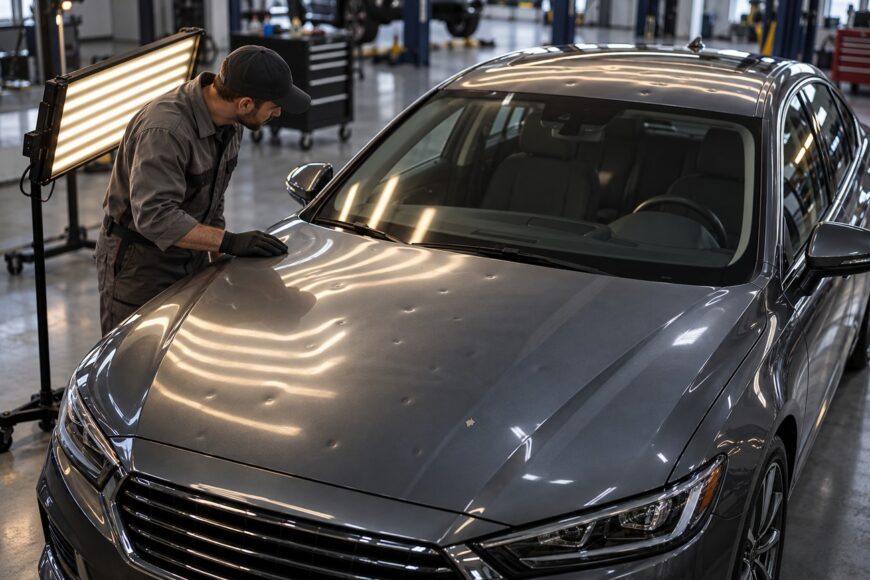
A hood or roof can look smooth in sunlight, then show a field of small dents when reflected lines cross the paint. That change in lighting can make the damage feel worse than it first appeared, but it also gives you a more reliable starting point for deciding what needs repair.
The choice between paintless dent repair (PDR) and conventional bodywork depends on the paint, the condition of the metal, and access behind each dent. The quality of the finished surface matters too: a panel may look acceptable head-on while its reflections still show waves. Before anyone polishes or reshapes it, document what the hail actually did.
- Document the damage before anyone starts fixing it
- When paintless dent repair is—and is not—enough
- PDR, combined repair or repaint: how the options differ
- Why a hail-damaged roof is harder to fix than a hood
- What a useful estimate should account for
- Check the finish, paint and trim before accepting the car
- Frequently asked questions
- What should I tell the repair shop if my roof has a sunroof or roof-mounted equipment?
Document the damage before anyone starts fixing it
Photograph the vehicle from all sides, then take closer views of the hood, roof, and any visible chips or cracks. Keep the images before polishing or repair so the original condition is available for an insurance assessment or a discussion with the shop. Include wider shots that show where each close-up belongs on the car.
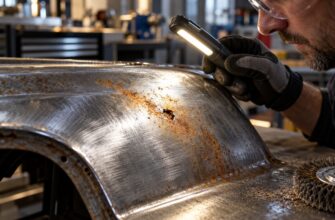
Next, inspect a clean hood and roof under reflected-line lighting from several angles. A clean surface lets the reflected lines reveal changes in shape; dirt and water spots can obscure them. Angled photographs that capture those lines can help show the spread of dents more clearly than an overhead overview shot.
Ordinary lighting may hide shallow dents, and photographs can miss fine paint damage or distortion around a dent. That is why an estimate based only on overview photos may change after an in-person inspection. Record the condition first, then clean the panels for a closer look; avoid polishing, pulling dents, or otherwise altering the damage before any required assessment.
When paintless dent repair is—and is not—enough
Shallow, rounded hail dents with intact paint are common candidates for PDR. Standalone PDR is appropriate when the paint is intact and the metal can be restored without conventional refinishing. A technician works the panel’s shape back while preserving its existing finish.
Chipped or cracked paint and stretched metal may require paintwork or a combined repair. A dent with a sharp crease can also be harder to correct cleanly than its size suggests. Paint damage needs separate attention even if the surrounding dent can be improved with PDR.
Intact-looking paint alone does not establish the full repair plan. The metal may be distorted across a wider area, or the back of the dent may be difficult to reach. Ask the shop to explain what it expects to correct and whether any residual unevenness may remain, rather than treating PDR as a promise of an invisible result.
PDR, combined repair or repaint: how the options differ
The suitable method depends on the damage found during inspection, including paint condition, metal shape, and access.
| Approach | Suitable damage | Paint treatment | Access considerations | Principal trade-off |
|---|---|---|---|---|
| Standalone PDR | Intact paint and metal that can be restored without conventional refinishing | Preserves the factory paint finish when successful | Requires workable access from behind or a suitable glue-pulling approach | May leave some unevenness where shape, stretch, or access limits correction |
| Combined repair | Dents alongside localized paint damage or areas that PDR alone cannot finish adequately | Refinishing is limited to areas that need it, where feasible | May combine dent correction with preparation for paintwork | Can retain more original finish, though the plan is more involved |
| Conventional bodywork with repainting | Paint damage, stretched metal, or distortion that calls for reshaping and refinishing | Repaints the affected area or panel as specified in the repair plan | Allows work where standalone PDR is unsuitable | Changes the original finish and requires care to achieve an acceptable surface |
Why a hail-damaged roof is harder to fix than a hood
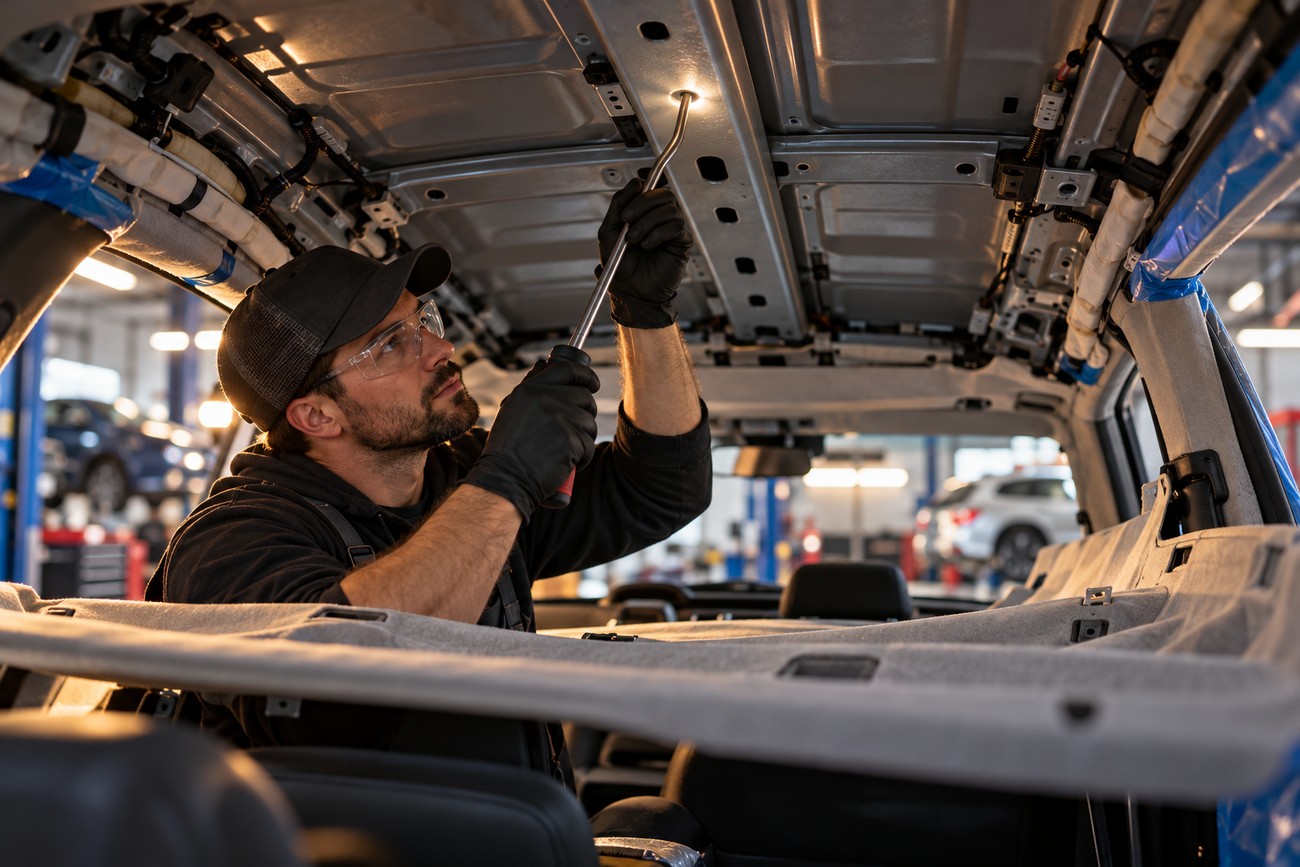
A hood can often provide more direct access to its underside, although its construction still determines where tools can reach. A roof has reinforcement beneath its outer skin, so access can change from dent to dent. Roof PDR may require removal of the headliner to reach areas that cannot be worked from outside.
Where reinforcement blocks a tool, a technician may consider glue pulling from the painted side. It is not suitable for every dent or panel shape, and it does not remove the need to assess the paint and metal first. A hood made from aluminum also calls for careful force control because aluminum and steel respond differently to correction.
Headliner removal adds work beyond correcting the dents. Clips, fasteners, and trim must be handled and reassembled properly; poor fit can show at the edges or lead to new noises later. Discuss the proposed access method before work begins so you understand why roof repair may be more involved than hood repair.
What a useful estimate should account for
A useful estimate identifies the number and location of dents, rather than focusing only on the deepest one. Many small dents can add up to substantial work because each area needs assessment and correction. Dents near roof reinforcement may also need a different access method from those on an open part of the panel.
The shop should record paint condition and say whether it expects standalone PDR, a combined repair, or refinishing. For roof work, ask whether the estimate includes possible headliner removal and reassembly. These details make competing proposals easier to compare than a single price with no explanation of the work.
An overview photo rarely shows every shallow dent. Reflected-line inspection in person may reveal more damage or a paint break that changes the repair plan, so a photo-only estimate is best treated as preliminary. A quick local repair can suit limited damage, but speed alone does not establish the quality of a larger hail repair.
Check the finish, paint and trim before accepting the car
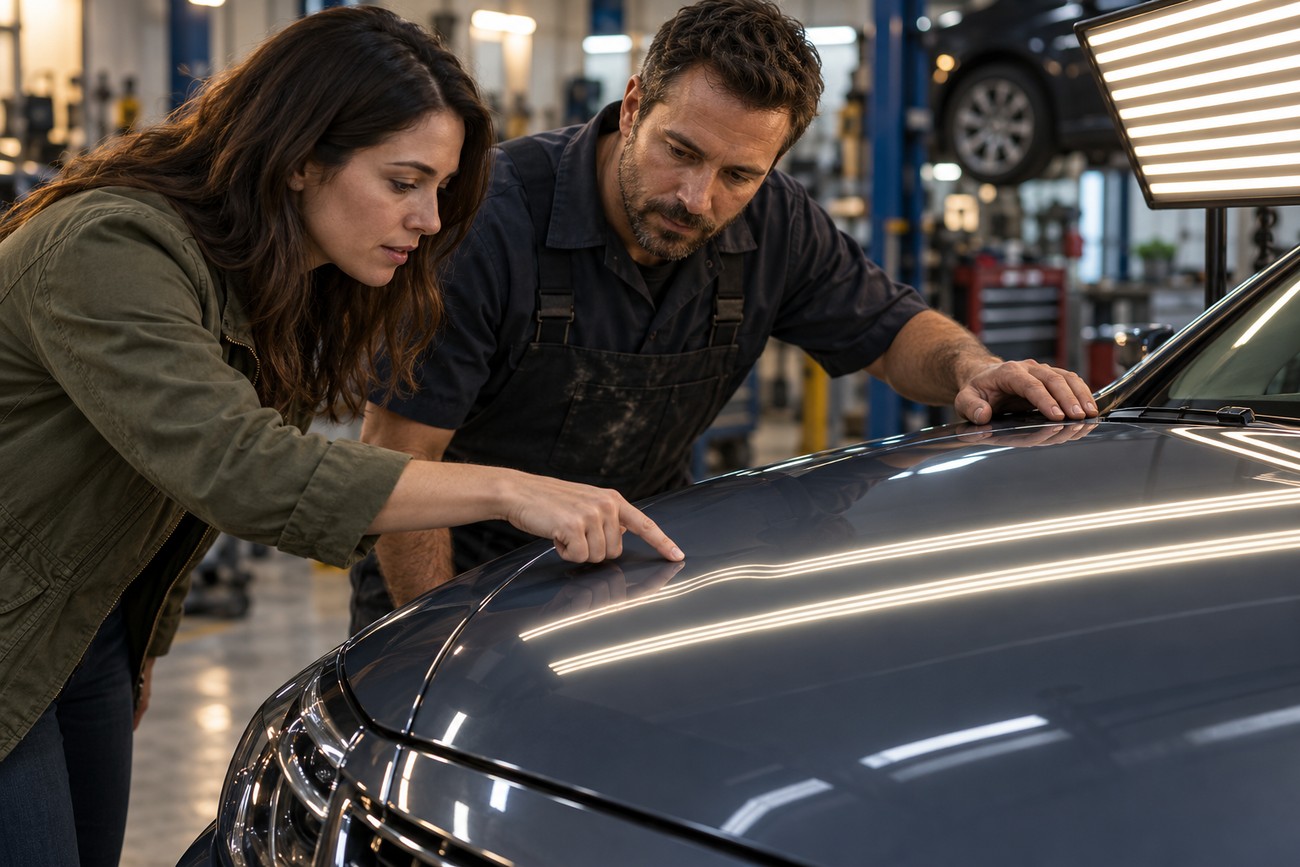
View the repaired hood and roof from several angles with lines reflected across them, rather than judging them only in direct sun. Look for remaining dents, broad waves, or abrupt changes in the reflection. If something appears uneven, point to the exact area and review it with the shop before accepting the finish.
Revisit any chips or cracks recorded before repair. Where paint was broken, exposed material needs appropriate attention because leaving it unprotected can invite corrosion. Check that the agreed paintwork has addressed those spots, even if the nearby dents now look smooth.
If the headliner or roof trim was removed, inspect its fit around the edges and fittings, and listen for new rattles during a drive. Successful standalone PDR preserves the factory paint finish; repainting changes it, while residual waves or poor trim reassembly can also raise questions at resale. Outcomes vary, so keep the repair documentation and assess the actual result rather than assuming any repaired car will lose value.
Frequently asked questions
Roof-mounted components add an important detail to the repair handoff. Tell the shop what is fitted before it plans access behind the roof skin, including equipment that may not be obvious from an exterior damage photo. Arrange to check those components when you collect the car.
What should I tell the repair shop if my roof has a sunroof or roof-mounted equipment?
Identify the sunroof and any roof-mounted equipment before roof disassembly, and mention any existing problems with their operation. This helps the shop plan access and distinguish pre-existing issues from anything noticed after the repair.
At handover, check that the sunroof operates as it did before and that other fitted equipment is secure. Inspect the surrounding trim for proper fit. Report a new noise, poor fit, or operating problem promptly so it can be examined while the repair details are still clear.