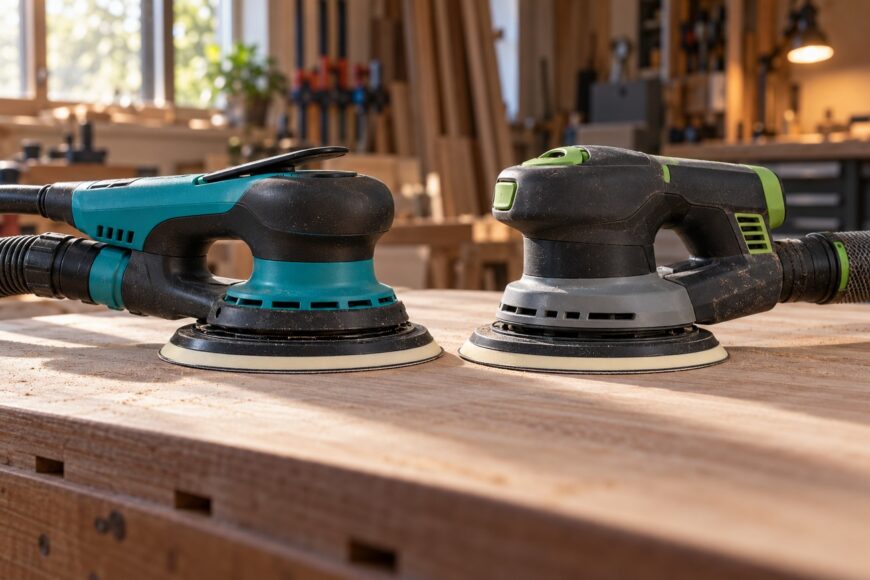
The Mirka DEROS 650X CV and Festool ETS EC 150/5 are premium random orbital sanders with 150 mm pads and 5 mm orbits. Their headline specifications are close enough that a buyer expecting one to transform the finished surface may be disappointed. The more consequential differences often emerge in how each machine feels in the hand, behaves during long sessions, and fits the dust-extraction equipment already in the shop.
Neither brand is the automatic winner. A 5 mm orbit suits a broad range of sanding work, yet it may be the wrong starting point if especially fine finishing is your main task. Before paying for either machine, settle the orbit, check the extractor and hose you will use, and decide how much prolonged handling comfort matters to your work.
- What This Festool vs Mirka Comparison Actually Measures
- Mirka DEROS 650X CV vs Festool ETS EC 150/5: Key Specifications
- Sanding Performance: Is There a Visible Winner?
- Ergonomics, Vibration, and Long-Hour Comfort
- Dust Extraction and the Tool System Around the Sander
- Price, Ownership Value, and the Hidden Premium
- Which One Should You Buy?
- Frequently asked questions
- What is the best random orbital sander on the market?
- Why can two premium sanders feel so different if their results are similar?
What This Festool vs Mirka Comparison Actually Measures
The direct comparison here is between the Mirka DEROS 650X CV and the Festool ETS EC 150/5. Both have a 150 mm pad and a 5 mm orbit, so differences in handling and system fit are easier to assess without also changing the basic sanding configuration. Comparing brand names alone obscures that distinction: each range contains tools intended for different jobs.
A 5 mm orbit is a versatile middle ground between material removal and surface quality. It makes sense when one sander must handle routine preparation and produce a controlled finish. If your work is dominated by especially fine finishing, a 3 mm orbit is a better direction to investigate before choosing between these two models.
Pad diameter changes the comparison as well. A 125 mm version can suit smaller surfaces and different handling preferences, but it is not an equivalent substitute in a test of these 150 mm machines. Likewise, an aggressive tool such as a Festool Rotex addresses a different removal requirement and should not be used as proof that one of these conventional random orbital sanders is stronger or weaker.
The common buying error is choosing a respected model first and defining the work afterward. A cabinet surface, a broad panel, and a delicate final pass can place different demands on orbit and pad size. Establish the material, stage of sanding, and finish requirement first; then compare machines configured for that same job.
Mirka DEROS 650X CV vs Festool ETS EC 150/5: Key Specifications
These figures establish the like-for-like comparison. They do not, by themselves, predict which sander will feel better during a full day of work.
| Specification | Mirka DEROS 650X CV | Festool ETS EC 150/5 |
|---|---|---|
| Pad diameter | 150 mm | 150 mm |
| Orbit | 5 mm | 5 mm |
| Rated power | 350 W | 400 W |
| Approximate weight | 1.1 kg | 1.2 kg |
| Relevant stated system features | Evaluate with the extractor, hose, pad, and abrasives you intend to use | MMC electronics with speed maintenance and temperature monitoring; turbo dust extraction is stated for the ETS EC range |
The Festool has a higher rated power, while the Mirka is lighter on the stated figures. Neither difference establishes a better finish or settles the question of comfort. Dust collection, balance, control under your usual hand pressure, and the cost of a workable setup need a separate assessment.
Sanding Performance: Is There a Visible Winner?
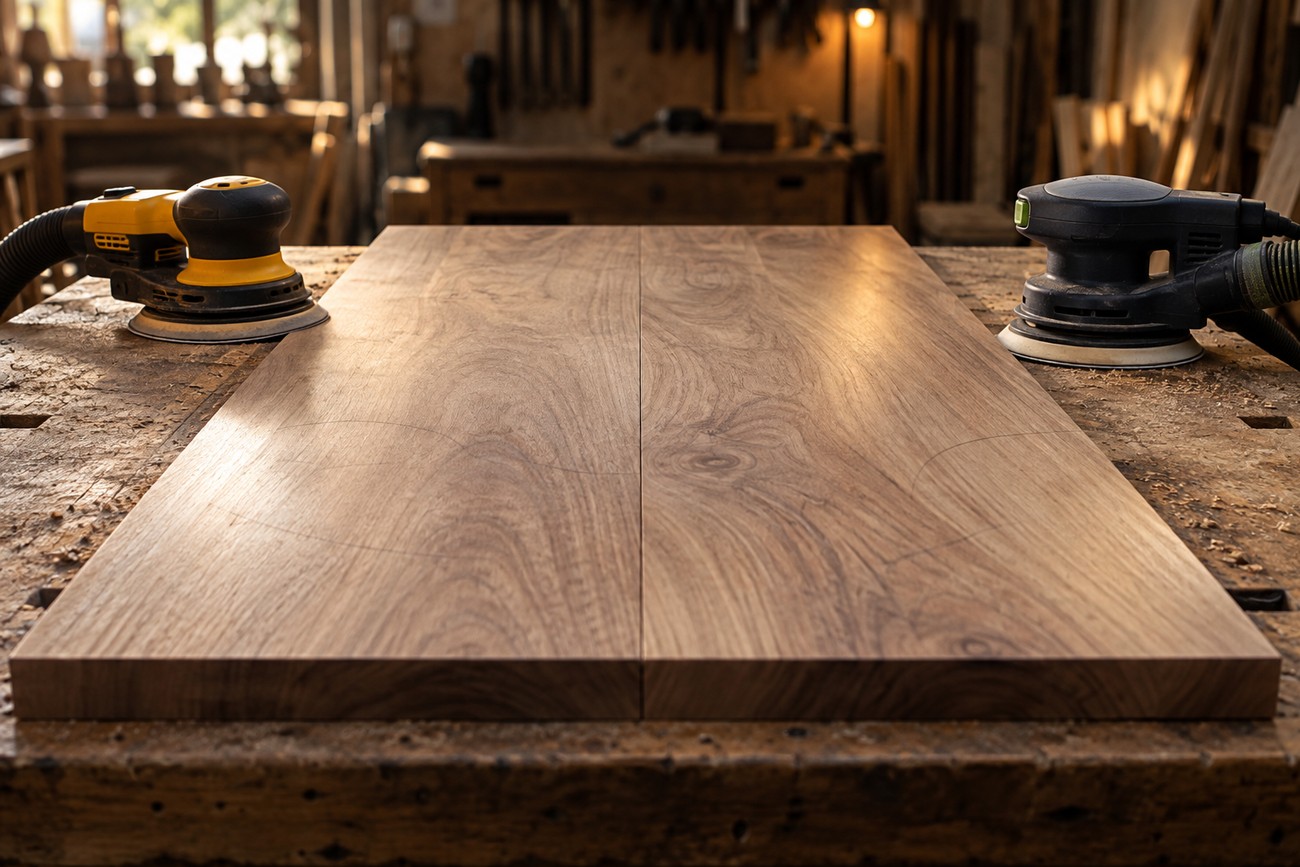
In the cited Wood Whisperer practical test, the two 5 mm machines produced comparable surface quality. The tester also found no noticeable difference in how quickly they removed pencil lines. That is useful evidence against the claim that either badge automatically produces a superior finish, although a pencil-line test cannot represent every wood, coating, or sanding sequence.
For general workshop work, a 5 mm orbit offers a sensible balance between removal and finish. It can prepare broad surfaces without forcing you to use an aggressive specialty machine for ordinary sanding. Its versatility has a limit: if the final surface is the overriding concern, comparing finer-orbit configurations may be more useful than trying to find a winner between these two 5 mm models.
Abrasive choice can alter the result before the sander does. A worn disc or one poorly matched to the material may cut unevenly, while a damaged or tired pad can change how the abrasive contacts the work. Excess hand pressure can also disturb the machine’s intended action. Control those variables before attributing scratches or slow cutting to Mirka or Festool.
Surface quality and removal rate deserve separate judgments. A machine can feel eager to cut while leaving you with more cleanup at the next grit; another can feel restrained yet maintain a predictable surface. Test on the material you actually use, with the same abrasive type and grit on each machine, and inspect the surface after removing the dust.
The premium price is therefore a poor shortcut to predicting the visible outcome. On a short, well-controlled task, these sanders may deliver results that are difficult to distinguish. Their value can diverge more clearly when the job involves sustained load, repeated passes, awkward positioning, or long hours behind the tool.
Ergonomics, Vibration, and Long-Hour Comfort
The Mirka DEROS 650X CV weighs approximately 1.1 kg; the Festool ETS EC 150/5 weighs approximately 1.2 kg. That difference can matter when the tool is held for extended periods, particularly away from a comfortable bench position. Weight alone is an incomplete ergonomic verdict, however. Balance, grip, hose drag, and the pressure needed to keep the pad working consistently all affect fatigue.
Mirka is often described as light or low-vibration, yet user impressions conflict. Some operators find the Festool smoother, more powerful, or easier to control; others prefer the Mirka’s lighter feel. These reports are better treated as reasons to handle both machines than as measurements that establish a universal ranking.
A brief demonstration reveals the grip and switch placement, but it says less about comfort after a long sequence of panels. Notice whether your hand starts pressing harder to guide the tool or whether the hose pulls against your preferred stance. The sander that demands less correction over time may be worth more to you than the one that initially feels lighter.
Dust Extraction and the Tool System Around the Sander
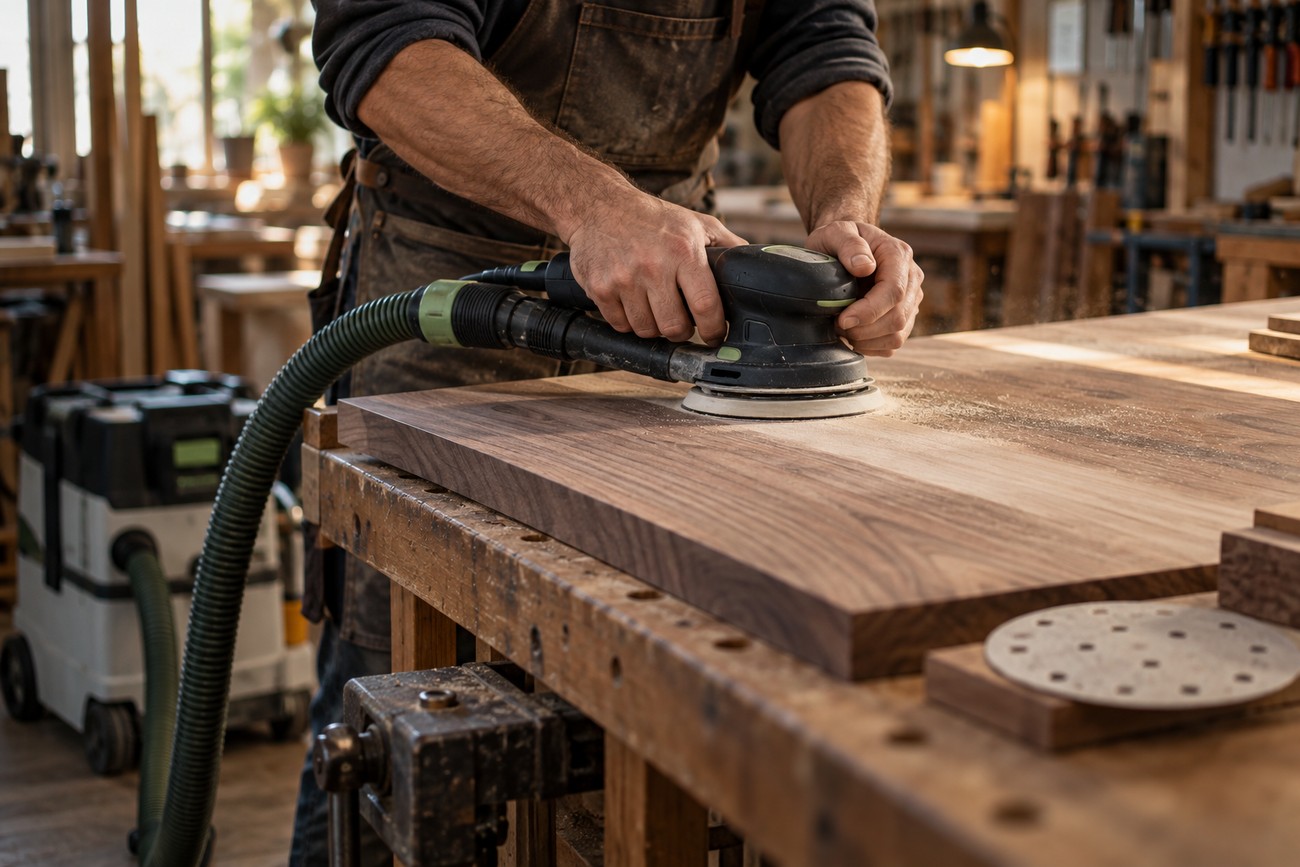
Festool states turbo dust extraction for the ETS EC range and describes its MMC electronics as maintaining speed and monitoring temperature. Those are relevant features, particularly if you want consistent behavior during sustained work. Judge them with the extractor and abrasives you will use, rather than treating them as a guarantee of clean sanding on their own.
The working system includes the vacuum, hose, pad, and abrasive disc. A capable sander attached to an unsuitable extractor or awkward hose can be unpleasant to control and leave more dust on the work. Poor extraction may also allow heat and debris to build at the sanding surface, undermining abrasive performance and the quality of subsequent passes.
Consumables deserve attention before purchase. Check that you can readily obtain suitable pads and abrasives for the material and finish you produce, and confirm that your hose connects appropriately to the chosen setup. A familiar stock of discs or an extractor already in the shop may give one machine a practical advantage without implying that its motor produces a better surface.
Dust control matters most when sanding becomes repetitive. Clearing debris helps you see what remains to be worked and reduces interruptions to clean the surface. If you can arrange a demonstration, use your intended extraction setup or one genuinely comparable to it; an isolated test of the bare sander answers only part of the buying question.
Price, Ownership Value, and the Hidden Premium
Reported price comparisons do not establish a permanently cheaper brand. Published gaps around $100–$125 have appeared in different comparisons, and the direction can vary with market, seller, and package. Current local pricing is therefore more useful than a quoted difference from another region or an earlier test.
Part of a premium purchase may pay for ergonomics, dust handling, stability under load, and integration with equipment you own. It need not buy a visibly superior finish on the first panel. That distinction explains a familiar disappointment: if both machines complete a short job to the same standard, the extra spend can appear to have achieved nothing.
Repeated long sessions change the calculation. A grip you can hold comfortably, a hose arrangement that stays out of the way, and predictable behavior as the work continues may reduce fatigue and interruptions. These benefits are difficult to establish from rated wattage or a few minutes of sanding, but they are tangible if the sander is used regularly.
Price the usable setup rather than the machine in isolation. Include the extractor connection, pads, and abrasives you need, then consider access to service and replacement consumables in your area. A premium tool chosen with the wrong orbit can remain the wrong tool for the job, regardless of how well made it feels.
Which One Should You Buy?

Choose the Mirka DEROS 650X CV if low weight is a priority and you prefer its handling when tested under realistic conditions. Its approximately 1.1 kg weight and reputation for a light, low-vibration feel make it appealing for prolonged use. Because perceptions of vibration and power differ, treat that reputation as a reason to try it, rather than a substitute for doing so.
Choose the Festool ETS EC 150/5 if its feel suits you, you value its stated MMC electronics and turbo dust-extraction approach, or it fits equipment you already use. Its 400 W rating and reports of smooth, strong operation may support that choice. Rated power is not proof of a better finished surface: the cited 5 mm test found no clear finish advantage for either machine.
If a hands-on comparison is possible, keep the pad size, abrasive, grit, extractor, and task consistent. Work for long enough to notice grip strain and hose interference, then inspect the sanded surface rather than relying solely on how forceful the motor feels. The most powerful or lightest machine is not automatically the best machine for your material and working position.
Before ordering, check the whole decision:
- Is a 5 mm orbit appropriate, or is especially fine finishing the main priority?
- Does a 150 mm pad suit the surfaces you sand most often?
- Will your extractor, hose, pads, and abrasives work well with the chosen sander?
- Which grip and balance remain comfortable over your typical work duration?
- What is the total cost of the machine and the system needed to use it properly?
Frequently asked questions
The answers below address two uncertainties that specifications alone cannot settle: what “best” means for a sander, and why similar finished surfaces can come from tools that feel different in use.
What is the best random orbital sander on the market?
There is no universal best random orbital sander. The right model depends on the surface, required finish, orbit, pad size, handling comfort, and dust-extraction setup. Brand prestige cannot resolve a mismatch between the tool and the task; a respected 5 mm machine is still a poor choice if your work calls primarily for a finer-orbit configuration.
For these two 150 mm models, the cited practical test found comparable results. Use that as a reason to give ergonomics and system fit serious weight in the decision, rather than paying more in expectation of a finish advantage that the test did not show.
Why can two premium sanders feel so different if their results are similar?
The finished surface records the sanding action, while your hands also register balance, grip, vibration, hose pull, and how the machine responds to pressure. Abrasive choice, pad condition, and extraction can change those sensations. Two operators may therefore prefer different sanders even when both produce a comparable surface.
To separate machine feel from setup, compare them on the same material with equivalent abrasives and effective dust collection. Then judge comfort over a representative stretch of work. A quick pass can confirm that both sand well, but it may miss the handling difference that determines which one you want to use all day.