A diesel engine can continue to run while an expensive fault is developing. Difficult starting, white smoke, reduced pulling power, a rising temperature, or a new warning light may appear before the engine stops completely. Treating those changes as harmless because the machine or boat still moves gives a small problem time to reach the fuel system, cooling system, turbocharger, or internal engine components.
Effective diesel maintenance combines a short pre-start inspection, the service schedule written for that particular engine, and prompt investigation of changes in sound, exhaust, temperature, or performance. Engine hours and operating conditions are usually more useful references than mileage, with seasonal service where applicable. Mileage alone gives an incomplete picture, especially for equipment that spends long periods idling or works under heavy load.
The checks below provide a maintenance framework, although the engine manual and installation requirements remain controlling. A visual inspection can reveal a developing leak or loose connection; it cannot replace scheduled servicing, testing, or work on high-pressure fuel equipment.
- Start with a pre-start inspection
- A service schedule built around hours, conditions, and the manual
- Oil service: use the right specification, not a generic mileage rule
- Keep water, debris, and air out of the fuel system
- Protect cooling, airflow, and starting reliability
- Read warning signs together—and know when to stop
- Frequently asked questions
- What actually destroys diesel injectors?
- What should I do if the water separator keeps filling?
- How can I track service hours without an hour meter?
Start with a pre-start inspection
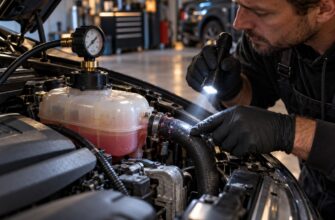
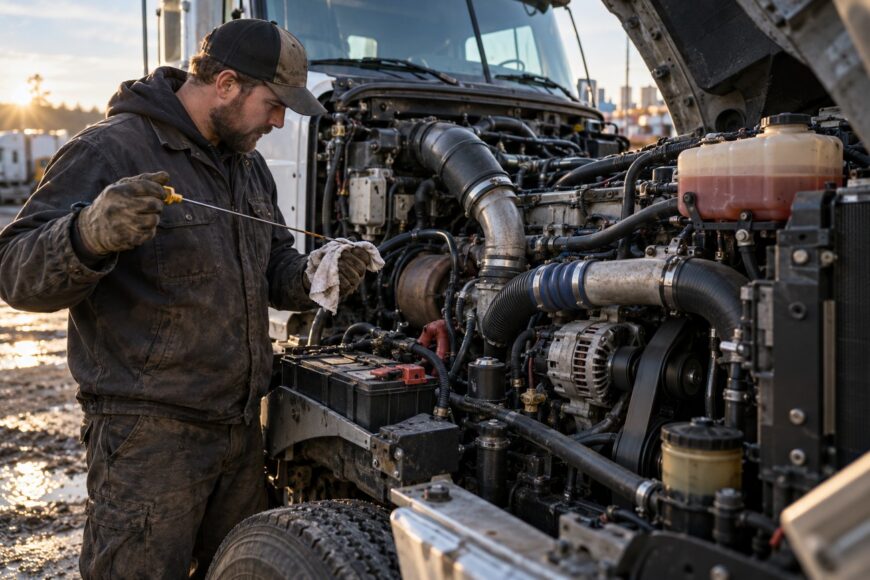
Make the inspection with the engine stopped, cool where practical, and on a stable surface. Check the oil level using the procedure specified for the installation, then inspect fuel and coolant levels. Many working-diesel checklists call for checking oil daily because oil consumption and leakage can develop between service visits.
Look over belts, hoses, wiring, battery connections, and the area beneath the engine. A belt with damaged edges, unusual slack, or heavy contamination needs attention before operation. Battery terminals should be secure and free of obvious corrosion, while a wet or stained surface may indicate an oil, fuel, coolant, or raw-water leak that requires tracing rather than wiping away.
Where a water separator is fitted, inspect it and drain it as the manufacturer directs. Some operating checklists call for daily attention to the separator, particularly where fuel storage or working conditions make water contamination more likely. Use a clean container and follow the equipment procedure; dispose of drained fuel and water safely, and do not assume that a clear-looking fuel sample proves the whole tank is clean.
After starting, observe the exhaust, idle quality, warning lamps, and initial temperature behavior. A brief baseline recorded in the log helps you recognize a new haze, unusual smell, uneven idle, or slower rise to normal operating temperature. Keep hands, loose clothing, and tools away from moving parts, and never use an after-start observation as a reason to ignore a leak or warning that was visible with the engine off.
A service schedule built around hours, conditions, and the manual
Use this table to organize maintenance, then confirm every trigger and procedure in the engine-specific manual. Service intervals depend on the engine model, operating conditions, engine hours, and, where applicable, seasonal service.
| Maintenance item | Practical check or service trigger | What to verify in the engine manual |
|---|---|---|
| Pre-start inspection | Check oil, fuel, and coolant levels; belts, battery connections, leaks, and visible exhaust-system damage before operation. | Required inspection frequency, fluid-check position, acceptable levels, and any installation-specific safety steps. |
| Engine oil and filter | Check oil as required by the operating checklist and service at the prescribed engine-hour or seasonal interval. | Oil specification, filter part requirements, capacity, sampling guidance, and the approved service interval. |
| Fuel filters | Replace when the schedule, restriction indication, contamination, or operating symptoms call for service. | Primary and secondary filter arrangement, approved elements, bleeding or priming procedure, and interval for the duty cycle. |
| Water separator | Inspect and drain a fitted separator as directed; investigate repeated water findings. | Drain method, disposal requirements, sensor reset procedure, and inspection frequency. |
| Cooling system | Check coolant, belts, hoses, radiator or cooling passages, and temperature behavior; clean debris when conditions require it. | Coolant type, concentration, pressure-test requirements, cleaning method, and replacement or flushing interval. |
| Air intake | Inspect the intake path and air filter for blockage, dust, damage, or poor sealing. | Restriction limits, filter service method, replacement criteria, and turbocharger inspection requirements. |
| Marine cooling items | For applicable installations, service the raw-water impeller, zinc anodes, and heat exchanger. | Seawater-system inspection, impeller replacement, anode condition, flushing, and corrosion-control requirements. |
| Seasonal preparation | Prepare the engine for storage, recommissioning, or the start of a working season. | Storage fluids, fuel treatment, battery care, antifreeze protection, and recommissioning checks. |
A commonly cited marine-diesel example is oil and filter service every 100 engine hours or seasonally, but that is an example to verify, not a universal timetable. Some practical guides cite 200–250 engine hours for primary and secondary fuel filters; the actual interval remains model- and condition-specific. Generic claims of changing diesel oil every 3,000–7,500 miles do not override the engine manual or duty-cycle guidance.
Oil service: use the right specification, not a generic mileage rule
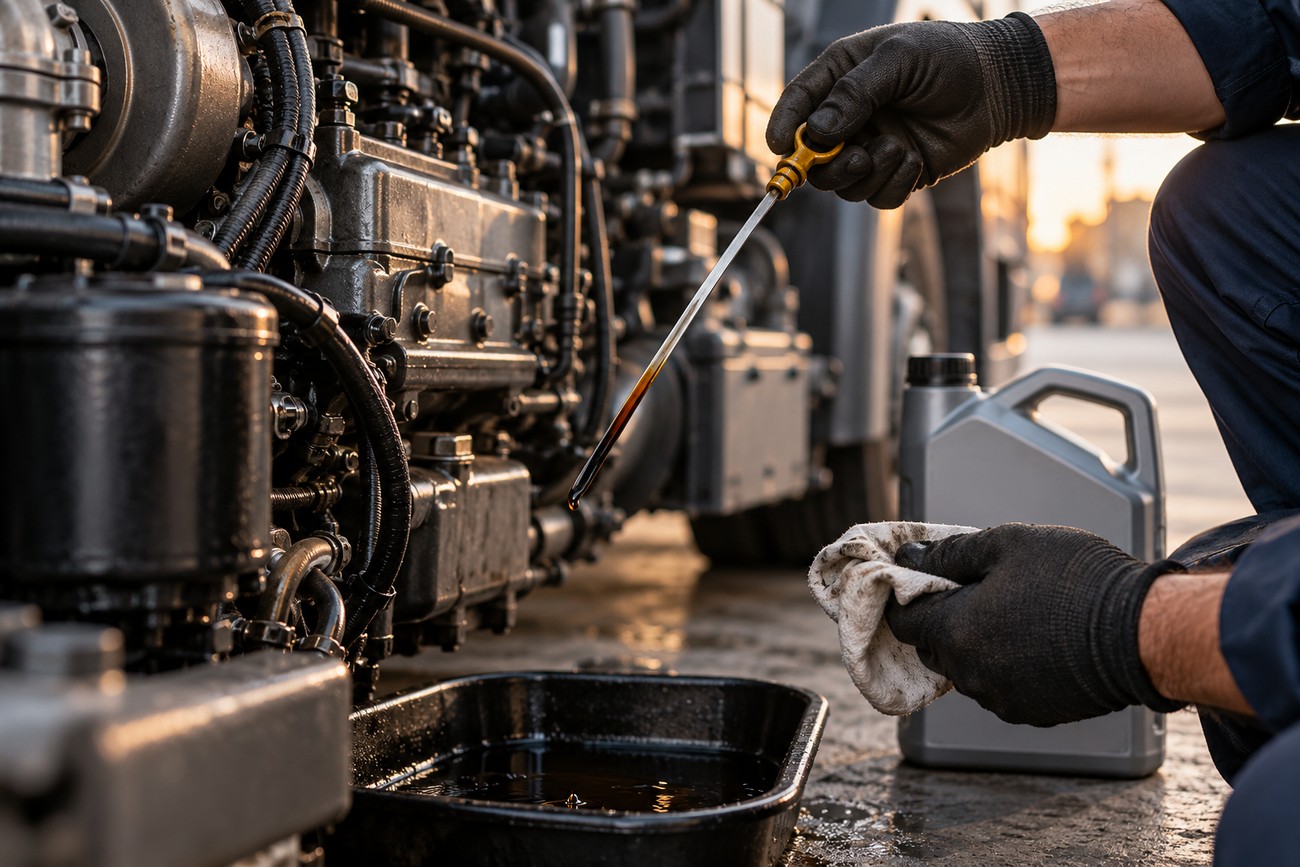
Check the oil level on level ground and under the conditions specified by the manufacturer, since some engines require a waiting period after shutdown while others specify a particular reading procedure. Record the level when it is checked, especially on equipment that works long hours. A gradual fall can reveal consumption or a leak before the change becomes obvious in the engine bay.
Use the oil specification required by the engine manufacturer, including the relevant service classification and any approval stated in the manual. The correct choice depends on the engine design, emissions equipment, fuel, ambient conditions, and operating duty. A familiar oil grade from another diesel may be unsuitable even if the oil appears clean and the engine starts normally.
Operating hours describe engine work more accurately than ordinary road mileage for many generators, boats, tractors, excavators, and other equipment. Long idling, repeated cold starts, dusty conditions, high loads, and short operating cycles can affect the service requirement. Follow the manufacturer’s schedule as adjusted for the stated operating conditions, and use a marine example of every 100 hours or seasonally only when it matches the particular engine’s instructions.
Online mileage rules create a common maintenance error. Sources may cite 3,000–7,500 miles, yet that range is not a universal diesel oil-change interval and does not supersede the engine manual. A service log should include the date, engine-hour reading or estimate, oil specification, filter details, operating conditions, and any oil added between changes.
That record turns a vague concern into a useful trend. If the engine begins needing more oil, develops a new wet area, or shows a change in oil condition, arrange further assessment rather than simply shortening the interval or changing oil repeatedly. Do not overfill to compensate for an unexplained loss; excess oil can also create problems and should be corrected according to the manufacturer’s procedure.
Keep water, debris, and air out of the fuel system
Diesel fuel quality affects starting, combustion, and the life of filters, pumps, and injectors. Water can collect in the system without an obvious refueling incident, especially when fuel is stored poorly or a tank draws in moist air as temperatures change. Inspect and drain a fitted water separator as directed, with some operating checklists calling for daily attention.
Fuel-filter intervals vary with the engine and its working environment. Some practical guides cite 200–250 engine hours for primary and secondary fuel filters, but that figure is not a universal interval. A restriction indicator, contaminated fuel, repeated hard starting, or a warning that returns after service may require earlier investigation and a check of the complete fuel supply.
Filter replacement introduces a separate risk: air can enter through a loose seal, damaged gasket, incorrect element, drain fitting, or poorly tightened connection. Hard starting, a long crank, or an unstable idle after filter work can indicate air in the fuel supply, although none of those symptoms proves an injector fault. Check sealing, connection condition, and the specified priming procedure before replacing expensive components.
High-pressure fuel equipment can retain dangerous pressure and requires the manufacturer’s test and isolation procedure. Keep diagnostic work on the high-pressure side with a qualified technician; never loosen high-pressure lines to bleed them. Owner-level checks should stay with visible leaks, filter installation, the separator, low-pressure connections, fuel level, and the service information for that installation.
Repeated water in the separator deserves a source investigation. Check the fuel supplier or storage container, tank cap and vent condition, tank sediment, condensation exposure, and possible water entry around the filler. Draining the separator may restore operation temporarily while leaving the cause in the tank or storage system, allowing contamination to return and damage fuel-system components.
Protect cooling, airflow, and starting reliability
Cooling-system checks begin with the coolant level, visible condition, hoses, clamps, belts, and signs of dried residue or wetness. Check only when it is safe to do so, since a hot pressurized system can release scalding coolant. The specified coolant type and mixture matter, and topping up with an incompatible fluid can create a later corrosion or protection problem.
Inspect the radiator, charge-air cooler, screens, and other cooling passages for dust, fluff, mud, plant material, or worksite debris. Dust-heavy and debris-heavy operations can block airflow even when the engine bay looks acceptable from a distance. Clean using the method approved for the installation; aggressive pressure or the wrong direction of cleaning can bend fins or force debris deeper into the core.
A rising temperature needs attention before continued loading. Stop or reduce the load according to the operating instructions, then allow the system to be assessed safely. Overheating can result from restricted airflow, low coolant, a damaged belt, a failing pump, a thermostat issue, or an internal problem, so continued operation should not be used as a diagnostic test.
Air intake restrictions also reduce performance and can increase smoke or exhaust temperature. Inspect the filter housing, seals, ducting, and intake opening, especially after work in dust. Battery condition and clean, tight connections belong in the same routine because slow cranking can look like a fuel or compression problem, particularly during cold starts.
Marine installations add cooling components that do not apply to every diesel. Raw-water impellers, zinc anodes, and heat-exchange maintenance require their own schedule and inspection procedures. A restricted seawater intake, worn impeller, blocked strainer, depleted anode, or fouled heat exchanger can produce overheating even when the engine’s freshwater coolant level appears normal.
Read warning signs together—and know when to stop

Diagnose the pattern rather than assigning a failed component to one symptom. Start with starting behavior, then consider smoke, power under load, temperature, and fault warnings together. Hard starting with white smoke suggests a different line of investigation from low power with a blocked air intake, while a temperature rise changes the urgency of either situation.
For a hard start or loss of power, begin with basic checks: fluid levels, battery connections, fuel level, filter condition, water separator contents, visible leaks, and signs of air entering the fuel supply. Review recent maintenance, because a problem that began immediately after filter or hose work may relate to sealing or priming. These checks help narrow the fault without encouraging parts-swapping.
White smoke can have several causes, and its appearance during a cold start does not identify one failed component. Fuel smell, persistent smoke after warm-up, uneven idle, unusual mechanical noise, or a warning lamp calls for timely diagnosis. A running engine may still be developing a serious fuel-system, cooling, turbocharger, or internal-engine fault.
Stop and seek professional assessment for active overheating, a significant fuel leak, rapidly worsening smoke, severe knocking, loss of oil pressure, or a warning condition identified as critical by the manual. Do not open a hot cooling system or disturb high-pressure fuel lines. If the engine can be shut down safely, preserve the evidence by recording the warning, temperature behavior, load, smoke, and recent work.
Small changes are easier to interpret when the operator keeps a simple record. Note start quality, exhaust appearance, operating hours, temperature, fuel additions, oil additions, and warning events. This information gives a technician a useful sequence and helps distinguish a recurring condition from a one-time event, while the absence of a complete failure should never be treated as proof that continued operation is safe.
Frequently asked questions
Fuel contamination and service-hour records raise practical questions beyond the routine checks above. The answers below address injector risks, repeated water in the separator, and tracking hours without a meter. For service decisions, use the engine manual and the conditions recorded for that installation.
What actually destroys diesel injectors?
Contamination, water-related corrosion, and inadequate fuel lubricity are major risks to injectors and other precision fuel-system parts. Dirt can damage close-fitting surfaces, water can promote corrosion and interfere with lubrication, and fuel with impaired lubricity can increase wear. Poor storage, a neglected tank, or an unsuitable fuel treatment can therefore create damage without a dramatic refueling mistake.
Symptoms alone do not confirm a failed injector. Hard starting, smoke, uneven running, and low power can also result from air in the fuel supply, restricted filters, slow cranking due to a weak battery, or a cooling or air-intake fault. Preserve fuel samples and maintenance records where contamination is suspected, then have the system tested using the engine manufacturer’s procedure.
What should I do if the water separator keeps filling?
Repeated water means the source needs investigation rather than repeated draining alone. Review the fuel source, storage container, tank cap, filler seal, vent, and exposure to condensation or rainwater. A technician may also need to assess tank sediment and sample fuel from different points, because a separator can collect water that remains elsewhere in the tank.
Until the cause is understood, avoid treating the separator as a permanent collection point. Use the manufacturer’s instructions for draining and disposal, keep records of when water appears, and arrange professional fuel-system assessment if a warning returns, the engine runs poorly, or contamination reaches the filters.
How can I track service hours without an hour meter?
Keep an operating log with the date, start and stop times, equipment use, load pattern, and any extended idling. For a boat or generator, record each operating session; for mobile equipment, a daily log can include the estimated hours worked and the type of duty. This creates a practical estimate for planning inspections and comparing symptoms with operating history.
Estimated hours are not a precise substitute for the manufacturer’s requirements. Install an hour meter when practical, retain service invoices, and mark the uncertainty in the log rather than presenting an approximation as an exact reading. If the schedule is critical or the equipment has an unknown history, base the next service on the manual and obtain qualified advice.