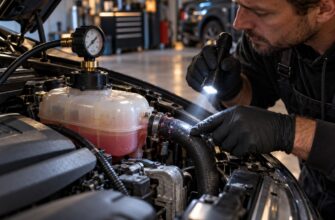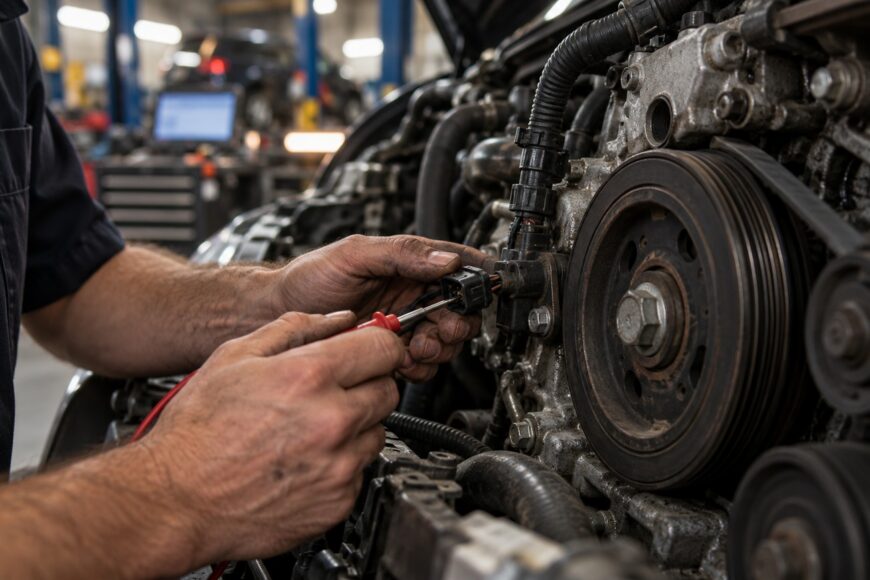
The starter turns normally, but the engine will not fire. A minute later, it starts as if nothing happened. Or the engine stalls after warming up and restarts after a short pause. A failing crankshaft position sensor can cause this pattern, though the temporary recovery makes it easy to misread.
The sensor supplies timing information the engine control unit (ECU) needs for fuel injection and ignition. A broken signal can disrupt both. Wiring, the sensor’s toothed target, ignition, fuel delivery, ECU power, and immobilizer faults can produce similar complaints, so the useful approach is to follow the symptoms and test the signal before buying a sensor.
- What the Crankshaft Position Sensor Does
- Common Crankshaft Position Sensor Symptoms
- Intermittent, Heat-Related, and Weather-Dependent Failures
- How to Diagnose the Sensor Without Guessing
- Other Problems That Mimic a Bad Crankshaft Sensor
- What to Do When the Engine Stalls or Will Not Start
- Frequently asked questions
- How can you tell a crankshaft position sensor problem from a camshaft position sensor problem?
- What happens if you unplug the crankshaft position sensor?
- What happens when the crankshaft sensor goes bad?
- What are the 7 symptoms of a bad camshaft position sensor?
- How to temporarily fix crankshaft position sensor?
What the Crankshaft Position Sensor Does
The crankshaft position sensor reports crankshaft position and speed to the ECU. The ECU uses that information to synchronize fuel injection and ignition with engine rotation. If it cannot establish a usable crankshaft signal, it may be unable to run the engine correctly.
A complete signal loss can leave you with an engine that cranks but does not start. It can also stop a running engine and, depending on the vehicle’s control strategy, result in no spark. These are reasons to check for a crankshaft signal, rather than proof that the sensor itself has failed.
Signal faults are often less clear-cut. Heat may affect the sensor, while vibration can disturb a weak connector or damaged wire. The ECU may receive an inconsistent signal for a time, causing rough running, before the fault becomes severe enough to prevent starting.
Common Crankshaft Position Sensor Symptoms
Hard starting is a common complaint. The starter may crank at its usual speed while the engine takes longer to catch, starts only after another attempt, or refuses to start until you wait. A lost crankshaft signal is one possible cause; fuel, ignition, power-supply, and immobilizer faults remain in the picture.
During normal driving, fluctuating RPM or idle, hesitation, jerking under acceleration, and loss of power can point to an inconsistent timing signal. The engine may stumble at a stop or feel reluctant under load. Such symptoms deserve attention even if the car still starts reliably, because an intermittent fault can worsen.
Sudden stalling is the more urgent symptom. If the ECU loses usable crankshaft information while the engine is running, the engine may shut off without giving you much time to react. A later restart does not rule out another stall.
The Check Engine light may illuminate, stay on, or appear only around an episode. An intermittent fault may leave no continuously illuminated warning, and a stored code may be absent when you check. Conversely, a warning light alone cannot identify the crankshaft sensor; the codes and the conditions under which they appeared matter.
Intermittent, Heat-Related, and Weather-Dependent Failures
A car that starts cold but stalls or refuses to restart hot has a useful diagnostic pattern. After a pause or cooldown, the engine may start normally again. Record the temperature and how long it took to restart: testing only after the problem disappears can miss the fault.
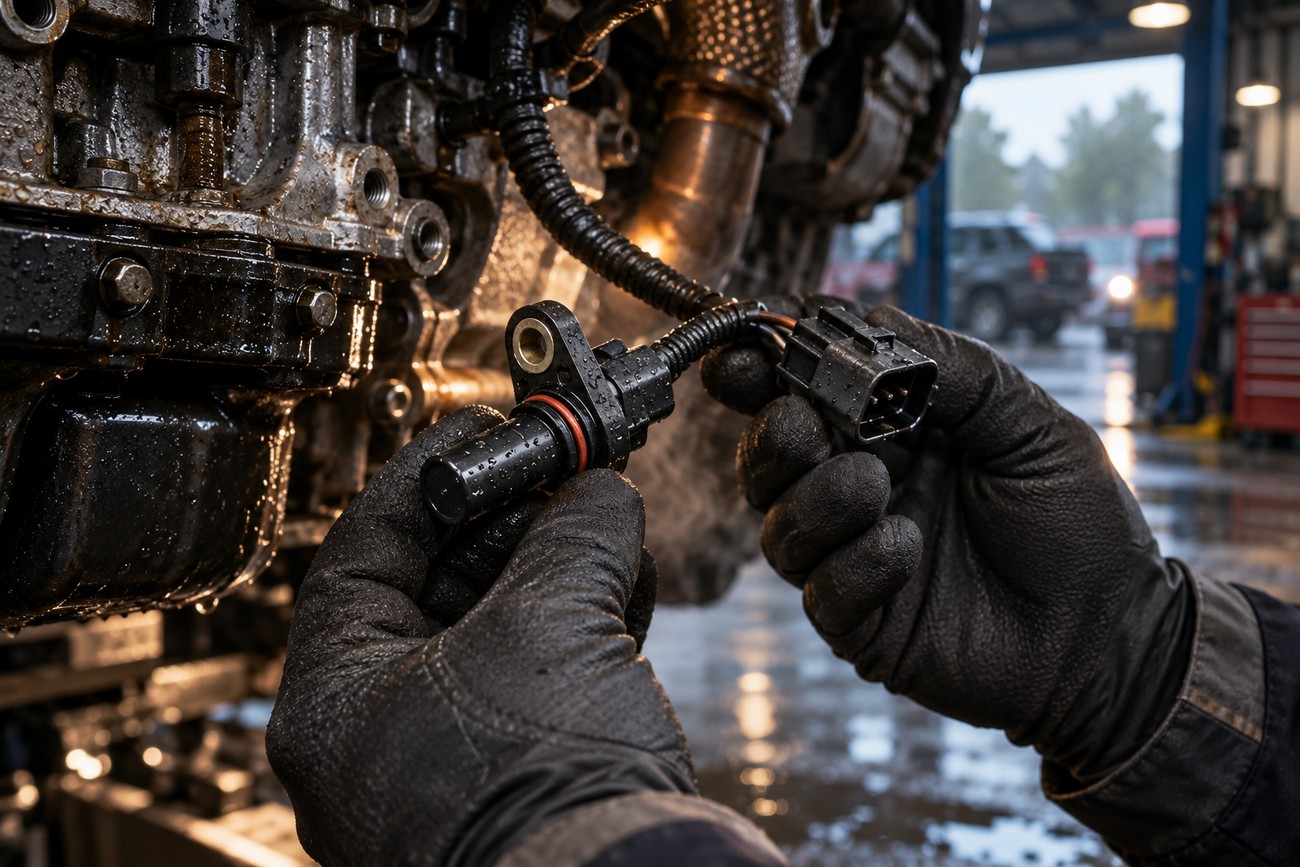
Damp weather can worsen starting or signal problems in some vehicles, particularly where moisture affects a connector or harness. That does not distinguish a damaged sensor from an external electrical fault. Inspect the connection rather than treating the weather pattern as a verdict.
Vibration and engine load can expose a weak connection that behaves normally while the vehicle is parked. A cold resistance reading or a stationary idle test may therefore look acceptable. Diagnosis is more convincing when the fault can be observed while it is happening, with live crankshaft data or a signal test appropriate to the vehicle.
Keep a brief record of whether the failure occurs during cranking, at idle, or on the road, and whether the engine is hot, cold, or damp. Those details help a technician reproduce a fault that might otherwise vanish before the car reaches the workshop.
How to Diagnose the Sensor Without Guessing
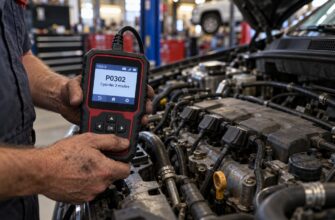
Begin with a scan for stored and pending fault codes, then check live data while cranking if the tool supports it. Look for crankshaft-speed information and note whether it disappears during the failure. The absence of a stored code does not rule out an intermittent signal problem.
Watch the tachometer while the starter turns. No needle movement can be a strong indirect clue that crankshaft-speed data is missing, but some displays respond slowly or behave differently during cranking. Treat the observation as a reason to verify scan data and the signal, not as a sensor test by itself.
Reproducing a hot or vibration-related failure while monitoring the crank signal can reveal an interruption that a single cold resistance reading will miss.
Inspect the sensor connector for poor contact or contamination and follow the harness for damage. Check that the sensor is correctly positioned, its clearance meets the vehicle specification, and the toothed reluctor or trigger target is intact. A sound sensor cannot provide the ECU with a reliable signal if its connection or target is faulty.
Test the sensor type fitted to the vehicle using its service information. Some guides cite approximately 500–700 ohms for certain inductive sensors, but that is not a universal specification; other applications use different limits. Static resistance alone cannot confirm performance under heat or vibration, so a dynamic signal test may be needed before replacement.
Other Problems That Mimic a Bad Crankshaft Sensor
A crank-no-start complaint has several possible paths. A fuel-delivery fault may prevent combustion even when the ECU sees engine speed. Faults in spark plugs, coils, or their controls can also keep the engine from firing. Establish whether fuel and ignition are available before assigning the failure to the crankshaft sensor.
No spark warrants a check of ECU power, grounds, related wiring, and any immobilizer restriction, as well as crankshaft data. A missing crank signal can stop ignition operation, but it is not the only reason spark may be absent. Poor connections can imitate a failed sensor closely enough that replacing the sensor changes nothing.
Camshaft timing signals can affect starting and drivability too, and their faults may produce overlapping symptoms or related codes. Likewise, a Check Engine light reports that the control system detected a problem, not which part to replace. Read the code in context and confirm the relevant signals and circuits.
What to Do When the Engine Stalls or Will Not Start
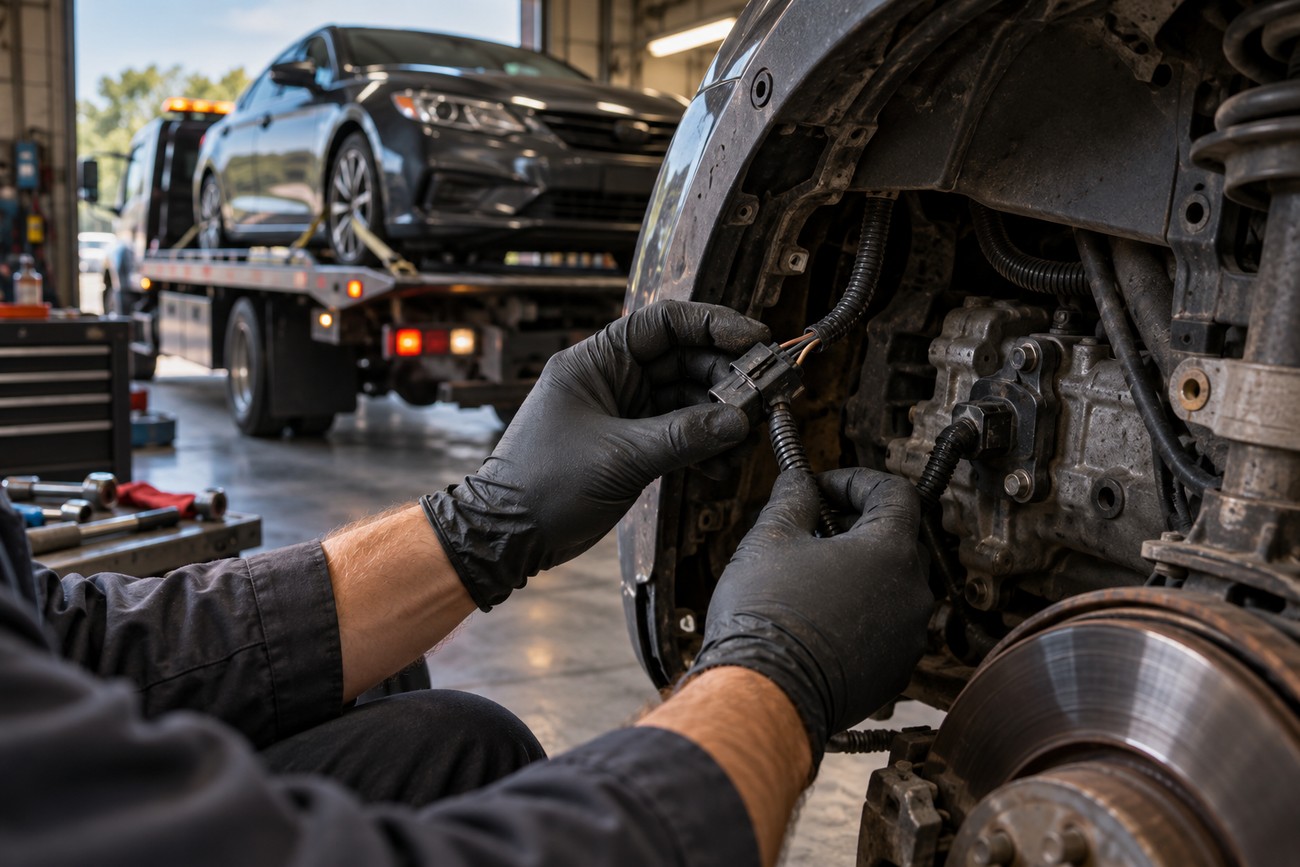
If the engine stalls in traffic, focus first on getting the vehicle to a safe location. Follow the vehicle’s guidance if steering or braking assistance changes with the engine off, and avoid continuing a trip in a car that stalls unpredictably. Arrange recovery or diagnosis rather than relying on a successful restart.
For a no-start, note whether the starter cranks normally, whether the engine is hot or cold, and whether the tachometer moves during cranking. Record any warning lights or codes before clearing them. This information is often more useful than repeated start attempts after the symptom has gone away.
A visual check of accessible connectors and wiring may reveal an obvious loose connection, but keep clear of moving and hot parts. If cooling restores operation, regard it as a temporary change in conditions, not a repair. Do not replace parts repeatedly without checking the wiring, connector, sensor clearance, and trigger target.
Once testing identifies the fault, use the correct part and installation procedure from vehicle-specific service information. Sensor design, fitment, and clearance vary. Confirming a stable signal after the repair matters as much as getting the engine to start once.
Frequently asked questions
These related questions help clarify what a symptom or quick test can establish. The vehicle’s control strategy still matters, especially when two timing-signal faults look similar from the driver’s seat.
How can you tell a crankshaft position sensor problem from a camshaft position sensor problem?
The crankshaft sensor reports crankshaft position and speed; the camshaft sensor supplies information about camshaft position for engine-phase timing. Faults in either system can affect starting and running, so symptoms alone rarely separate them. Compare vehicle-specific codes and live crankshaft and camshaft data, then test the indicated circuit and signal.
What happens if you unplug the crankshaft position sensor?
Unplugging it removes the normal crankshaft signal and may cause a no-start, stall, warning light, or limited operation, depending on the vehicle’s control strategy. It is not a reliable way to prove the original sensor was bad. Switch the ignition off before handling the connector, and use the service procedure for any electrical test.
What happens when the crankshaft sensor goes bad?
The ECU may receive no crankshaft information or an unreliable signal. The difference matters: a complete loss may stop starting or running, while an intermittent loss can appear only under certain conditions. Diagnosis aims to determine whether the signal fails at the sensor or is lost through its wiring, connection, or target.
What are the 7 symptoms of a bad camshaft position sensor?
Possible symptoms include hard starting, a no-start, rough idle, stalling, hesitation, loss of power, and a Check Engine light. There is no reliable seven-symptom checklist that identifies a camshaft sensor: the same complaints can come from other timing, ignition, fuel, or wiring faults. Codes and signal tests provide the useful distinction.
How to temporarily fix crankshaft position sensor?
There is no dependable temporary repair for a failing crankshaft position sensor. Cooling the vehicle or reseating an accessible loose connector may allow it to restart, but neither establishes that the fault is resolved. If the engine has stalled unpredictably, avoid driving until the sensor circuit and related components have been checked and repaired.