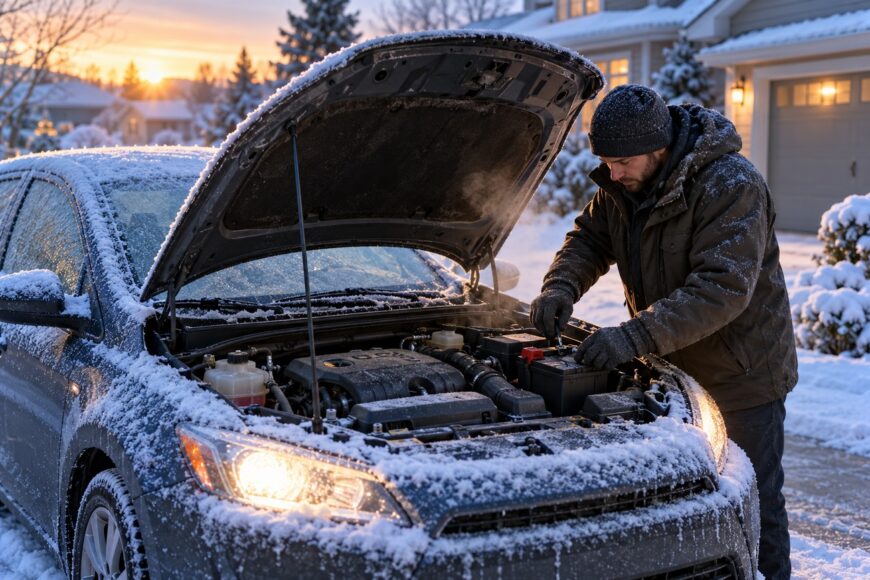
The car worked normally the previous evening, yet now the starter turns slowly, clicks, or barely moves. In other cases, the engine fires and stalls, leaving you to decide whether another attempt will help or simply flatten the battery.
The cause is often more than the choice of winter oil. Cold reduces battery output, thickens oil, exposes fuel and ignition faults, and makes repeated cranking expensive for the starter and battery. The safest approach is to read the symptom first, then check the battery, oil, fuel, and ignition or glow-plug system according to the engine type.
- Why cold weather makes starting an engine difficult
- Winter cold-start symptoms and likely causes
- A practical diagnosis sequence before trying again
- The fixes that prevent most winter no-starts
- Diesel cold starts: glow plugs, fuel, and white smoke
- Warm-up, remote start, and winter habits that add wear
- Frequently asked questions
- What temperature is too cold for a car to start?
- How do you fix a cold-start problem?
Why cold weather makes starting an engine difficult
Low temperature reduces the power available from a lead-acid battery while increasing the effort required to turn the engine. Thickened oil creates more resistance at the crankshaft, starter, and bearings, so the battery must deliver more current when its performance is already reduced.
Most internal-combustion engines start confidently to about −20 to −25 °C when maintained correctly. Below that range, thickened oil and reduced battery output sharply increase the risk of a weak or failed start. A battery that seems adequate in mild weather may no longer spin the engine fast enough after a cold night.
Fuel delivery and combustion also become less forgiving. Petrol engines need reliable ignition and suitable cold-start enrichment, while diesel engines depend on adequate glow-plug heating and fuel that remains usable in the prevailing conditions. Moisture, a restricted filter, weak ignition components, or a sensor fault may remain hidden until the temperature falls.
Some oil manufacturers claim reliable starting to −40 °C, but this is not a universal vehicle limit. Practitioners often place the real-world limit of many mass-market cars without extra heating near −30 °C. The result depends on the complete system: oil grade and approval, battery condition, starter health, fuel, and how long the vehicle has been cold-soaked.
Winter cold-start symptoms and likely causes
A symptom can identify the next system to inspect, but it rarely proves a single failed part. Listen to the starter, watch the instrument panel, and note whether the engine turns consistently, fires briefly, smokes, or makes unusual noise.
| Symptom | Likely systems to check | First check |
|---|---|---|
| Starter turns slowly | Battery output, oil resistance, starter circuit, or starter motor | Battery charge, terminal condition, and the oil grade used |
| Single click or repeated clicking | Low battery voltage, poor connections, relay, or starter circuit | Battery terminals, ground connection, and voltage under load |
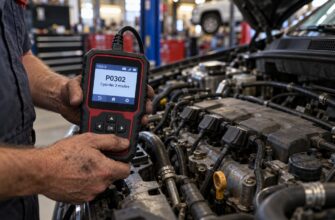
| Engine starts and immediately stalls | Fuel delivery, ignition, sensors, or insufficient cold-start enrichment | Scan for faults and check whether fuel and ignition remain available after firing |
| Metallic noise that fades after starting | Cold oil flow, low oil level, or an engine wear problem | Stop if the noise is severe or persistent; check the oil level and arrange an inspection |
| Rough running or fluctuating idle | Ignition, fuel mixture, sensors, intake leaks, or normal cold enrichment | Allow a brief stabilization period, then check for warning lights and stored faults |
| White smoke and unburned-fuel smell from a diesel | Incomplete combustion, glow plugs, fuel quality, or low compression | Check glow-plug operation, winter fuel, and the fuel filter |
| Starter becomes hot after repeated attempts | Excessive cranking, a discharged battery, or a failing starter | Stop cranking, allow it to cool, and recharge or test the battery |
A practical diagnosis sequence before trying again
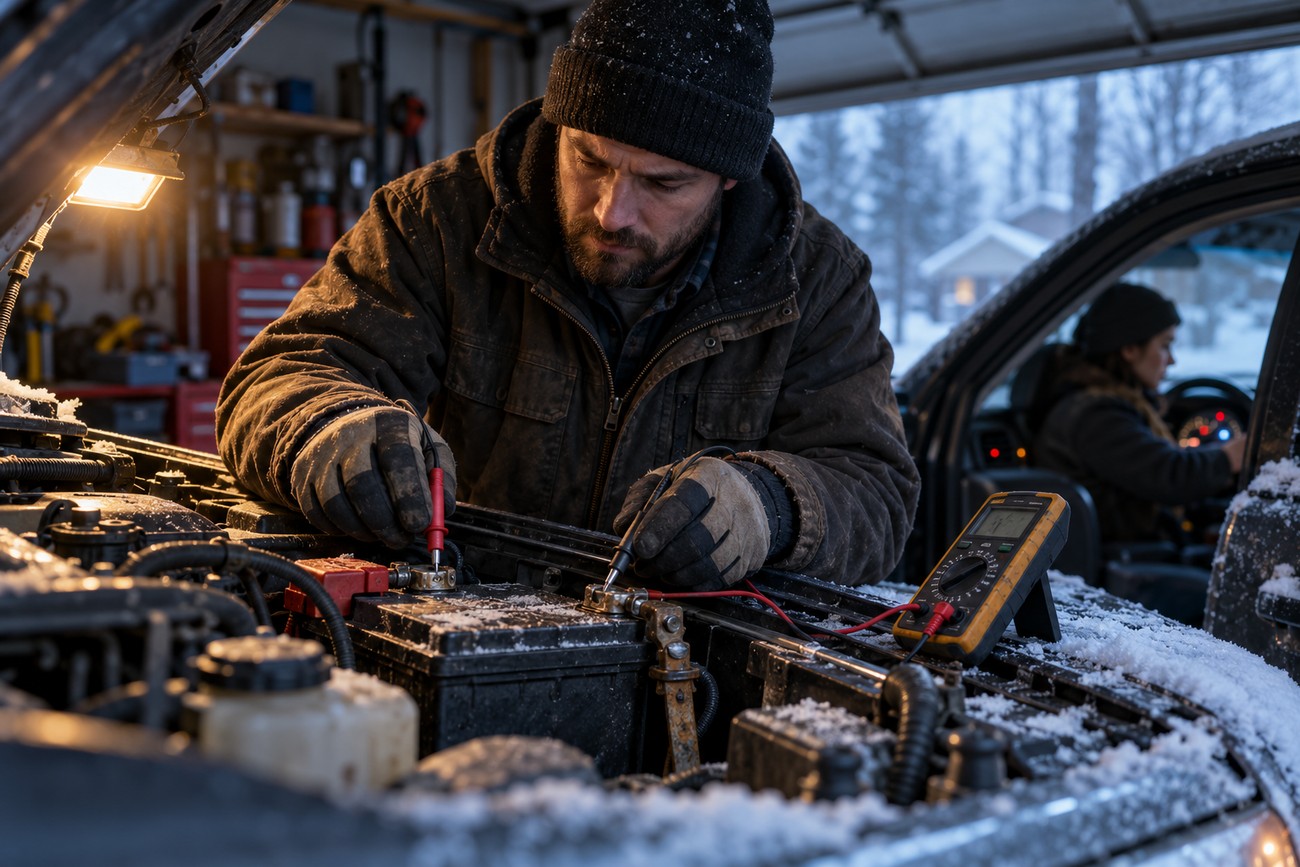
Start by observing how the engine turns. A slow, heavy crank points toward battery output, oil resistance, or the starter circuit; a normal-speed crank with no firing shifts attention toward fuel, ignition, sensors, or, on a diesel, glow-plug operation. If the dashboard dims sharply or resets during cranking, include the battery and its connections in the first checks.
Inspect the battery terminals and the engine ground for looseness, corrosion, or damage. A lead-acid battery can lose about 30% of its capacity at −10 °C and up to 50% of its cranking current at −20 °C. Charging the battery indoors or using a properly rated booster may restore starting ability, but a battery that repeatedly fails in cold weather should be tested rather than rescued indefinitely.
Technicians separate a weak battery from thick oil or a failing starter by comparing cranking speed, terminal condition, and whether the engine turns consistently. Replacing parts based on one symptom alone can miss a poor ground connection or a starter that draws excessive current.
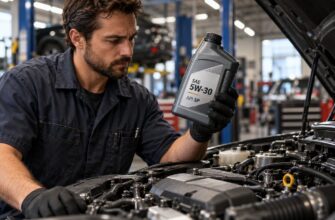
Confirm the oil level and the exact viscosity and manufacturer specification before making another attempt. In severe cold, a 2–3-second pre-crank followed by a pause may help shift cold oil before the main attempt. This is only a limited technique: repeated attempts without pauses can overheat the starter and discharge the battery.
If the starter speed is normal but the engine will not run, move to fuel and ignition checks on a petrol engine, or fuel and glow-plug checks on a diesel. Stop if there is a strong fuel smell, an unusual mechanical knock, smoke from the starter area, or a warning light that indicates a serious fault.
The fixes that prevent most winter no-starts
Battery testing is one of the most useful pre-winter checks. A fully charged battery with adequate cold-cranking performance gives the starter a realistic chance to overcome thick oil. Clean, tight terminals and a sound engine ground matter just as much; surface corrosion can create enough resistance to mimic a weak battery.
Use the oil grade specified by the engine maker for the expected climate. 0W oil is better suited to temperatures below −25 °C, 5W oil is generally adequate around −20 °C, and 10W oil can become unsuitable in severe frost around −25 °C and below. The correct approval and viscosity matter more than the word “synthetic” on the container.
Correct oil cannot compensate for a weak battery, poor electrical connections, or a failing starter. If a charged battery still produces slow or uneven cranking, test the starter circuit and motor. Excessive current draw, worn brushes, or internal resistance can become apparent only in cold weather.
Fuel preparation also prevents avoidable failures. Use the appropriate seasonal fuel, keep the fuel system free of water, and replace a restricted fuel filter before severe weather. Petrol engines need sound plugs, coils, and sensors; diesel engines need working glow plugs and a fuel system suited to winter conditions.
Approved engine heaters can reduce oil resistance and make starting easier, especially below the normal reliable range. Electric preheaters add substantial electrical load, however, and may exceed the safe capacity or approval limits of older residential wiring. Use equipment approved for the vehicle and the installation, with suitable protection and connections.
Diesel cold starts: glow plugs, fuel, and white smoke
Glow-plug heating is critical below about 0 °C because a diesel relies on heat created by compression to ignite the fuel. Wait for the vehicle’s normal preheat indication and follow the starting procedure in the owner’s manual. A failed glow plug can noticeably worsen starting at −10 °C and below, particularly when the engine has been left outside overnight.
White smoke accompanied by an unburned-fuel smell usually means that fuel is entering the cylinders without burning completely. Glow plugs are one possibility, but low cranking speed, poor fuel quality, water contamination, restricted fuel flow, and low compression can produce similar symptoms.
Modern Common Rail diesels are especially sensitive to winter fuel quality and water in the system. For these engines, suitable winter-grade diesel and a clean, water-free fuel system are often more critical than one or two moderately worn glow plugs. A fuel filter check before winter can prevent a failure that appears to be an electrical problem.
Arrange a pre-winter inspection of the glow plugs, their control circuit, the battery, and the fuel filter. Do not keep cranking a diesel that repeatedly produces white smoke without starting; the battery and starter can be damaged, while unburned fuel may dilute the oil in some fault conditions.
Warm-up, remote start, and winter habits that add wear
Long high-rpm idling is not a substitute for correct warm-up. Manufacturers generally recommend a brief initial warm-up followed by gentle driving for about 5–10 minutes. Keep engine speed and load moderate until the oil and coolant have begun to reach normal operating conditions.
Cold oil takes longer to circulate, so full protection is delayed after starting. Frequent cold starts followed by short winter trips accelerate wear. The engine may never remove the moisture and fuel dilution created during enrichment, especially when it is started repeatedly but driven only a short distance.
Remote-start warm-up is commonly limited to about 5–15 minutes because longer or repeated cycles increase condensation and fuel consumption. Starting the vehicle several times without a meaningful drive can leave the engine and exhaust system cold while adding another high-wear start.
At very low temperatures, avoiding a second cold start during a 10–20-minute stop can sometimes be preferable, subject to safety and local rules. Never leave a running vehicle unattended where theft, exhaust accumulation, or local regulations make that unsafe. The decision should also account for ventilation and the surroundings, especially near buildings.
Some engines automatically raise idle speed briefly after starting. That behavior is usually programmed cold-start enrichment rather than a fault, provided it settles as the engine warms and no warning lights or abnormal noises appear.
Frequently asked questions
Cold-start problems are easier to diagnose when you separate cranking speed from the engine’s ability to ignite and keep running. The temperature, battery condition, oil specification, fuel, and engine type all affect the result. Use the following checks to decide whether another attempt is reasonable or whether the vehicle needs inspection.
What temperature is too cold for a car to start?
There is no single temperature that is too cold for every car. Most internal-combustion engines start confidently to about −20 to −25 °C when maintained correctly, while the practical limit depends on cold-soak time, battery health, starter condition, fuel, and the oil grade approved for that engine.
Wind chill does not make a parked car colder than the actual air temperature; it describes how quickly exposed objects lose heat. Use the actual temperature and the vehicle’s condition for diagnosis. Some oil manufacturers claim reliable starting to −40 °C, but this is not a universal vehicle limit, and practitioners often place the real-world limit of many mass-market cars without extra heating near −30 °C.
How do you fix a cold-start problem?
Begin by identifying whether the engine cranks slowly or at normal speed. Slow cranking calls for a battery, terminal, ground, oil-viscosity, and starter check. Normal cranking with no ignition requires investigation of fuel, spark, sensors, or diesel glow-plug operation.
Charge and test the battery, confirm the oil level and specification, and use suitable seasonal fuel. Avoid repeated attempts without cooling pauses. If the engine starts and stalls, produces persistent white smoke, makes a serious metallic noise, or shows a warning light, arrange a proper diagnostic inspection rather than continuing to crank.