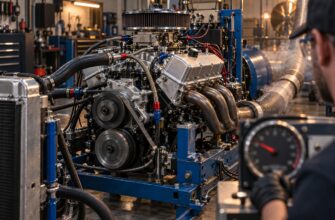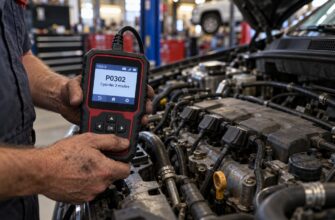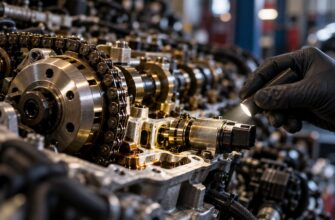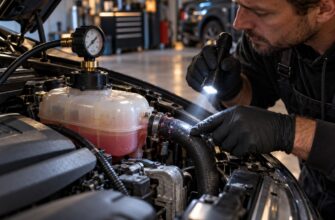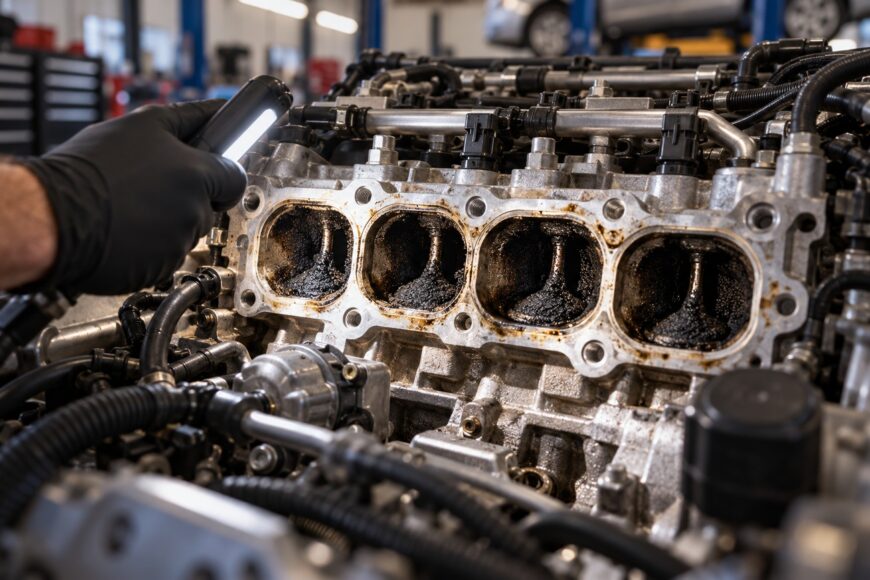
Sluggish acceleration, a rough or shaking idle, hard cold starts, and rising fuel consumption can all appear when deposits affect a direct-injection engine. They are useful clues, but none proves that carbon is the cause. Ignition faults, air leaks, injector wear, and other problems can produce the same complaints.
GDI and DI engines have an additional complication: fuel is injected directly into the cylinder, so it does not wash the intake valves as it does in port fuel injection. A preventive chemical treatment may help the fuel side, while established valve carbon remains untouched. Cleaning without diagnosis can therefore miss the real fault, and loosened contamination can sometimes make symptoms worse before they improve.
- Why Direct Injection Engines Develop Carbon Buildup
- Symptoms Are Clues, Not Proof of Carbon
- Chemical, Ultrasonic, or Walnut Cleaning: Which Method Fits?
- What Chemical Cleaning Can—and Cannot—Fix
- Common Cleaning Mistakes and Hidden Risks
- A Sensible Service Plan: Interval, Verification, and Prevention
- Frequently asked questions
- What is the best carbon cleaner for a direct-injection engine?
- How can you tell whether a cleaning actually worked?
- How do you get rid of carbon buildup in a direct-injection engine?
Why Direct Injection Engines Develop Carbon Buildup
In a port-injected engine, fuel passes through the intake ports and helps keep the valve area cleaner. In a GDI or DI engine, the fuel enters the combustion chamber after the intake valve, so that washing effect is absent. Oil mist from the crankcase ventilation system and recirculated exhaust gases can then contribute to deposits on the valve and nearby intake surfaces.
Injector deposits are a separate problem. They can alter the spray pattern, reduce effective flow, or create uneven fueling. Intake-valve carbon restricts airflow and can disturb the air charge entering the cylinder. Both conditions may cause poor running, but they require different inspection and cleaning methods.
Deposits may also exist in the intake tract, combustion-related areas, or elsewhere in the fuel system. A procedure designed for one area should not be described as cleaning the entire engine. Fuel-tank additives are generally more useful for prevention and light contamination than for severe, established deposits on GDI intake valves.
The distinction matters during service planning. An injection-system flush may improve injector operation while leaving the valve backs heavily coated. Conversely, mechanical intake cleaning will not correct an injector with a worn internal component or an electrical fault. The target must be identified before the method is selected.
Symptoms Are Clues, Not Proof of Carbon

Carbon-related complaints commonly include sluggish acceleration and worse throttle response. The engine may feel reluctant under load, especially when airflow is restricted or the injector spray is no longer even. Increased fuel consumption can accompany the problem, although fuel-trim, sensor, and ignition faults can create the same result.
Unstable or shaking idle is another common complaint. Hard cold starts may occur when deposits affect airflow or fuel delivery, but a weak battery, poor ignition, low fuel pressure, or an injector fault can look similar. A symptom list helps determine where to test; it does not identify the failed part by itself.
Diagnosis should include the relevant ignition, air-intake, and fuel systems before cleaning. Scan data, misfire information, fuel trims, injector testing, and an inspection appropriate to the engine can separate a deposit problem from a vacuum leak or worn component. Severe carbon should be judged from symptoms and diagnostic evidence, not mileage alone.
A cleaning that does not resolve the complaint is useful information. It may mean the deposits were not the main cause, the procedure did not reach the affected area, or injector wear and another fault remain. Treating temporary smoothness after service as proof of a permanent repair can lead to unnecessary repeat treatments.
Chemical, Ultrasonic, or Walnut Cleaning: Which Method Fits?
Each method targets a different part of the engine. The correct choice depends on where the deposits are found and whether the injectors or intake manifold must be removed.
| Method | Where it works | Removal required | Realistic role | Main limitation |
|---|---|---|---|---|
| Chemical injection-system flushing | Treated fuel and injection path | Usually no injector removal; dedicated equipment is connected to the injection system | Fuel-system cleaning and preventive or moderate contamination treatment | Does not automatically remove heavy carbon from GDI intake valves |
| Ultrasonic injector cleaning | Removed injectors | Yes, the injectors must be removed | Cleaning and testing injector bodies and nozzles on a bench | Does not clean the intake tract, valves, or whole engine |
| Mechanical intake cleaning with walnut-shell media | Heavy deposits on intake valves and ports | Usually intake-manifold removal and careful preparation | Removing established valve carbon that chemical treatment cannot reach | Requires correct sealing, media control, and removal of residual material |
Chemical flushing is usually performed with dedicated equipment connected to the injection system. It can address the treated fuel path, but its reach depends on the product and procedure. It should not be sold as proof that the intake valves or combustion chamber are clean.
Ultrasonic cleaning is a removed-injector operation. The injectors can be cleaned and tested separately, which is valuable when spray pattern or flow is suspect. The process does not wash carbon from the intake valves, because those parts are outside the removed injector.
Severe intake-valve carbon often requires removal of the intake manifold and mechanical cleaning, including walnut-shell media. This abrasive is selected because it can remove deposits while limiting damage to suitable metal surfaces when used correctly. Preparation and cleanup remain essential; loose media must not be left in the engine.
What Chemical Cleaning Can—and Cannot—Fix
A chemical procedure can improve fuel delivery when deposits are the main restriction in the treated path. It cannot automatically remove heavy carbon from GDI intake valves, where the deposit formed outside the fuel stream. A claim of complete cleaning may refer only to the fuel-system portion covered by the equipment.
Light contamination may respond to a mild treatment, while heavy deposits may produce only temporary improvement. A smoother idle after service can reflect a short-term change in fueling without proving that the underlying restriction or injector wear has been corrected. The result should be checked against repeatable symptoms and diagnostic data.
There is also a practical risk during chemical cleaning. Dissolved contamination can further restrict injector nozzles that were already marginal, so the engine may run worse or the original complaint may remain. This does not automatically mean the engine has suffered major damage, but it does justify before-and-after testing.
Some product instructions recommend a staged process or repeat treatment, including a finishing procedure. That may be appropriate for the specified product and system, but it is not a universal requirement for every vehicle. The instruction must be read alongside the vehicle manufacturer’s requirements and the actual condition of the engine.
Common Cleaning Mistakes and Hidden Risks
Using a cheap or universal cleaner without checking compatibility is a common error. Injection systems differ in materials, pressures, seals, and operating method. A product approved for one application may be unsuitable for another, so the label and technical instructions deserve more attention than a broad promise of “full cleaning.”
Cleaning without diagnosis creates a second risk. If the real problem is an ignition fault, air leak, injector wear, or fuel-pressure issue, a flush may consume time without repairing it. Severe valve deposits should not be treated as though they were merely a dirty injector.
Post-flush deterioration can reflect loosened debris restricting an already marginal injector rather than sudden engine damage. Before-and-after verification is safer than judging the service by a brief change in idle quality.
Tank additives are particularly easy to overuse as a substitute for inspection. They may support prevention, but severe carbon on intake valves is unlikely to be solved reliably by an additive alone. Different cleaners should also never be mixed to intensify the result; compatibility and chemical behavior may change in an uncontrolled way.
The fuel filter should be considered before cleaning, especially where contamination or poor fuel quality is suspected. After the procedure, the system should be assessed again so that a restricted filter or newly exposed injector problem is not mistaken for a failed engine repair.
Injector removal, ultrasonic cleaning, and intake disassembly add cost and create a risk of damage if performed incorrectly. That does not make them excessive; it means the work should match the evidence. A proper bench test or controlled mechanical cleaning can be more useful than repeating a low-cost treatment that cannot reach the deposit.
A Sensible Service Plan: Interval, Verification, and Prevention
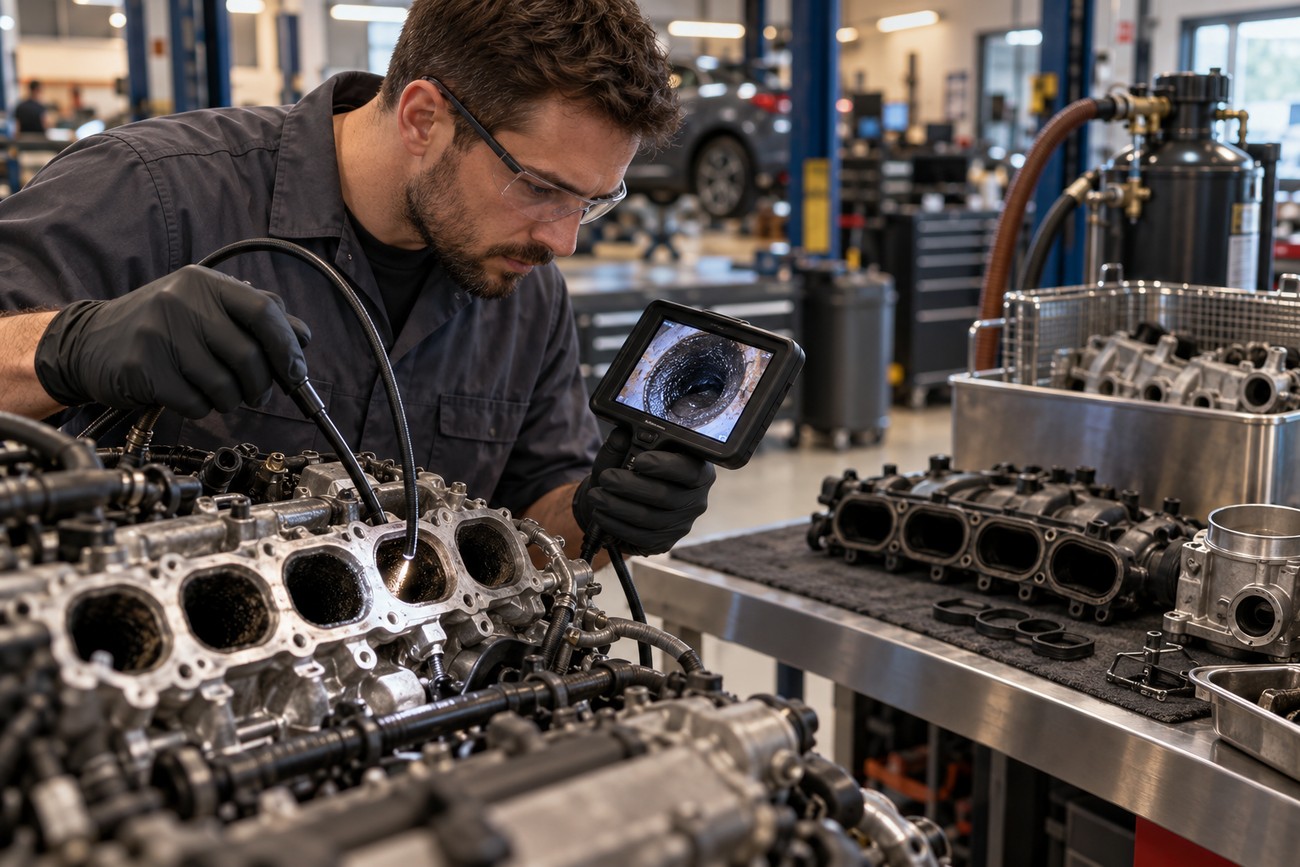
A sensible workflow starts with the complaint and a basic inspection. Confirm the operating symptoms, check relevant scan data, and examine ignition, air intake, fuel delivery, and injector condition as appropriate. Then select a method for the specific deposit location rather than choosing a cleaner by mileage alone.
Service intervals are product-specific and conflict substantially. One manufacturer instruction specifies 1 L for engines up to 2,000 cm³ and 2 L for engines from 2,000 to 4,500 cm³, with cleaning recommended no less often than every 20,000 km. Another manufacturer recommends preventive cleaning every 7,000–8,000 km. These figures are not a universal standard.
Fuel quality, vehicle condition, driving pattern, and diagnostic evidence should guide the decision. A single reported source associates poor-quality fuel with a possible 3–5-fold increase in contamination intensity, but that is a source-specific observation, not a universal measured rule. A vehicle with no symptoms and clean test results does not automatically need the shortest suggested interval.
Verification completes the job. Compare cold starting, idle stability, throttle response, fuel trims, misfire data, and injector results where available. If valve carbon was suspected, use an inspection method that can actually assess the valves; a fuel-system improvement alone cannot confirm that the intake tract is clean.
Frequently asked questions
The right cleaning method depends on the confirmed deposit location and the system involved. Chemical treatments, ultrasonic injector cleaning, and mechanical intake cleaning serve different purposes. Diagnosis and follow-up testing are necessary to determine whether the service addressed the original fault.
What is the best carbon cleaner for a direct-injection engine?
There is no single best cleaner for every GDI or DI engine. Match the product to the deposit location, the approved application, and the vehicle’s injection-system compatibility. A chemical injection-system treatment is relevant to the treated fuel path, while heavy intake-valve carbon may require manifold removal and mechanical cleaning.
How can you tell whether a cleaning actually worked?
Use repeatable evidence rather than a temporary smoother idle or a subjective driving impression. Recheck the original symptoms, cold starting, idle behavior, throttle response, fuel trims, misfire data, and injector flow or spray results when applicable.
If valve carbon was the suspected cause, the verification must address the valves or airflow restriction. Improvement in injector performance does not prove that intake-valve deposits were removed.
How do you get rid of carbon buildup in a direct-injection engine?
First, identify whether the buildup is in the injectors, intake valves, intake tract, or another area. Then use the corresponding method: chemical equipment for the treated injection path, ultrasonic service for removed injectors, or manifold removal and mechanical cleaning, including walnut-shell media, for severe intake-valve deposits.
After walnut-shell cleaning, the work area must be prepared correctly and residual media removed. Final testing should confirm that the original fault has changed and that no separate ignition, air-intake, or injector problem remains.