A quick automatic wash, a touchless cycle, and a hand wash can all leave a car looking cleaner. Choosing between them gets harder when you consider how the finish may look afterward. Brushes and towels can leave visible swirl marks, while a touchless cycle may leave road film behind. Even the drying step can affect the result if grit remains on the paint.
Start with the car’s condition rather than the name on the wash sign. Light dust, heavy grit, intact paint, and chipped edges call for different levels of caution. A good choice removes the dirt you have without making the cleaning process itself the main source of wear.
- Start With Paint Condition and Dirt, Not the Wash Label
- Touchless, Brush, and Hand Washing: Trade-Offs at a Glance
- When Touchless Falls Short—and When Contact Helps
- How to Judge an Automatic or Hand-Wash Operator
- The Wash and Dry Order That Limits Swirl Marks
- Water Use and Protection Over Repeated Washes
- Frequently asked questions
- How often should I wash my car?
- What should I do if I notice swirl marks after a wash?
- Which car wash method is best?
- What is the 30-60-90 rule for cars?
- What is the best car wash that won’t scratch your car?
Start With Paint Condition and Dirt, Not the Wash Label
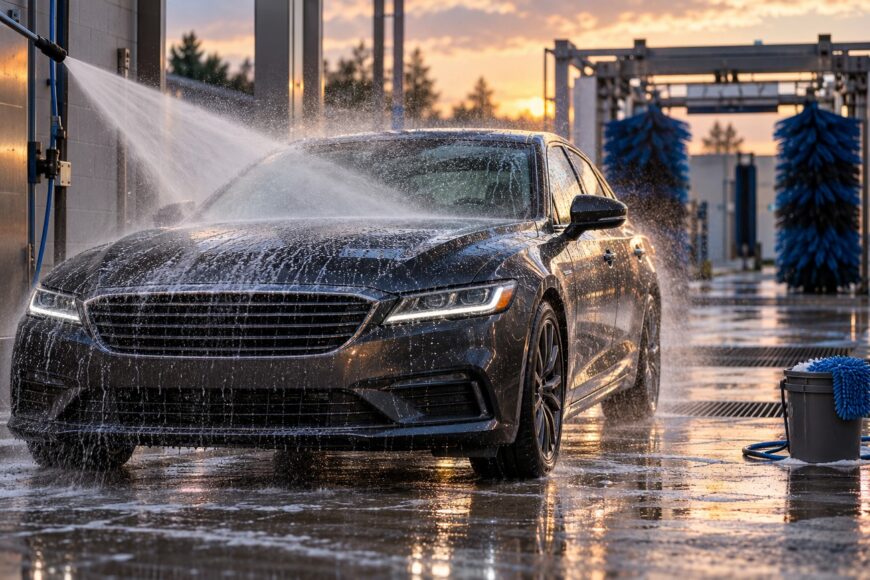
For light dust, a well-run touchless cycle is often a practical first choice. It uses pressure and chemicals without mechanical paint contact, so no wash mitt or brush moves across the finish. Check the result before drying, though: touchless washing can leave road film or heavy dirt.
Substantial grit changes the decision. Give the body a thorough rinse before any contact wash, paying attention to areas where grit collects. If dirt remains bonded to the surface, careful washing with clean tools can remove more than a touchless pass alone. Any paint contact carries some micro-scratch risk; clean tools and careful technique reduce, but do not eliminate, it.
Inspect chips, peeling paint, film edges, seals, and loose trim before using a pressure jet. Pressure is generally safe at an appropriate distance on intact modern paint, but vulnerable areas need more space and a less direct spray. A wash that suits an undamaged panel may worsen an already weak edge.
Dark paint does not have to be weaker to look worse after washing. Fine marks often show more clearly against a dark finish, especially under direct light. If those marks would bother you, pay particular attention to the quality of the contact tools and the drying process.
Touchless, Brush, and Hand Washing: Trade-Offs at a Glance
Use the method as a starting point, then check how the wash is operated and how the car will be dried.
| Method | Likely cleaning ability | Paint-contact risk | Weakness to check |
|---|---|---|---|
| Touchless | Pressure and chemicals remove loose dirt, but road film or heavy dirt may remain. | No mechanical paint contact during washing; wiping leftover dirt afterward reintroduces risk. | Check the result before drying and watch for strong chemicals affecting wax or sealant. |
| Brush or cloth automatic | Contact can lift film that a touchless cycle leaves behind. | Brushes or cloth touch the paint and can carry grit. | Look for maintained contact media, working nozzles, and filtration. |
| Careful hand wash | Allows attention to stubborn areas after a thorough rinse. | Mitts and towels still touch paint; dirty tools can cause micro-scratches. | Check tool cleanliness and whether drying starts only after dirt is removed. |
When Touchless Falls Short—and When Contact Helps
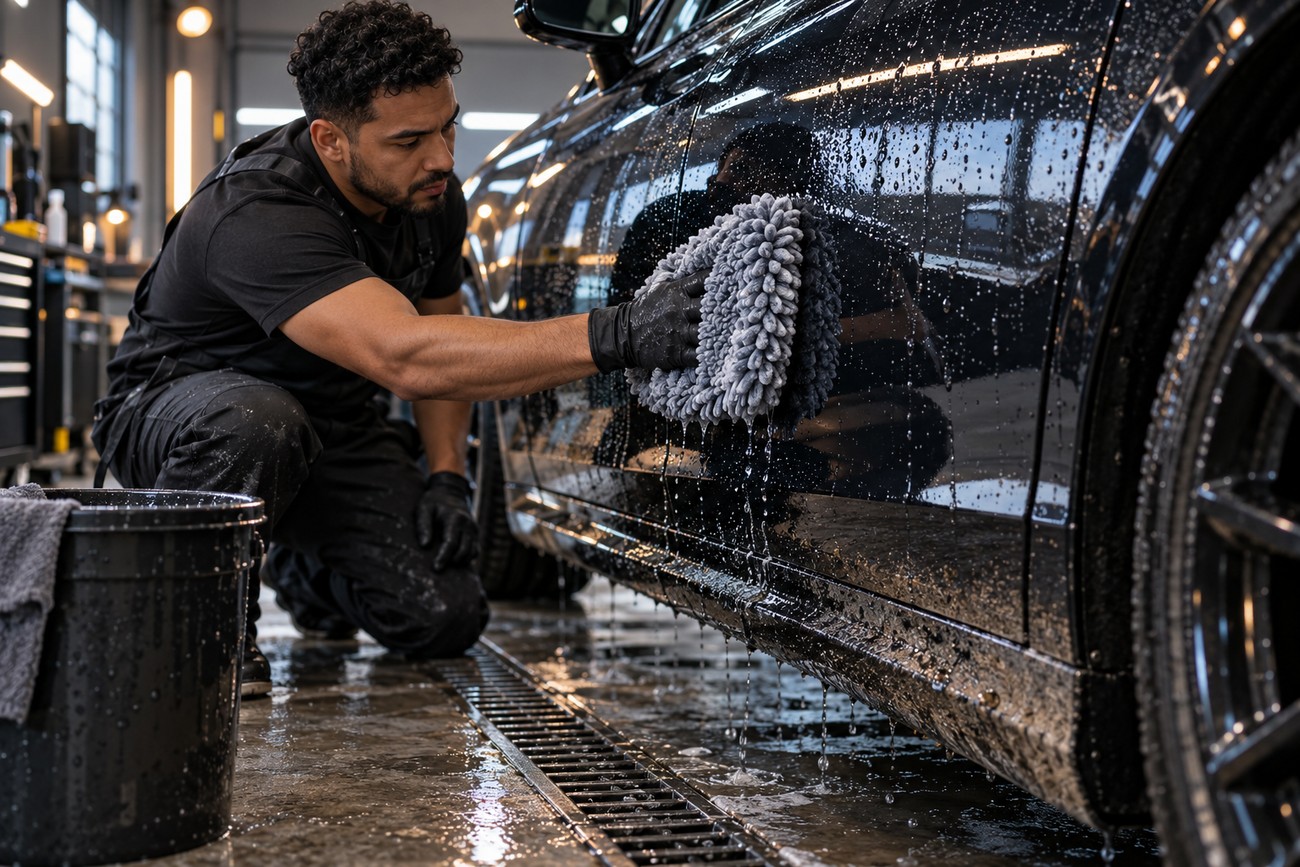
Touchless washing uses pressure and chemicals without mechanical paint contact, but it can leave road film or heavy dirt. That remaining film matters if you plan to towel-dry the car. A panel may look clean from a distance while still holding particles that a towel could drag across the finish.
For stubborn dirt, rinse thoroughly first, then use a careful contact wash with clean equipment. Contact helps lift film, yet every pass across the paint carries some micro-scratch risk. Avoid trying to make up for a poor rinse by pressing harder with a mitt.
Stronger chemicals can help a touchless wash clean without brushes or cloth. They may also shorten the life of wax or sealant, so a car that receives frequent chemical washes deserves occasional checks for signs that its protection needs renewing. A “paint-safe” label alone tells you little about the chemical concentration used in a particular cycle.
Pressure itself is not automatically harmful to sound modern paint when the jet is used at an appropriate distance. Keep it farther from chips, peeling paint, seals, film edges, and weak components, and avoid aiming directly into damaged edges. If an area already looks loose, address its condition rather than relying on a forceful wash to clean it.
How to Judge an Automatic or Hand-Wash Operator
At a brush or cloth automatic wash, look beyond the cycle name. Results depend partly on the maintenance of the contact media, nozzles, and filtration. Equipment that looks neglected, leaves grit on contact surfaces, or fails to rinse evenly is a reason to choose another facility.
A hand-wash sign offers no guarantee either. Watch whether clean mitts are used on the body and whether towels are kept separate from tools used on dirtier areas. A mitt repeatedly dragged over gritty lower panels can carry that material onto cleaner paint, even if the washing is done by hand.
Drying reveals much about the operator’s process. An attendant should not rub a towel over panels that still show road film, and a dirty or rough towel can create visible swirl marks. If the car is not fully clean, ask for another rinse or wash rather than a more vigorous wipe.
Specific, observable steps are more useful than a broad claim that a wash is “safe for paint.” You can check whether tools appear clean, spray reaches the whole car, and drying is gentle. If you cannot see the process, inspect the finish and remaining dirt before accepting towel drying.
The Wash and Dry Order That Limits Swirl Marks
Begin with a quick inspection of chips, loose trim, film edges, and seals so you know where to ease off with the spray. Clean the wheels with separate tools; dirt lifted there should not move onto the body. Thoroughly pre-rinse the paint to remove loose grit before anything touches it.
If the remaining film needs contact washing, use clean equipment and work from cleaner upper areas toward dirtier lower ones. Rinse the tools as they pick up dirt, then rinse the body thoroughly. Clean tools and careful technique reduce micro-scratch risk, though no contact wash eliminates it.
A touchless cycle can leave enough road film for a drying towel to drag across the paint. Check the lower panels before wiping; if they still feel or look dirty, rinse and wash them again first.
Once the finish is clean, air drying avoids towel contact where it gives an acceptable result. If you use a towel, choose a clean, soft one and move it with minimal pressure rather than scrubbing at droplets. Replace it if it picks up dirt.
Drying should finish a clean wash, not compensate for an incomplete one. That distinction is especially useful after a touchless cycle: the absence of brush contact during washing offers little benefit if the final step grinds leftover particles into the finish.
Water Use and Protection Over Repeated Washes
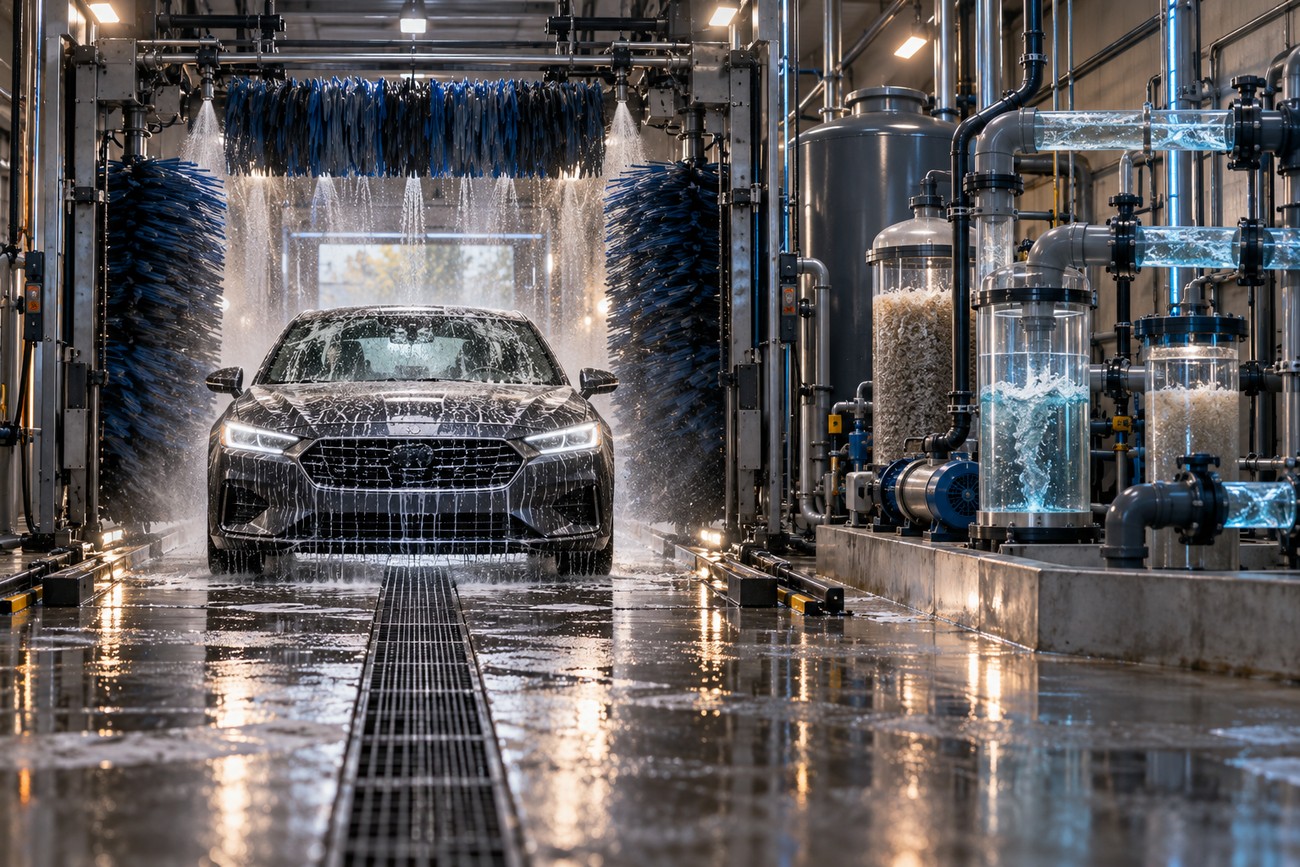
Water-use claims need a clear measure. Fresh-water demand is different from the total water circulated through a wash, and a reclaim system can change how much new water a site needs. A figure from one wash configuration should not be treated as an average for every method.
EPA WaterSense reports about 85.3 gallons of fresh water per vehicle for a commercial touchless wash, excluding any reclaim adjustment. EPA also reports that an automatic in-bay wash without water reclaim can use up to 74.1 gallons, approximately 280 liters, per vehicle. Those examples describe particular configurations; they do not establish a universal comparison with washing at home.
If water use influences your choice, ask a facility whether it reclaims water and what its stated figure measures. Over repeated washes, also pay attention to the car’s protection. Stronger touchless chemicals can help remove dirt but may shorten the life of wax or sealant. Check its condition rather than assuming a wash label or a fixed calendar date tells you when to renew it.
Frequently asked questions
The right routine depends on what collects on the car and what happens during each wash. These answers focus on the next decision to make.
How often should I wash my car?
Wash when accumulated grime or exposure calls for it, rather than following an arbitrary interval. Inspect the lower panels and areas where dirt collects, especially after driving through heavy road grime. Letting grit build up can make the eventual wash harder, while washing a lightly dusty car with unnecessary contact adds another opportunity for marks. Adjust the method to the dirt present each time.
What should I do if I notice swirl marks after a wash?
Inspect the marks on a clean, dry surface in good light before trying to correct them. If a facility performed the wash, take clear photos promptly and contact it with the details of your visit. Do not rub harder to see whether the marks disappear; that can add damage. Seek suitable paint-care advice to establish whether the marks are in the finish and what correction, if any, is appropriate.
Which car wash method is best?
The best method is the one that removes the dirt on your car with the least avoidable risk to its current finish. If a wash leaves residue, it has not completed the job simply because the paint avoided brushes. If its contact tools or drying towels are dirty, a thorough-looking result may come with marks. Choose a process you can assess and change methods when the car’s condition changes.
What is the 30-60-90 rule for cars?
The 30-60-90 rule commonly refers to mileage-based vehicle maintenance milestones, not a car-wash schedule. Service needs vary by vehicle, so use your owner’s manual and the car’s condition to decide what maintenance is due. For washing, judge accumulated dirt, exposure, and paint condition instead; those do not follow mileage milestones reliably.
What is the best car wash that won’t scratch your car?
No wash can promise a scratch-free result in every condition. Touchless washing avoids mechanical paint contact during the cycle, but leftover dirt becomes a risk if someone wipes it away. Contact washing carries some micro-scratch risk even with good technique. For a car where marks are a particular concern, favor clean, well-maintained equipment and confirm that the finish is free of grit before any towel touches it.