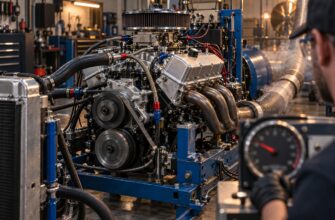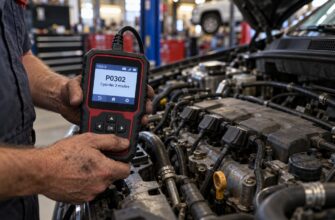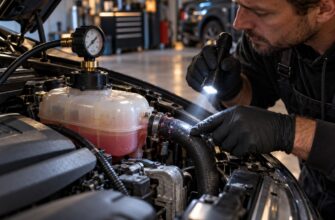
A hard start, weak acceleration, or a rough idle can point to a compression problem. A home test may reveal a mechanical fault, but it can also produce a falsely low result if the battery, starter, throttle position, or gauge connection is unsuitable.
The useful result is more than a number on a dial. Test under consistent conditions, compare the readings with the specification for your exact engine, and pay attention to the differences between cylinders. General ranges can provide context, but they cannot replace the service information for the vehicle.
- What you need before testing
- How to check compression cylinder by cylinder
- Compression readings: patterns and next checks
- Why a low or normal reading can mislead you
- What to do after a genuinely low result
- Frequently asked questions
- What if the engine will not start and cannot be warmed up?
- How can I check my engine compression at home?
- How do I make a homemade compression tester?
- Do I remove all spark plugs when doing a compression test?
What you need before testing
Use a compression tester with a gauge that is easy to read and an adapter that seals securely in the spark plug or injector opening. Cheap testers may have coarse scales, inaccurate gauges, or poorly made adapters. A small leak at the connection can allow pressure to escape and make a healthy cylinder appear weak.
Have the factory service specification available before you begin. It should identify the expected compression range, the allowable difference between cylinders, the engine temperature, and any special procedure for fuel or ignition shutdown. For a comparable standard test, warm the engine to approximately 75–90 °C.
The battery must be fully charged, and the starter must turn the engine at a consistent speed. A weak battery or slow starter can lower every reading, sometimes enough to make the result look like an internal engine fault. If the starter sounds unusually slow, correct that problem before drawing conclusions from the gauge.
Before cranking, disable fuel delivery and ignition, then remove all spark plugs on a gasoline engine. This prevents fuel from entering the cylinders and reduces the load on the starter. Work carefully around hot components, use insulated gloves where appropriate, and follow the repair manual if you are unsure how to disable these systems on your vehicle. For a diesel engine, follow the manufacturer’s procedure for accessing the test openings.
How to check compression cylinder by cylinder
After the engine is warm and the fuel and ignition systems are disabled, clean dirt away from the spark plug wells. Debris can fall into the cylinder when a plug is removed. On a gasoline engine, remove every spark plug rather than testing with the remaining plugs installed, so the starter can turn the engine evenly.
Screw the tester adapter into the first test opening by hand. It should seat firmly without excessive force. On a gasoline engine, hold the throttle fully open during cranking; a closed throttle restricts airflow and can reduce the reading.
Crank the engine until the gauge stops rising. This usually takes about 5–10 compression strokes. Record the peak pressure reached, rather than the first jump of the needle, because the initial movement is only part of the measurement.
Release the pressure from the tester, move it to the next cylinder, and repeat the test under the same conditions. Keep the throttle in the same position, crank until the gauge stops rising, and record each result clearly. Consistency matters more than small differences between separate runs.
When testing is complete, remove the tester and restore the spark plugs, fuel connections, ignition connections, and any removed covers according to the vehicle’s repair instructions. Check that every plug is correctly tightened and that no tool or loose connector remains near the engine before attempting to start it.
Compression readings: patterns and next checks
Universal limits do not exist. Many gasoline engines show roughly 10–14 bar, while diesel engines are often listed around 20–30 bar; some sources give 25–35 bar for certain diesels. These figures are only broad reference ranges, and the specification for the particular engine takes priority.
| Pattern of readings | Possible meaning | What to check next |
|---|---|---|
| All cylinders are within the factory range and close to one another | The basic compression result is consistent with the specification. | Check other causes of poor running, such as ignition, fuel delivery, air metering, valve timing, and exhaust restriction. |
| One cylinder is substantially lower than the others | A local sealing or valve-timing problem is possible, although a poor adapter seal or testing error can create the same pattern. | Repeat the measurement with a verified connection and the same procedure. If it remains low, arrange a leak-down or other mechanical test. |
| Two neighboring cylinders are low | A fault affecting adjacent combustion chambers, such as a head-gasket sealing problem, is possible. Valve timing or test conditions can also affect both readings. | Confirm temperature, starter speed, throttle position, and gauge sealing. Then inspect for cooling-system symptoms and use a leak-down test if required. |
| All cylinders are evenly low | The engine may have general wear, incorrect valve timing, restricted airflow, or a test performed with slow cranking. | Verify the factory specification and repeat the test with a charged battery, a healthy starter, a fully open throttle on gasoline engines, and a sealed adapter. |
A commonly used comparison guide is a maximum difference of about 10% from the highest cylinder or approximately 1 bar. The manufacturer’s tolerance remains more important, especially on turbocharged engines and engines with unusual combustion-chamber designs.
Why a low or normal reading can mislead you
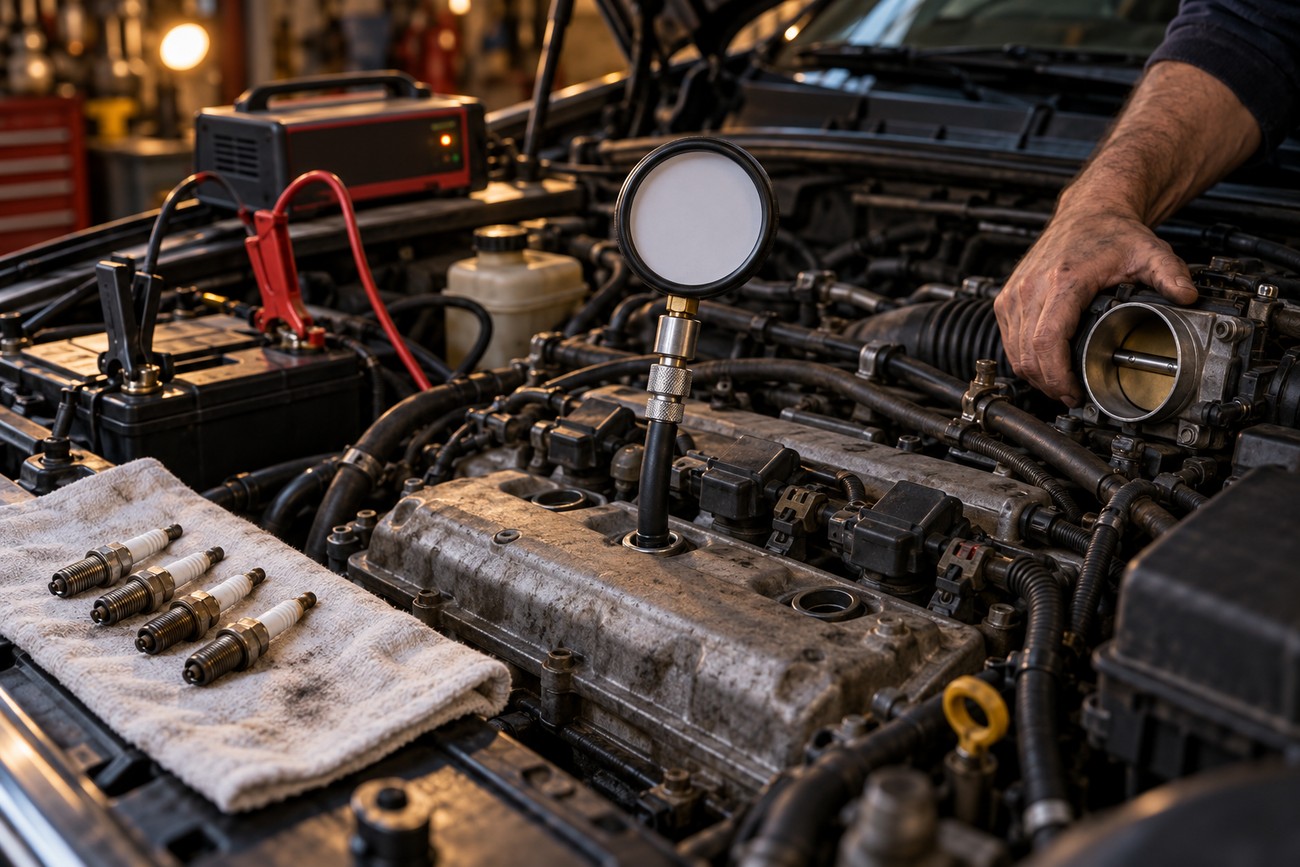
Compression is measured while the starter turns the engine, so cranking speed directly affects the result. A tired battery, corroded cable, or worn starter can slow the engine and lower the pressure recorded by the gauge. A closed throttle on a gasoline engine, an adapter that leaks, or inconsistent cranking between cylinders can also distort the comparison.
If a reading is unexpectedly low, correct the test conditions and repeat it before removing the cylinder head or assuming the engine needs major repairs. On a gasoline engine, confirm that all spark plugs were removed and the throttle was fully open. Check that the tester was firmly sealed, and record the engine temperature and battery condition in your test notes.
A normal compression result does not rule out poor fuel delivery, ignition faults, incorrect camshaft timing, restricted exhaust flow, or problems with sensors and engine management. Compression testing evaluates cylinder pressure during cranking; it does not measure how the engine breathes or produces power under load.
Evenly low readings can be significant when they fall below the specification for that engine. A worn engine may continue to start and drive with no dramatic symptom, while still having reduced mechanical reserve. Interpret the figures alongside the factory data and the vehicle’s symptoms rather than a universal gasoline or diesel range.
What to do after a genuinely low result
First repeat the test correctly and confirm that the low result is real. Low compression identifies a loss of cylinder pressure, but it does not identify the failed component. Possible causes include worn piston rings, leaking valves, incorrect valve timing, or a cylinder-head gasket problem.
A leak-down test can help locate where the pressure escapes. Air heard at the intake points toward an intake valve, air at the exhaust points toward an exhaust valve, and air entering the crankcase can support a ring or piston-related diagnosis. Cooling-system symptoms or air movement in the coolant may suggest a head-gasket or cylinder-head sealing issue, although these observations require careful confirmation.
An oil test can provide an additional clue. A small, controlled amount of oil may temporarily improve a low reading when ring sealing is involved, while little change can direct attention toward valves or timing. This is only a diagnostic hint, not a final verdict, and excess oil can foul spark plugs and create problems for the exhaust system or catalytic converter.
Do not use one compression figure to estimate the remaining life of the engine. Combine the readings with a leak-down result, valve-timing checks, oil consumption, exhaust smoke, fault codes, and the manufacturer’s limits. A qualified repair facility may be appropriate when the result remains low or when timing components and cylinder-head work are involved.
Frequently asked questions
The standard test assumes you can warm the engine and follow the manufacturer’s procedure. If the engine will not start, a cold test can still help you compare cylinders. The answers below also cover test equipment and spark plug removal.
What if the engine will not start and cannot be warmed up?
You can perform a cold compression test as a preliminary comparison between cylinders. Record that the engine was cold, keep the test conditions identical, and use the results mainly to identify a cylinder that is clearly different from the others.
Do not compare cold readings directly with the manufacturer’s specification for a warmed engine unless the service information specifically permits it. Once the engine can be started and safely warmed, repeat the test at the specified temperature. If it cannot be started, a leak-down test and checks of ignition, fuel delivery, and valve timing may be more useful than treating the cold number as a final diagnosis.
How can I check my engine compression at home?
Use a compression tester compatible with the engine, warm the engine when possible, and disable fuel and ignition. On a gasoline engine, remove all spark plugs, keep the throttle fully open, and test each cylinder with the same cranking procedure. Crank until the gauge stabilizes, usually after 5–10 compression strokes.
Write down the peak pressure for every cylinder and compare the pattern with the engine’s service specification. A relative electronic compression test can help compare cylinder contribution, but it estimates differences indirectly and does not measure pressure in bar. A mechanical gauge remains the appropriate tool for an absolute compression reading.
How do I make a homemade compression tester?
A homemade tester is generally a poor choice for engine diagnosis because it must seal against combustion pressure, fit the exact plug or injector thread, retain a suitable check valve, and use a gauge with a usable pressure range. A small leak in any part can produce a falsely low result, while an improvised connection may damage the thread or fail during cranking.
A rental or basic purpose-built tester is safer and more repeatable. For diesel engines, use a diesel-rated gauge and the correct adapter for the injector or glow-plug opening; gasoline and diesel tools are not automatically interchangeable. Follow the engine manufacturer’s procedure for disabling fuel before cranking.
Do I remove all spark plugs when doing a compression test?
Yes, remove all spark plugs for a comparable gasoline-engine test. This lets the starter turn the engine more evenly and prevents one cylinder from adding extra resistance, which can make the readings lower or less consistent.
Keep the ignition and fuel systems disabled while the plugs are out. The exact access procedure differs between engines, and some modern vehicles require special steps, so use the repair manual when the correct shutdown method is unclear. Diesel engines use a different adapter and access point, commonly at a glow plug or injector, according to the manufacturer’s procedure.