The first drive after fitting new brakes or tires can feel unfamiliar. The pedal may feel different, the car may respond less sharply, or a new sound may appear. That uncertainty can tempt you to test the parts aggressively—or to dismiss a genuine fault as normal settling.
Gentle break-in is a required, controlled process that helps new components establish consistent contact. It does not correct incorrect installation, a persistently soft brake pedal, pulling, severe vibration, or braking that feels unsafe. Make an emergency stop whenever safety requires it, then arrange an inspection if the symptoms remain.
Before leaving the shop, confirm the tire pressures against the vehicle placard when the tires are cold, and make sure the vehicle stops predictably. Component-specific instructions from the brake and tire manufacturers take priority over any general mileage or braking routine.
- Before the first drive, separate break-in from a fault
- Bed new brakes with moderate stops and time to cool
- Give new tires room to settle, especially in the wet
- When brakes and tires are both new, widen your safety margin
- Recheck the wheels—and know when symptoms need a shop
- Frequently asked questions
- What does the 30/30/30 rule for brakes mean?
- What if my trips are too short for a dedicated brake-bedding drive?
- How long does it take for new brakes to settle in?
- What happens if you do not bed in brakes?
Before the first drive, separate break-in from a fault
Read the instructions supplied with the brake components and tires before choosing a break-in method. Brake materials, tire construction, vehicle weight, and intended use can change the recommended procedure. An illustrative routine found elsewhere should never override the manufacturer’s directions or safe road conditions.
At low speed and in a safe area, check that the brake pedal feels firm and that the vehicle responds predictably. The car should not pull sharply to one side, make a severe grinding noise, or require unusual pedal travel. Set cold tire pressures to the vehicle maker’s placard, rather than relying on the number molded into the tire sidewall.
Some changes in feel are expected while new friction surfaces and tires settle. A persistently soft pedal, unsafe braking, strong pulling, or severe vibration is different. Bedding cannot repair air in the hydraulic system, an installation problem, incorrect wheel fitment, or a damaged component.
If braking feels unsafe, stop driving and seek inspection. Do not avoid an emergency stop to protect new parts; collision avoidance takes priority. A short check after installation is useful, but it should confirm safe operation rather than serve as a substitute for professional inspection when warning symptoms are present.
Bed new brakes with moderate stops and time to cool

Brake bedding helps the pad and rotor establish even contact and a consistent transfer layer of friction material. That process supports predictable friction and helps reduce the risk of uneven deposits. It is controlled heat management, rather than a test of how hard the new brakes can stop.
Where the component manufacturer permits it and road conditions are suitable, an illustrative procedure is 10–30 moderate deceleration from 60–80 km/h to 10–30 km/h, with approximately 30–60 seconds between cycles. Use smooth, medium pedal pressure. Do not treat these figures as a universal recipe, and do not perform speed-specific stops in traffic, on a wet or contaminated road, or anywhere you cannot stop safely.
Avoid prolonged pedal pressure, such as riding the brakes down a long hill or holding the vehicle stationary with the brake pedal immediately after a hot stop. After the controlled sequence, drive for several kilometers with minimal braking where safe, allowing the components to cool. Do not park with the brakes clamped while they are very hot unless the situation requires it.
The initial procedure is separate from ordinary gentle use over the following distance. Allow roughly 150–300 km of gentle brake use after replacement, subject to manufacturer instructions. Avoid repeated hard stops and long, dragging applications during this period; excess heat can contribute to glazing or uneven friction-material deposits, which may lead to noise or vibration.
Noise, judder, or a change in pedal feel should not automatically be blamed on incomplete bedding. If symptoms persist, worsen, or appear with a soft pedal or reduced braking, stop treating the problem as a break-in issue and have the system inspected. Bedding may establish contact, but it is not a guaranteed repair for glazing, vibration, or an installation fault.
Give new tires room to settle, especially in the wet
New tires can feel different from the tires they replace, even when their size and pressure are correct. Construction, tread design, road surface, temperature, weather, and installation all affect the first impression. Grip may change as the tires wear in, so leave extra following distance while you learn their response.
For the early journeys, use smooth acceleration, braking, and steering. Avoid abrupt lane changes, high-speed cornering, aggressive launches, and deliberate grip tests. Wet roads deserve additional caution because a new tire’s behavior can feel less familiar when water reduces the available margin.
Illustrative gentle-use ranges are 200–500 km for summer tires, 500–700 km for winter tires, and up to 800–1000 km for studded tires. These are planning ranges, not guaranteed grip thresholds. Follow the tire maker’s guidance, keep speeds and loads within safe limits, and adapt to conditions rather than trying to complete a mileage target quickly.
Studded tires benefit from gentle acceleration and braking while the studs seat in the tread. Early wheelspin, hard stops, and sharp cornering can interfere with that seating process and may contribute to stud loss. Do not assume that every slippery feeling comes from mold-release residue; pressure, alignment, road contamination, weather, and tire installation can also be responsible.
When brakes and tires are both new, widen your safety margin
A common mistake is to leave the installer for a fast, tightly scheduled trip and drive as though both systems already feel familiar. New brakes may need controlled bedding, while new tires may still have a different steering and traction response. Combining the two changes makes it harder to judge whether an unfamiliar sensation is expected or requires attention.
Plan the first journeys with more space and less pressure. Brake earlier and smoothly, keep a larger gap from traffic, and choose a route where safe deceleration are possible without forcing a speed-specific procedure. Postpone deliberate performance tests until the components have been used gently and any required checks have been completed.
A manufacturer’s controlled brake-bedding procedure can fit within ordinary cautious driving, provided the road and traffic permit it. It is not a requirement to perform moderate stops at stated speeds where conditions are unsafe. A public road is not a test track, and no break-in routine justifies a hazardous maneuver.
Keep the planning ranges separate: roughly 150–300 km of gentle brake use after replacement, and roughly 200–500 km for summer tires, with longer tire guidance for winter and studded types. Distance alone does not confirm successful bedding. Predictable braking, stable steering, correct pressure, and the absence of warning symptoms matter more than reaching a number.
Recheck the wheels—and know when symptoms need a shop
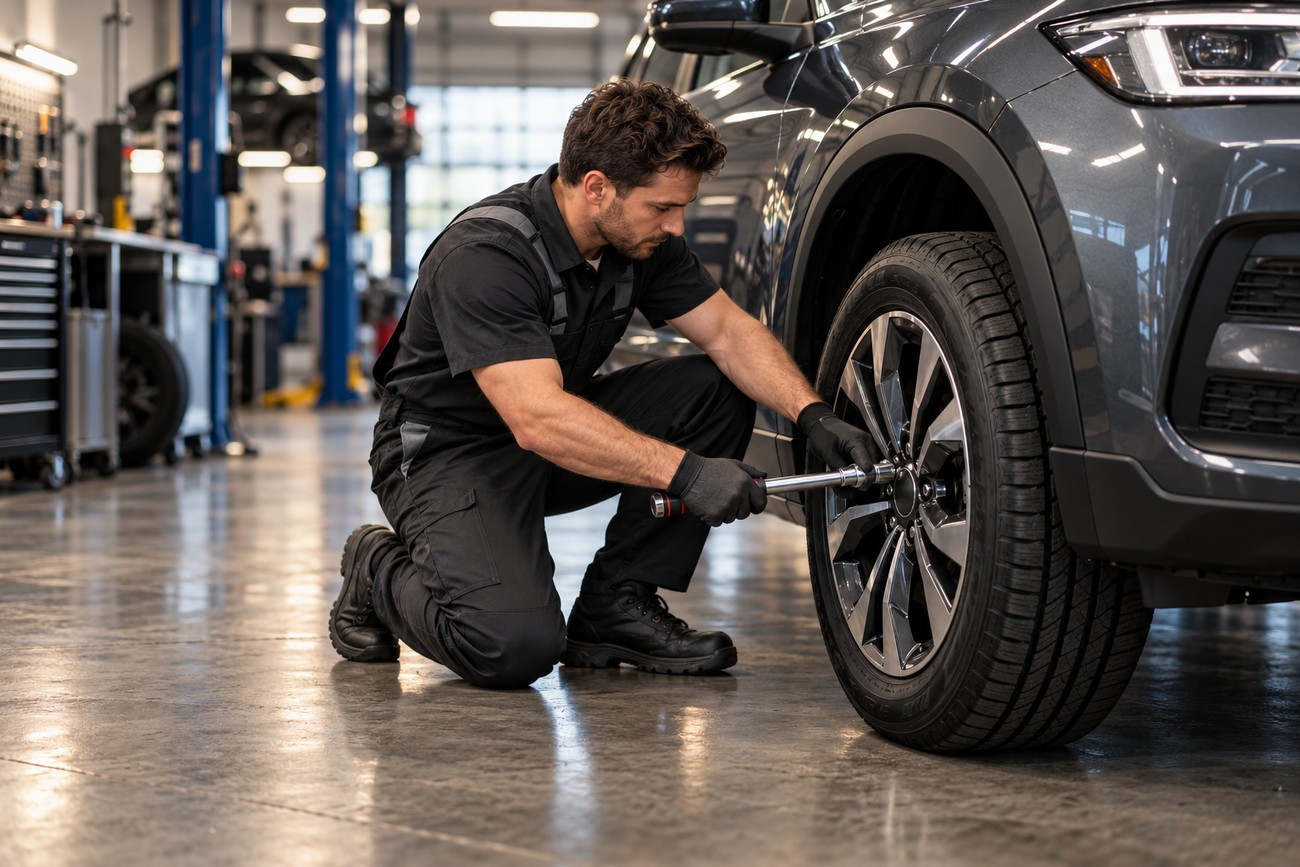
After the first 100–300 km on newly fitted tires, check the cold tire pressures and follow the vehicle maker’s or installer’s guidance on wheel-fastener rechecks. Early driving is a useful point to verify the installation. Persistent vibration should be assessed for balance, fitment, alignment, or another fault rather than assumed to be something the tire will cure by itself.
A light, temporary squeal can have several causes, including the materials, temperature, and contact surfaces. Persistent squeal, brake judder, strong steering-wheel vibration during braking, or a noticeable decline in stopping performance deserves inspection. Noise or vibration after new brakes can also result from installation faults, runout, contamination, or uneven friction-material deposits.
A persistently soft pedal is a safety symptom, not a normal break-in stage. Continued hard use can worsen heat-related brake problems, especially if a component is already dragging or contacting unevenly. If the pedal remains soft, the vehicle pulls, braking feels weak, or the car shudders severely, stop driving when it is safe to do so and arrange prompt inspection.
Do not repeatedly apply the brakes hard in an attempt to remove a squeal or vibration. That approach can add heat without correcting the cause. A qualified inspection can determine whether the issue involves bedding, hydraulic pressure, caliper movement, rotor condition, wheel fitment, balance, or another part of the vehicle.
Frequently asked questions
Brake-bedding advice often refers to rules and distances that need context. The component maker’s instructions take priority over informal routines. If braking feels unsafe or warning symptoms persist, arrange an inspection rather than waiting for break-in to finish.
What does the 30/30/30 rule for brakes mean?
The 30/30/30 rule is an informal bedding mnemonic, and its numbers have varying definitions. It is not a universal manufacturer specification. Some versions refer to repeated moderate stops, speed ranges, or cooling intervals, so the label alone does not provide a reliable procedure.
Use the brake manufacturer’s instructions instead. If no suitable controlled route exists, follow the maker’s normal-driving guidance over several trips rather than forcing a mnemonic into unsafe traffic or weather.
What if my trips are too short for a dedicated brake-bedding drive?
Follow the component maker’s normal-driving guidance over several trips. Use smooth, moderate braking, leave extra space, and avoid prolonged pedal pressure or repeated hard stops. There is no need to create a hazardous speed-specific routine simply to complete bedding in one journey.
Short trips do not excuse warning symptoms. A soft pedal, unsafe braking, severe vibration, or strong pulling requires inspection regardless of whether the vehicle has completed a bedding drive.
How long does it take for new brakes to settle in?
There is no single universal time or distance. An illustrative planning range is roughly 150–300 km of gentle use after replacement, while the initial bedding sequence, if specified by the manufacturer, may establish contact sooner. Heat control and persistent symptoms matter more than the odometer alone.
Continue cautious driving until braking feels predictable. If the pedal remains soft or braking is unsafe, do not wait for the distance to pass; arrange an inspection.
What happens if you do not bed in brakes?
Without suitable bedding, contact and friction-material transfer may remain uneven. The result can include inconsistent friction, excess heat, noise, glazing, or vibration, although those symptoms can also have other causes.
Do not try to correct the issue with repeated maximum-effort stops. Follow the component maker’s procedure if conditions permit, and have persistent noise, judder, reduced braking, or a soft pedal checked by a qualified technician.