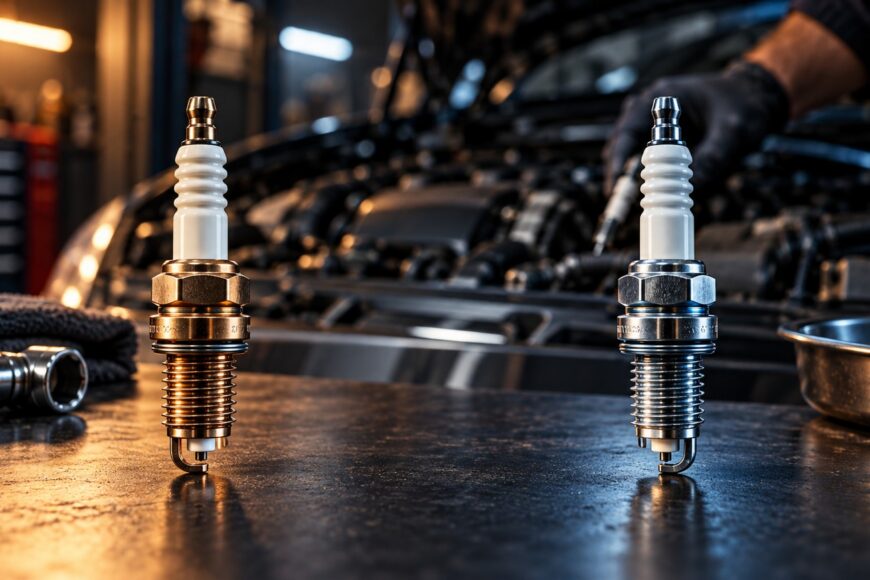
Bosch versus NGK matters less than whether the exact spark plug matches the engine. The correct choice must match the vehicle’s OEM number and complete specification, including heat range, thread length or reach, seat type, protrusion, resistor characteristics, and gap. A plug that fits the thread can still be wrong for the combustion chamber, ignition system, or ECU calibration.
Iridium also creates unrealistic expectations. A thinner electrode can improve ignition stability and service life, yet a healthy engine with correctly specified plugs will usually show little or no noticeable gain in power or fuel economy. Paying more for iridium does not change that basic limit.
Rough idle, repeated misfires, short service life, or poor cold starting after installation should therefore be treated as diagnostic symptoms. Incorrect fitment, a damaged coil, oil in the plug well, mixture faults, careless installation, or counterfeit parts can all imitate a Bosch or NGK failure.
- What Iridium Spark Plugs Actually Change
- Bosch vs NGK: Why the Exact Part Number Matters More
- Bosch vs NGK Iridium: The Practical Comparison
- When New Iridium Plugs Cause Misfires or Poor Starting
- Installation and Buying Mistakes That Ruin a Good Plug
- Why Turbo, Direct-Injection, LPG, and CNG Engines Need More Care
- How to Choose Between Bosch and NGK Iridium
- Frequently asked questions
- Should I replace the ignition coils when installing Bosch or NGK iridium plugs?
- Why is one spark plug a different color from the others after a short interval?
- How can I tell whether a Bosch or NGK iridium plug is counterfeit?
What Iridium Spark Plugs Actually Change
An iridium plug uses a fine center electrode, commonly about 0.4–0.8 mm in diameter, compared with the thicker electrode used on many nickel plugs. The smaller tip concentrates the electric field, which can reduce the voltage required to create a spark. That supports stable ignition, including under lean-mixture conditions where the spark has a harder job.
The electrode material also supports long service life. Many modern vehicles specify tens of thousands of miles or hundreds of thousands of kilometers for iridium plugs, but the vehicle manufacturer’s replacement interval remains authoritative. A product listing that advertises a longer life cannot override the engine maker’s maintenance schedule.
Those benefits are mainly about maintaining the intended ignition performance over time. They do not add energy to a weak ignition coil, repair a leaking injector, remove oil from the combustion chamber, or correct an incorrect heat range. If the old plugs were badly worn, a new set may restore lost smoothness, but that is recovery of normal operation rather than a reliable performance upgrade.
Independent testing and mechanic experience generally find little or no noticeable power or fuel-economy gain when the ignition system is healthy and the plug is correctly specified. Iridium is also less forgiving of incorrect gap, oil fouling, deposits, and overheating. The fine electrode can last a long time in the right engine, while a poorly running engine can damage its condition quickly.
Bosch vs NGK: Why the Exact Part Number Matters More
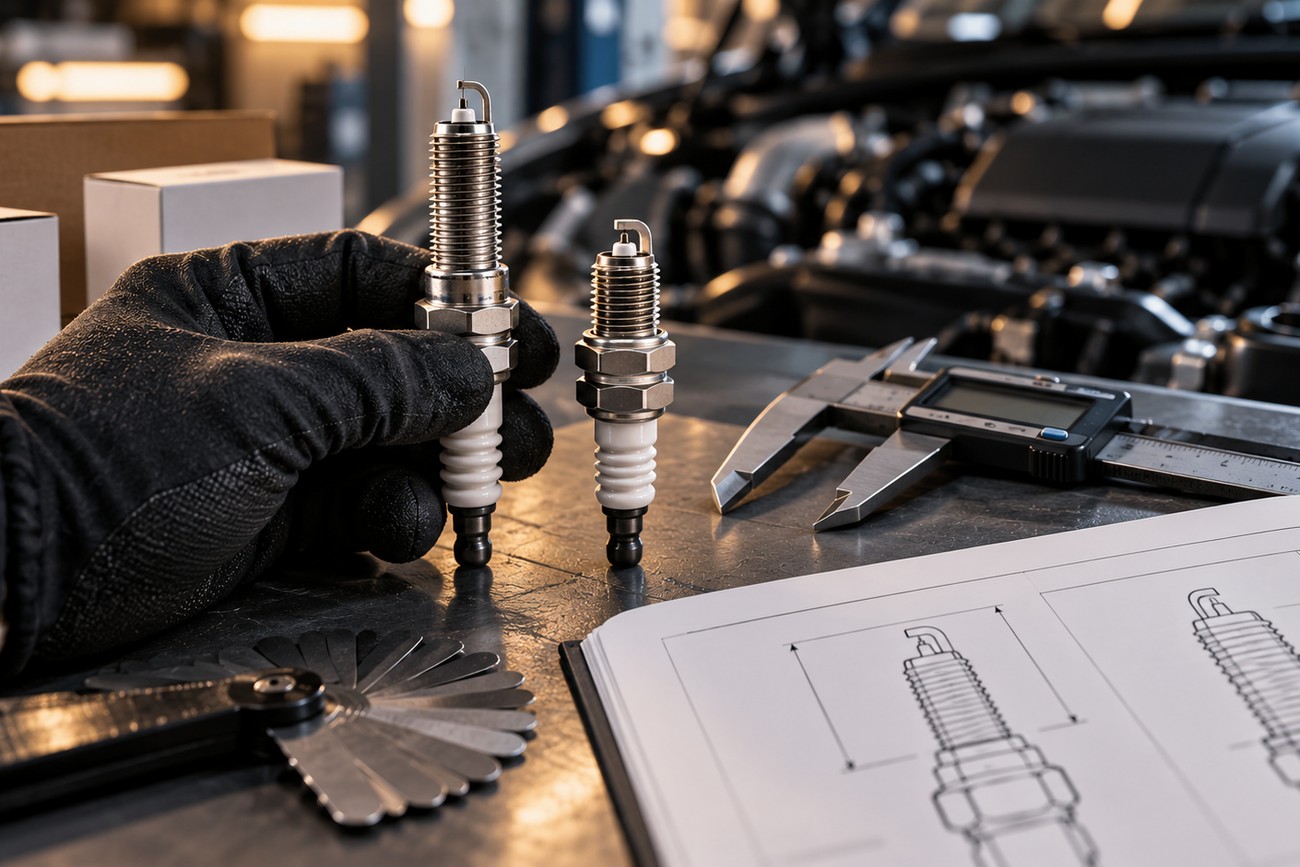
Bosch and NGK are major OEM and aftermarket suppliers. Both offer multiple plug constructions, heat ranges, electrode designs, and catalogue numbers, so the logo alone cannot establish suitability or durability. A successful choice starts with the vehicle manufacturer’s original equipment number or a reliable, application-specific equivalent.
Check the complete specification: heat range, thread diameter and length or reach, seat type, protrusion, resistor characteristics, and specified gap. The plug must also suit the engine’s ignition system and combustion-chamber design. A matching thread proves only that the part can begin to screw into the cylinder head; it does not prove that the electrode sits at the correct depth or operates at the correct temperature.
Spark-plug production specifications cover geometry, thread, seating, heat range, and electrical parameters. Those details work together. An incorrect reach can place the electrode too far from the chamber or too close to the piston, while an unsuitable heat range can encourage fouling or excessive temperature even if the engine starts normally.
Catalogue cross-references deserve independent checking. A retailer may map a Bosch number to an NGK number incorrectly, or list a plug for a related engine with a different ignition requirement. Verify the cross-reference against the manufacturer’s catalogue and the vehicle’s exact engine code, fuel system, and model year where applicable.
Bosch vs NGK Iridium: The Practical Comparison
The table compares selection factors rather than assigning Bosch or NGK a blanket ranking. The correct plug is the genuine part whose complete specification matches the vehicle’s OE requirement.
| Selection factor | Bosch | NGK | What matters in practice |
|---|---|---|---|
| OEM cross-reference | Use the exact Bosch catalogue number listed for the application. | Use the exact NGK catalogue number listed for the application. | Confirm the number against the vehicle’s OE requirement; a retailer’s cross-reference can be wrong. |
| Heat range | Must match the engine’s specified thermal requirement. | Must match the engine’s specified thermal requirement. | Brand reputation cannot compensate for an incorrect heat range. |
| Thread length or reach | Must match the cylinder head and combustion-chamber design. | Must match the cylinder head and combustion-chamber design. | Thread compatibility alone does not prove correct fitment. |
| Seat type and protrusion | Must match the OE design, whether the application uses a gasket or a tapered seat. | Must match the OE design, whether the application uses a gasket or a tapered seat. | Incorrect seating or protrusion can cause sealing, clearance, or combustion problems. |
| Electrode design | Iridium designs use a thin center electrode intended to support stable, long-life ignition. | Iridium designs use a thin center electrode intended to support stable, long-life ignition. | The design helps only when the plug is correctly matched and the engine is healthy. |
| Gap | Use the vehicle-specific specification rather than relying on a generic boxed setting. | Use the vehicle-specific specification rather than relying on a generic boxed setting. | Incorrect gap can cause rough running, hard starting, and misfires. |
| Service-life expectation | Follow the vehicle manufacturer’s replacement interval. | Follow the vehicle manufacturer’s replacement interval. | Fuel, oil, engine condition, driving conditions, and ignition faults affect real life. |
| Failure risks | Incorrect gap, deposits, oil fouling, overheating, and unrelated ignition faults remain possible. | Incorrect gap, deposits, oil fouling, overheating, and unrelated ignition faults remain possible. | A thin iridium electrode is less forgiving of abuse than a simple new nickel plug. |
| Authenticity | Counterfeit products can closely resemble genuine Bosch plugs. | Counterfeit products can closely resemble genuine NGK plugs. | Seller reliability, packaging, part number, and price all deserve scrutiny. |
| Price and value | Higher price does not guarantee longer life or better performance. | Higher price does not guarantee longer life or better performance. | Choose the genuine OE-equivalent part, not the most expensive listing. |
Iridium’s main value is consistent ignition over a long service interval when the application is correct. It should not be judged by dramatic power gains. If a correctly maintained engine runs normally, changing from one reputable iridium supplier to another may produce no seat-of-the-pants difference.
Price is also a poor substitute for evidence. A cheaper genuine plug that matches the OE specification can be a better purchase than an expensive plug with the wrong reach or heat range. Conversely, a suspiciously cheap listing can erase any expected value if the part is counterfeit, damaged, or old stock.
When New Iridium Plugs Cause Misfires or Poor Starting
Rough idle immediately after an iridium installation often points to the gap, heat range, damaged insulator, or incorrect part number. Remove and compare the plugs before replacing other components. Check that each one is the same specification, that the ceramic is intact, and that the installation has not disturbed a coil connector or coil boot.
If misfires return after 5–10 thousand kilometres, do not automatically blame Bosch or NGK. Coils, injectors, oil in the plug wells, a lean mixture, deposits, and wiring faults can all produce the same symptom. Reading fault codes, comparing misfire counts by cylinder, and inspecting the old plug usually provide more useful evidence than changing the brand again.
A plug can be electrically functional and still misfire under load. Deposits can provide a leakage path, oil can contaminate the firing end, and a cracked insulator can fail only when cylinder pressure rises. Inspect the plug well, coil boot, and ceramic closely rather than relying only on a basic continuity check.
Cold-start problems deserve special attention on direct-injection, turbocharged, LPG, and CNG engines. The wrong heat range or electrode specification can make starting worse even when the thread and connector appear correct. Oil, repeated misfires, and rich mixtures can reduce iridium service life sharply rather than gradually, so a short life may be a symptom of an engine fault.
Installation and Buying Mistakes That Ruin a Good Plug
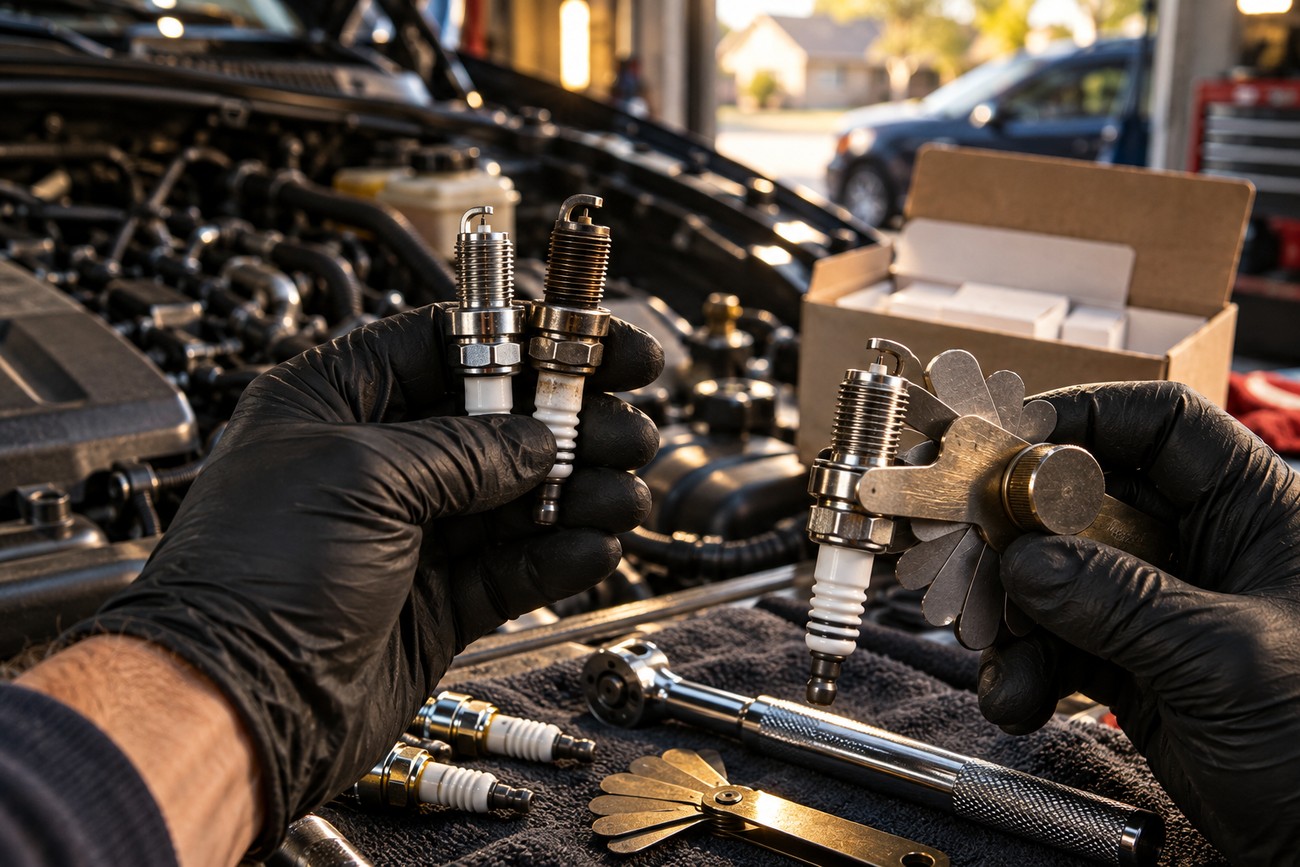
Fitting by brand alone is the first mistake. Identify the exact vehicle, engine, fuel system, and OEM plug number before comparing Bosch and NGK equivalents. An old or questionable cross-reference can make a supposedly compatible part unsuitable.
Check the gap against the vehicle application, even when the box presents a factory-looking setting. Some iridium plugs should not be adjusted by casually levering against the fine center electrode. If the specified gap differs, use the manufacturer’s approved procedure or obtain the correct pre-gapped application rather than bending the electrode with force.
Clean the area around the plug wells before removal. Dirt can fall into the cylinder, while oil in the well can damage the coil boot and create an apparent plug misfire. Start the plug by hand, ensure the seat is correct, and use the vehicle or plug manufacturer’s tightening procedure; overtightening can damage threads or sealing, while insufficient tightening can also create problems.
Before installation, use this short inspection checklist:
- Confirm the exact part number and the vehicle’s OEM cross-reference.
- Check the packaging, labels, and quantity for consistency.
- Inspect the ceramic, threads, sealing area, and electrode for damage.
- Measure or verify the gap against the vehicle specification without stressing the iridium tip.
- Clean the plug wells and inspect for oil or damaged coil boots.
- Use the correct socket and follow the specified tightening procedure.
Buy from a credible source rather than choosing the lowest price. Counterfeit Bosch and NGK plugs can closely resemble genuine products, and appearance alone is not proof of authenticity. Suspicious packaging, inconsistent markings, an implausible price, or a seller unable to verify the part number should be treated as a reason to reject the purchase.
Why Turbo, Direct-Injection, LPG, and CNG Engines Need More Care
Turbocharged and direct-injection engines can expose spark plugs to more demanding thermal and operating conditions than comparable naturally aspirated engines. Higher cylinder pressure makes spark formation harder, while increased heat load can narrow the margin between clean operation and fouling or overheating.
Modern engines also depend on the plug matching the ECU calibration and the engine’s thermal requirements. The ignition strategy, injection timing, boost pressure, and combustion-chamber design are developed around a particular plug specification. A generic “performance” iridium plug can therefore work worse than the standard OE-equivalent part.
Gas-fuel applications require the same caution. LPG and CNG combustion conditions can call for a specific heat range, gap, resistor design, or electrode arrangement. A plug listed as iridium for a petrol engine is not automatically suitable for an LPG or CNG conversion.
Cold-start complaints can follow an incorrect plug choice in a direct-injection, turbo, CNG, or LPG application. There is no universal Bosch or NGK winner across all fuel systems. Confirm the exact application and its complete electrical and thermal specification before treating a starting problem as a brand comparison.
How to Choose Between Bosch and NGK Iridium
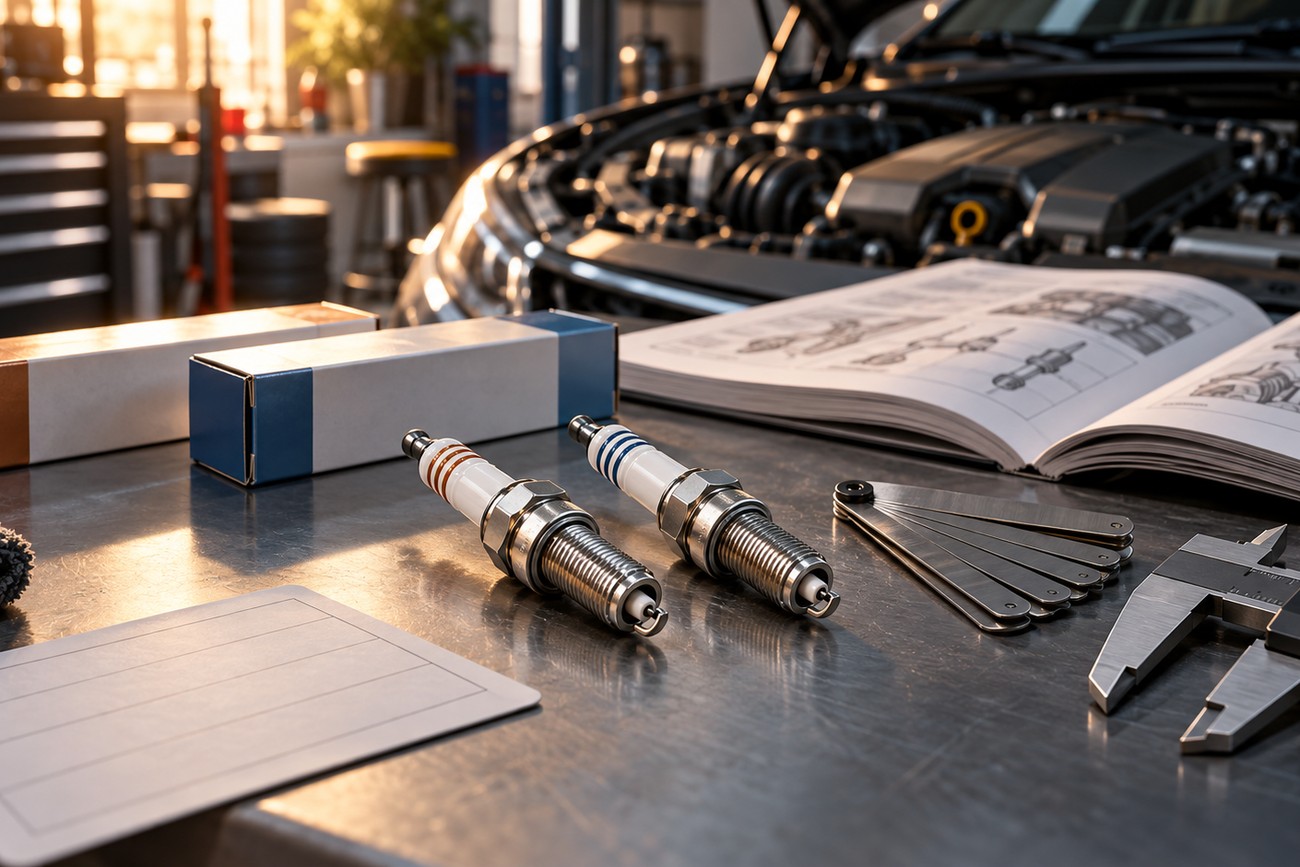
Start with the vehicle identification, engine code, fuel system, and the original plug number. Then verify the Bosch and NGK catalogues against that OE reference. The correct result may be Bosch, NGK, or only one of them, depending on the application and the quality of the available cross-reference.
Next, confirm the complete specification: heat range, reach, seat type, protrusion, resistor characteristics, and gap. Check that the plug is genuine and supplied through a reliable channel. Do not treat a low price, a familiar logo, or a claim of improved economy as evidence that the part is suitable.
Diagnose the old plugs and the ignition system if the vehicle already has symptoms. Look for cylinder-specific differences, oil contamination, deposits, damaged insulation, coil faults, injector problems, and mixture issues. Replacing the plug set without finding the cause can produce the same misfire again with either brand.
The practical verdict is conditional: choose Bosch or NGK when its exact catalogue number is the genuine OE-equivalent for your engine. Judge the result by reliable starting, stable combustion, and appropriate service life, rather than dramatic power gains. Follow the vehicle manufacturer’s replacement interval even when a plug brand advertises a longer life.
Frequently asked questions
Should I replace the ignition coils when installing Bosch or NGK iridium plugs?
No. Coils should not be replaced automatically when installing either brand of iridium plug. Test them or replace them only when misfire data, inspection, resistance or output checks, cylinder swapping, or other diagnosis supports a coil fault.
New plugs can expose a weak coil because the engine’s ignition demand changes with gap and cylinder conditions, but that does not make the plug installation the cause. If a misfire follows a coil when it is moved to another cylinder, the coil becomes a stronger suspect than the Bosch or NGK label.
Why is one spark plug a different color from the others after a short interval?
An isolated color difference usually points to a cylinder-specific condition that deserves investigation. Possible causes include an injector delivering a different amount of fuel, oil control problems, a local mixture variation, or differences in combustion temperature.
Compare the affected plug with its cylinder’s misfire data and inspect the injector, coil, plug well, and compression-related symptoms where appropriate. Colour alone does not prove poor plug quality, especially if the part number and gap are correct.
How can I tell whether a Bosch or NGK iridium plug is counterfeit?
Start with the seller and the part number. Buy through a reliable supplier, compare the packaging and labels across the set, verify the catalogue number against the manufacturer’s application data, and be cautious of a price that is implausibly low.
Inspect the ceramic, markings, threads, sealing area, and electrode for inconsistent finish or damage, but do not treat appearance alone as proof. Counterfeit plugs can closely resemble genuine products, so an uncertain seller or unverifiable packaging is enough reason to return the set and purchase from a more dependable source.