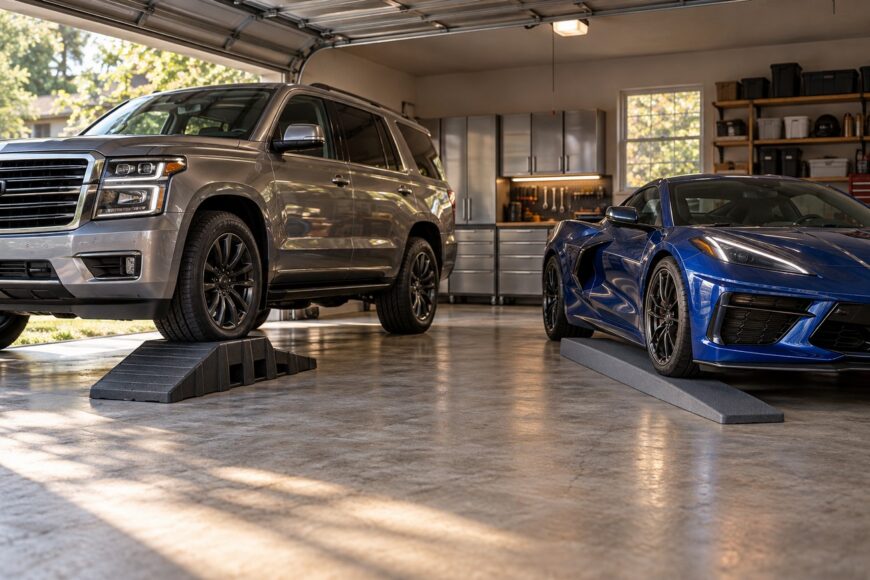
Choosing between RhinoRamps and Race Ramps is a fit-and-safety decision before it is a price comparison. RhinoRamps 11909/Max favor higher stated capacity and a wider tire platform. Race Ramps RR-56 favor a gentler approach angle and easier carrying. Those strengths matter only if the ramps suit your vehicle and the floor where you use them.
A low front splitter can strike a ramp long before the tire starts climbing. A heavy vehicle can exceed a ramp’s limit even when its total weight sounds acceptable, while a wide tire may leave too little room for a comfortable approach. Smooth concrete introduces another problem: a ramp that moves forward as the tire touches it. The best choice is the pair you can position, climb, and inspect without working at the edge of its limits.
- What Actually Matters When Choosing Car Ramps
- RhinoRamps vs Race Ramps: The Key Differences
- Approach Angle and Clearance: The Deal-Breaker for Low Cars
- Weight Ratings, Tire Width, and Vehicle Fit
- Construction, Traction, and Everyday Handling
- The Drawbacks Owners Notice After Buying
- Which Ramps Should You Buy for Your Vehicle?
- Frequently asked questions
- What happened to RhinoRamps?
- Do I still need wheel chocks when using car ramps?
- How should I inspect and store car ramps between uses?
What Actually Matters When Choosing Car Ramps
Start with the axle you plan to raise, rather than the vehicle’s total weight alone. The two ramps carry that axle’s load, and each ramp must support the wheel placed on it. Cargo, vehicle modifications, and weight distribution can change the load you expect; a headline capacity does not tell you whether one ramp will be overloaded.
Next, check the path from floor to platform. Front overhang, bumper lips, and splitters determine whether the body clears the ramp’s leading edge. A generous load rating is little help if the bumper touches before the tire reaches the slope. At the top, usable platform width matters as much as nominal tire width: the tire needs to sit securely, with a margin for steering and positioning error.
Published ratings assume favorable conditions, including a level, solid surface and reasonably even loading. Abrupt entry, braking, or a diagonal approach can create force peaks above the static axle load. Dirt under one corner or a soft surface also changes how a ramp bears weight. A ramp that technically supports a stationary vehicle can still be an uncomfortable choice if getting onto it demands precise steering or repeated attempts.
Finally, account for where the ramps will live. RhinoRamps are shorter and heavier; RR-56-style Race Ramps are lighter to carry but take more lengthwise storage space. A pair used in a fixed, clean garage poses different handling problems from one carried to events or stored in a damp outbuilding. Neither setting excuses a poor match on capacity, clearance, or floor contact.
RhinoRamps vs Race Ramps: The Key Differences
These approximate figures describe RhinoRamps 11909/Max and Race Ramps RR-56; check the label and current specifications for the exact product you buy.
| Criterion | RhinoRamps 11909/Max | Race Ramps RR-56 |
|---|---|---|
| Published capacity | 12,000–16,000 lb GVW per pair, depending on model; approximately 6,000–8,000 lb per axle | Approximately 1,500 lb per ramp; approximately 3,000 lb per axle |
| Approach angle | Approximately 16–17° | Approximately 10.8° |
| Lift height | Approximately 6.5–8.5 inches | Approximately 8–10 inches |
| Construction | Molded plastic/rubber composite with hollow ribbed sections | High-density foam/composite solid-block construction with textured anti-slip coating |
| Platform width | Approximately 13 inches; generally more accommodating of wider tires | Check exact usable width; users report that 235 mm tires can sit close to the edge on some models |
| Traction and reported limitations | Stepped surface helps locate the tire; users report sliding on some smooth floors | Rough coating often grips smooth concrete well; coating can become dirty or wear |
| Weight and carrying | Approximately 18–20 lb per pair; substantially heavier | Noticeably lighter and more portable |
| Storage | Less length to accommodate, though hollow sections need cleaning | Long approach takes more lengthwise space |
| Likely best fit | Heavier pickups, larger SUVs, and vehicles with wider tires and adequate front clearance | Low sports cars and users who carry ramps, provided axle load and tire fit are suitable |
Approach Angle and Clearance: The Deal-Breaker for Low Cars

RhinoRamps rise at approximately 16–17°. For a car with a low splitter or a long front overhang, that slope can bring the body into contact with the ramp before the tire reaches it. Driving more slowly limits the severity of a scrape, but it cannot create clearance that the car does not have. Capacity should therefore be a second check, after confirming that the car can enter the ramp at all.
Race Ramps RR-56 use an approximately 10.8° approach angle. Their longer, gentler climb is better suited to many low sports cars, particularly those with projecting bumper lips. The lower angle is an advantage, not a clearance guarantee: ride height, tire size, bodywork, and the exact point where the ramp meets the floor still determine whether contact occurs.
Before buying, compare the ramp profile with the car’s front overhang and the space beneath its lowest projection. A cautious trial should take place on a level, stable surface with another person watching from a safe position beside the car, clear of its path. Stop if the body approaches the ramp or either ramp shifts; forcing the car onward can damage the bodywork or destabilize the setup.
Some owners place small wood blocks ahead of RhinoRamps to create a two-stage approach. It can improve the entry angle for a particular car, but it is a practical workaround rather than a universally validated ramp setup. Blocks can move, split, or leave uneven support. If clearance depends on improvised pieces staying perfectly aligned, a purpose-suited low-angle ramp is the more defensible purchase.
Weight Ratings, Tire Width, and Vehicle Fit
RhinoRamps 11909/Max carry published ratings of 12,000–16,000 lb GVW per pair, approximately 6,000–8,000 lb per axle, depending on the model. Race Ramps RR-56 are commonly rated at approximately 1,500 lb per ramp, or approximately 3,000 lb per axle. The difference makes RhinoRamps a more plausible starting point for a heavier pickup or large SUV. It does not remove the need to read the rating on the exact ramps in hand.
For a conservative check, find the vehicle’s relevant axle rating or a reliable measured axle weight for its working configuration, then compare the expected load at each wheel with the individual ramp limit. Leave room for cargo and uneven side-to-side loading. GVW and axle figures are different ways of describing limits; do not assume that dividing the vehicle’s total weight by two proves a pair of ramps is suitable.
RhinoRamps offer a platform approximately 13 inches wide. On some Race Ramps models, users report that a 235 mm tire sits close to the edge or does not fit comfortably; 245–275 mm tires warrant especially careful verification. A tire’s labeled width is not a substitute for checking the usable flat platform and how the tread actually rests on it. Steering corrections while climbing can consume a small remaining margin.
Keep the loading controlled whichever pair you choose. A sudden climb, hard braking at the top, or a diagonal entry can produce forces above the simple static weight assumption. Uneven concrete, loose ground, and a ramp that does not sit fully flat further reduce the practical safety margin. A technically adequate rating is a starting condition, not permission to work at the limit.
Construction, Traction, and Everyday Handling
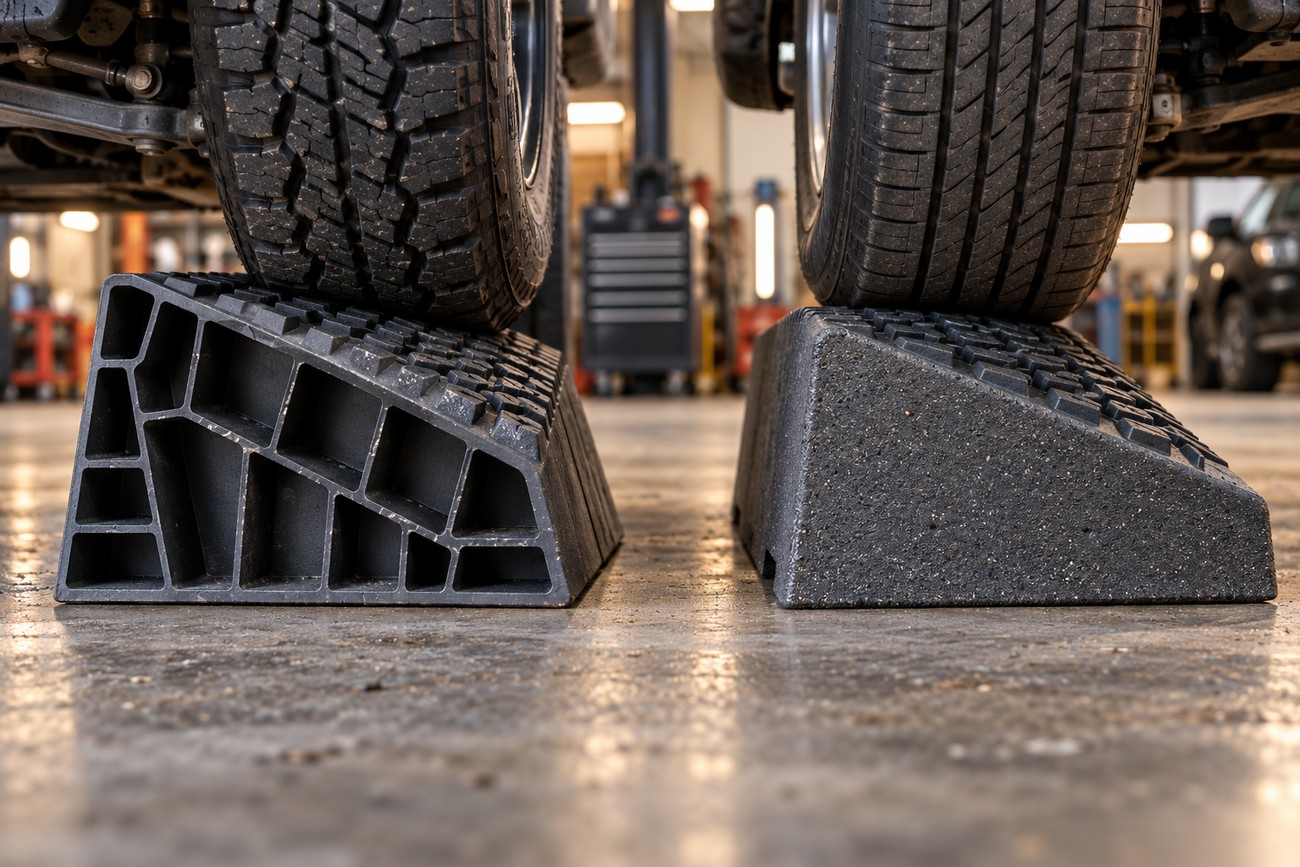
RhinoRamps use a molded plastic/rubber composite formed into hollow ribbed sections. That structure helps explain their shape and stepped driving surface, which gives the tire distinct points of engagement on the way up. Some users find the hollow form less reassuring under load, but appearance alone is not a measure of strength. The useful distinction is whether the ribs remain intact and the ramps sit firmly on the floor.
Race Ramps use a high-density foam/composite solid-block construction with a textured anti-slip coating. The solid form feels different to handle and is noticeably lighter than the RhinoRamps pair, which weighs approximately 18–20 lb. That portability helps when ramps travel with a low car. It does not make the material immune to damage: cuts, impacts, and repeated dragging across rough concrete can cause edges to chip or crumble.
On smooth concrete, the rough Race Ramps coating often grips better than the contact surface on RhinoRamps. Owners nevertheless report RhinoRamps sliding as a tire first presses against the slope, particularly on polished floors. The stepped RhinoRamps tread can help the tire locate and hold its position once it climbs, but tire engagement and floor grip are separate issues. Watch the ramp itself during a careful initial approach.
Traction surfaces also need maintenance. Dirt embedded in a rough coating changes how it contacts the floor, while heavy use can wear that coating. Oil, grit, or moisture under either design can undermine an otherwise stable setup. Clean the floor and ramp contact areas before use, and follow the ramp maker’s guidance on suitable surfaces and any approved means of preventing movement.
The Drawbacks Owners Notice After Buying
A common RhinoRamps complaint appears at the first drive-on: the ramp slides forward on polished garage concrete. A clean rubber mat or another manufacturer-approved traction measure may help, provided it lies flat and does not introduce a new shifting surface. If the ramp still moves as the tire touches it, stop. Holding it in place by hand or asking someone to stand in front of the vehicle is unsafe.
Hollow sections create a less visible ownership chore. Sand, snow, and road dirt can collect inside RhinoRamps, then make thorough cleaning and drying awkward. More important, a crack in a rib can reduce local stiffness even if the damage is hard to spot at a glance. Inspect underneath and around molded corners before relying on a pair that has been dropped, struck, or stored where it could be damaged.
Race Ramps demand a larger purchase outlay, and their long approach can dominate a small garage shelf despite their light weight. Buyers with broad tires may also discover that a usable platform feels narrower than expected when they try to center the wheel. Those disadvantages matter most if portability and low-angle access are occasional needs rather than regular ones. Paying more does not solve a marginal load rating or tire fit.
The textured coating and foam/composite body need different care from hollow plastic ribs. Dragging Race Ramps over rough flooring can damage edges, while cuts may grow into chipped or crumbling areas. A worn or contaminated anti-slip surface also deserves attention before another drive-on. Avoid treating cosmetic wear and structural damage as interchangeable; if you cannot judge whether a damaged ramp remains serviceable, take it out of use and consult the manufacturer.
Storage conditions affect both types. Repeated outdoor freeze-thaw exposure can accelerate material aging, particularly when moisture and dirt remain on the ramps. Keep them clean and dry where possible, protected from impacts and repeated dragging. A pair that passed inspection last season still needs checking before it goes under a vehicle again.
Which Ramps Should You Buy for Your Vehicle?
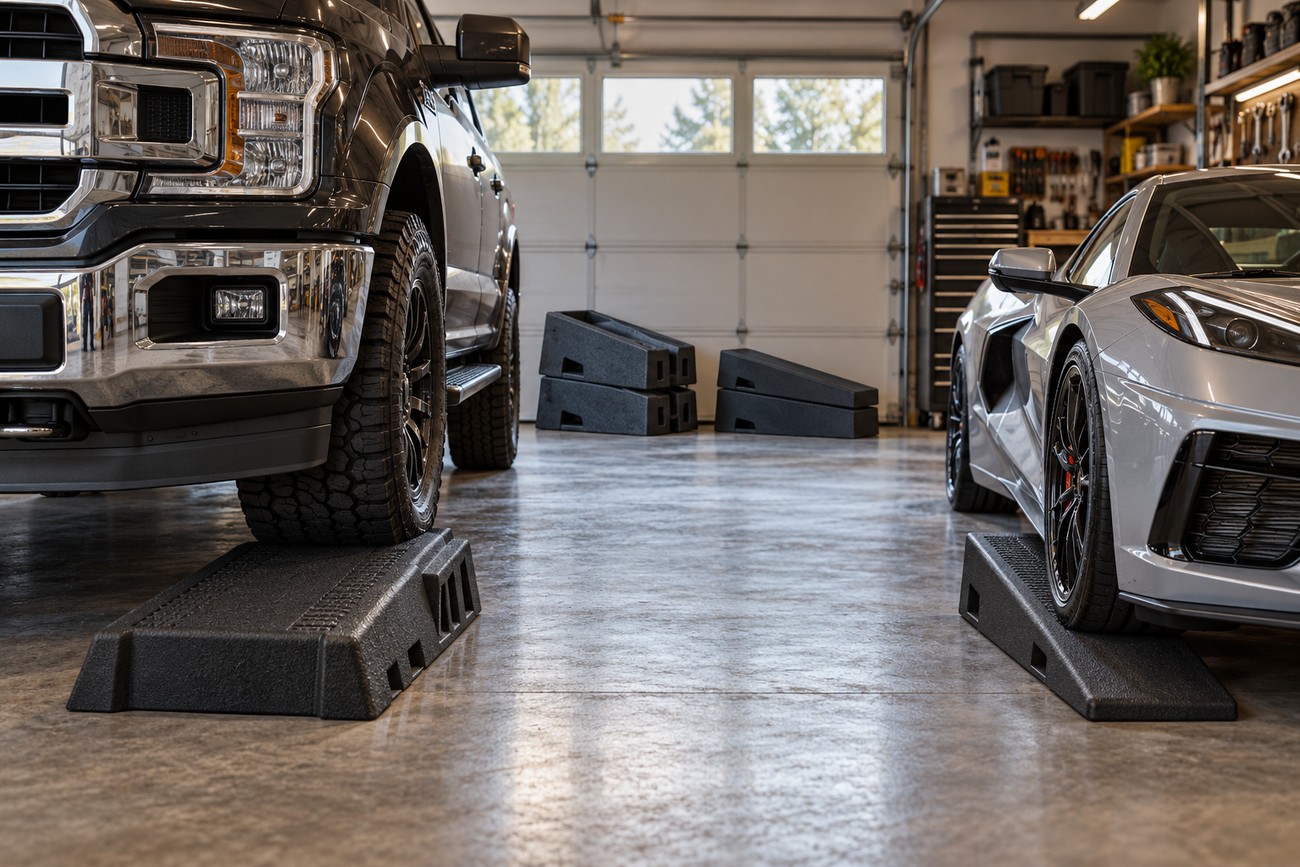
Choose RhinoRamps 11909/Max as the stronger candidate for a heavier pickup, a large SUV, or wide tires, provided the exact model’s rating covers the axle and the front bodywork clears its approximately 16–17° approach. Their broader platform and higher stated capacity make practical sense for these vehicles. They are also usually the better value when carrying weight and accommodating tires matter more than portability.
Choose Race Ramps RR-56 as the stronger candidate for a low sports car whose bumper or splitter cannot clear a steeper ramp. The approximately 10.8° approach and lighter construction suit a pair that travels with the vehicle to an event or another workspace. Check the approximately 1,500 lb-per-ramp limit and usable platform width first; a gentle slope cannot compensate for an overloaded or poorly supported wheel.
Some vehicles fit neither option comfortably. A low, heavy car with wide tires could need both a gentler approach and more load or platform capacity than the RR-56 offers. A tall vehicle parked on an uneven or loose surface may need a different working location before any ramp is appropriate. Selecting a different rated ramp or lifting method is preferable to adapting one beyond its stated limits.
Before ordering, make these checks against the exact vehicle and ramp model:
- Confirm the working axle load and each ramp’s individual rating.
- Compare the tire’s tread placement with the usable platform width.
- Check front overhang and splitter clearance against the approach angle.
- Identify a level, solid, clean surface where the ramps will sit fully flat.
- Measure the space needed to carry, clean, and store the pair.
Frequently asked questions
Model names and ramp shapes are easy to recognize, but neither replaces the instructions and rating supplied with the pair you will use. The same applies to setup habits: inspect the ramps and secure the vehicle for each job, even if they worked well the previous time.
What happened to RhinoRamps?
Do not assume that every product sold as RhinoRamps has the same rating, dimensions, or availability. RhinoRamps 11909/Max are the models compared here, and their stated capacity varies by model. Check the current product label, instructions, and seller listing rather than relying on an older review or a photograph of a similar-looking ramp.
If you own an older pair, identify it from its markings before applying specifications found for a newer one. Missing labels, uncertain history, or visible damage are reasons to pause rather than guess at its capacity.
Do I still need wheel chocks when using car ramps?
Yes. Chock the wheels remaining on the ground as directed by the ramp and vehicle instructions, apply the parking brake where appropriate, and place the transmission in Park or in gear as applicable. Ramp traction helps prevent the ramps from moving; it is not the entire method of preventing the vehicle from rolling.
Set both ramps squarely on a level, solid surface, drive up slowly, and stop once the tires are correctly positioned. Before going underneath, shut off the vehicle, verify that it is stable, and follow the ramp maker’s instructions. Never rely on a person holding a ramp or on an improvised stop to secure the car.
How should I inspect and store car ramps between uses?
Clean and dry the ramps after use, then inspect RhinoRamps around their hollow ribs and molded corners for cracks. On Race Ramps, check for cuts, chipped or crumbling material, and worn or separating anti-slip coating. For either type, remove grit from the floor-contact areas and look for deformation or damage that prevents full, even contact.
Store the pair where it will not be dragged, crushed, or left wet through repeated freezing and thawing. Inspect it again before the next use, especially after an impact or a season in outdoor storage. If damage casts doubt on its integrity, do not place a vehicle on it until the manufacturer has confirmed whether it remains usable.