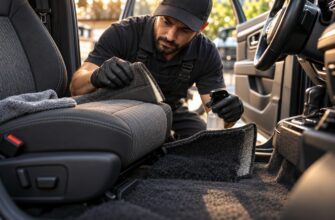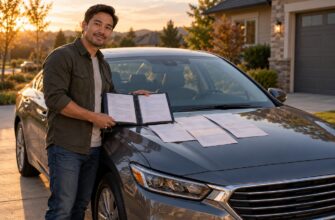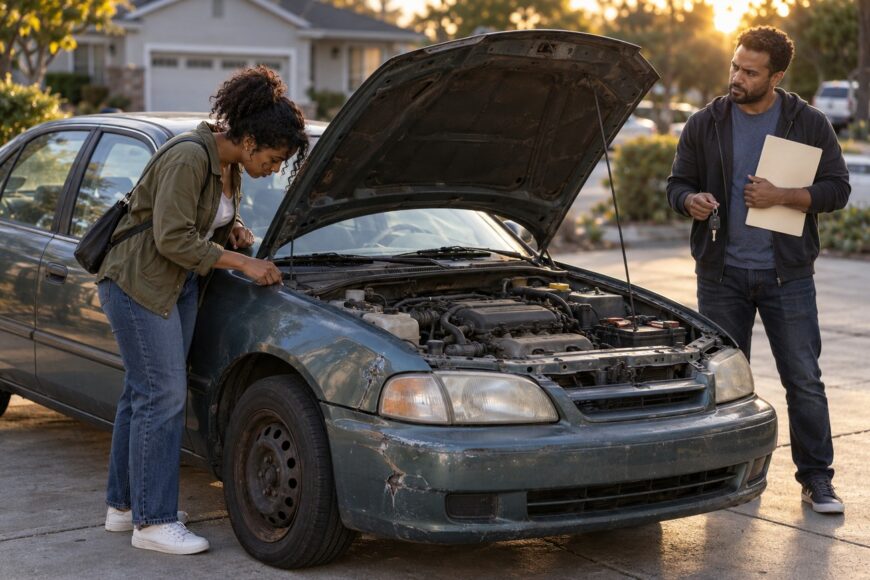
An attractive price can conceal a costly repair, an unregistrable vehicle, or a title problem that follows you long after the seller disappears. A rushed deposit may be harder to recover than a repair is to finance, especially when the payment went to an unknown person or through an irreversible transfer.
No clean history report, original-looking title, short test drive, or low-mileage claim proves that a deal is safe. Reliable buying decisions come from layered checks: identify the seller, match the VIN and ownership documents, compare mileage records, inspect the vehicle independently, and document the final agreement before money changes hands.
- Spot the Scam Before You See the Car
- Verify the Seller, VIN, and Title Together
- Check Mileage and History for Contradictions
- Do Not Treat a History Report as a Condition Guarantee
- Protect the Money, Contract, and Final Price
- Know When to Walk Away and What to Do Next
- Frequently asked questions
- What is the $3,000 rule for cars?
- What are five common car scams buyers still encounter?
- How can I sell my car without being scammed?
- What should you not tell a car dealer?
Spot the Scam Before You See the Car
A price substantially below comparable vehicles deserves verification before enthusiasm takes over. Low pricing can reflect genuine urgency or a car with expensive defects, ownership problems, or a history the seller does not want examined. The price itself is a warning sign, not proof of fraud, so compare the offer with similar vehicles and ask for the VIN before arranging payment.
Artificial urgency is another common pressure tactic. A seller may claim that several buyers are waiting, demand a deposit within minutes, or say that inspection can happen only after money is sent. Depositing money before an in-person inspection and VIN review creates avoidable risk, particularly when the seller will not provide basic documents.
A refusal to share the VIN before a meeting prevents you from starting a proper history check. Cash-only demands, unusual payment links, and requests for an irreversible transfer also reduce your transaction trail and leverage if the deal collapses. These signals do not establish fraud on their own; they are sufficient reasons to pause, verify independently, and leave if the seller will not cooperate.
Verify the Seller, VIN, and Title Together
Start with the VIN printed or stamped on the vehicle, then compare it with the title, identification plates, service paperwork, and electronic documents. Every location should show the same sequence. A single mismatch can result from an administrative error, a replaced part, or a stolen or misidentified vehicle, so resolve it through the registration authority before continuing.
Check that the seller’s identity matches the owner named on the title and that the transfer fields can be completed correctly. Review lien notation, damage or salvage status, odometer disclosure, signatures, and any sections that the seller must complete. An original-looking title is insufficient if the owner is absent, a lien remains, or the document is incomplete.
A vehicle may be legally owned by someone else, subject to a lien, or offered by a person without authority to sign the transfer documents. A dealer, broker, or relative should be able to explain the legal basis for the sale and provide the required paperwork. Confirm with the relevant registration office that the vehicle can be registered in your name before releasing funds.
A clean title does not guarantee that the vehicle has never been damaged because damage-label rules vary by jurisdiction. Repairs made without an insurance claim may leave no obvious title brand, while a rebuilt vehicle may require additional inspection or documents. Treat title status as one part of ownership and damage verification, rather than as a complete condition report.
Check Mileage and History for Contradictions
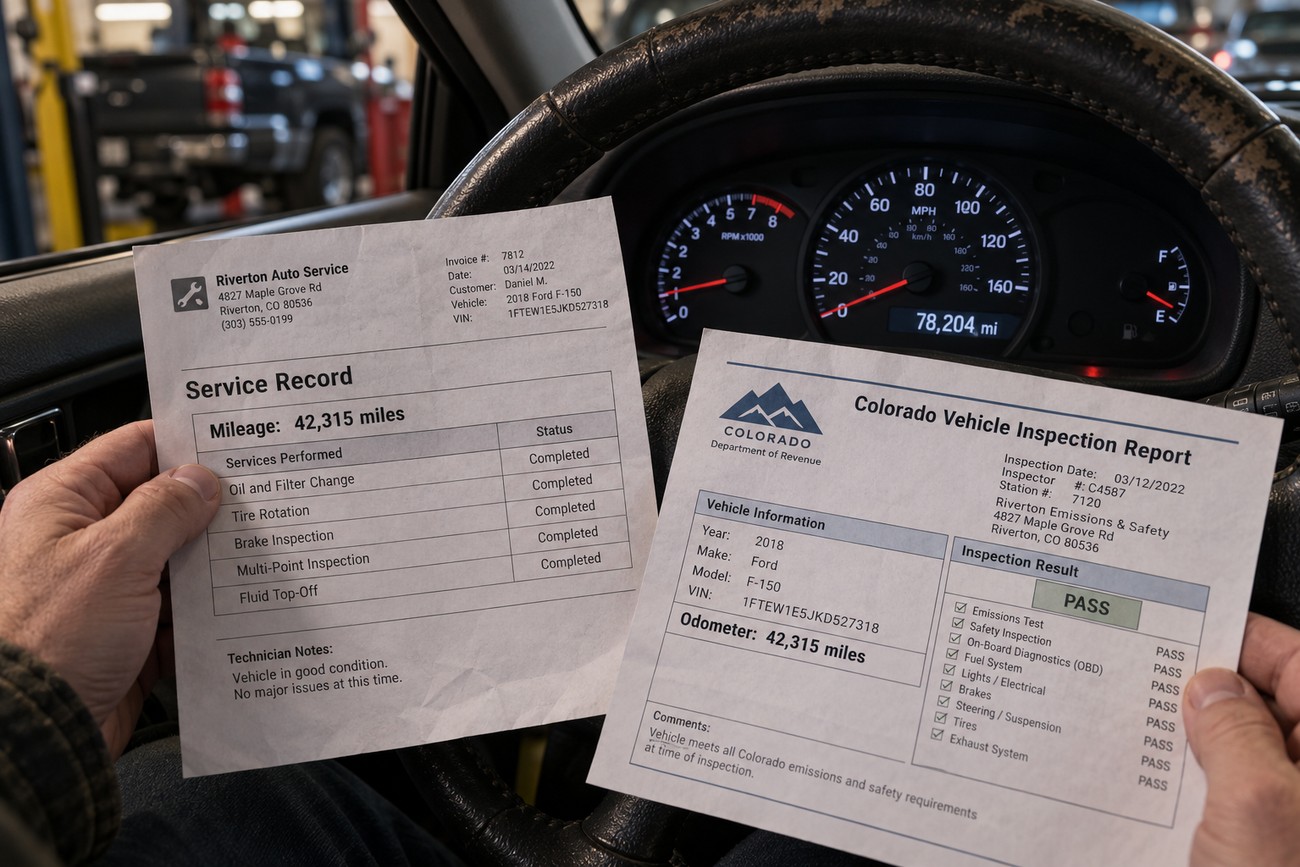
NHTSA defines odometer tampering as disconnecting, resetting, or altering an odometer with intent to change its mileage reading. Odometer fraud causes more than $1 billion in estimated harm annually in the United States. The risk matters because a low displayed mileage can raise the vehicle’s price while concealing maintenance needs and accumulated wear.
At vehicle transfer, the seller must disclose the mileage in writing on the title; unknown or incorrect mileage must also be identified. Compare the dashboard reading with earlier titles, service invoices, oil-change stickers, inspection records, and registration entries. A seller’s statement that the mileage is unknown does not legalize concealment: the unknown status must be disclosed in writing.
Physical evidence can expose a contradiction. Look at the steering wheel, pedals, driver’s seat, seat belts, switches, and other frequently touched controls, then compare their wear with the claimed mileage. A vehicle showing under 20,000 miles may commonly be expected to have original tires, but this is only an indicator mentioned by NHTSA, not a universal rule for every model or operating condition.
Uneven, misaligned, or wavering digits on a mechanical odometer can indicate tampering, and NHTSA advises walking away after such a finding. Digital displays deserve the same scrutiny: there is no universal federal standard establishing that digital odometers are completely tamper-proof. A discrepancy among records, dashboard data, and vehicle modules is a reason to stop until a qualified inspector explains it in writing.
Do Not Treat a History Report as a Condition Guarantee
VIN-history data can help identify mileage discrepancies, crash records, repair entries, and title status. Free vehicle-history information is available through vehiclehistory.gov, while expanded reports are often paid. Use the report to find questions for the seller and inspector, rather than treating it as a certificate that the car is mechanically sound.
History reports depend on received records and may miss uninsured crashes, minor repairs, and accidents without an insurance claim. A “clean” result therefore means that the available data contains no reported issue of that type. It does not establish that every panel is original, every repair was properly completed, or the vehicle has never been damaged.
A proper pre-purchase scan compares mileage and fault data across several control modules instead of trusting the dashboard alone. A mismatch may point to a replaced module, a recording error, or manipulation that requires document-level investigation.
Arrange an independent inspection with no financial connection to the seller. It should include diagnostic scanning and comparison of dashboard mileage with mileage or data stored in other vehicle modules, plus checks for structural repairs, warning lights, fluid leaks, brakes, tires, and underbody. damage. The inspector’s written findings give you a clearer basis for renegotiation or withdrawal.
Inspection findings should also fit the claimed use of the vehicle. Excessive wear on the steering wheel, pedals, seat, belts, or controls can conflict with a low-mileage story even when the report looks clean. If the seller refuses an independent inspection, the refusal itself is sufficient reason to end negotiations.
Protect the Money, Contract, and Final Price
Release money only after checking the seller’s identity, ownership rights, title, VIN, inspection results, and ability to register the vehicle legally. For a private sale, completing payment at a bank or DMV/registration office is safer than paying an unknown seller in a parking lot or by an irreversible transfer. Use a traceable payment method and keep the receipt, signed documents, and confirmation of funds.
Put every material promise in the written contract. That includes a warranty, return period, promised repair, included equipment, and the exact condition of the title. Spoken promises about a warranty, return, or repair have little practical value if they are absent from the written contract, especially after the seller becomes difficult to contact.
Dealers may present a vehicle price and add charges later in the process. Review the complete written price for preparation, paint protection, alarms, extended warranties, and financial services. Ask which items are optional, remove unwanted additions before signing, and compare the final amount with the figure used in your financing documents.
Know When to Walk Away and What to Do Next
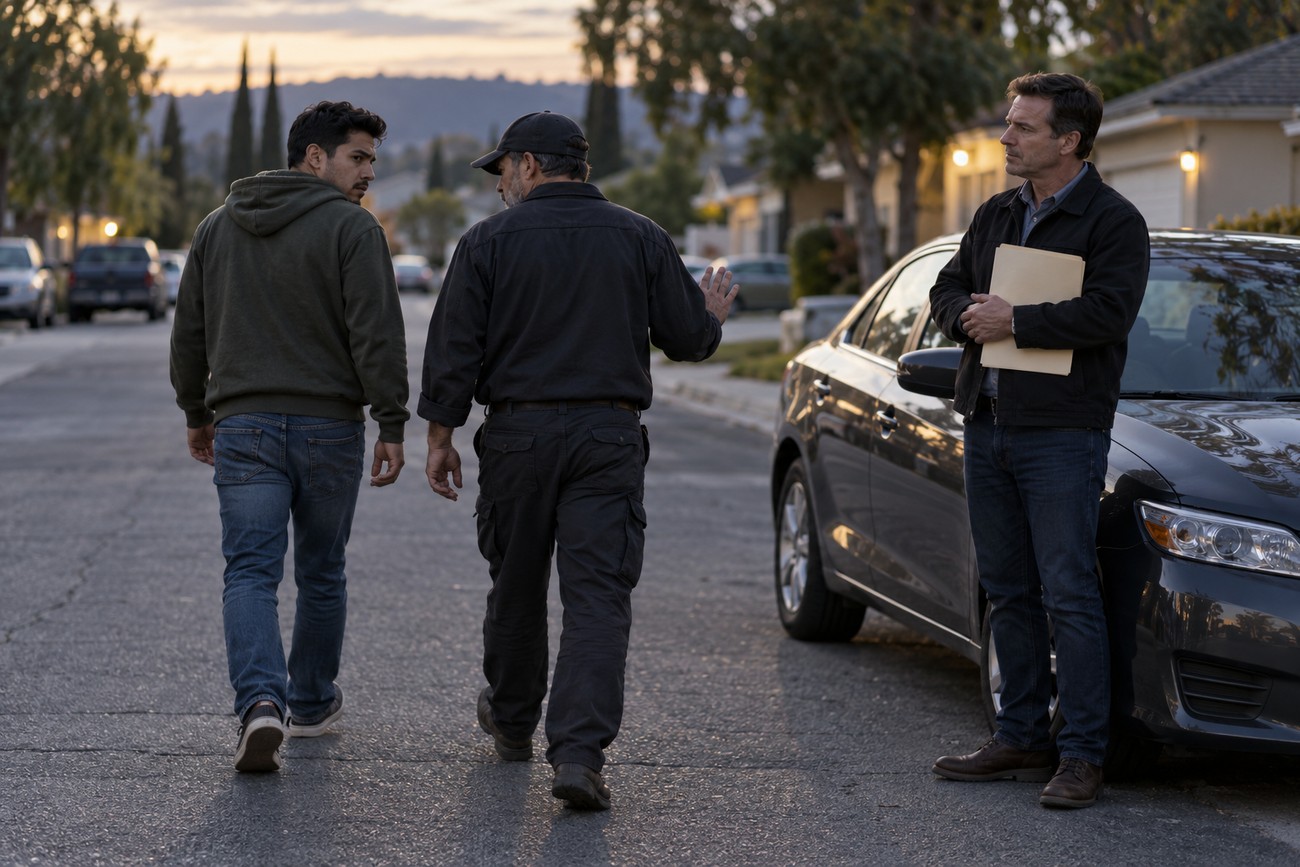
Use a simple decision rule: stop when the seller blocks VIN or title verification, documents conflict, the vehicle cannot be registered, or an independent inspection contradicts the sales story. A refusal to provide documents or allow inspection is enough to end negotiations. A good-looking car is replaceable; money sent into an untraceable dispute may not be.
Preserve the listing, screenshots, messages, VIN reports, title images, inspection results, invoices, and payment evidence. Record the seller’s identity and the dates of important statements. If the transaction has already occurred, contact the registration authority, payment provider, insurer, and an appropriate consumer or legal service promptly, since available procedures vary by jurisdiction.
For intentional odometer fraud, federal U. S. remedies may include $1,500 or three times the damages, whichever is greater; state remedies and the requirements for proving intent vary. That possibility is not a guaranteed recovery. Complete records give a consumer adviser or attorney a stronger basis to assess the facts and available options.
Frequently asked questions
These questions address informal advice and common transaction patterns. They do not replace the title, inspection, payment, and registration checks required for a particular vehicle.
What is the $3,000 rule for cars?
The “$3,000 rule” is an informal budgeting or repair-decision heuristic, not a legal scam threshold or universal mechanical standard. People may use it to compare a repair bill with a vehicle’s value, but the amount says nothing by itself about title validity, odometer accuracy, or hidden structural damage.
Use the rule only as a prompt to investigate costs. Obtain an independent inspection, confirm the title and VIN, and estimate maintenance that is due soon. A vehicle below or above that informal figure can still be a bad purchase if its ownership cannot be transferred legally.
What are five common car scams buyers still encounter?
Five practical warning categories are odometer rollback, a fake or incomplete title, deposit-before-inspection fraud, hidden dealer add-ons, and payment fraud. These are categories rather than an official ranking, and a single warning sign does not prove that a seller is dishonest.
The common thread is the removal of independent verification or a reliable transaction record. Check documents before paying, insist on a written total, use traceable funds, and leave when the seller creates pressure that prevents those checks.
How can I sell my car without being scammed?
Verify cleared funds before releasing the vehicle, keys, or signed title. Meet in a controlled location such as a bank or registration office, confirm the buyer’s identity, and avoid accepting payment that can be reversed or disputed after handover without understanding the risk.
Document the transfer with a signed bill of sale, accurate mileage, vehicle condition, date, and copies of the required paperwork. Complete any notice-of-sale or registration steps required in your jurisdiction, and keep records until the ownership change is confirmed.
What should you not tell a car dealer?
A buyer should avoid volunteering a maximum total budget, preferred monthly payment, or urgency before receiving a complete written price. Revealing those details too early can shift the discussion toward a payment target while fees, financing charges, and optional products remain unclear.
Ask first for the vehicle price, required fees, taxes, financing terms, and optional additions in writing. You can negotiate from the complete total, then decide whether the payment and vehicle fit your budget without giving the dealer a higher figure to work toward.