
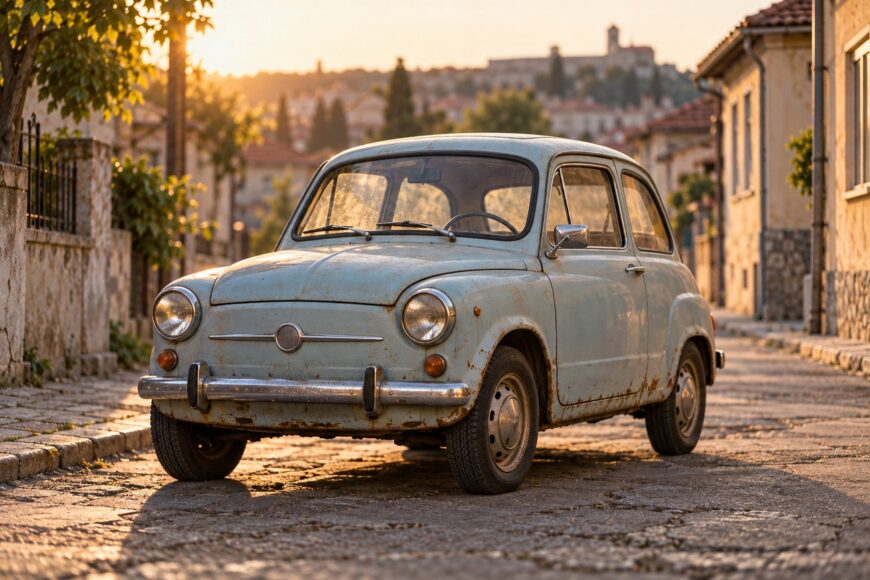
The Zastava 750 was Yugoslavia’s beloved small car: compact, affordable, easy to place on a crowded street, and familiar enough to become part of everyday life. That affection still shapes the market today, where a tidy example can look like an inexpensive route into classic-car ownership.
The mechanical story is more complicated. This licensed Yugoslavian version of the Fiat 600 was produced by Zastava in Kragujevac from 1962 to the early 1980s, but its electrical equipment, body panels, trim, and build details were not interchangeable with every Fiat part. Rust, overheating, weak brakes, poor lighting, and scarce original trim can turn a charming purchase into a demanding workshop project.
- What the Zastava 750 Actually Was
- Zastava 750 Specifications: The Numbers That Matter
- How It Drives—and Why Modern Roads Expose Its Limits
- The Real Ownership Problems: Rust, Heat and Electrics
- Buying One: The Inspection Order That Prevents an Expensive Mistake
- Making a Zastava 750 Usable Without Erasing Its Character
- Fiat 600 Myths, Collector Value and the Daily-Driver Question
- Frequently asked questions
- How can you tell whether a restored Zastava 750 is structurally sound?
- What should a buyer budget for when sourcing missing Zastava-specific parts?
What the Zastava 750 Actually Was
The Zastava 750 began as a licensed Fiat 600 derivative built by Zastava in Kragujevac, Yugoslavia. Production ran from 1962 to the early 1980s, during which the car became familiar across Yugoslavian towns and cities. Its small dimensions suited narrow streets, limited parking, and modest household budgets.
The range included the 750, 750L, and 850 variants. Those names matter to buyers because specifications, trim, and parts can vary between cars, while sellers sometimes use “750” as a broad label for several related versions. Confirming the exact variant from the documents, identification plates, and car itself is safer than relying on an advertisement title.
Cultural importance came from availability as much as engineering. The Zastava 750 gave many families access to personal transport and remained visible for years after newer cars arrived. Its rear-engine layout, small footprint, and recognizable shape now carry strong nostalgic value, although nostalgia can distract from the structural and mechanical work a surviving example may need.
Its historical status needs careful wording. Some sources call it Yugoslavia’s most mass-produced passenger car, while others give that distinction, or greater influence, to the later Zastava 101/Skala. Either way, the 750 was a major part of Yugoslavian motoring history; the exact “most numerous” claim depends on how production and model families are counted.
Zastava 750 Specifications: The Numbers That Matter
The Zastava 750 uses a rear-mounted inline four-cylinder engine driving the rear wheels through a four-speed manual transmission. Its base engine displacement is 767 cc, with approximately 25–27 hp. At approximately 600–650 kg, the car feels responsive at urban speeds, although its short wheelbase and limited power leave little reserve on faster roads.
| Item | Factory-style specification or claim | Ownership context |
|---|---|---|
| Engine | Rear-mounted inline four-cylinder | The cooling system requires careful ventilation and cooling-flap adjustment |
| Displacement | 767 cc base engine | Small capacity makes tuning and maintenance important for stable running |
| Power | Approximately 25–27 hp | Suitable for modest urban use, with limited reserve in modern traffic |
| Top speed | Approximately 100–110 km/h claimed | Higher-speed driving can feel nervous and exposes the car’s safety and braking limits |
| Transmission and drive | Four-speed manual transmission, rear-wheel drive | Simple mechanical layout with a cable-operated clutch |
| Mass | Approximately 600–650 kg | Low mass helps maneuverability but can be a disadvantage in collisions with heavier vehicles |
| Brakes | Drum brakes all around, without a brake booster | Require correct adjustment, sound drums, and generous stopping distances |
| Fuel consumption | 5–7 L/100 km claimed | Commonly 7–9 L/100 km in modern real-world use |
The claimed fuel figure is easy to misuse in a sales listing. Period claims of 5–7 L/100 km do not describe every modern journey, especially one involving traffic, imperfect tuning, short trips, or a worn carburetor. Owners commonly report 7–9 L/100 km in modern real-world use, so a buyer should judge fuel economy alongside mechanical condition rather than treating the lowest figure as guaranteed.
The engine’s cooling system deserves more attention than its small displacement suggests. It depends on correct ventilation and cooling-flap adjustment, and a neglected system can overheat in slow traffic. The car is light and mechanically straightforward, but that simplicity rewards regular adjustment rather than attention only after a fault appears.
How It Drives—and Why Modern Roads Expose Its Limits
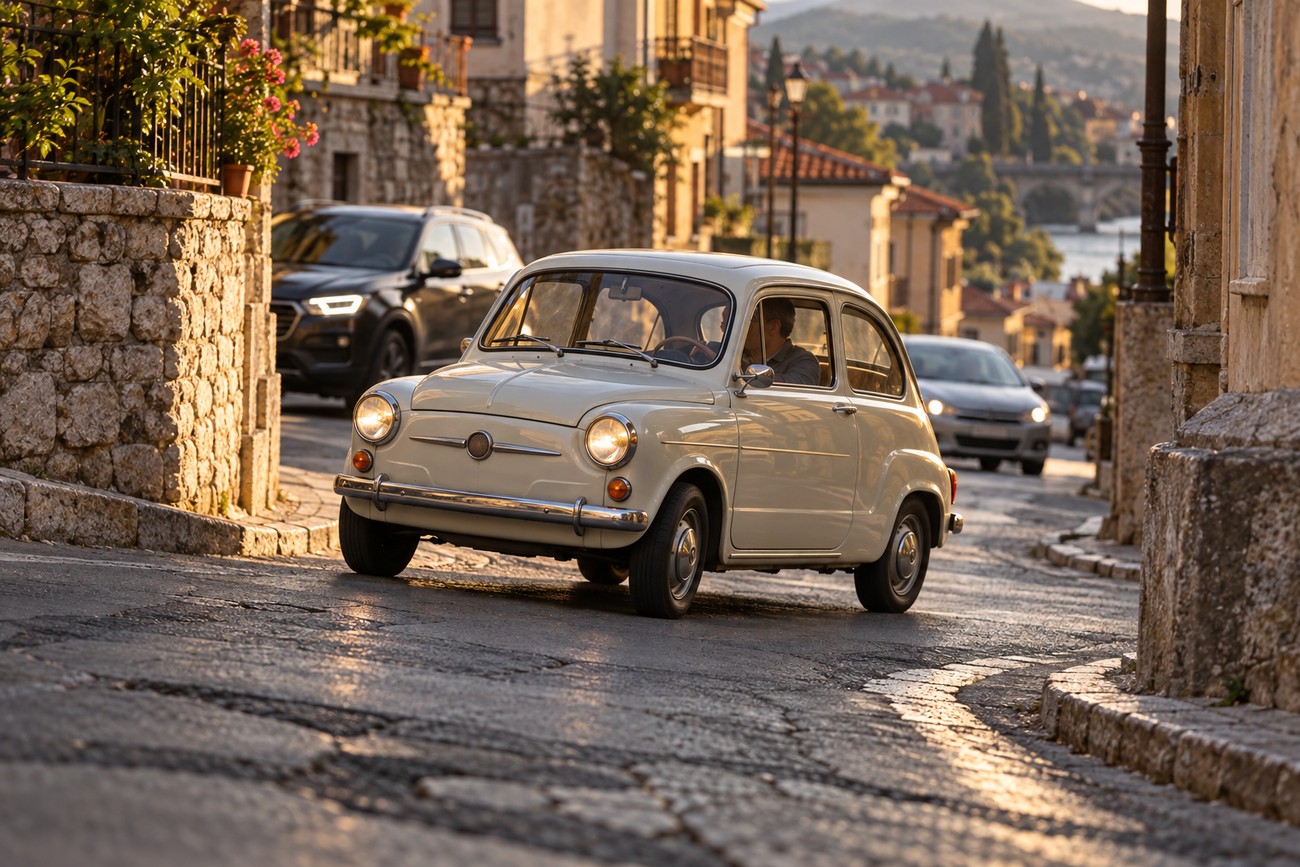
At city speeds, the Zastava 750 is easy to place and enjoyable to maneuver. Its compact dimensions and short wheelbase make tight streets, small parking spaces, and narrow turns feel natural. Steering effort and low weight add to its nimble feel.
The same short wheelbase contributes to nervous behavior at higher speeds. The car can feel busy on uneven pavement, and modern traffic leaves little room for its modest acceleration. Noise and vibration are also substantially higher than in a contemporary car, so a short demonstration drive may understate the fatigue of a longer journey.
Drum brakes on all four wheels, without a brake booster, demand a sound and correctly adjusted system. Oval drums, worn shoes, contaminated linings, or uneven adjustment can make the car pull or stop inconsistently. The brakes can work acceptably when maintained, but they do not offer the margin, pedal assistance, or repeated-stop confidence expected from a modern vehicle.
Factory lighting is weak by current standards, and night driving without a sensible lighting upgrade can be tiring and potentially unsafe. Suspension travel is modest, while modern potholes and tall curbs can damage components, especially on cars fitted with stiffer aftermarket parts. Thin structure and little front-impact protection complete the picture: competence in period traffic does not equal modern-traffic capability.
The Real Ownership Problems: Rust, Heat and Electrics
Structural corrosion is the first serious ownership problem because it can be hidden beneath attractive paint. Inspect the sills, floors, lower door edges, and rear wings, then follow the metal into mounting areas and seams. Rust in these locations affects more than appearance; it can weaken the structure and make restoration substantially more expensive.
Overheating is another recurring complaint, particularly in summer traffic or during slow running. The cooling system requires careful ventilation, and the cooling flaps must operate correctly. A car that behaves well on a short open-road drive may still run hot in a queue, where heat management faces a tougher test.
Electrical faults commonly involve poor grounds, aging contacts, unstable lighting, and unreliable instruments. The symptoms can move around: a lamp works after the harness is disturbed, a gauge changes behavior with engine vibration, or a connection fails only when the car is hot. Checking grounds and tracing the wiring methodically is usually more useful than replacing components at random.
Original body panels, chrome, interior pieces, and emblems are harder to source than many mechanical parts. Most mechanical parts are broadly compatible with Fiat 600 components, while electrical equipment and some body panels and trim are specific to the Yugoslavian car. That difference explains why a running project can be relatively manageable while a complete, accurate restoration becomes a search for used parts, careful repairs, or handmade replacements.
Buying One: The Inspection Order That Prevents an Expensive Mistake
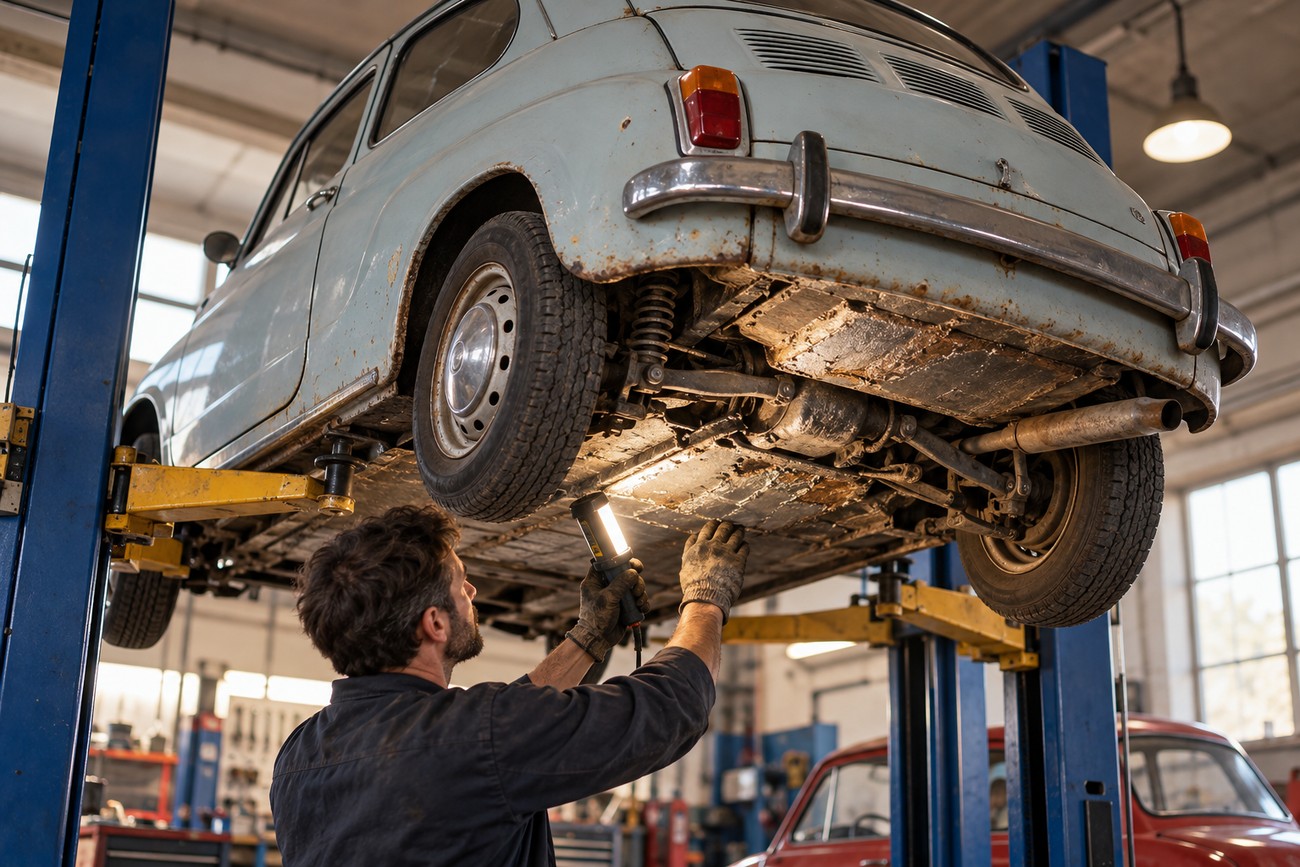
Start with structure before paint, upholstery, or engine sound. Look at the factory welds, original mounting points, floor sections, sills, and areas where suspension or body loads are transferred. A car with honest faded paint can be a better foundation than a bright example whose repairs have concealed distorted metal or extensive filler.
Ask the seller to show the underside in daylight and provide photographs taken before paintwork where possible. Check whether repairs follow the original seams and mounting points, or whether flat patches have been laid over weakened metal. Fresh paint proves that the surface was changed; it does not prove that internal corrosion has stopped.
Once the structure is credible, test the brakes, clutch, gearbox, steering, and suspension. Confirm that the brake pedal feels consistent, the car does not pull under braking, and the clutch cable operates smoothly. Then check how the engine runs when warm, because a cold start alone cannot reveal how it behaves in traffic.
Electrical checks should include every lamp, the instruments, charging behavior, and the main grounds. Trace faults rather than assuming that a replacement bulb or gauge has solved them. Mechanical compatibility with Fiat 600 components helps with many repairs, but it does not remove the difficulty of finding Zastava-specific electrical parts, body panels, chrome, or trim.
Budget for the car you can verify, not the car the seller’s paint suggests. A seemingly minor corrosion problem can conceal extensive structural rust, and restoration work becomes harder after the body has been cosmetically finished. Checking geometry and metal first helps avoid paying for a beautiful shell that still needs major welding.
Making a Zastava 750 Usable Without Erasing Its Character
Reliability work should begin with the fundamentals. Regular valve, carburetor, and ignition adjustment is essential to stable running, especially on an engine where small changes in setup can affect starting, idle quality, and fuel consumption. A carefully tuned original engine is usually a better starting point than a collection of unverified modifications.
Electrical improvements can be discreet. Cleaned connections, sound grounds, and additional wiring between key electrical points can improve lighting, instruments, and starting reliability without changing the car’s appearance. The work should be protected from moisture and routed properly; loose extra wires can create new faults instead of solving old ones.
Cooling deserves equal priority. Check the ventilation path, cooling-flap operation, seals, and relevant components before relying on the car in summer traffic. Lighting upgrades are also worthwhile for drivers who use the car after dark, provided the installation preserves proper beam control and does not overload the original wiring.
Later Zastava or Fiat brake components may improve braking where a compatible, properly engineered conversion is available. Such work requires correct matching of drums or other components, wheel clearance, hydraulics, and adjustment. These changes improve usability, but they do not turn the Zastava 750 into a modern daily driver; its structure, visibility, speed reserve, and collision protection remain products of an earlier era.
Fiat 600 Myths, Collector Value and the Daily-Driver Question
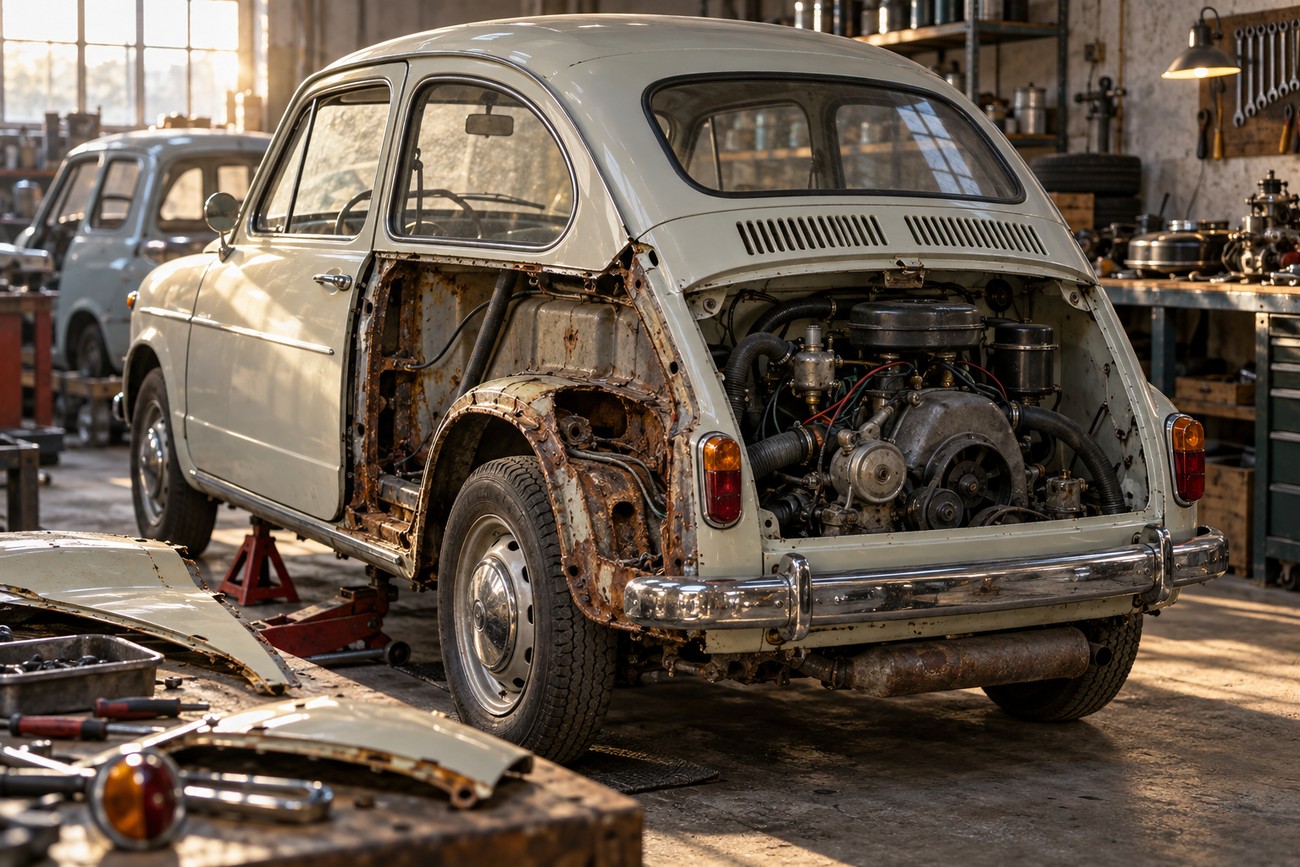
The most persistent parts myth is that every Zastava 750 component is interchangeable with a Fiat 600. Most mechanical parts are broadly compatible, which is useful when maintaining the drivetrain and running gear. Electrical equipment, some body panels, and trim can be specific to the Yugoslavian car, so a Fiat catalog or a familiar-looking part is not enough to prove it will fit.
Restoration also does not automatically remove reliability risks. New paint can cover corrosion that remains inside sills or structural members, and a rebuilt engine can still overheat if ventilation and cooling-flap adjustment are wrong. Assess a car by the quality of its metalwork, wiring, brake system, and cooling setup, rather than the freshness of its finish.
Collector appeal depends heavily on preserved original details. Badges, the instrument cluster, factory seats, correct trim, and documented ownership history can matter as much as technical condition to a buyer seeking an authentic example. Mechanical upgrades may make a car more usable, but irreversible cosmetic changes can reduce its appeal to someone who values originality.
The daily-driver claim needs qualification. A well-maintained Zastava 750 can cover local trips and provide an engaging classic-car experience, but modern daily driving usually requires meaningful brake, lighting, cooling, and safety improvements. Real-world fuel consumption is commonly 7–9 L/100 km, rather than an assumed 5 L/100 km, and the car’s limited passive safety remains the most important reason to choose routes and traffic conditions carefully.
Frequently asked questions
The two checks below address decisions that are easy to get wrong when a Zastava 750 looks attractive in photographs.
How can you tell whether a restored Zastava 750 is structurally sound?
Ask for evidence of the restoration before judging the paint. Useful material includes underside photographs taken before and after welding, invoices or work descriptions, and clear views of the sills, floors, mounting areas, rear wings, and lower door edges. The repairs should follow credible factory seams and retain original mounting points rather than relying on broad plates or thick filler.
Inspect the car on a lift if possible, checking for straight structure, consistent welds, fresh underseal applied over unknown metal, and signs that doors or panels were forced into alignment. A seller who can explain what was removed, cut out, and replaced gives you more useful information than one who only presents a polished exterior. Fresh paint is evidence of cosmetic work; it is not evidence that internal corrosion has been stopped.
What should a buyer budget for when sourcing missing Zastava-specific parts?
Separate the parts list into three groups before making an offer: mechanical items with broad Fiat 600 compatibility, Zastava-specific electrical equipment, and scarce body or trim pieces. The first group is generally easier to plan for. The other two may require used parts, repair of the original item, careful reproduction, or extended searching, particularly for chrome, emblems, interior pieces, and correct body panels.
Photograph every missing or damaged detail and identify the exact variant before buying replacements. A complete but imperfect set of original badges, seats, instruments, and trim may be more valuable than a mixture of attractive parts from different cars. Keep a separate contingency for bodywork, because scarce panels and structural repairs can consume more time and money than routine mechanical maintenance.







