
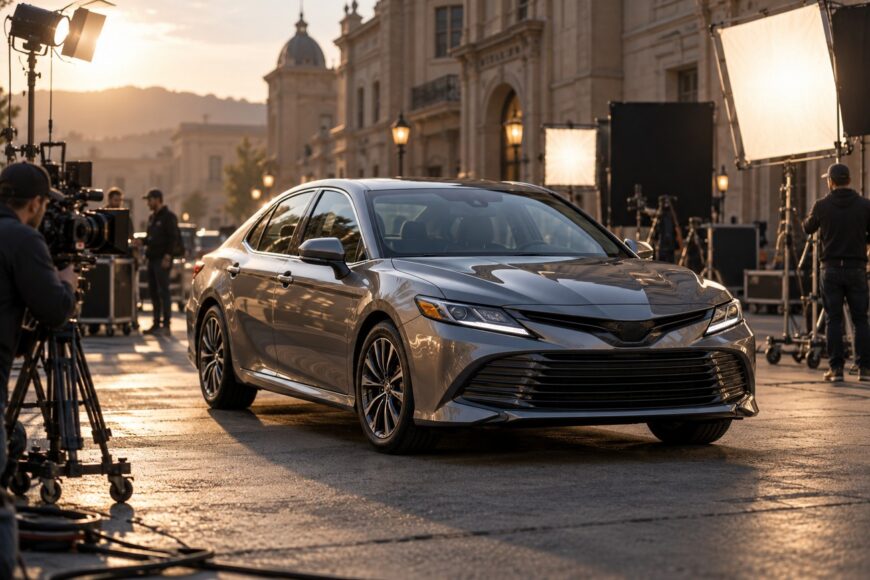
Seeing your own Toyota Camry in a Hollywood frame would be a peculiar kind of automotive victory. The car might cross the background of a city scene, sit outside a hotel, or carry a character whose job is explained by the vehicle before the script says a word. Recognition would come quickly, even if the camera moved on just as quickly.
That is the central tension with the Camry as a movie car. It is familiar, legible, and useful on screen, yet it appears more often as background traffic or a status signal than as a celebrated hero car with a famous individual example. The practical casting question therefore sits alongside a larger cultural one: what does a Camry say about its owner, its market, and the scene around it?
- Why the Toyota Camry Works So Well on Screen
- From Celica Camry to a Global Movie Car
- What “Cast in a Movie” Really Means for a Camry
- The Camry Performance Myth: Status Does Not Equal Speed
- Why the Business-Sedan Image Can Backfire
- How to Judge Whether Your Camry Could Be a Screen Car
- Frequently asked questions
- How can you tell which Camry generation appears in a movie scene?
- Who are the actors in the Toyota commercial?
- What’s the nicest Toyota Camry?
- Who is the actor in the new Toyota commercial?
- Who is the girl in the new Toyota commercial?
Why the Toyota Camry Works So Well on Screen
A Camry can communicate prosperity without demanding an explanation. Its size, formal shape, and business-sedan reputation suggest a character with stable finances, institutional access, or a respectable corporate position. The signal is immediate because viewers already know how to read the car.
The same visual shorthand works for official and administrative roles. A Camry can suggest a company executive, a government employee, a senior manager, or a professional who has moved beyond basic transportation. In Russian cinema, the model has become a recognizable cultural marker of prosperity, with associations that extend beyond the badge itself.
That readability is useful to a production because the car supports the scene without requiring dialogue. It can establish a social setting in a parking lot, a convoy, a business district, or a residential street. The vehicle does its work quietly, leaving the actors and plot in the foreground.
Familiarity also creates a limitation. A Camry is often associated with corporate fleets, taxis, and official use, so it can look ordinary when a scene calls for an exotic or deeply character-defining automobile. Its regular presence in Russian and foreign films and television usually makes it a secondary or background vehicle rather than a cult hero car.
From Celica Camry to a Global Movie Car
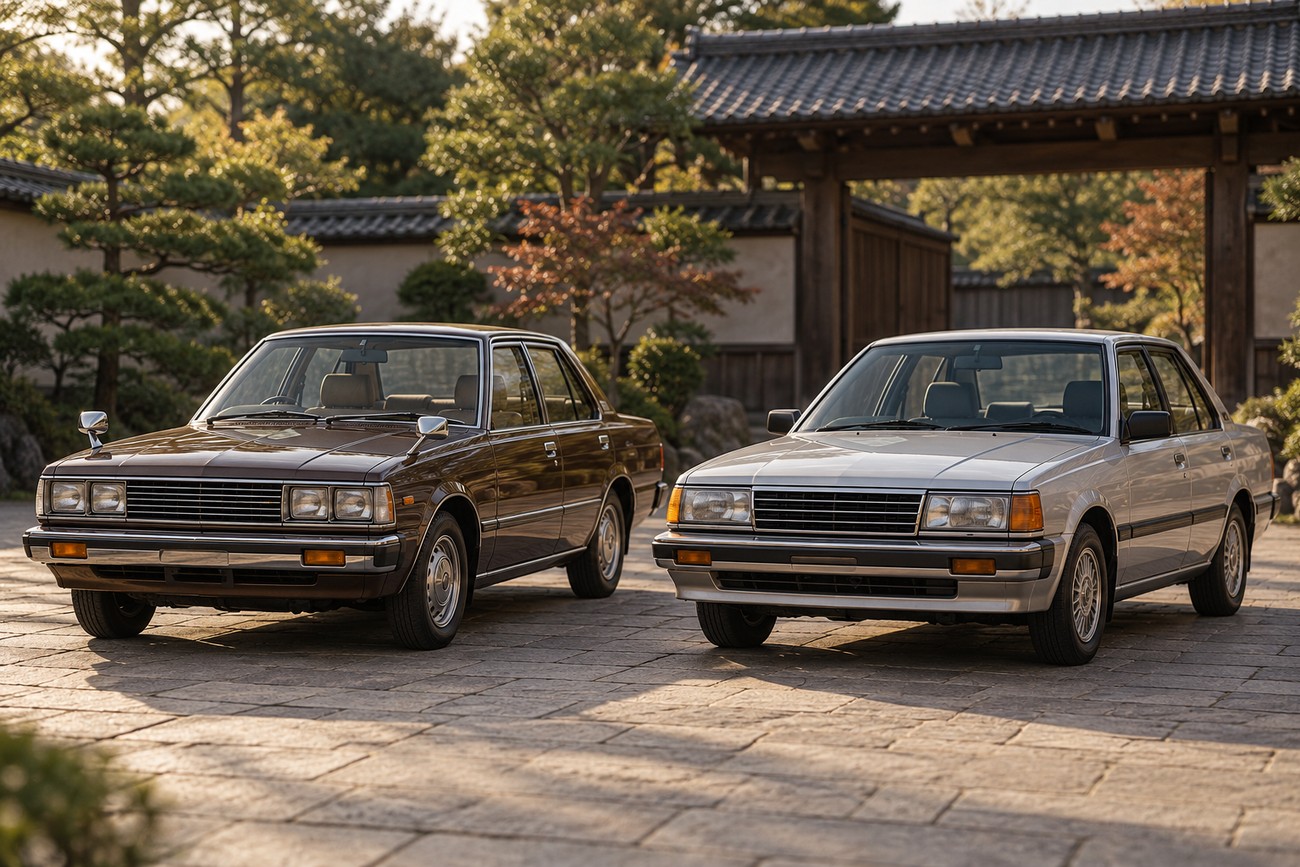
The Camry’s origin is often simplified incorrectly. The 1979 Camry Celica is a predecessor and part of the model’s prehistory, not the first standalone Camry. The Camry became a separate model in 1982, which is the more useful starting point for discussing its independent identity.
The distinction matters because the model did not retain one fixed character across every market and generation. Early Japanese versions followed a narrower domestic-market logic, while later international development gave the nameplate a broader physical and commercial role. Treating every Camry as the same car produces misleading conclusions about its screen image.
The XV10 was the first internationally oriented Camry. Compared with the narrow Japanese version, the XV10 was 75 mm wider and 180 mm longer, a substantial change that helped the model appear more substantial and adaptable to markets where rear-seat space and road presence mattered.
The Camry was sold and locally produced in Japan, the United States, and Australia. That production and market spread helps explain why the car can appear naturally in different cinematic environments: its availability was broad enough for it to function as ordinary local transport, business equipment, or a recognizable middle-to-upper-market sedan.
What “Cast in a Movie” Really Means for a Camry
A model can have a strong screen presence without one specific car becoming famous. The Camry appears regularly in Russian and foreign films and television, yet most appearances serve the scene rather than the vehicle. The audience may remember a tense meeting, a city drive, or a character’s social position instead of the exact Camry involved.
This is different from a hero car whose color, trim, modifications, and mechanical identity become part of the story. A featured vehicle receives deliberate camera attention and continuity importance. A passing Camry may be selected because it fits the period, location, and social setting, then disappear before viewers have time to identify its generation.
Some authors describe the Camry as one of the more noticeable cars in Russian cinema, but this is an authorial assessment rather than a formal ranking. The stronger and safer claim is that the model is culturally visible: it recurs often enough to carry meaning, even when no single example dominates public memory.
That distinction is useful for owners. Seeing a Camry in a movie does not prove that a particular trim, owner, or example is famous. It shows that the model has a dependable visual vocabulary, one that filmmakers can use for status, routine authority, or everyday realism.
The Camry Performance Myth: Status Does Not Equal Speed
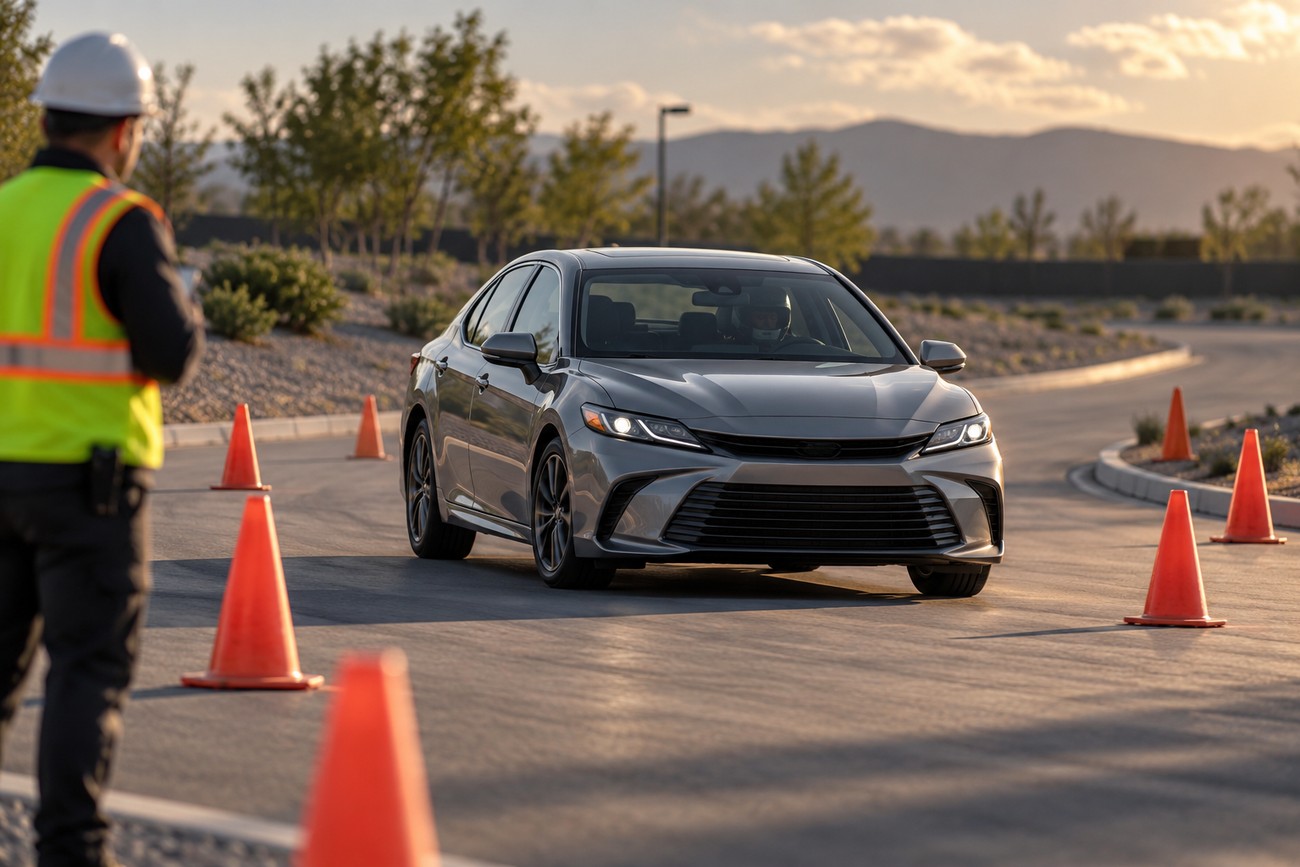
The Camry’s business-sedan image can create expectations that its driving character does not always meet. Owners and enthusiasts commonly criticize base versions for modest acceleration and unexciting handling. The car’s reputation is built more on predictable, relaxed travel than on dramatic responses.
More powerful versions complicate that judgment. Some modern Camry versions use a 2.5-liter engine producing 200 hp, while the V6 in the GR Sport specification produces 249 hp. Those figures show that the range includes stronger mechanical options, although they do not change the broader public image of the nameplate.
A higher-output Camry can improve overtaking confidence and make highway driving less strained. It still carries the same visual and cultural associations, and its chassis tuning and presentation remain connected to the model’s mainstream role. Extra power can sharpen the experience without turning the sedan into a sports car.
This matters on screen because visual status and driving drama are separate tools. A Camry can make a character look established before it makes a scene look fast. If the production needs a chase vehicle or an obviously aggressive machine, the model’s calm reputation may work against the intended effect.
Why the Business-Sedan Image Can Backfire
The Camry’s familiarity makes its status signal easy to understand, yet that same familiarity can make the car feel corporate, taxi-like, or clichéd. In markets where it is common in company fleets or official service, the badge may suggest routine transportation more strongly than personal ambition.
The business-sedan label can also raise expectations for premium materials, isolation, and driving feel. A buyer or viewer expecting a luxury experience may find a mass-market car with a formal image rather than a fully premium one. The gap becomes especially visible when the scene uses the Camry as shorthand for wealth without giving the vehicle a setting that reinforces that reading.
Generation and market context are essential before judging an on-screen example. Different Camry generations and markets varied in platform, drivetrain, dimensions, and character. A Japanese-market car, an American-market car, and an Australian-market car may share a name while presenting different proportions and different assumptions about how the vehicle is used.
Popularity can therefore weaken the signal outside its original context. A Camry that communicates influence in one scene may look banal in another, particularly if the surrounding setting contains many similar sedans. The car needs the right location, character, and production design to turn familiarity into meaning.
How to Judge Whether Your Camry Could Be a Screen Car
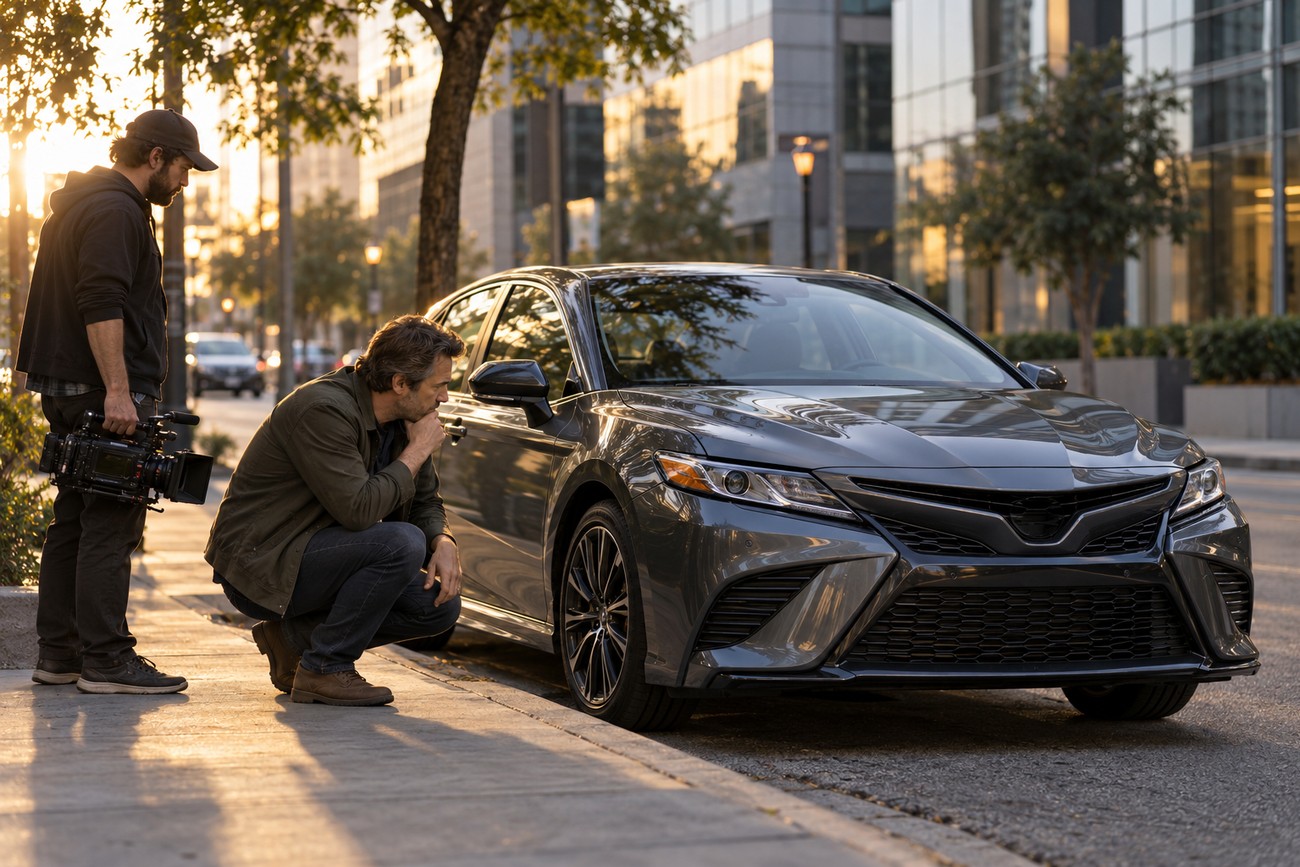
A production vehicle first needs to fit a visual role. A Camry may work as a senior employee’s transport, an official sedan, family background traffic, or a parked car that establishes a business district. Its recognizability can help a production communicate status or institutional identity quickly, provided the surrounding scene supports that interpretation.
Period and market accuracy come before personal attachment. Check whether the body style existed by the scene date, whether its dimensions and lighting equipment match the intended market, and whether the trim looks plausible for the character. A car that is mechanically excellent can still be wrong for the production if its generation or specification breaks continuity.
Condition also affects suitability. Exterior damage, mismatched panels, unusual accessories, or highly personalized modifications may draw attention away from the scene. A clean, visually coherent example is easier to place when the role calls for credible transport rather than a vehicle with its own narrative identity.
Finally, separate a usable production vehicle from a hero car. A specific Camry may function as scene-setting transport even when the model itself is not narratively important. Screen presence should never be confused with proof that one particular trim, owner, or example is famous, and no owner can assume that a recognizable car guarantees a Hollywood booking.
Frequently asked questions
The Camry’s screen identity depends on context, production choices, and the specific vehicle. These answers focus on practical identification and ownership questions rather than treating every appearance as an automotive celebrity.
How can you tell which Camry generation appears in a movie scene?
Start with the scene date and market context, then compare body proportions rather than relying on a vague visual guess. Roofline, rear-quarter shape, grille treatment, window proportions, wheelbase impression, and the relationship between hood and cabin can narrow the generation. A narrow-looking car may point toward a domestic-market version, while a visibly wider and longer body, compared with the contemporary narrow Japanese version, can support an XV10 identification.
Use multiple frames if available, including parked shots and rear views. License-plate format, traffic direction, road markings, and the local vehicle mix can identify the market, while the film’s stated period can eliminate later generations. Badges and trim details should confirm the conclusion, not replace the broader visual comparison.
Who are the actors in the Toyota commercial?
There is no single cast for “the Toyota commercial.” Toyota releases different advertisements by country, model, campaign, and broadcast period, so the actors cannot be identified accurately from that description alone.
A campaign title, air date, country, or link is needed for reliable identification. Commercial credits may also distinguish actors from athletes, influences, voice performers, or real customers, which makes a visual guess particularly unreliable.
What’s the nicest Toyota Camry?
The nicest Camry depends on whether you value power, equipment, rear-seat comfort, or a quieter ownership experience. Among the versions described here, a V6 GR Sport with 249 hp is the stronger choice for buyers who prioritize output, while a well-equipped 2.5-liter version producing 200 hp may better suit relaxed daily use.
Trim names and engines vary by market, so compare the actual local specification rather than relying on a global brochure. Inspect the car’s condition, service history, and equipment level as carefully as the badge; a higher trim does not automatically make every used example the better purchase.
Who is the actor in the new Toyota commercial?
No single actor is attached to every new Toyota commercial. The cast changes across markets and campaigns, and some advertisements use recognizable public figures while others rely on professional commercial performers.
Identify the exact commercial through its country, model, campaign name, or publication date before assigning a name. This avoids confusing a regional advertisement with a different campaign that happens to use the same Toyota logo or vehicle.
Who is the girl in the new Toyota commercial?
The “girl in the new Toyota commercial” cannot be identified reliably without the specific advertisement. Toyota runs multiple campaigns at the same time, and the same model may appear in different edits for different countries.
A screenshot, link, broadcast market, or description of the scene can narrow it down. Credits from the official campaign, agency, or production listing are stronger evidence than facial resemblance or unverified social media claims.







