
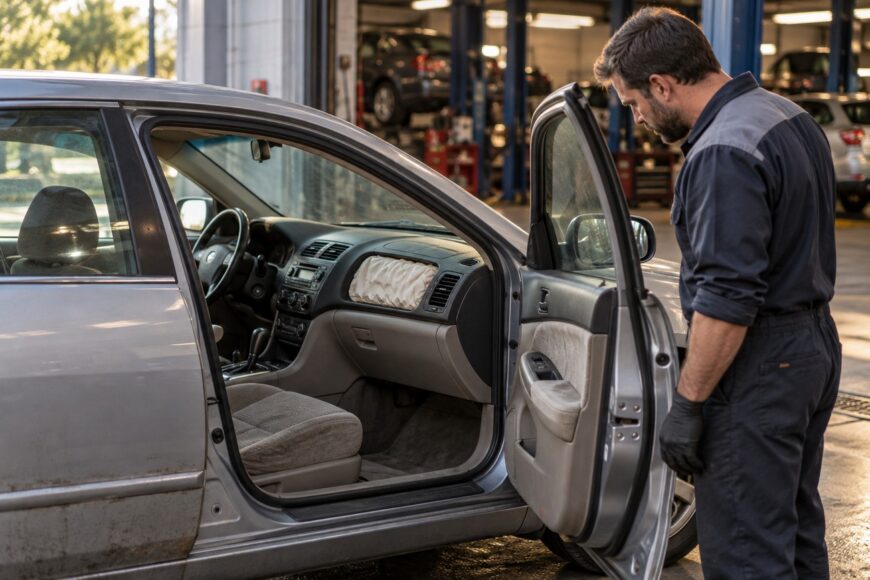
A 2005 Honda Accord can still have an unresolved Takata airbag, despite its age and normal SRS warning-light behavior. The model is associated with Takata recalls, yet that association does not establish the status of every car. A specific vehicle needs a full VIN check and a review of its actual repair history.
The central risk is relying on clues that cannot confirm the installed inflator. A dashboard light may operate normally while the original passenger inflator remains in place, and an old vehicle-history report may show an earlier repair without reflecting the current campaign status. Visual inspection alone is also unreliable, especially after a collision or interior replacement.
- Can a 2005 Honda Accord Still Have a Takata Airbag?
- What the Takata Recall Actually Covers on an Accord
- How to Check a 2005 Accord by VIN
- The Status Traps: SRS Lights, Crash Repairs, and Closed Recalls
- What to Do Before and During the Dealer Visit
- Buying or Selling a 2005 Accord With Takata History
- Frequently asked questions
- Which Honda Accord years were affected by the Takata airbag recall?
- What should I do if the dealer cannot provide the replacement part yet?
- What paperwork should I get after a Takata recall repair?
Can a 2005 Honda Accord Still Have a Takata Airbag?
Yes. Honda included Accord vehicles from the 2003–2007 model years in the affected range associated with the Takata recall. That range places a 2005 Honda Accord among the vehicles that require a VIN-specific check, although it does not mean every 2005 Accord has an open campaign or the same airbag configuration.
The primary concern is the passenger frontal airbag inflator. In the defect condition, excessive internal pressure can rupture the inflator housing when the airbag deploys. Metal fragments may then be ejected into the cabin, creating a serious injury hazard beyond the intended protection of the airbag.
Honda’s model-year range is a starting point, not a final diagnosis. Exact applicability depends on the full VIN, the vehicle’s market and body configuration, and the particular inflator covered by the campaign. Some Accord vehicles were first handled through regional campaigns and later included in broader national coverage.
A normal SRS indicator does not prove that the recall inflator has been replaced. The warning system may not identify an inflator that remains subject to a recall, while a light that stays on may point to a separate electrical or restraint-system fault. The official VIN result is the reliable way to establish whether recall work remains open.
What the Takata Recall Actually Covers on an Accord
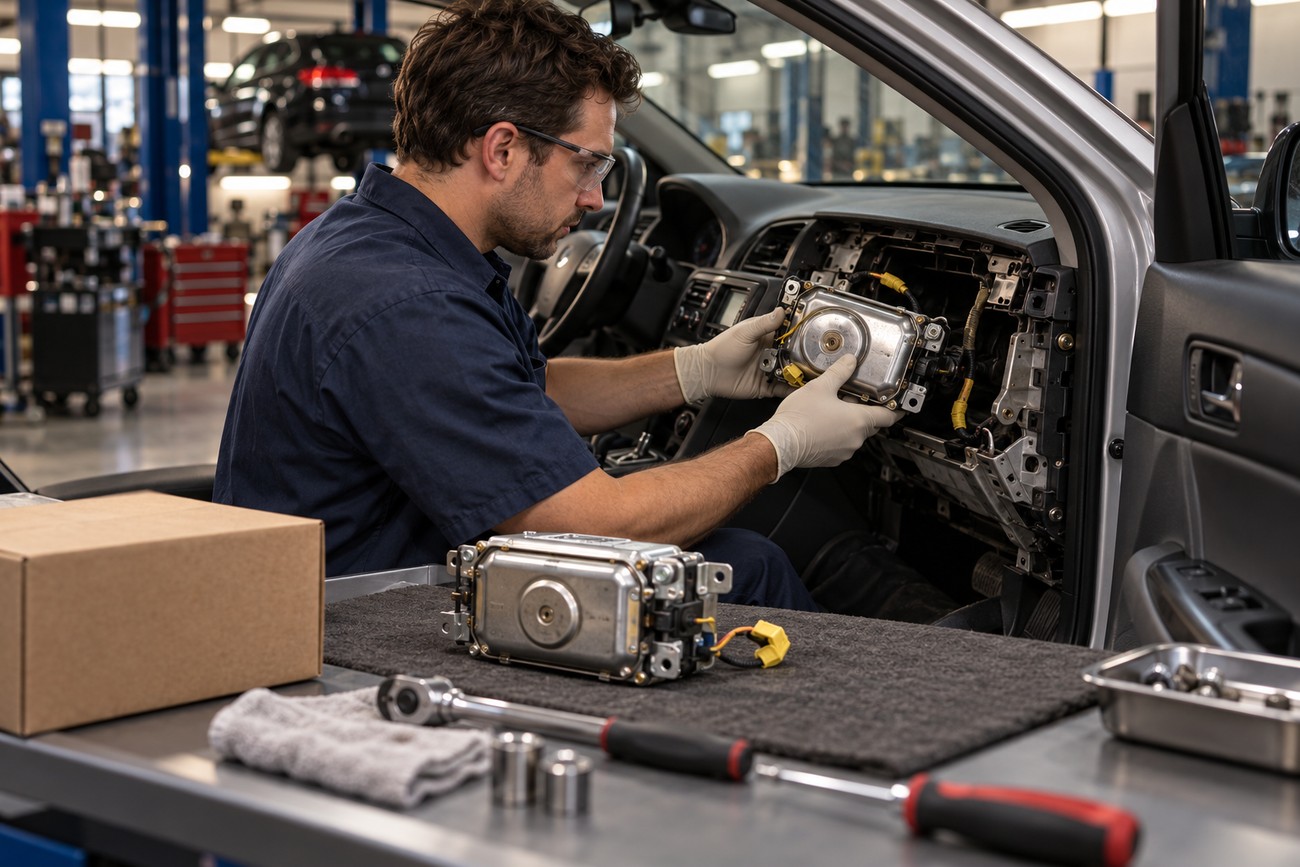
The Takata remedy usually concerns the specified passenger frontal airbag inflator. An authorized dealer generally replaces that inflator rather than automatically replacing the entire airbag module or restoring every part of the SRS. Recall repair is free through an authorized dealer when the VIN is covered.
Honda reported about 2.3 million inflators requiring replacement in the relevant 2015 campaign. About 915,000 inflators had already appeared in earlier campaigns. Those figures describe campaign populations, not the number of affected 2005 Honda Accords, so they should not be used to determine an individual vehicle’s status.
Coverage details can differ by campaign. Honda’s corresponding Accord coverage included the 2003–2007 model years, while exact body, market, and inflator limits were determined by the campaign and VIN. A generic page listing the Accord range cannot confirm that a specific trim or imported vehicle is included.
Completion of the inflator campaign also says little about other safety equipment. Seat belts, crash sensors, wiring, control units, and modules damaged or removed after a collision require separate inspection. A closed recall records campaign completion; it does not certify that the entire SRS is original, intact, or free of faults.
How to Check a 2005 Accord by VIN
Start with the full vehicle identification number, rather than the year, trim, registration state, or a generic model page. Enter it into the official recall lookup used for the vehicle’s market. A complete VIN is essential because the same model year can contain different campaign coverage and repair histories.
Keep the lookup result and compare it with records from an authorized Honda dealer. An old Carfax entry or similar history report can be incomplete, outdated, or unclear about whether a campaign was later opened, completed, or recorded correctly. A seller’s assurance has value only after it matches the current VIN record.
If the campaign is open, arrange the free dealer repair and ask what part is being ordered. Older vehicles may require the dealer to wait for replacement stock, and a public recall page does not confirm that a particular dealer has the part on hand. Ask the service department to document the open campaign and provide an update if delivery is delayed.
After the work, request written confirmation showing the VIN, campaign reference, repair date, dealer identification, and installed part number. This record helps distinguish a documented inflator replacement from a verbal statement. It also gives a future buyer or service technician a clearer starting point.
The Status Traps: SRS Lights, Crash Repairs, and Closed Recalls
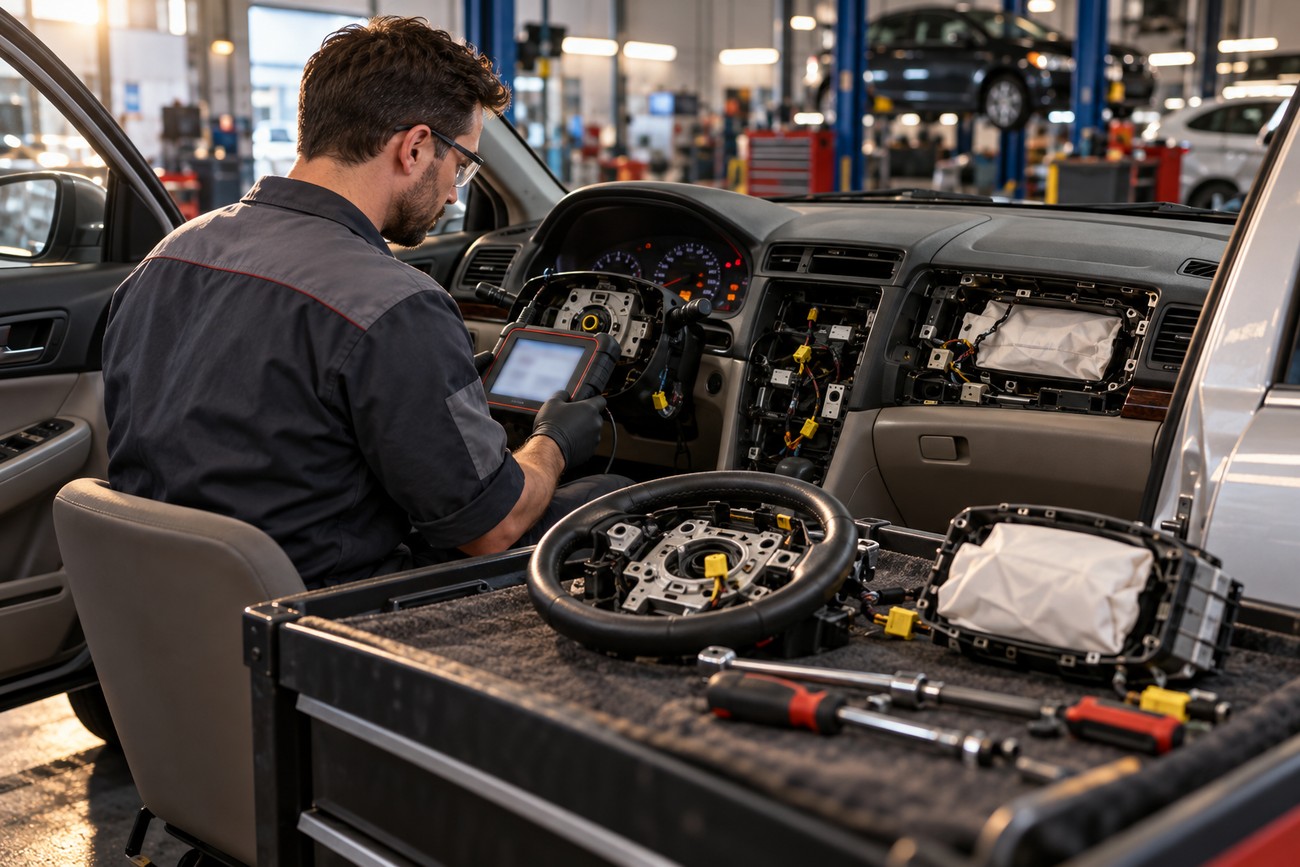
The SRS lamp is a system check, not proof that the Takata campaign has been completed. If the lamp illuminates briefly during startup and then goes out, that only shows that the indicator and part of its monitoring process are operating as expected. It does not identify which inflator is installed or whether it was replaced under the recall.
A closed recall can create a different misunderstanding. The record may reflect a completed campaign for the specified inflator while the vehicle later received a replacement steering wheel, dashboard, or airbag module after a crash. A module may also be missing, disconnected, or different from the factory-installed unit.
Technicians compare VIN campaign data with physical module identification and SRS diagnostics after a collision. A closed recall is useful evidence, yet it does not prove that the installed airbag is the original component or that the vehicle’s restraint system was rebuilt correctly.
Collision repairs deserve a separate inspection of the modules, wiring, sensors, control unit, and seat belts. The recall history is tied to the VIN and the specified inflator, while the physical condition of the car may have changed afterward. This is why an intact-looking dashboard cannot settle the question by itself.
An illuminated SRS indicator may signal an electrical or other restraint-system fault unrelated to the Takata campaign. The 2005 Accord is not automatically included in the cited NHTSA Do Not Drive list; that published Accord list includes 2001–2002 models. Even so, every 2005 Accord VIN still requires checking, and a vehicle with an active SRS fault should be assessed promptly.
What to Do Before and During the Dealer Visit
Prepare the VIN, the recall lookup result, and any collision or repair documents before booking service. Tell the dealer if the steering wheel, dashboard, seats, or other interior parts have been replaced. Nonstandard parts can affect access to the module and change the scope of the inspection.
Do not dismantle the airbag, unplug its connectors, or test the circuit with an ordinary multimeter. Airbag systems contain pyrotechnic components, and an improvised electrical test can create an avoidable deployment or damage risk. A used Takata airbag from a dismantler is not a substitute for official VIN verification and the approved recall remedy.
The dealer may need to diagnose a separate SRS code before, during, or after the recall repair. That diagnostic work can concern wiring, sensors, the control unit, or another restraint component and should not automatically be treated as part of the free inflator campaign. Ask the service adviser to separate recall work from unrelated paid repairs before authorizing additional work.
Parts availability can affect the appointment date. If the replacement is not immediately available, ask the dealer to record the open campaign, explain any driving restrictions that apply to that VIN, and provide a parts-order update. Keep every service document, including the final installed part number.
Buying or Selling a 2005 Accord With Takata History
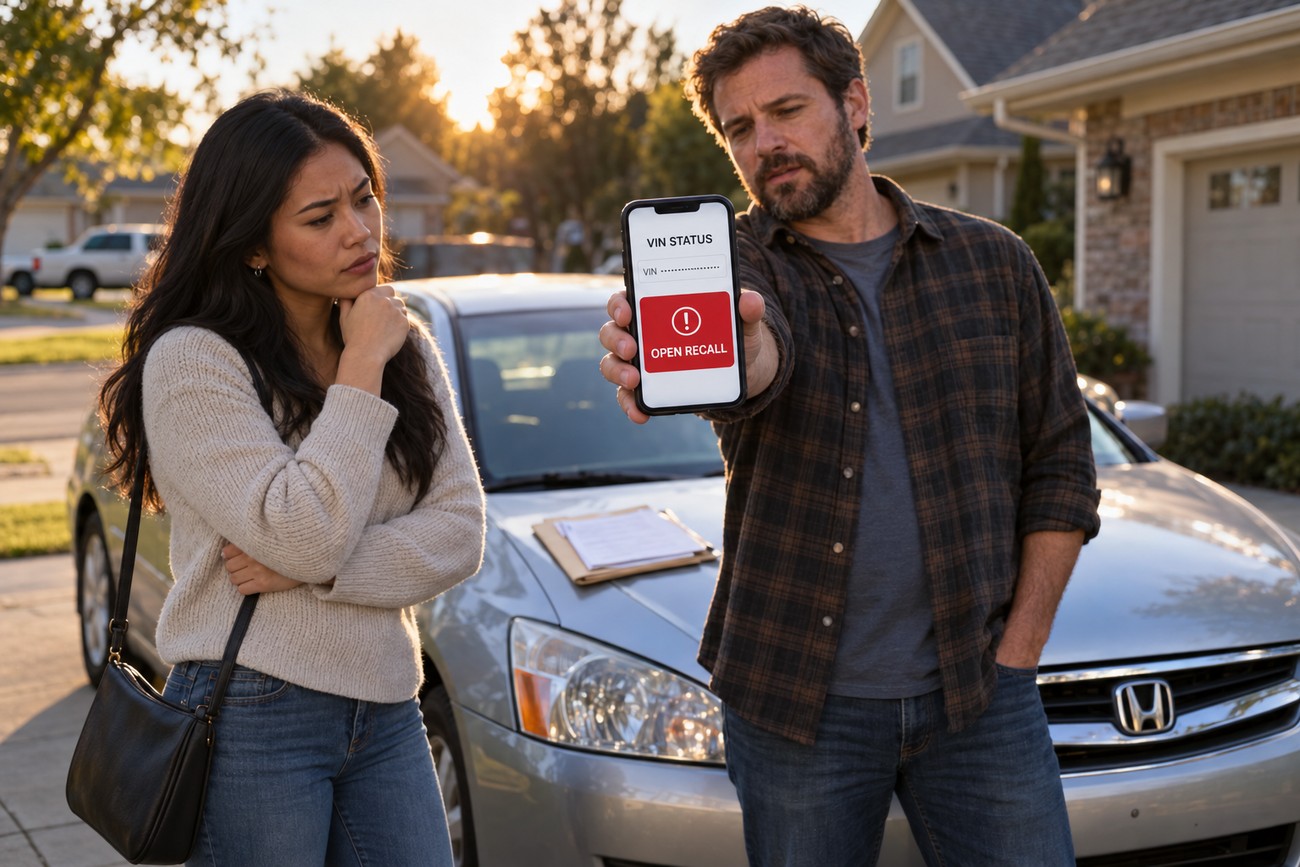
Owners often discover an open recall while preparing a car for sale, registration, or routine service. For a buyer, the seller’s statement and an old history report should lead to a current VIN lookup, not replace it. A 2005 Accord with an open Takata campaign needs prompt dealer verification regardless of how clean the interior looks.
Before completing a purchase, ask for the current recall result and written repair records. Check whether the vehicle has been in a collision, whether the steering wheel or dashboard was replaced, and whether the SRS lamp behaves correctly during startup. These checks address different risks: recall eligibility, physical repair quality, and current system faults.
A completed campaign improves the record for the specified inflator, yet it does not verify the belts, sensors, wiring, control unit, or unrelated SRS components. A post-crash vehicle may need a separate inspection even when the recall status is closed. This matters especially when the car has changed owners or crossed state or national borders.
Some owners worry that recall work will damage an old dashboard. That concern is a reason to document the vehicle’s condition before service and request written completion records. It is not a sound reason to leave an open safety campaign unresolved; the dealer should explain access issues and identify any separate condition found during the visit.
Frequently asked questions
The year range used in recall information can be useful for screening, while the VIN remains the basis for an individual decision. The following points address common gaps in model-level information and dealer records.
Which Honda Accord years were affected by the Takata airbag recall?
Honda’s commonly cited Accord range for the relevant coverage is the 2003–2007 model years. Exact eligibility still depends on the VIN, market, body configuration, campaign, and specified inflator. Some earlier Accord years appear in a separate NHTSA Do Not Drive list, including 2001–2002 models, and those limits should not be transferred automatically to a 2005 Accord.
What should I do if the dealer cannot provide the replacement part yet?
Ask the dealer to document the open campaign, confirm whether any driving restriction applies to that VIN, and provide a parts-order update. Keep the appointment or case reference and ask when the service department expects new information. If communication stalls, contact the manufacturer’s recall support channel and retain the VIN-specific lookup and dealer correspondence.
What paperwork should I get after a Takata recall repair?
Request a record showing the VIN, campaign reference, repair date, dealer identification, and installed part number. These details establish that the specified inflator was replaced and make the repair traceable during a future sale or service visit. Keep the document with the vehicle’s collision and maintenance history, since recall completion does not document the condition of other SRS components.







