
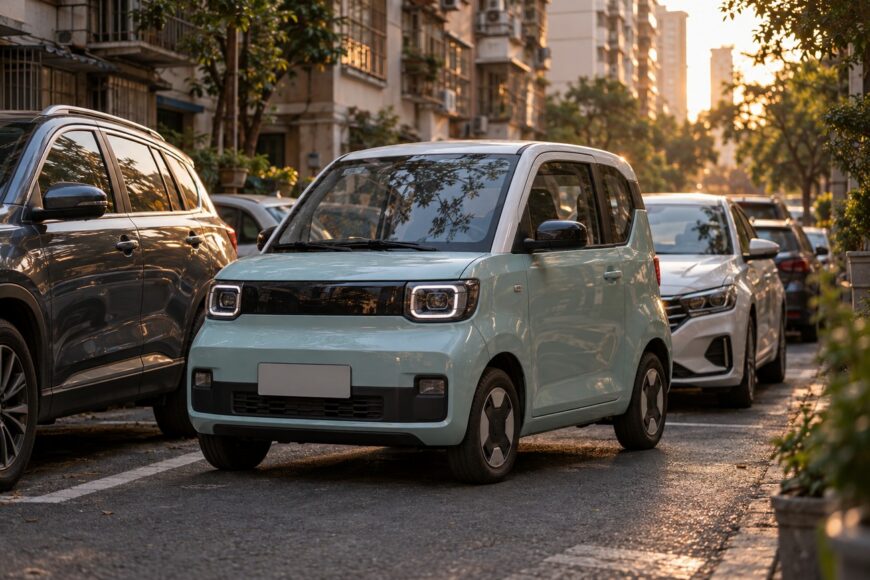
The Wuling Hongguang Mini EV is small, basic, and compromised in ways a conventional family car is not. Yet it has become one of China’s most widely sold ultra-compact EVs because its accessible price, tiny footprint, and low urban energy use solve a specific problem: getting through crowded streets and into scarce parking spaces without buying a larger car.
That makes the useful buying question one of fit. For short city trips, the Mini EV can be a sensible tool; for regular highway travel or as a household’s only car, its limits become harder to ignore. The name also covers different generations and specifications, so any verdict has to start with the particular car for sale.
- Why the Wuling Mini EV Became a Bestseller
- Which Wuling Mini EV Are You Actually Buying?
- What It Is Like to Drive in the Real World
- Range, Charging, and the Winter Reality
- The Costs and Compromises Hidden Behind the Low Price
- Who Should Buy It—and Who Should Not
- Frequently asked questions
- What is the number-one-selling EV in China?
- What does a Wuling Mini EV cost?
- What is the cheapest EV I can buy right now?
- What is the best Chinese mini electric car for a city commute?
Why the Wuling Mini EV Became a Bestseller
CarNewsChina recorded 13,630 Wuling Mini EV sales in September 2026. That figure places it among China’s mass-market ultra-compact EVs, although it does not establish a permanent number-one ranking across every type of electric vehicle. Its popularity is easier to understand through the trips it replaces than through a comparison with full-size cars.
A driver who mostly travels across town can make regular use of its small turning and parking footprint. In dense neighborhoods, fitting into a space that would be awkward for a larger car is a daily benefit. The compact cabin and low weight also help keep energy demand modest at urban speeds.
Accessible Chinese-market pricing is central to the appeal, particularly for buyers who need basic electric transport rather than long-distance capability. The same buying logic does not automatically carry over to an imported car: delivery, certification, and support can change the total substantially. A low starting price has value only if the car still meets the buyer’s routine needs.
Strong sales therefore show that the Mini EV answers a widespread urban need, not that it suits every household. Its success is consistent with a car that handles short errands well while making clear concessions in passenger space, luggage room, and travel beyond the city.
Which Wuling Mini EV Are You Actually Buying?
The Mini EV name spans several generations and market listings, so check the model year, battery, body, and local approval paperwork before comparing advertised cars.
| Specification | Earlier versions | Updated reported versions |
|---|---|---|
| Motor and drive | 20 kW, listed as about 27 hp in some catalogs | 30 kW, rear-wheel drive, 85 N·m |
| Battery | 9.3 or 13.8 kWh | About 25.1 kWh, LFP chemistry |
| Stated range | Approximately 120–170 km, depending on version and market | 205 km CLTC |
| Listed top speed | About 100 km/h | 101 km/h |
| Size and wheelbase | Approximately 3060 mm long; 2010 mm wheelbase | Approximately 3268 × 1520 × 1575 mm; 2190 mm wheelbase |
| Mass and body listing | Check the specific vehicle | About 790 kg; four-door and five-door descriptions both appear across markets, batches, and restyling |
Those columns describe reported configurations, not a guarantee that every car in a showroom matches one of them exactly. Listings may also cite other range figures, including 301 km, for particular versions or markets. A range quoted under a different test cycle should not be treated as directly comparable with the updated car’s 205 km CLTC figure.
Body descriptions need the same care as battery figures. A seller’s use of “Mini EV” or a door count alone cannot establish which restyling, charging equipment, or locally approved configuration you will receive. Ask for the vehicle’s exact specification and homologation documents before using another market’s review to make a decision.
What It Is Like to Drive in the Real World
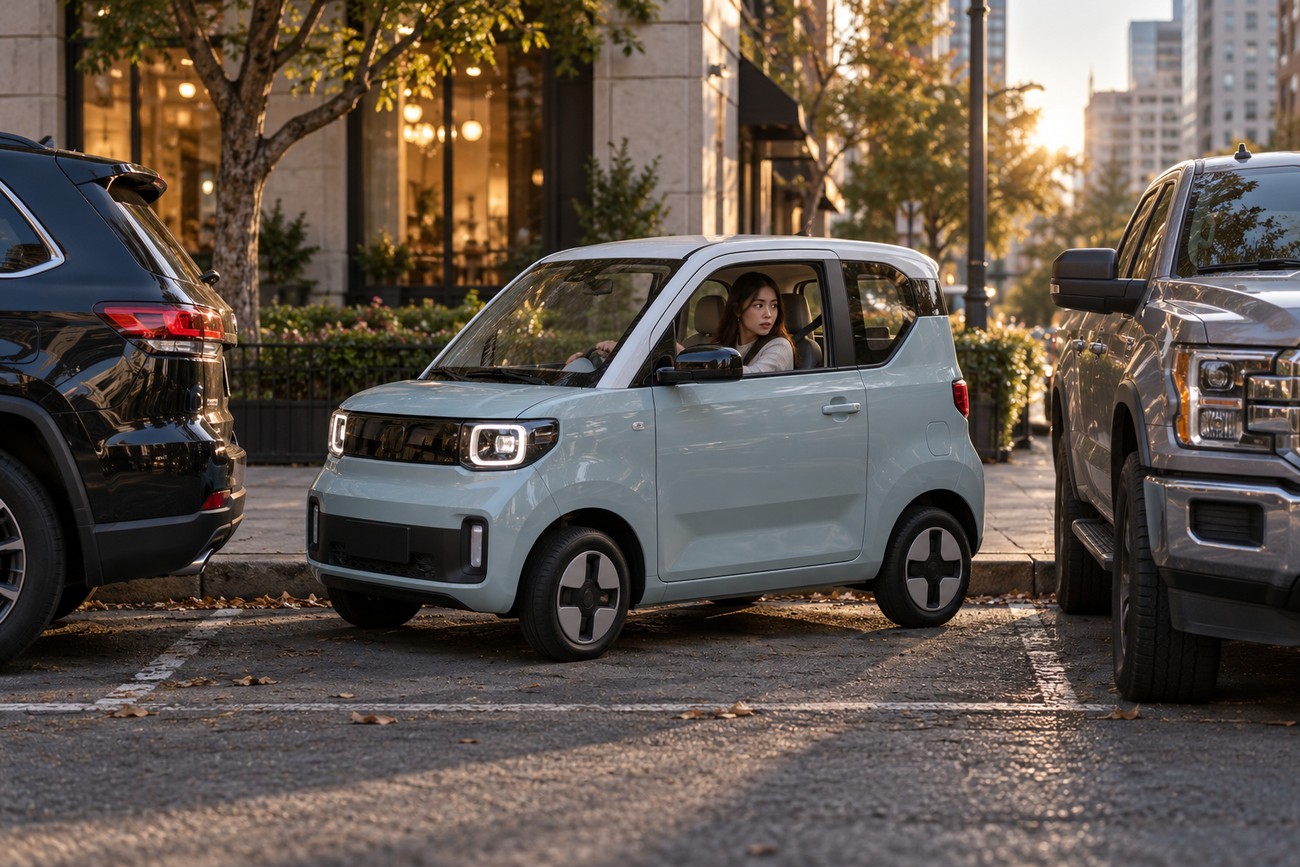
In town, the Mini EV’s proportions are its strongest driving feature. Narrow streets, tight parking, and short journeys reward a car that takes up little space. An updated version is listed with rear-wheel drive, 30 kW, and 85 N·m; that specification is better understood as adequate urban propulsion than as a promise of strong performance everywhere.
The updated version’s listed top speed is 101 km/h. Reaching that figure on paper is different from feeling comfortable among faster traffic, especially when carrying passengers or facing a long stretch of open road. Buyers who regularly use fast roads should judge the car on those roads, rather than assume that a top-speed figure settles the issue.
Cabin packaging involves a similarly clear trade-off. Owners commonly describe the rear row as cramped; it is mainly suitable for children or short trips. The luggage area is limited with the rear seats in use, and folding the seatbacks is often necessary for a larger shopping load. That choice turns a passenger-and-cargo errand into one or the other.
Simple suspension and limited sound insulation can make rough surfaces noisy and harsh. Low mass helps efficiency, yet bumps and road noise are more noticeable than they might be in a larger car. A test drive over the surfaces you actually use will reveal more than a short loop on smooth streets.
Range, Charging, and the Winter Reality
An updated Mini EV version is listed at 205 km on the CLTC cycle, with reported energy consumption of about 9.2 kWh/100 km. These are useful reference points for that version, not a distance you can assume between every pair of charges. Earlier cars have approximately 120–170 km of stated range, depending on battery and market.
Urban driving is the Mini EV’s natural setting because steady, higher speeds place more demand on a small battery. Cold weather can also reduce usable range, making a trip that feels easy in mild conditions less predictable in winter. Leave room for weather, heating, and an unexpected detour instead of planning around the full laboratory figure.
Check the charging connector, onboard charging arrangement, and capacity of the household electrical supply before judging the car by its advertised range. A workable place to charge can matter more to daily use than a larger figure on the specification sheet.
Home charging changes the ownership experience: the car can start routine trips with energy already available. Without a convenient home point, charging may depend on public facilities that fit the car’s hardware and your schedule. Confirm the exact vehicle’s charging method and local compatibility before purchase; equipment can differ between versions and markets.
The Costs and Compromises Hidden Behind the Low Price
A low Chinese-market price is not automatically the amount an overseas buyer will pay. Import logistics, delivery, local certification, and any work needed to put the car legally on the road can add substantially to the bill. Comparing the Mini EV with a locally sold alternative calls for an on-the-road cost, not a converted headline price.
Ownership support deserves equal attention. Parts and service availability may be less transparent outside established sales markets, and a cheap car becomes less useful if a routine repair means a long wait. Before committing, establish who will diagnose it, supply parts, and handle warranty or battery issues in your area.
Low mass and compact construction contribute to efficiency, while also leaving less scope for cabin space, isolation from noise, and a settled feel on poor roads. Highway confidence is another limitation to assess in person. None of these observations establishes a crash-test rating, and buyers should check the safety equipment and independent evidence for the exact version offered.
Equipment can move the value calculation as well. Basic trims may omit features you normally expect, while better-equipped versions may cost more or be harder to source locally. Compare actual cars, including their charging hardware and equipment, rather than assuming that the cheapest advertised Mini EV represents every version.
The most expensive mistake is buying it to perform a job it was not well suited to do. A household that needs to carry adults, luggage, and supplies on frequent longer trips may quickly lose the benefit of the low purchase price. Assessing those trips before buying is more useful than trying to solve the space and range limits afterward.
Who Should Buy It—and Who Should Not
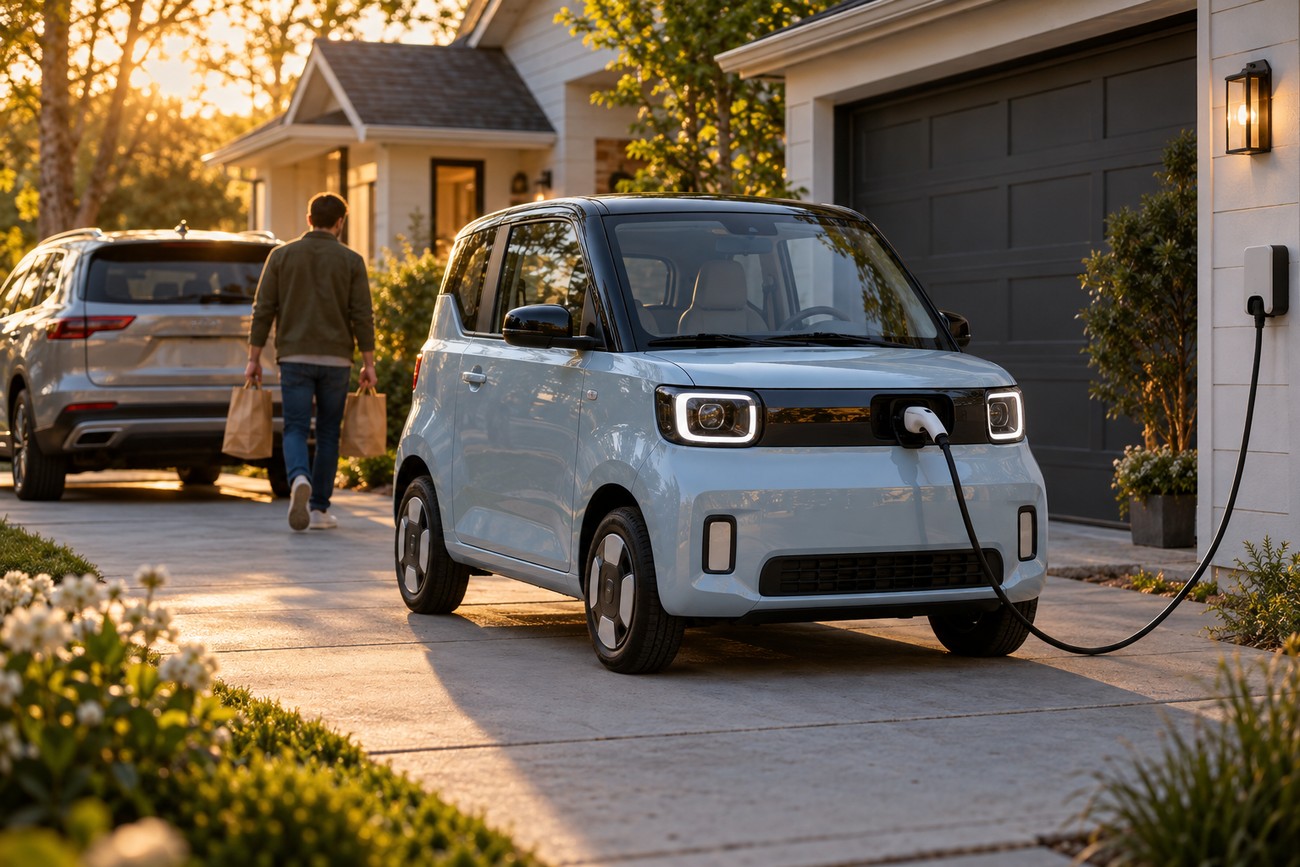
The strongest case is for a buyer with short urban journeys, difficult parking, and a dependable place to charge. In a household with another car for longer trips, the Mini EV can take on commuting and errands without being asked to cover every journey. Its compact size then remains an advantage rather than a constant constraint.
It is a weaker choice as an only family vehicle or a regular highway car. Adults who often ride in the back, bulky shopping, and winter trips near the limit of the stated range all put pressure on its compromises. A cheaper purchase does not make those needs disappear.
Before paying a deposit, use the exact vehicle and your normal week as the test. Check:
- The generation, model year, body configuration, battery, and local approval documents.
- The charging connector, charging method, home electrical setup, and winter driving needs.
- Whether rear-seat space and luggage room work for the passengers and loads you actually carry.
- Which local workshop can service the car and obtain parts.
If those checks come back clearly in its favor, the Mini EV can be a useful city car rather than simply a cheap EV on paper. If several depend on optimistic assumptions, a larger or better-supported vehicle may be the less costly choice to live with.
Frequently asked questions
The answers below depend on the market, sales period, and exact vehicle being compared. Those details matter especially with an inexpensive imported EV: a ranking or price from one market may say little about what you can buy and use locally.
What is the number-one-selling EV in China?
There is no reliable permanent number-one answer without a defined sales period and vehicle category. Rankings change depending on whether they compare a month or a year, and whether they include every EV class or only ultra-compact cars. CarNewsChina recorded 13,630 Wuling Mini EV sales in September 2026, evidence of substantial Chinese demand rather than proof that it led all EVs.
What does a Wuling Mini EV cost?
There is no single reliable global price for a Wuling Mini EV. The payable amount depends on the generation, trim, seller, and country. For an imported car, request a quote that separates the vehicle price from shipping, taxes or duties where applicable, certification, delivery, and any locally required work. Then check what charging and service support that price actually includes.
What is the cheapest EV I can buy right now?
The answer depends on your country, the date, and which vehicles are available for registration there. A low advertised price elsewhere does not make a car the cheapest usable option locally. Compare on-the-road prices for vehicles you can actually buy, then account for suitable charging access, parts, and service before choosing the lowest-cost one to own.
What is the best Chinese mini electric car for a city commute?
The best one is the car that covers your normal commute with a sensible range margin, carries your usual passengers, charges where you park, and has local support. The Wuling Mini EV is a strong candidate when journeys are short and parking is tight. If your commute includes fast roads, regular rear-seat passengers, or uncertain charging, compare other locally supported cars before deciding.







