
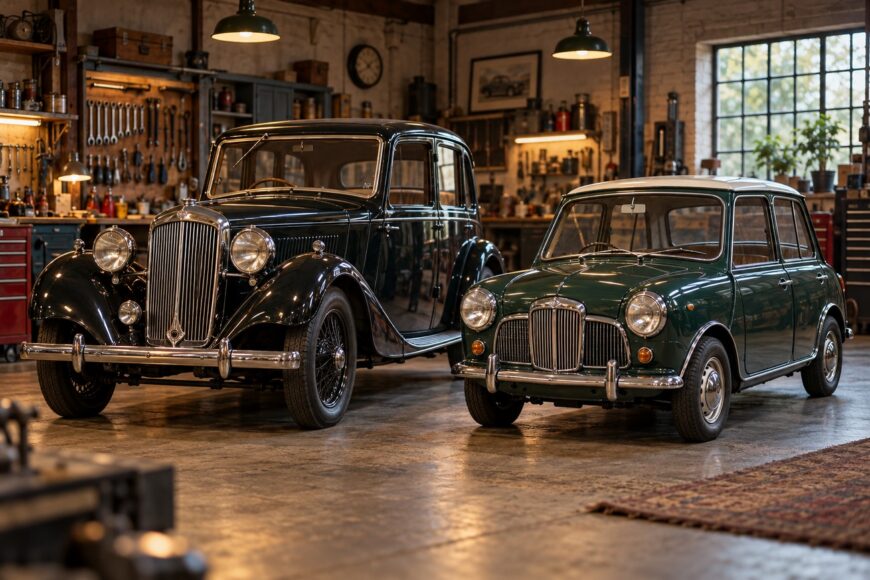
“Wolseley Hornet” identifies two fundamentally different cars, not one continuous model. The pre-war Hornet was a small, six-cylinder Wolseley built from 1930 to 1936, while the later car was a Mini-based, front-wheel-drive saloon from the 1960s. They share a name and a certain sense of compact luxury, yet their engines, construction, body styles, parts supply, and ownership risks are entirely different.
That distinction matters before you read a specification sheet or judge a car by its polished chrome. A pre-war example may be an open two-seater, a saloon, a coupé, or a rolling chassis carrying a coachbuilt body. The later Hornet has the familiar Mini family connection, four doors, four seats, a separate boot, and richer trim. Both can be appealing purchases, though neither rewards casual identification.
- One Name, Two Very Different Hornets
- The Pre-War Hornet: Six-Cylinder Character in a Small Car
- The Mini-Based Hornet: A Booted, More Formal Mini
- Pre-War or Mini-Based? The Differences at a Glance
- What Ownership Actually Costs: The Hidden Compromises
- How to Check a Hornet Before You Buy
- Frequently Asked Questions
- What does “12 HP” mean on a pre-war Wolseley Hornet?
- Why are central-locking wire wheels important on a Hornet Special?
- Why do catalogs give different production dates for the Mini-based Hornet?
- What was a Hornet rolling chassis supplied for?
One Name, Two Very Different Hornets
The pre-war Hornet family belongs to 1930–1936 and used a 1271 cc, six-cylinder OHC engine producing approximately 35 bhp. It was a light car with a character that came from its smooth six-cylinder layout and period engineering. Historical descriptions also place it in the 12 HP fiscal class, a taxation category rather than a direct statement of engine output.
The later Hornet was built around the Mini concept. Its 848 cc inline four-cylinder engine drove the front wheels, and the car was presented as a more formal four-door, four-seat saloon with a separate boot. The Mini connection explains much of its mechanical identity, while the body, trim, and marketing gave it a more upmarket position.
Production dates for the Mini-based car depend on the catalog being consulted. Automotive Heritage lists a 1961–1969 Hornet, while another commonly cited range extends to 1970. BMW Group Classic gives a more specific 10/1961–11/1962 listing for a classic Hornet entry. These ranges should be treated as source-dependent catalog boundaries rather than silently merged into one supposedly exact production record.
The practical rule is simple: identify the engine and body before discussing value. A 1271 cc six-cylinder car is from the pre-war family; an 848 cc front-wheel-drive car belongs to the Mini-based family. A seller’s use of “Hornet” alone is inadequate evidence, especially where a listing borrows the rarity of one generation to describe another.
The Pre-War Hornet: Six-Cylinder Character in a Small Car
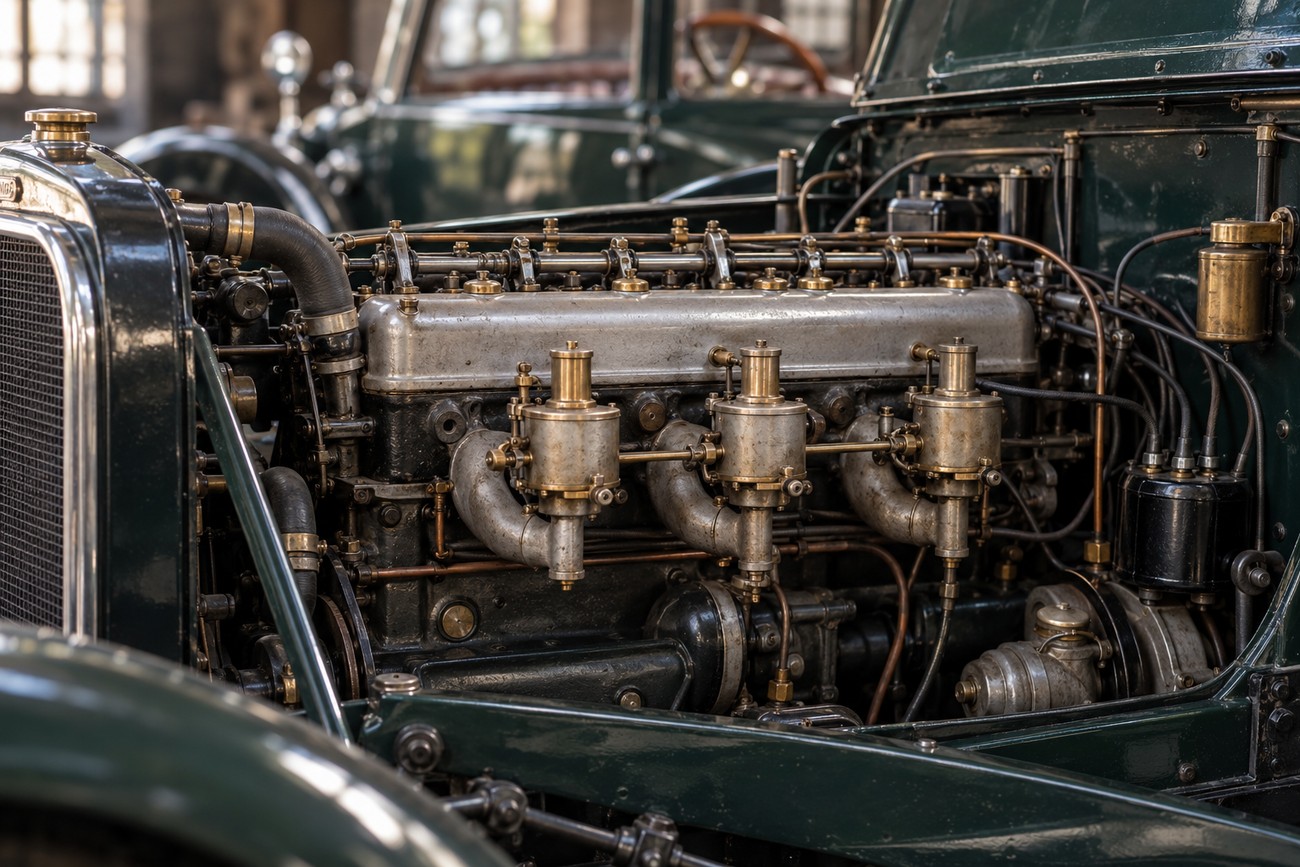
The pre-war Hornet was an engineered small car in its own right, not an early version of the later Mini-based model. Its 1271 cc six-cylinder OHC engine delivered approximately 35 bhp, and the compact chassis gave the car a distinctive combination of lightness and mechanical sophistication. The 12 HP fiscal class is important historical context because period taxation influenced how British cars were described and marketed.
The model’s development is commonly divided into the periods 1930–1931, 1932–1933, and 1934–1935. The 1932 revised Hornet brought a significant engineering change: its shortened, chain-driven OHC engine was moved forward to increase footwell space. That detail is useful during inspection because a car’s period specification should be consistent with its engine arrangement and documented identity.
Body styles were more varied than many modern summaries suggest. Buyers could encounter a saloon, coupé, or open two-seater, while Wolseley also supplied rolling chassis for separate coachbuilt bodies. Consequently, an unusual body is not automatically proof of a conversion or an incorrect car. It does, however, make period evidence, chassis identification, and body history more important.
Special versions add another layer of interest. Central-locking wire wheels are associated with certain pre-war Hornet Special specifications and can provide a useful authenticity clue, although one feature alone cannot establish a car’s identity. A claimed Special should be assessed through its complete specification, surviving documentation, and consistency between chassis, engine, wheels, and body.
The appeal is also the principal risk. Smooth six-cylinder running and coachbuilt individuality can conceal a mechanical package that demands specialist knowledge. Specific OHC components and other pre-war parts may require club contacts, specialist dismantles, or a long search, so restoration planning should begin before purchase rather than after a component fails.
The Mini-Based Hornet: A Booted, More Formal Mini
The 1960s Hornet used the Mini’s compact engineering in a more formal package. It was a front-wheel-drive, four-door, four-seat saloon with a separate boot, giving it a conventional three-box appearance within a very small footprint. The boot and upgraded presentation helped distinguish it from a basic Mini in the showroom, even though the underlying platform imposed familiar space limitations.
BMW Group Classic lists an 848 cc engine producing 34 hp at 5500 rpm, with a maximum speed of 118 km/h, for its 10/1961–11/1962 classic Hornet entry. Automotive Heritage gives 35 hp at 5500 rpm and 60 Nm at 2900 rpm for its 1961–1969 listing. Published material can also quote 38 hp, which is why a power figure should always be tied to a stated year, market, and source.
The Hornet’s richer interior, chrome, and wood-style trim created a more restrained luxury image than the standard Mini. That finish is a major part of the car’s attraction, yet it also changes the restoration equation. Missing or deteriorated trim can be harder and more expensive to reproduce than the compact mechanical platform initially suggests.
Its separate boot is useful for a small saloon, though it does not transform the car into a spacious family vehicle. Rear-seat accommodation remains restricted, and luggage capacity is limited by the underlying compact layout. A buyer who expects conventional saloon practicality may find that the formal body promises more room than it can deliver.
Pre-War or Mini-Based? The Differences at a Glance
The following table is an identification aid rather than a substitute for inspecting a specific car and its documentation.
| Feature | Pre-war Hornet | Mini-based Hornet |
|---|---|---|
| Period | 1930–1936 | 1960s; catalogs variously state 1961–1969, 1961–1970, or 10/1961–11/1962 for a BMW Group Classic entry |
| Engine | 1271 cc, six-cylinder OHC | 848 cc inline four-cylinder |
| Published output | Approximately 35 bhp | Published figures include 34 hp, 35 hp, and 38 hp, depending on source, year, and market |
| Drivetrain and layout | Pre-war Wolseley chassis and period-specific mechanical layout | Front-wheel drive; four-door, four-seat saloon |
| Body formats | Saloon, coupé, open two-seater, or rolling chassis for coachbuilt bodies | Formal saloon with a separate boot |
| Buyer profile | Specialist pre-war ownership, historical originality, and coachbuilt individuality | Compact classic driving with Mini-family engineering and more decorative trim |
Catalog boundaries and power figures vary, so the table should guide identification rather than settle the specification of a particular car. The engine, body configuration, chassis evidence, and period documents remain decisive.
What Ownership Actually Costs: The Hidden Compromises
The Mini-based Hornet’s mechanical relationship with the Mini can make parts and servicing seem reassuringly straightforward. That assumption becomes unsafe once the car is assessed as a complete Hornet. Its specialized trim, chrome, wood-style details, and separate-boot body introduce restoration work that a basic Mini may avoid.
Space is another compromise hidden by the formal styling. The rear seats are tight, and the boot is small, even though the separate luggage compartment gives the car a more conventional appearance. This matters if the car is intended for regular use rather than occasional local driving, because its visual status does not change the compact platform’s basic limitations.
Chrome and interior materials can determine the real cost of a seemingly sound example. A car may present well in photographs while carrying tired plating, damaged wood-style trim, incomplete fittings, or hard-to-source interior details. Cosmetic restoration is often treated as secondary to mechanical work, yet missing original trim can define whether the finished car feels complete and whether its claimed specification remains credible.
The pre-war car carries a different set of risks. Its six-cylinder OHC engine and specific period mechanical components can require specialist servicing, while parts may be found through club networks, specialist dismantles, or prolonged research. Special and coachbuilt examples offer greater individuality, though their uniqueness can increase the difficulty of reproducing body details and confirming what was originally supplied.
On a pre-war car, the most expensive component may be the one that cannot be ordered twice. Establishing a parts and repair route before purchase can matter more than a modest difference in the advertised price.
The result is a sharp divide between the two ownership experiences. The Mini-based Hornet can be an accessible compact classic with a more demanding finish, while the pre-war Hornet is a specialist historic car whose size says little about the complexity of its maintenance. Neither should be bought solely because the name sounds rare or the platform sounds familiar.
How to Check a Hornet Before You Buy
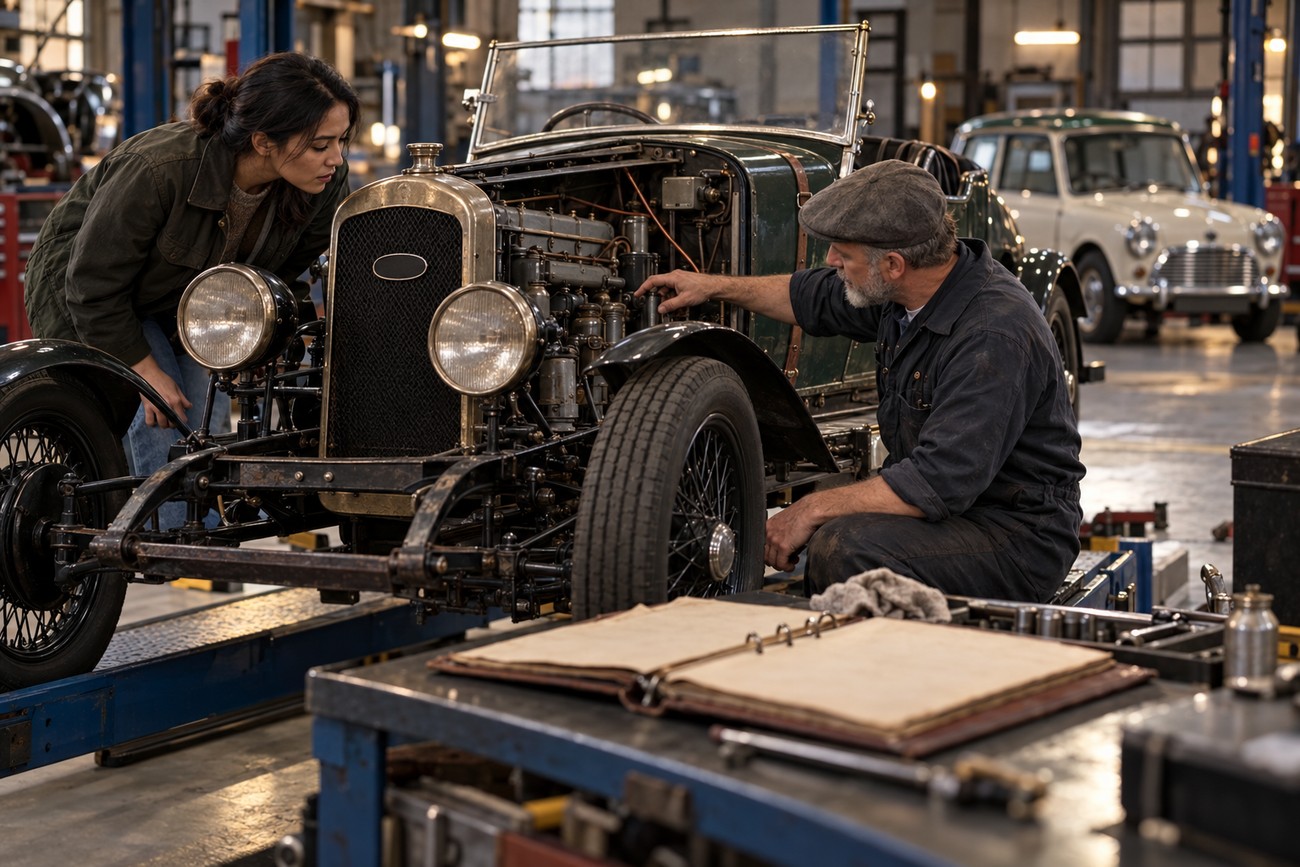
Start with identity, not cosmetics. Confirm whether the car is pre-war or Mini-based, then match the engine, period, body style, and seller’s description to catalog and club information. A claimed 34 hp, 35 hp, or 38 hp figure has little meaning until its year, market, and source are established.
On a pre-war car, inspect the chassis and body history as carefully as the engine. A saloon, coupé, open two-seater, or coachbuilt body may be legitimate, while a later alteration can also look convincing. Check whether the rolling-chassis history, body construction, and surviving documentation support the description.
Examine structure before admiring the brightwork. Corrosion repair, distorted panels, incomplete body framing, and poorly executed previous work can consume more money than an engine service. The same principle applies to the Mini-based Hornet: a polished exterior does not prove that the boot, floor structure, interior fittings, or trim are complete.
Authenticate the generation and specification from the engine, body configuration, and period evidence before negotiating on cosmetic condition. A polished Hornet can still be mechanically or structurally incomplete.
Check the parts situation before committing to a restoration. For the pre-war model, identify likely sources for engine components, wheels, instruments, and body hardware through the relevant club and specialist network. For the Mini-based car, assess whether missing chrome, wood-style trim, and interior pieces can be sourced or reproduced to an acceptable standard.
Finally, treat “Special,” “coachbuilt,” and “rare” as claims requiring evidence. Central-locking wire wheels may support a pre-war Special specification, but they should be considered alongside the rest of the car’s period features. Value should follow documented identity and usable condition, rather than a freshly polished finish or an assumed connection with the Mini.
Frequently Asked Questions
The two Hornet generations require different approaches to identification and ownership. The pre-war car demands attention to its chassis, engine, body history, and period specification. The Mini-based car shares mechanical roots with the Mini but has its own trim, body, and catalog complications.
What does “12 HP” mean on a pre-war Wolseley Hornet?
“12 HP” describes the historical British fiscal horsepower class used for taxation and registration purposes. It is not the measured output of the engine and should not be read as meaning that the Hornet produced 12 bhp.
The car’s actual engine description is a 1271 cc, six-cylinder OHC unit producing approximately 35 bhp. Fiscal horsepower was calculated through a period formula related to engine dimensions, so it served an administrative purpose rather than providing a direct performance comparison.
Why are central-locking wire wheels important on a Hornet Special?
Central-locking wire wheels are associated with certain pre-war Hornet Special specifications and can help establish whether a car’s equipment matches its claimed identity. They are a useful period clue because wheel specification is harder to explain away than a general statement about upgraded trim.
They do not prove authenticity on their own. The wheels should be assessed with the engine, chassis evidence, body style, documentation, and other period-specific details. A genuine feature fitted to a later or altered car does not automatically make the complete vehicle an original Special.
Why do catalogs give different production dates for the Mini-based Hornet?
Catalogs may define the series by different markets, body or model boundaries, and the scope of the surviving records. That produces ranges such as 1961–1962, 1961–1969, and 1961–1970 without necessarily describing the same catalog exercise.
BMW Group Classic’s 10/1961–11/1962 entry is more specific than the broader ranges used by other sources. For a particular car, the chassis, engine, registration history, and period documentation are more useful than selecting one universal end date from a general catalog.
What was a Hornet rolling chassis supplied for?
A rolling chassis was a running chassis supplied without a standard complete factory body, allowing a separate coachbuilder to create and fit the bodywork. This explains why some pre-war Hornets have forms that differ from the familiar saloon or factory illustrations.
A surviving example with an unusual body is therefore not automatically incorrect. Its history still needs checking, since a coachbuilt body may be original, replaced, or extensively altered. Chassis records, period photographs, club material, and construction details can help establish which explanation is most credible.







