
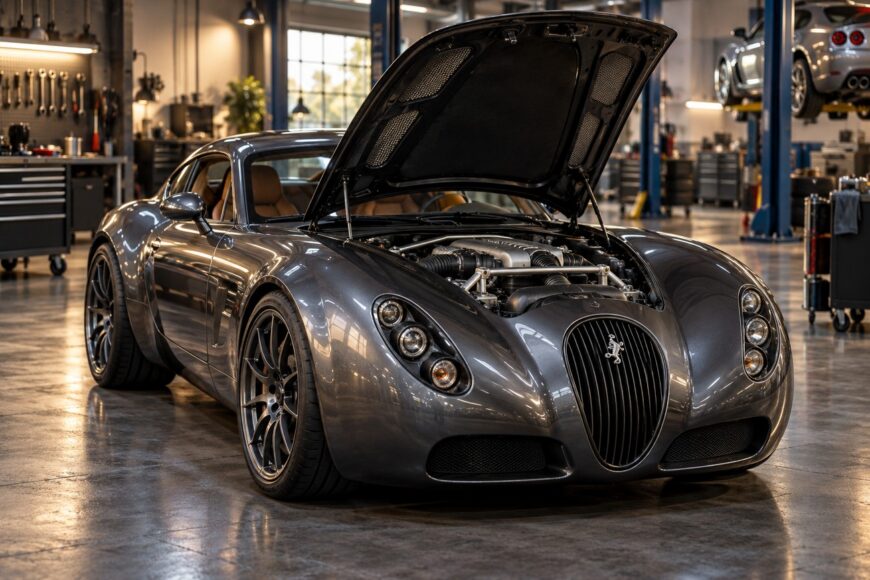
The Wiesmann GT MF5 combines dramatic coachbuilt styling, low mass, and BMW powertrains in a package that feels far removed from an ordinary performance coupe. That appeal comes with a practical tension: the engines may be familiar to BMW specialists, while the chassis, body, trim, and service pathway belong to a tiny-series manufacturer.
The V10 and V8 cars also represent materially different ownership propositions. The high-revving naturally aspirated car uses BMW’s SMG sequential transmission; the later car brings twin-turbo torque and a six-speed automatic. Version choice, real-world drawbacks, and inspection quality matter more than accepting brochure figures at face value.
- What the Wiesmann GT MF5 Really Is
- V10 or V8: Two Very Different GT MF5s
- GT MF5 V10 vs V8: What Actually Changes
- Performance Beyond the 3.9-Second Claim
- Ownership Risks: SMG, S85 Maintenance and Rare Parts
- How to Inspect and Buy a GT MF5
- Frequently asked questions
- What is the price of a Wiesmann GT MF5?
- How much does a Wiesmann car cost compared with a BMW performance car?
- Who makes Wiesmann cars?
What the Wiesmann GT MF5 Really Is
The GT MF5 is a low-volume Wiesmann sports car with selected BMW mechanical components, rather than a BMW M5 in a different body. Its aluminum space-frame or monocoque-style structure, composite body panels, rear-wheel drive, and carefully positioned engine give it a distinct engineering identity. BMW supplied important hardware, yet the complete vehicle was designed, assembled, and supported within a much smaller ecosystem.
Its front-mid-engine layout needs precise interpretation. The engine remains ahead of the cabin, so this is still a front-engine car, while its main mass is positioned behind the front axle line. That reduces front-end load and helps the MF5 feel more balanced when the driver changes direction or brakes deeply into a corner.
Weight is central to the car’s character. Sources commonly cite approximately 1,380 kg for the V10 GT, although a single definitive factory figure is not consistently available. Low mass can sharpen responses and reduce the workload on the brakes and tires, while it also leaves less insulation from rough pavement and gives the low body little tolerance for careless road access.
Wiesmann stated that fewer than 200 MF5 cars were produced in total. That makes the badge meaningful to collectors, but it also limits parts availability and reliability evidence. A BMW diagnostic tool may communicate with the engine, yet it cannot turn a bespoke composite fender, interior trim panel, or damaged chassis mounting point into an ordinary BMW repair.
V10 or V8: Two Very Different GT MF5s
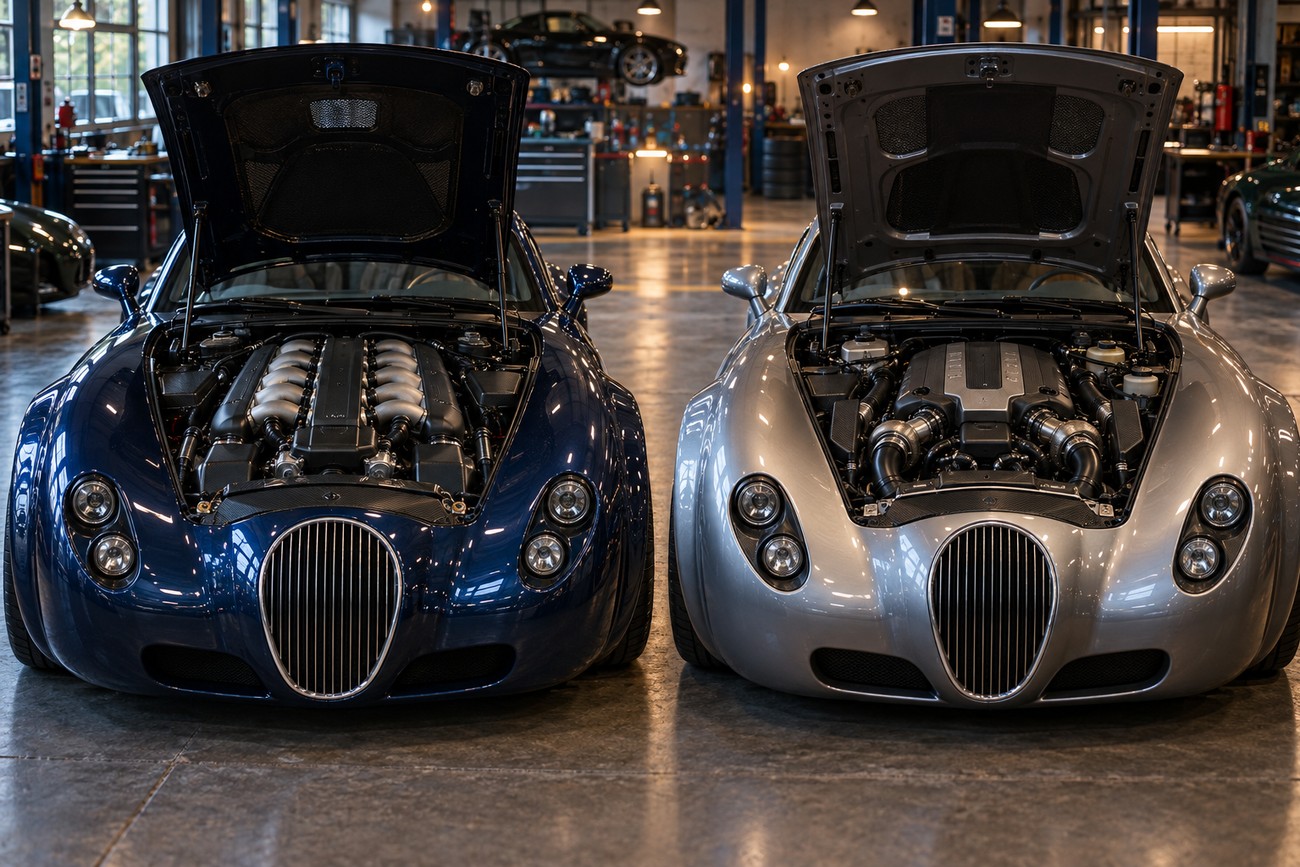
The MF5 badge covers two powertrain eras. Early cars use a naturally aspirated 5.0-liter BMW S85 V10, producing about 507 hp at 7,750 rpm and 519–520 Nm at 6,100–6,200 rpm. Later cars use a 4.4-liter twin-turbo BMW V8 producing 555 hp and 680 Nm.
The V10 rewards commitment to engine speed. Its peak power arrives near the top of the rev range, so the driver must select the correct gear and allow the engine to work. The sound and rising intensity are central to the experience, but relaxed low-speed progress can feel less polished when the transmission is cold or the road is crowded.
The V8 delivers its performance differently. Twin-turbo torque makes strong acceleration easier to access at moderate engine speeds, and the six-speed automatic generally suits ordinary traffic better than an automated manual. That does not make it universally preferable: buyers seeking the most distinctive, high-revving experience may value the V10’s character more highly.
Both cars are rear-wheel drive, yet the transmission change affects the entire ownership decision. A buyer should verify the engine, gearbox, production documentation, and service records before comparing two cars by mileage or appearance alone. The same model name can conceal different maintenance priorities, driving techniques, and future repair exposure.
GT MF5 V10 vs V8: What Actually Changes
Identical MF5 branding hides different mechanical and financial decisions. The figures below describe quoted specifications; they should be read alongside condition, tire choice, transmission health, and the quality of the individual car.
| Category | V10 GT MF5 | V8 GT MF5 |
|---|---|---|
| Engine | Naturally aspirated 5.0-liter BMW S85 V10 | 4.4-liter twin-turbo BMW V8 |
| Output | About 507 hp at 7,750 rpm | 555 hp |
| Torque | 519–520 Nm at 6,100–6,200 rpm | 680 Nm |
| Transmission | BMW SMG sequential automated manual transmission | Six-speed automatic transmission |
| Drivetrain | Rear-wheel drive | Rear-wheel drive |
| Quoted acceleration | 0–100 km/h in 3.9 seconds | 0–100 km/h in 3.9 seconds |
| Quoted top speed | Approximately 311 km/h | Approximately 311 km/h |
| Ownership character | High-revving, more demanding at low speed, with SMG-related inspection needs | Stronger low- and mid-range torque, with automatic-transmission service priorities |
Performance Beyond the 3.9-Second Claim
The MF5’s low mass and front-mid-engine balance shape its performance more consistently than a single acceleration number. Rear-wheel drive keeps the steering and propulsion duties clearly separated, while the engine position helps reduce the heavy nose feel found in some powerful front-engine cars. The result should feel agile and deliberate when the chassis is straight, correctly aligned, and fitted with suitable tires.
The V10’s peak power at approximately 7,750 rpm makes gear choice central to its character. A shift made too early can leave the engine below its strongest area, while a well-timed downshift turns the same road into a more involving sequence of acceleration and braking. This is one reason the V10 can feel more demanding than the V8 even when their quoted performance is identical.
Both versions are quoted at 0–100 km/h in 3.9 seconds and approximately 311 km/h. Those are claimed figures, not a guarantee for every surviving car. Tire condition, temperature, wheel alignment, differential behavior, stability-control operation, and transmission condition can all change the result.
A low quoted mass also needs context. It improves response, yet a light car can react sharply to damaged pavement and worn suspension components. Before using performance claims to justify a purchase, check whether the car still has correct geometry, healthy driveline mounts, suitable tires, and a properly functioning differential.
Ownership Risks: SMG, S85 Maintenance and Rare Parts
The V10’s BMW origin does not remove its expensive service areas. The S85 is associated with rod bearings, throttle actuators, and Double-VANOS concerns, all of which deserve documented maintenance attention. The engine’s installation in a rare Wiesmann can also make diagnosis and access less straightforward than in a higher-volume BMW application.
SMG deserves separate scrutiny because it is an automated manual transmission, not a conventional automatic. Its clutch, pump, hydraulic system, actuators, and adaptation data all matter. Owners commonly criticize its abrupt or slow low-speed behavior, especially during parking maneuvers or before the system has warmed up.
SMG diagnosis should include clutch condition, hydraulic pressure behavior, actuator operation, and adaptation data; a generic BMW fault-code scan is only an opening check.
The V8 avoids the V10’s high-revving S85 profile and uses a six-speed automatic, but it remains a rare installation in a low-volume chassis. Service history should still show how the transmission, cooling systems, differential, and supporting electronics have been maintained. A smooth test drive alone cannot establish that the expensive systems are healthy.
Ground clearance creates another routine risk. The low body and long front overhang can damage the underside, splitter, or sills on ordinary speed humps and steep driveways. Composite panels do not rust like steel, while alignment, paint matching, and repairs to their mounting points can be expensive and may require a specialist familiar with small-series bodywork.
Wiesmann-specific interior, trim, and body components may require specialist sourcing or fabrication, with long waits possible. The production run is too small for robust GT MF5-specific failure statistics, so broad claims about reliability should be treated cautiously. A car with excellent records can be a safer purchase than a cheaper example whose originality and repair history are unclear.
How to Inspect and Buy a GT MF5
Start by confirming exactly which car is being offered. Establish whether it is the naturally aspirated V10 with SMG or the twin-turbo V8 with a six-speed automatic, then match the identification to factory paperwork, service invoices, and diagnostic data. This prevents the common mistake of treating two mechanically different cars as equivalent simply because both carry an MF5 badge.
Review records before booking a road test. V10 buyers should look for evidence covering rod bearings, throttle actuators, and Double-VANOS-related work. SMG cars require clutch history, hydraulic-system checks, pump performance, actuator operation, and adaptation data; a missing record does not prove a failure, but it should affect the inspection budget.
Test the drivetrain both cold and warm. Observe engagement during parking, reversing, gentle pull-away, and brisk shifts. Listen for abnormal driveline noise, check the differential and stability systems, and confirm that the car does not mask poor geometry or worn tires with a brief straight-line acceleration run.
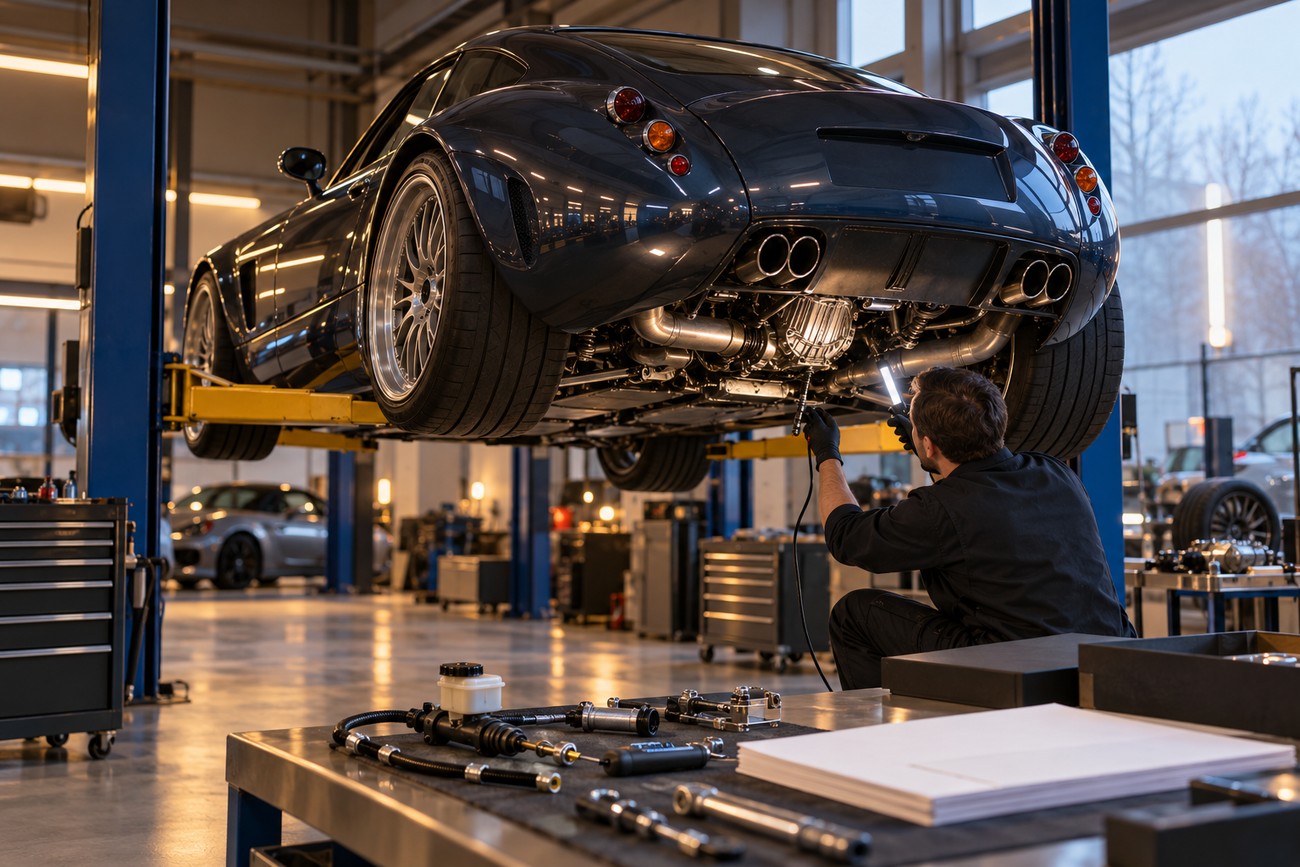
The physical inspection should include the aluminum structure, suspension attachment points, underside, splitter, and sills. Look for evidence of impacts, distorted mounting areas, inconsistent fasteners, or poor repairs. Composite panels may look presentable from several feet away while revealing costly problems through uneven gaps, mismatched paint, or stressed mounting points.
Finally, value condition and documented history ahead of a simple rarity premium. Wiesmann stated that fewer than 200 MF5 cars were produced in total, while the exact V10-to-V8 split is not confirmed by one authoritative public register. Individual sales can therefore reflect one car’s specification, restoration quality, and history rather than a universal market value.
Frequently asked questions
The questions below address the GT MF5’s price, ownership costs, and manufacturer. They also clarify how its BMW-sourced mechanical components relate to its bespoke Wiesmann construction. As with any low-volume car, condition and documentation remain central to each answer.
What is the price of a Wiesmann GT MF5?
There is no dependable single price for a Wiesmann GT MF5. The market is small, the exact production split is uncertain, and each transaction can be shaped by specification, mileage, documented maintenance, originality, restoration needs, and the availability of replacement parts.
A low asking price may represent deferred work on the SMG, S85 engine, composite body, or aluminum structure. A higher figure may reflect exceptional history and condition, yet one sale remains weak evidence of a standard value. A specialist inspection is essential before treating rarity as a premium.
How much does a Wiesmann car cost compared with a BMW performance car?
The relevant comparison is total ownership exposure, rather than the purchase figure alone. BMW-derived engines and drivetrain components can make routine mechanical knowledge easier to find, while bespoke bodywork, trim, specialist labor, and parts delays can make the complete Wiesmann substantially more demanding to maintain.
A BMW performance car usually benefits from higher production volume and broader parts support. The GT MF5 offers a different level of exclusivity, but buyers should reserve funds for low-volume repairs that a BMW-based powertrain may conceal.
Who makes Wiesmann cars?
Wiesmann is the manufacturer of the low-volume sports car, responsible for the distinctive body, chassis, assembly, and vehicle specification. BMW supplied certain engines and drivetrain components, including the S85 V10 and the later twin-turbo V8. The V10 was paired with BMW’s SMG sequential automated manual transmission, while the V8 used a six-speed automatic transmission.
BMW therefore did not build the complete GT MF5. Its mechanical origins can help with some diagnostics and servicing, while Wiesmann-specific structure, bodywork, interior, and trim still require the appropriate specialist knowledge.







