
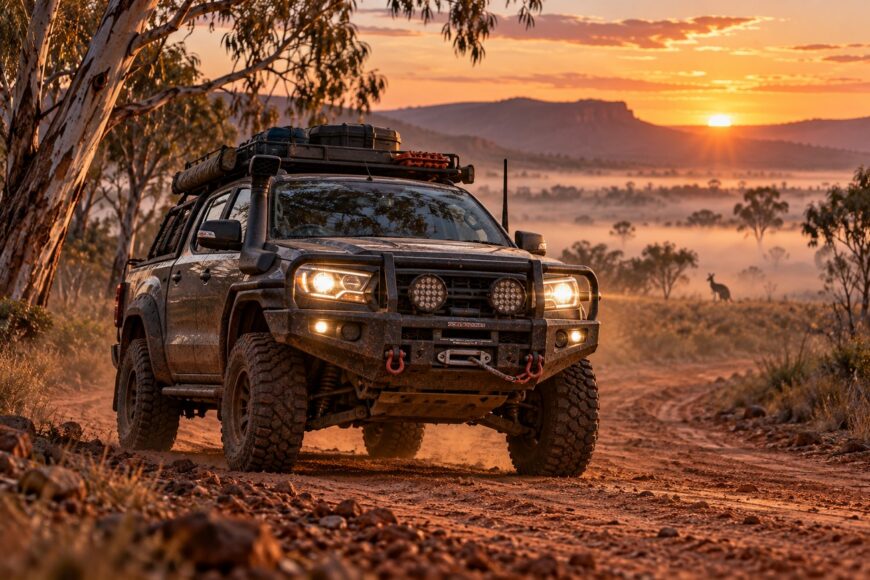
Heavily protected Ford Rangers are a familiar sight on Australian roads, especially outside the capital cities. A roo bar often appears soon after purchase on vehicles used for rural work, remote travel, towing, touring, or regular trips on long country roads.
The reason is practical. Kangaroo collisions are a recurring concern outside cities, particularly around dawn and dusk, and owners commonly associate them with expensive damage to the radiator, intercooler, lights, and other front-end components. A roo bar may reduce that damage in some impacts, although it also adds weight and cost and can create issues with payload, driver-assistance systems, and legal fitment.
- Why Australian Rangers Get Roo Bars So Quickly
- What a Roo Bar Can—and Cannot—Protect
- The Modern Ranger Problem: ADAS, Sensors, and Legal Fitment
- Steel or Alloy? The Real Cost of Carrying a Big Bar
- Frequently asked questions
- Why do so many Australian 4WDs have snorkels as well as roo bars?
- What are the most common problems with Ford Rangers in Australia?
- What is the difference between a bull bar and a roo bar?
- How should an owner check a used Ranger after a roo bar has been fitted?
Why Australian Rangers Get Roo Bars So Quickly
Australian Ford Rangers serve several roles at once. The same ute may tow a caravan, carry tools on a property, travel on remote roads, or spend weekends touring with extra fuel, recovery gear, and camping equipment. Those uses take the vehicle well beyond the predictable conditions of urban commuting.
Animal encounters become more likely on roads outside cities, with kangaroos particularly active around dawn and dusk. A collision can damage the grille, lights, radiator area, intercooler, sensors, and bodywork even when the vehicle remains driveable. For an owner far from a major repair center, a small-looking impact can also become a serious interruption to work or travel.
Insurance discussions and practical owner communities commonly link roo bars with animal-strike claims and radiator or intercooler repairs. The available figures vary by state and period, so they do not support a universal promise about how much a bar will save. They do explain why many owners treat the equipment as risk management rather than exterior styling.
Fitting the bar early can also be part of building the vehicle around its intended job. If the Ranger will carry a winch, auxiliary lights, or recovery equipment, owners may prefer to plan the front-end installation before adding other accessories. That decision still needs a payload and sensor check before the vehicle becomes heavily loaded.
What a Roo Bar Can—and Cannot—Protect
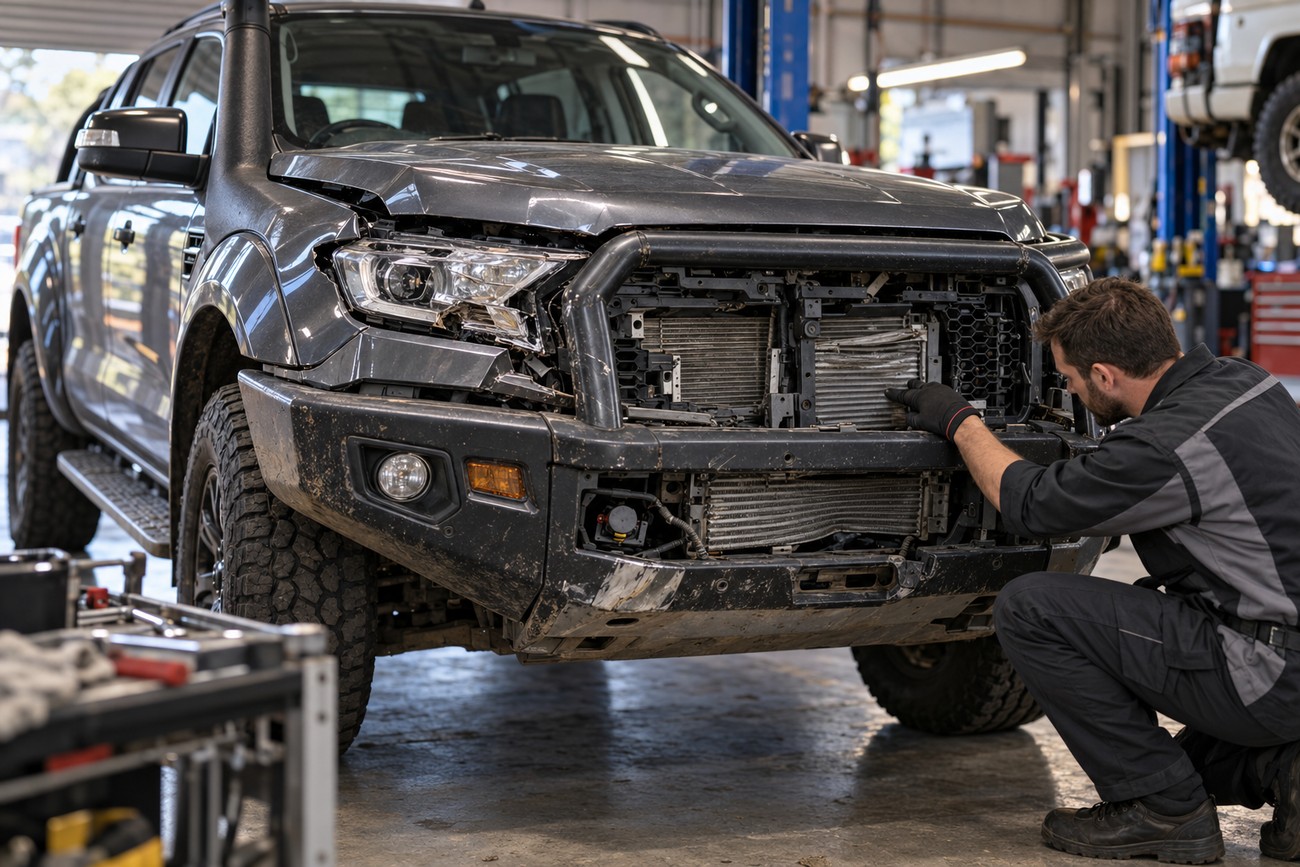
A correctly designed roo bar can reduce damage to some front-end components in certain low-speed animal impacts. Its structure may keep an animal or debris away from vulnerable areas such as the radiator or intercooler, depending on the impact angle, speed, and bar design.
That protection has limits. A higher-speed collision can cause serious damage to the Ranger and severe injury or death to the animal, even with a substantial bar fitted. The bar also cannot guarantee that lights, guards, bonnet panels, sensors, mounts, or cooling components will remain intact.
Rigid construction creates another trade-off. Impact loads can be transferred into the bar mounts or the frame, potentially making repairs more expensive in a different type of crash. A bar that helps in one low-speed animal impact can therefore change the damage pattern in a collision with another vehicle or a fixed object.
Night-driving risk still needs to be managed through speed appropriate to visibility, alertness, and suitable lighting. A roo bar may reduce the consequences of a particular strike; it does not provide extra reaction time or make driving faster in animal areas a sound strategy.
The Modern Ranger Problem: ADAS, Sensors, and Legal Fitment
Physical bolt-on fit does not prove safe compatibility. Depending on the trim, a modern Ranger may use radar, cameras, parking sensors, adaptive cruise control, and other driver-assistance systems. A bar can clear the bodywork and still interfere with one of these systems.
Common symptoms include false parking warnings, radar errors, blocked cameras, or driver-assistance functions that become unavailable. The problem may appear only after a change in temperature, a minor movement of the bar, or a later suspension adjustment. Sensor operation and, where required, calibration should be checked after installation.
The exact Ranger trim, sensor position, and post-installation warnings need checking before the bar is finalized. A universal fitment chart cannot account for every equipment level or sensor arrangement.
Road-legal suitability depends on more than bolt fit. The product and installation need appropriate geometry, secure mounting, controlled forward projection, safe edges, and compatibility with the vehicle’s safety systems, including airbag-related considerations. Requirements can also depend on the vehicle and jurisdiction, so the installer should provide clear product and fitment documentation.
Ask whether the bar was designed for the exact Ranger generation and trim, where the radar or camera is mounted, and whether calibration is included. Treat an unexplained warning light or an adaptive-cruise fault as an installation issue requiring investigation, rather than accepting it as the normal price of owning a bull bar.
Steel or Alloy? The Real Cost of Carrying a Big Bar
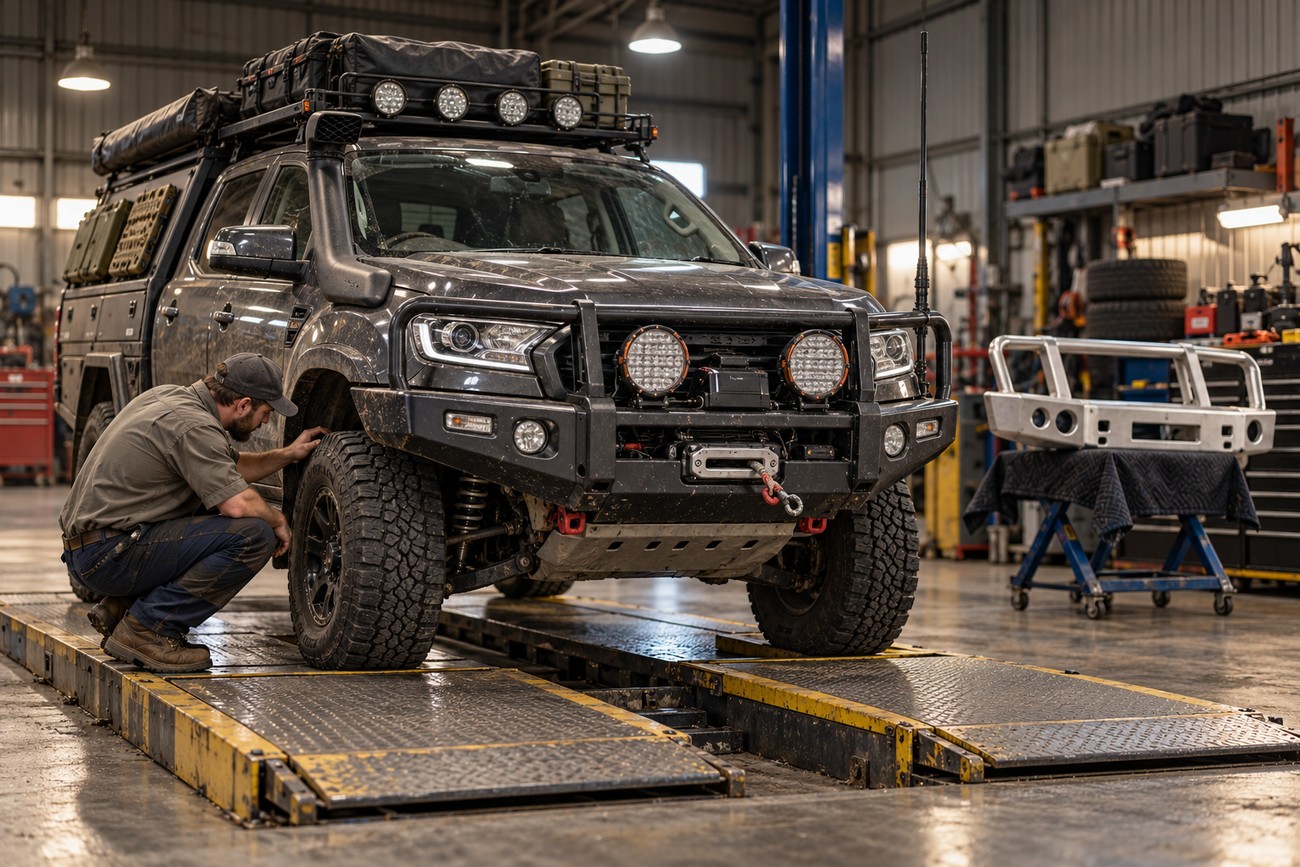
A heavy steel roo bar increases front-end mass and consumes part of the Ranger’s available payload. A winch, auxiliary lights, recovery points, dual batteries, suspension changes, and touring equipment add to the same burden. The effect becomes more significant on a vehicle already carrying passengers, tools, a canopy, or a loaded tray.
Extra front-end weight can alter balance, braking behavior, suspension load, fuel use, aerodynamic noise, and the way the vehicle feels in urban manoeuvres. Owners also report rattles, vibration, and movement after rough travel when the installation or fasteners have not been checked. A larger bar can make parking and judging the front corners harder, particularly in tight city spaces.
Steel and alloy should be considered according to the actual load, winch needs, intended travel, and sensor integration. Steel may suit demanding protection or winch applications, while a lighter alloy design may make more sense for an owner who mainly wants a road-legal barrier and mounting points. Appearance alone is a poor basis for choosing the construction.
The purchase price is only one part of the decision. Wiring, sensor work, calibration, number-plate mounting, suspension changes, and later adjustments can make the total installation cost substantially higher than expected. The sensible selection is the lightest suitable road-legal design with confirmed sensor compatibility, rather than the most aggressive-looking option.
Frequently asked questions
These questions cover related Ranger ownership decisions that are often confused with the choice of a roo bar.
Why do so many Australian 4WDs have snorkels as well as roo bars?
A snorkel raises the engine air intake and can help manage dust, water crossings, and convoy conditions on rural or remote trips. It addresses air intake height and cleanliness, while a roo bar addresses front-end protection and accessory mounting.
The two accessories serve separate purposes. A snorkel does not replace a roo bar, prevent an animal strike, or protect the radiator and intercooler. Its value depends on the conditions the Ranger actually encounters, and poor installation can introduce sealing or intake problems.
What are the most common problems with Ford Rangers in Australia?
General Ranger complaints can involve electronics, suspension, or drivetrain concerns, depending on the vehicle, age, use, and maintenance history. Those issues should be assessed separately from faults created by an aftermarket roo bar.
A bar-related problem is more likely to involve sensor warnings, altered suspension height, front-end load, wiring, rattles, or restricted parking-sensor operation. A used vehicle inspection should identify whether a symptom follows the accessory installation rather than assuming every fault is a factory vehicle problem.
What is the difference between a bull bar and a roo bar?
In Australia, “roo bar” and “bull bar” are often used interchangeably for front-protection equipment. The names do not by themselves prove a particular level of protection, construction, or compliance.
Designs can differ in shape, intended protection, winch and light mounts, sensor provisions, forward projection, and road-legal suitability. Compare the actual product documentation and vehicle fitment instead of relying on the label.
How should an owner check a used Ranger after a roo bar has been fitted?
Start by looking for movement, fresh damage, uneven gaps, loose fasteners, rattles, and wiring that is exposed or poorly secured. Check whether the front suspension sits evenly and whether the vehicle shows signs of excessive front-end load.
Turn on the ignition and test warning lights, parking sensors, cameras, adaptive cruise control, and other relevant systems. Ask for the bar’s product documentation, installation records, and any calibration or suspension paperwork. A qualified inspection is sensible if warnings remain, the bar has shifted, or the vehicle has been involved in an impact.







