
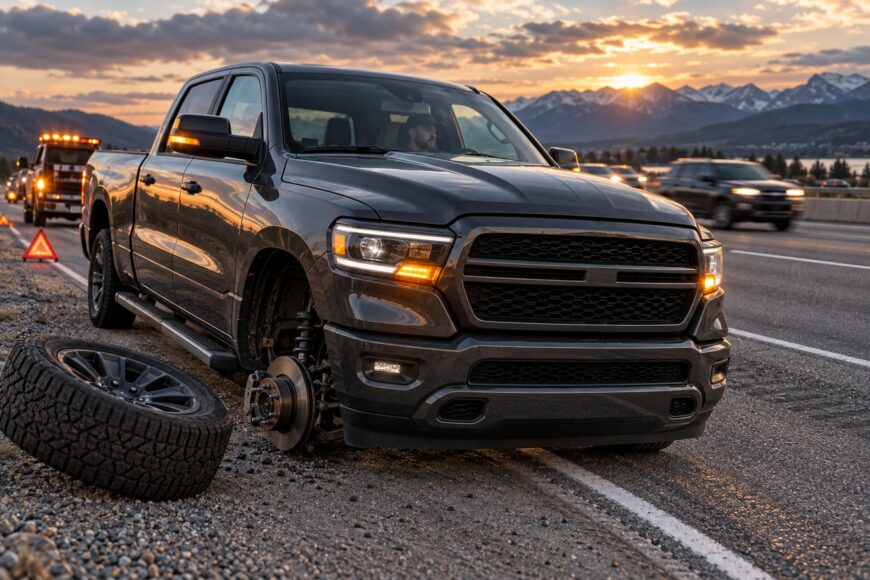
A wheel separating from a moving Dodge Ram is a serious loss-of-control emergency. The truck may pull sharply, damage the brake and suspension assemblies, or strike another vehicle. Even if it stops without an obvious injury, the remaining wheel hardware may already be overloaded.
This can happen after a tire-shop visit, an aftermarket wheel installation, a missing lug nut, or a winter of corrosion around the hub. The visible loose nut is sometimes only one link in a chain involving wheel fitment, fastener condition, installation technique, contaminated mating surfaces, and vehicle loading.
Do not assume that tightening the remaining nuts will make the truck safe. A proper diagnosis must establish whether the wheel, studs or bolts, hub, brakes, suspension, and wheel-and-tire combination are still serviceable.
- What to do immediately if a Dodge Ram wheel comes off
- Why a Dodge Ram wheel comes off while driving
- The installation mistakes that let a Ram wheel loosen
- What to inspect before putting the Dodge Ram back on the road
- How to prevent another wheel-off failure
- Frequently asked questions
- How can I verify that aftermarket lug nuts match my Ram wheels?
- What should I document before a shop repairs the truck?
- What would cause a wheel to come off while driving?
- What should I do if a wheel falls off while driving?
- What happens if a wheel falls off while driving?
What to do immediately if a Dodge Ram wheel comes off
Keep both hands on the steering wheel and reduce speed smoothly if the truck is still controllable. Avoid abrupt braking or steering unless needed to prevent an immediate collision. Activate the hazard lights, move away from active traffic if the truck can be positioned safely, and use warning devices only when you can place them without exposing yourself to traffic.
Call emergency services when there is an injury, a collision, a dangerous road position, or a risk to other road users. Otherwise, arrange professional roadside recovery. A wheel-off event is a roadside safety emergency, not a minor tire problem that can normally be solved by fitting a spare at the shoulder.
Do not drive to a repair shop on the remaining wheel hardware. Missing lug nuts, a damaged stud, or a displaced wheel can overload the parts that remain and worsen damage to the hub, brake rotor, wheel, or suspension. The truck should be transported on suitable recovery equipment for a complete inspection.
If it is safe, preserve the separated wheel, lug nuts, studs, bolts, and other loose parts. Photograph the wheel, hub, brake area, road position, and any visible marks before the vehicle is moved, and keep records of recent tire or wheel work. Do not handle damaged parts unnecessarily or make a fault determination before a qualified inspection.
Why a Dodge Ram wheel comes off while driving
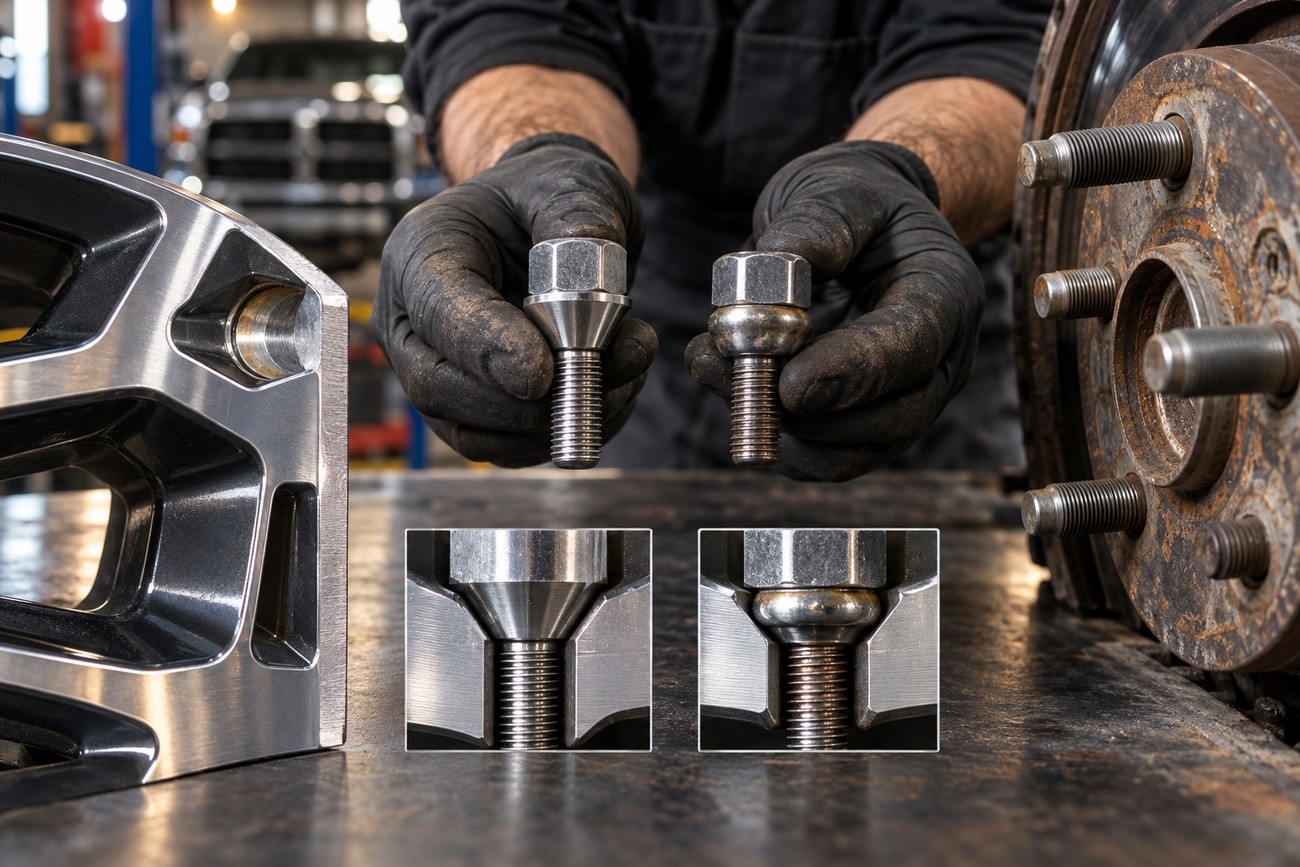
Wheel separation is often the result of several failures rather than one loose nut. The wheel fastener seat may be conical (tapered) or spherical (ball), and the fastener seat must match the wheel. Aftermarket wheels may require different seat geometry, fastener length, or fastener type than the original wheels.
The installed fastener must provide sufficient usable thread engagement. A fastener that threads on and appears secure can still be unsuitable if it is too short, has the wrong profile, or does not properly clamp the wheel. Relying on appearance or on the fact that the nut can be started by hand is unsafe.
Rust, dirt, paint flakes, or other foreign material between the wheel and hub can prevent full contact. The wheel may initially feel tight while the material compresses or breaks away in service, reducing clamping force. Corrosion can also distort the contact area and make a wheel sit unevenly.
Improper tightening can produce either insufficient clamping force or damaged threads and studs. A worn, stretched, or damaged stud, nut, or bolt may loosen even when the initial installation appeared normal. Once the wheel begins to move, the resulting impact loads can rapidly damage the remaining hardware.
Vehicle changes and operating conditions also matter. Lifts, larger wheels, altered offset, overload, towing, and uneven loading can increase stress on wheel hardware and related suspension components. A wheel that physically fits the hub is not automatically suitable for the truck’s model year, trim, tire size, or load requirements.
The installation mistakes that let a Ram wheel loosen
The wheel-to-hub mating surfaces should be cleaned of rust, dirt, and foreign material before installation. The wheel must sit flat against the hub, and the fasteners should be started and tightened in the correct staged pattern for the vehicle. A dirty contact surface can create a false sense of tightness while the actual clamping force is changing as the material settles.
An impact wrench is not a substitute for final torque verification with an appropriate manual torque tool. Its setting can vary with air pressure, tool condition, socket condition, fastener friction, and the operator’s technique. A final manual check verifies the specified torque; impact-tool use alone does not prove it.
Simply tightening harder cannot correct the wrong seat geometry, inadequate usable thread engagement, a damaged thread, or a wheel that is not sitting flat. Excessive force can stretch or damage studs, distort fasteners, and make later inspection more difficult. The wheel, fastener, and hub must be treated as one clamping system.
The wheel seat, thread condition, and final torque verification must be checked together. Trying to cure every loose-wheel complaint by tightening the nuts harder can hide the original fitment or component problem.
Driving with one missing lug nut or a damaged stud is unsafe because the remaining fasteners can be overloaded. The load is no longer distributed as intended, and movement at the wheel can damage additional studs or enlarge the wheel’s mounting holes. Stop using the truck and have the complete assembly inspected.
After installation, follow the applicable service guidance and re-torque the wheel fasteners after 500 miles. This check is especially important after a tire change, seasonal wheel change, or aftermarket wheel installation. If the wheel has been removed again, the installation procedure and re-torque interval should be treated as starting over.
What to inspect before putting the Dodge Ram back on the road
A qualified technician should begin with the wheel and hub rather than replacing only the visibly missing nut. Inspect the wheel’s mounting holes, seat areas, center bore, cracks, distortion, and signs of fretting or impact. Check the hub face for raised corrosion, scoring, deformation, and material that could prevent the wheel from sitting flat.
Inspect every stud, bolt, nut, and thread. Look for stretched or damaged threads, bent studs, damaged fastener seats, unusual wear, and evidence that a fastener bottomed out before clamping the wheel. Replace components that do not meet the vehicle and fastener manufacturer’s specifications; reusing visibly damaged hardware can leave the original failure unresolved.
The inspection should include the brake rotor or drum, caliper and backing components, wheel bearing area, steering and suspension parts, and any nearby brake lines or sensors. Check for impact marks, fresh metal movement, abnormal play, and evidence of wheel wobble. Damage may be hidden behind the wheel or appear only after the assembly is cleaned.
Confirm the exact truck configuration before selecting replacement parts. RAM 1500 wheel and tire recommendations depend on model year, trim, tire size, load requirements, and manufacturer fitment data. Verify the vehicle placard together with the wheel and tire manufacturer specifications, including diameter, width, offset, load rating, and the required fastener details.
Aftermarket wheels may require different seat geometry, fastener length, or fastener type than the original wheels. The technician should confirm that the selected fastener matches the wheel’s conical (tapered) or spherical (ball) seat and provides sufficient usable thread engagement. Do not approve the repair solely because the replacement wheel appears similar to the original.
How to prevent another wheel-off failure
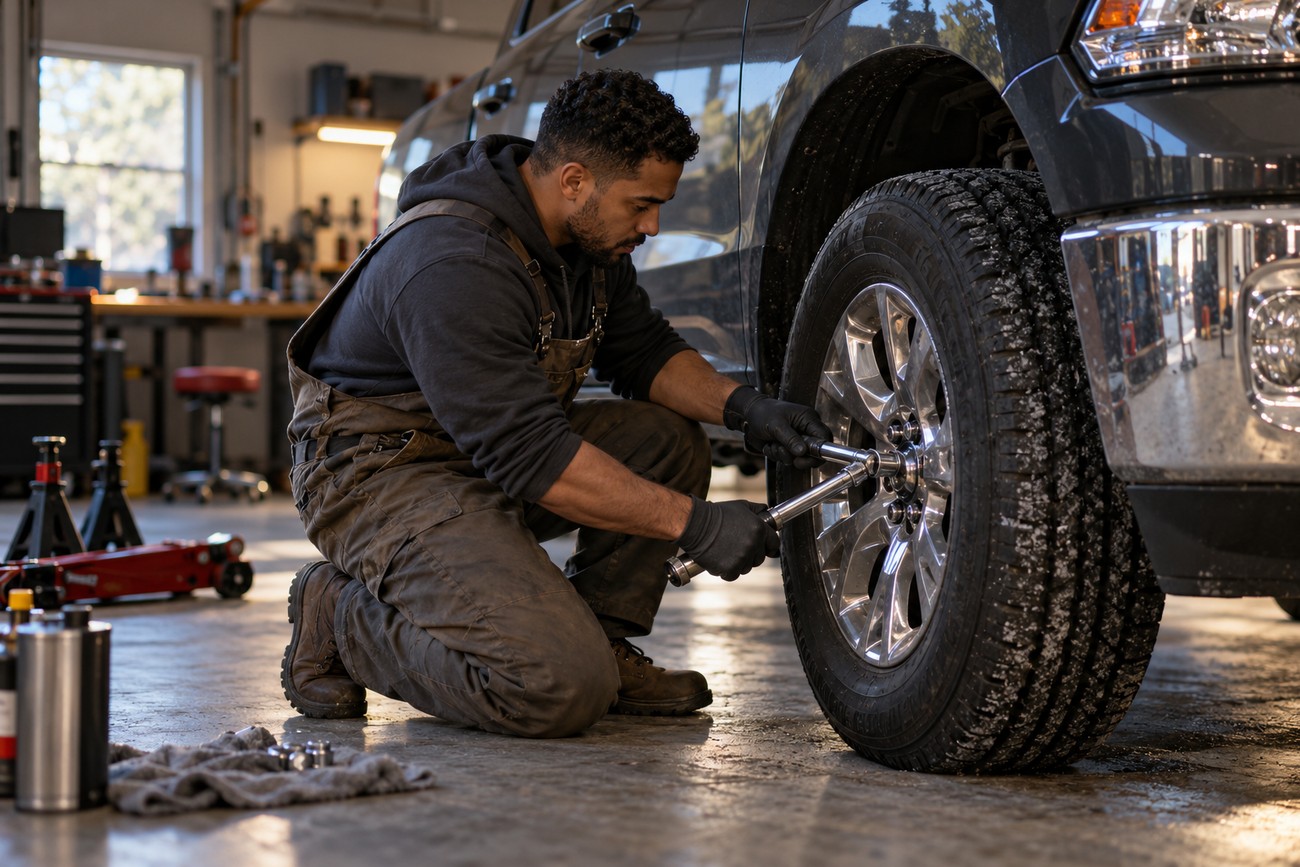
Use a repeatable installation process. Confirm the wheel’s seat profile, fastener type, dimensions, and usable thread engagement before mounting it. Clean and dry the wheel-to-hub contact surfaces, install the fasteners by hand first, tighten them in stages using the specified pattern, and complete the job with an appropriate manual torque tool.
Re-torque the wheel fasteners after 500 miles following installation, according to the applicable service guidance. Perform the same careful inspection after seasonal wheel changes, especially if the truck has been exposed to road salt, moisture, or visible corrosion. A wheel that feels secure immediately after installation still requires the prescribed follow-up check.
Choose wheels and tires using the exact year, trim, load requirements, diameter, width, offset, and manufacturer’s fitment data. Larger wheels, altered offset, and lifts can change loads at the wheel bearings, studs, suspension, and steering components. Have the whole combination evaluated rather than judging compatibility by whether the wheel clears the brake parts.
Account for towing, overload, and uneven cargo. These conditions can compound stress on the wheel system, particularly during braking, cornering, or rough-road travel. If a lug nut goes missing or a stud is damaged, stop driving and arrange recovery instead of planning to repair it later.
Frequently asked questions
These questions address the decisions that usually follow a wheel-off incident, including fastener identification, evidence preservation, recovery, and the likely consequences of continued driving.
How can I verify that aftermarket lug nuts match my Ram wheels?
Use the wheel maker’s specified seat profile, fastener dimensions, thread specification, and required usable thread engagement. Confirm whether the wheel uses a conical (tapered) or spherical (ball) seat, then compare that requirement with the lug nut or bolt specification. The fastener should be checked against the wheel documentation and the vehicle’s fitment information, not selected because it threads onto the stud.
A technician should also verify that the fastener does not bottom out, interfere with the wheel, or leave inadequate engagement. A visual match is only a preliminary clue; confirmation requires the correct specifications and a physical fitment check.
What should I document before a shop repairs the truck?
Photograph the separated wheel, hub, wheel studs or bolts, lug nuts, brake area, damaged suspension parts, and any marks showing movement or impact. If it can be done safely, collect the separated hardware and keep it together without cleaning or discarding it.
Record recent tire, wheel, brake, or suspension work, including dates, mileage, invoices, and parts information. Preserve the records without assigning fault before the inspection. This documentation helps the technician compare the failure with the recent service and identify parts that may have been replaced or altered.
What would cause a wheel to come off while driving?
Common possibilities include mismatched wheel seats or fasteners, inadequate usable thread engagement, contaminated mating surfaces, improper final torque, damaged threads, a fatigued stud or nut, and loads beyond the intended wheel-and-tire setup. Lifts, larger wheels, altered offset, towing, overload, and uneven loading can add stress.
The exact cause requires inspection of the wheel, hub, fasteners, brakes, and suspension. A missing nut is evidence of a failure, not proof of the original cause.
What should I do if a wheel falls off while driving?
Control the truck smoothly if possible, move away from traffic, activate the hazard lights, and call emergency services when the scene is dangerous or anyone is injured. Arrange suitable roadside recovery and do not drive the truck to a repair shop on the remaining hardware.
Preserve the wheel and loose parts, and photograph the assembly when it is safe to do so. The truck needs a complete inspection before any decision is made about replacement parts or continued use.
What happens if a wheel falls off while driving?
The truck can lose directional control, pull sharply, or suffer damage to the hub, brakes, wheel bearing area, steering, and suspension. The remaining fasteners may also be overloaded, so a truck that appears to roll after the incident can still have serious hidden damage.
Recovery and inspection are required before returning the vehicle to the road. Replacement decisions depend on the condition of the wheel, fasteners, hub, brakes, suspension, and the verified fitment of the replacement wheel and tire.







