
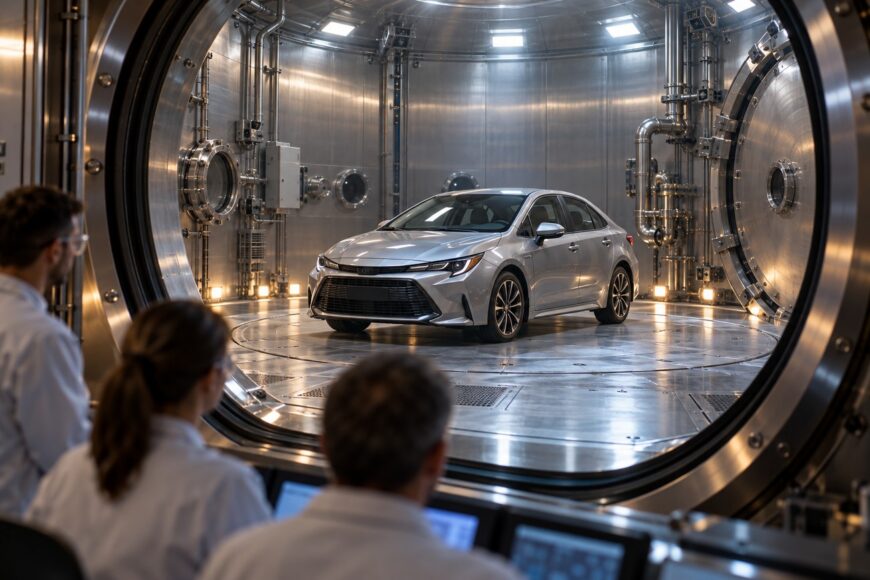
A Toyota Corolla sitting in space suggests a simple picture: no air, no sound, and perhaps an instant mechanical disaster. A real vacuum-chamber test is less cinematic. The main hazards are the loss of oxygen, the loss of convective cooling, pressure differences across sealed parts, and outgassing from materials.
The engine would stop once usable oxygen was gone, while heat from the engine, transmission, brakes, and electronics would become harder to remove. Seals, fluids, plastics, glass, lamps, and adhesives could then develop pressure-related or material problems. A Corolla would be more likely to shut down and deteriorate progressively than to explode on contact with the vacuum.
- What Happens as the Chamber Is Pumped Down
- Why the Engine Stops and the Corolla Cannot Drive Normally
- The Real Thermal Problem: No Airflow, No Normal Cooling
- Seals, Fluids, Plastics, and Electronics Under Vacuum
- What Would Fail First—and What Probably Would Not
- Why Real Vehicle Vacuum Tests Do Not Try to Drive the Car
- Frequently asked questions
- How long would the air inside a Corolla remain breathable in a vacuum chamber?
- What is the most common problem with a Toyota Corolla?
- What would a 2022 Toyota Corolla experience in a vacuum chamber?
What Happens as the Chamber Is Pumped Down
A real chamber normally produces low residual pressure; a perfect vacuum is approached as pressure tends toward 0 Pa. The pressure does not disappear as a single switch-like event. Pumps remove gas progressively, and each stage changes how air moves around and through the vehicle.
The cabin initially retains air, but it approaches chamber pressure unless it is specially sealed and structurally designed for the pressure difference. Air may leave through door seals, vents, drains, service openings, and other paths. A closed compartment can therefore remain at a different pressure temporarily, creating a load across its walls or seals.
The pumpdown rate matters because pressure differences can develop faster than air can equalize through small openings. Fast pressure reduction can increase stress on door seals, windows, lamps, enclosed components, and thin internal parts. That does not mean the whole Corolla would automatically implode; the result depends on which volumes are sealed and how the vehicle is built.
As pressure falls, familiar air effects also fade. Sound transmission through the chamber becomes weaker, aerodynamic forces decline, and gas-based heat transfer changes sharply. The car may look intact while its operating environment has already moved far outside the conditions for which a production vehicle was designed or certified.
Why the Engine Stops and the Corolla Cannot Drive Normally
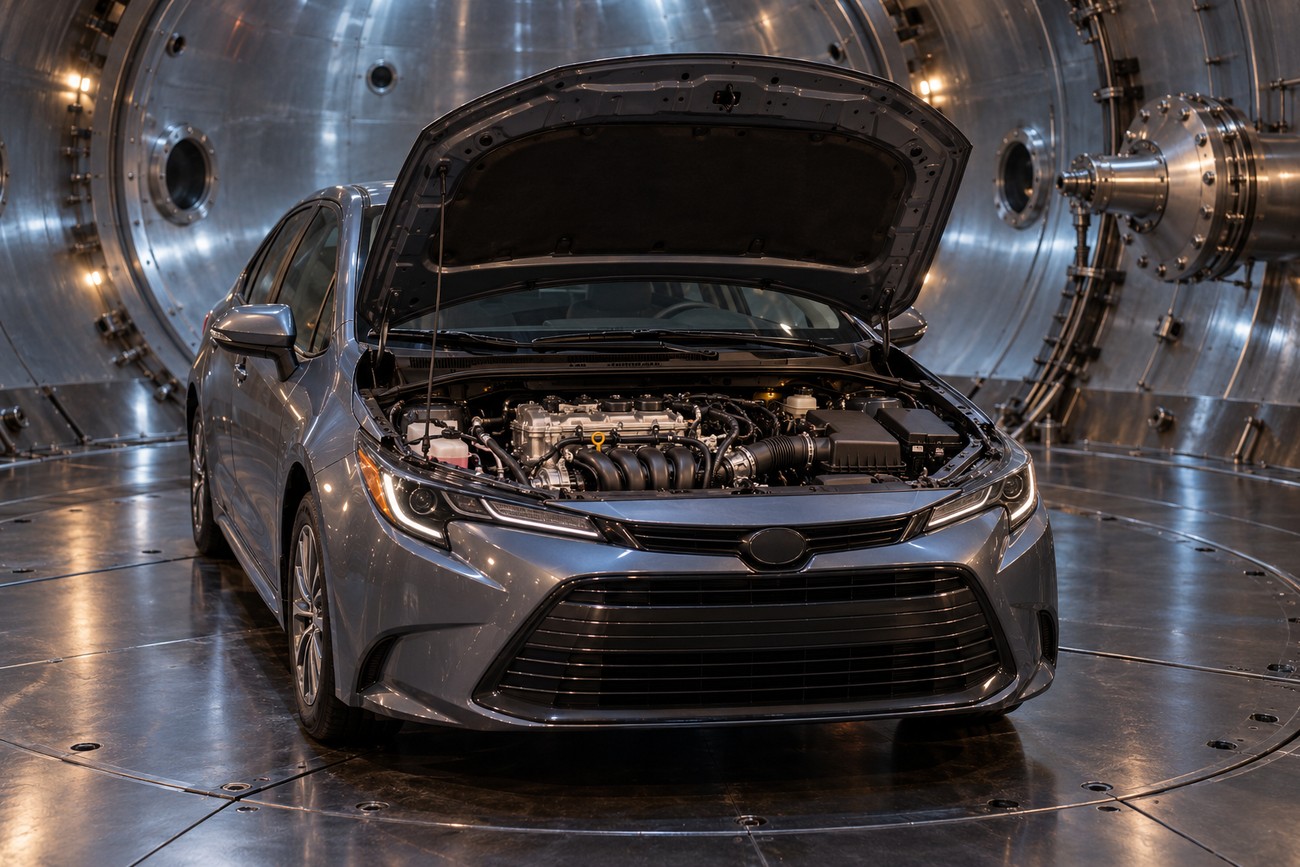
A conventional Corolla internal-combustion engine cannot sustain combustion without oxygen. Fuel injection, ignition, and mechanical compression can continue briefly while usable oxygen remains in the intake and other connected volumes. The engine would stop almost immediately after the oxygen in the remaining air volume is consumed; no universal clock time can be given.
Fuel in the tank does not solve the problem. Combustion requires an oxidizer, and the engine’s normal intake system expects air at a pressure and density close to the surrounding atmosphere. Once that supply is gone, the engine cannot produce useful power regardless of how much fuel remains.
Vacuum removes aerodynamic drag, but friction in tires, bearings, driveline components, and seals remains. A moving Corolla would still lose energy through tire deformation, wheel bearings, gears, shaft joints, and other contact surfaces. Removing air therefore does not turn the car into a frictionless vehicle or make it glide indefinitely.
The vacuum brake booster cannot provide its normal assistance when the surrounding pressure no longer supplies its intended pressure difference. The hydraulic brakes may still have mechanical and hydraulic functions, depending on the vehicle’s exact configuration and condition, but pedal effort and system behavior would be abnormal. A test vehicle should therefore be treated as unable to provide normal braking performance.
The Real Thermal Problem: No Airflow, No Normal Cooling
Vacuum is not equivalent to cold air. At sufficiently low pressure, convective heat transfer drops sharply because there are far fewer gas molecules to carry heat away from hot surfaces. A component can remain hot even while the surrounding chamber contains little gas.
In vacuum, heat leaves mainly through conduction into connected structures and thermal radiation. Heat can travel through engine mounts, brackets, wiring, pipes, and the vehicle body, while exposed surfaces radiate energy according to their temperature and finish. Those paths remain available, but they are often much less effective than normal airflow through a radiator, fan, grille, or brake assembly.
Engine, transmission, brake, and electronic cooling becomes severely degraded without surrounding airflow. The engine may stop for lack of oxygen before it reaches its normal operating condition, yet any heat already stored in the block, exhaust system, fluids, or brakes can continue moving through the vehicle. If a component is powered or rotating, heat can accumulate during operation.
Parts do not instantly freeze merely because air is absent. Some surfaces could cool by radiation, and some connected components could conduct heat toward cooler structures. The direction and rate of temperature change depend on starting temperature, power generation, surface properties, chamber conditions, and the thermal mass of the vehicle.
Seals, Fluids, Plastics, and Electronics Under Vacuum
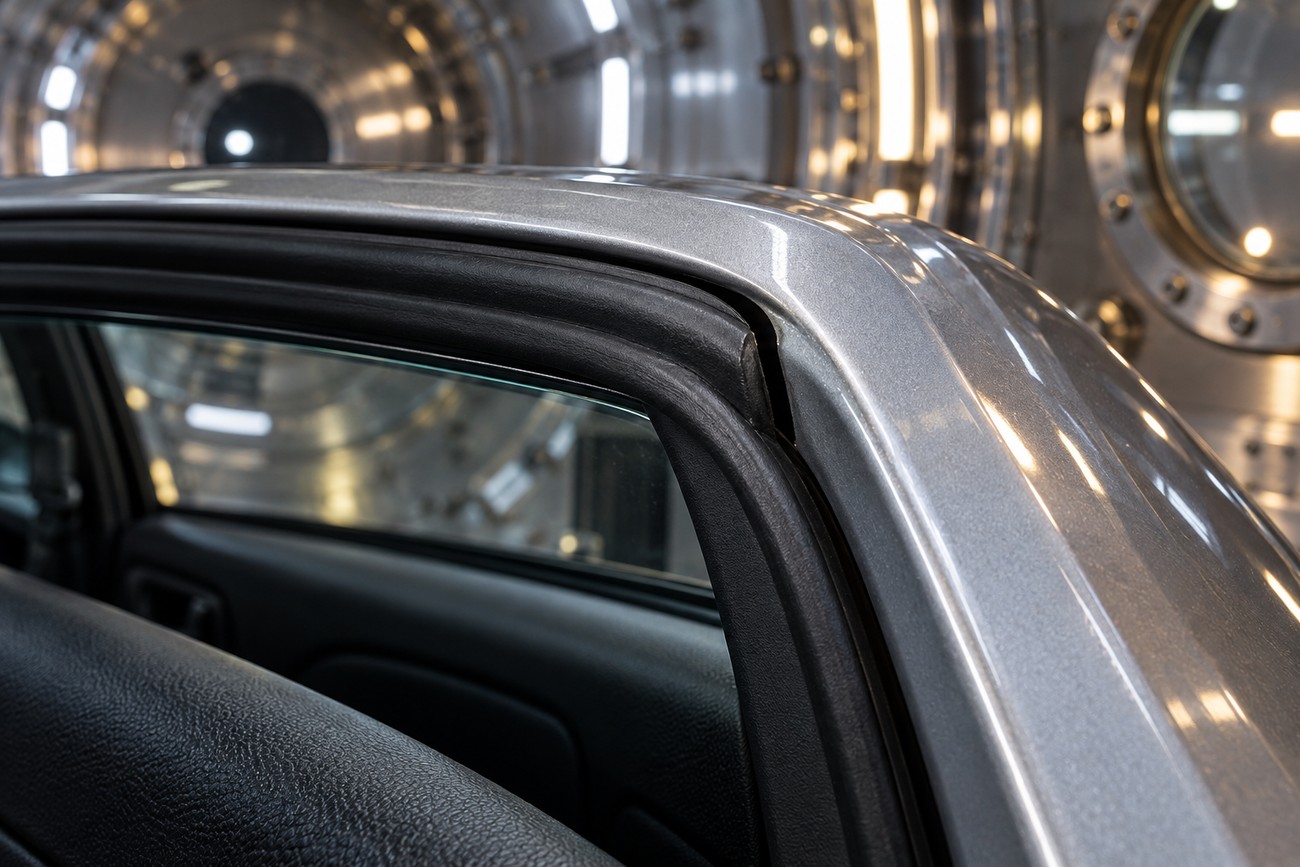
Reduced pressure can increase evaporation or outgassing from oils, fluids, plastics, rubbers, adhesives, sound insulation, and coatings. Volatile compounds may leave a material more readily, changing its smell, mass, flexibility, or surface condition. The effect varies with formulation, temperature, age, and the pressure reached in the chamber.
Seals and gaskets are exposed to pressure differences for which a production Corolla is not designed or certified. Door weatherstrips, window seals, lamp seals, shaft seals, and gaskets may deform, leak, or lose performance. That does not mean every rubber part will crack, but vacuum can reveal weaknesses that remain invisible during ordinary driving.
Vacuum testing often reveals outgassing and seal contamination before dramatic structural damage appears. Technicians therefore monitor pressure behavior and material compatibility instead of waiting for a visible crack.
Fluids and lubricants can experience gas release and abnormal boiling or cavitation-related behavior when heated. A fluid that is stable at atmospheric pressure may release dissolved gases or form vapor more readily as pressure falls. This can interfere with lubrication, cooling, hydraulic response, and the condition of nearby surfaces.
Electronic modules and connectors may face changed thermal conditions and possible discharge risks at high voltages. With less gas present, electrical behavior around contacts and high-voltage circuits can change, while reduced cooling raises component temperatures. The likely pattern is gradual degradation and overheating rather than an instant vehicle-wide explosion.
What Would Fail First—and What Probably Would Not
The first decisive functional failure is the loss of engine combustion once usable oxygen is unavailable. That event prevents normal driving even if the body, wheels, and drivetrain remain physically intact. Loss of normal cooling can create a serious secondary problem for running components that continue producing heat.
A Corolla is not expected to explode simply because it enters a vacuum chamber. Fuel vapors, electrical faults, hot surfaces, and damaged components can still create hazards, so the test would require controlled engineering procedures. Vacuum alone does not provide a universal mechanism for an instant vehicle-wide blast.
Glass, lamps, plastics, seals, and enclosed parts may be vulnerable, but damage is not universal or instantaneous. A component with a trapped internal volume can experience a different pressure load from a vented component. The vehicle’s age, prior damage, material condition, and seal design would influence which parts show trouble first.
The exact outcome depends on residual pressure, pumpdown rate, vehicle condition, and what volumes are sealed. A slow, controlled pressure reduction could produce a different result from a rapid pumpdown. For that reason, any precise failure timeline would be speculation without chamber data and a detailed inspection of the particular Corolla.
Why Real Vehicle Vacuum Tests Do Not Try to Drive the Car
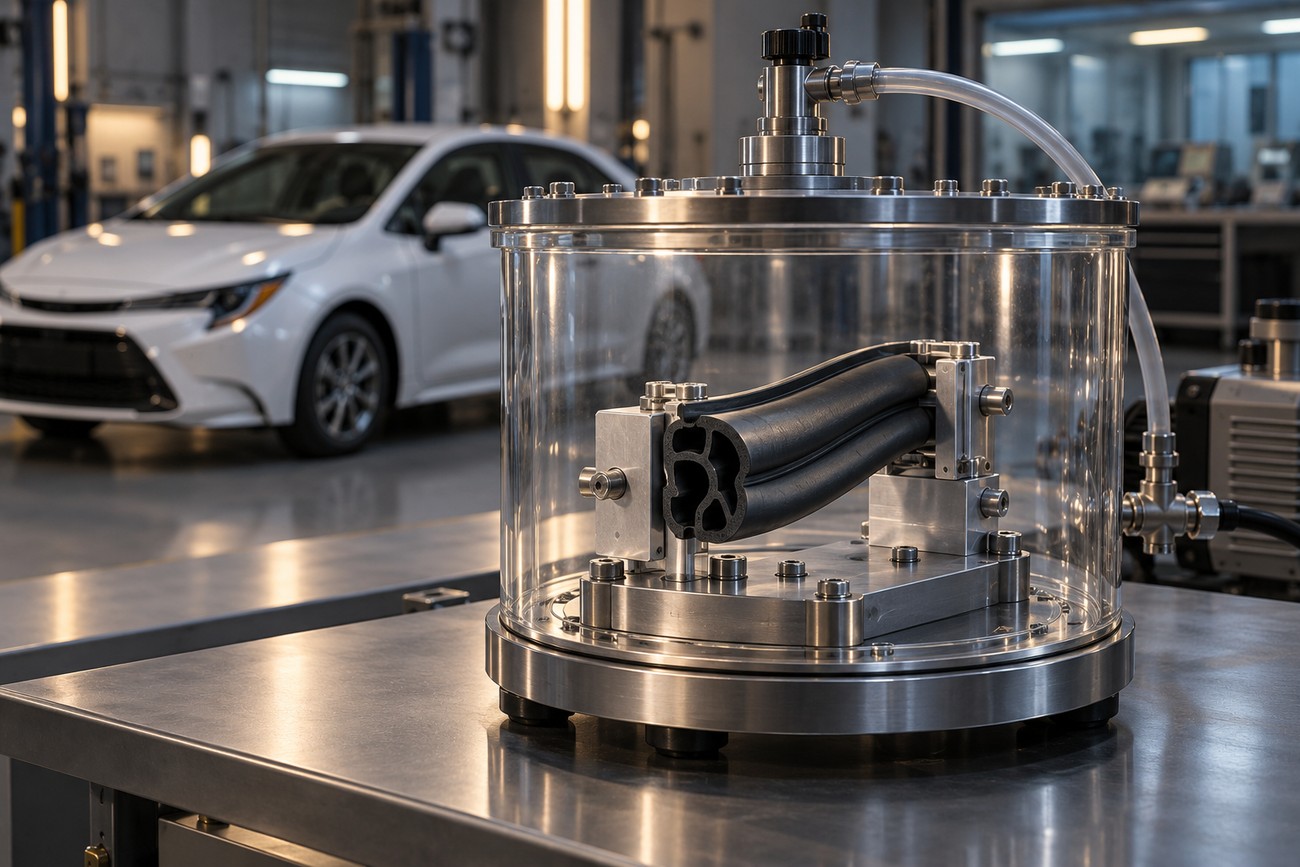
Vacuum chambers are used to evaluate degassing, electronics, materials, and hermeticity rather than to operate ordinary cars as vehicles. Engineers may examine how materials release gases, how components transfer heat, or whether a seal maintains its intended performance. These tests isolate specific behaviors under controlled pressure conditions.
A chamber large enough for a whole car creates major size, wall-load, and safety constraints. The chamber must withstand the pressure difference over a large surface area, provide suitable pumping capacity, manage released vapors, and protect personnel from component failure. Testing a complete vehicle is therefore a specialized facility problem rather than an unusual parking arrangement.
An electric or hybrid vehicle still faces severe thermal-management, battery, electronics, and sealing issues in vacuum. Its traction motor may avoid combustion-related oxygen loss, yet batteries and power electronics still generate heat, and their cooling systems depend on defined thermal paths. Electrification changes the failure sequence; it does not make a production vehicle space-ready.
Removing air does not remove mechanical friction or make a production vehicle space-ready. Vehicle-scale testing is designed around measurement and controlled exposure, with components selected or modified for the pressure range. A standard Corolla would be treated as a test article, not as a car intended to drive inside the chamber.
Frequently asked questions
The physics applies across Corolla versions, but the details depend on the vehicle, chamber, and test procedure.
How long would the air inside a Corolla remain breathable in a vacuum chamber?
There is no fixed time estimate without the cabin volume, leakage, openings, chamber volume, and pumpdown rate. A sealed cabin could initially retain air while the chamber pressure falls, but ordinary door seals, vents, and body openings are not designed to maintain a breathable pressure difference indefinitely.
The pressure outside the car also affects how quickly air leaves through available paths. A controlled test would measure cabin pressure and oxygen concentration rather than rely on a clock-based prediction.
What is the most common problem with a Toyota Corolla?
For a Corolla in a vacuum chamber, the defining problem is the test environment rather than a single model-specific defect. The vehicle loses its normal atmospheric operating conditions, so the most important assessment concerns pressure compatibility, heat rejection, and the behavior of sealed materials.
For an ordinary road vehicle, the answer would depend on model year, powertrain, maintenance, and the particular symptom. Those variables matter more than the Corolla badge alone.
What would a 2022 Toyota Corolla experience in a vacuum chamber?
A 2022 Corolla would follow the same basic pressure, oxygen, heat-transfer, and sealing physics as other conventional Corollas. Its engine would lose combustion oxygen, its brake-assistance system would operate outside its intended pressure difference, and cooling would become severely degraded.
The exact result would still depend on trim, powertrain, vehicle condition, chamber pressure, pumpdown rate, and sealed volumes. An external oxygen supply could address combustion oxygen, but it would not solve vacuum cooling, braking, sealing, or material problems.







