
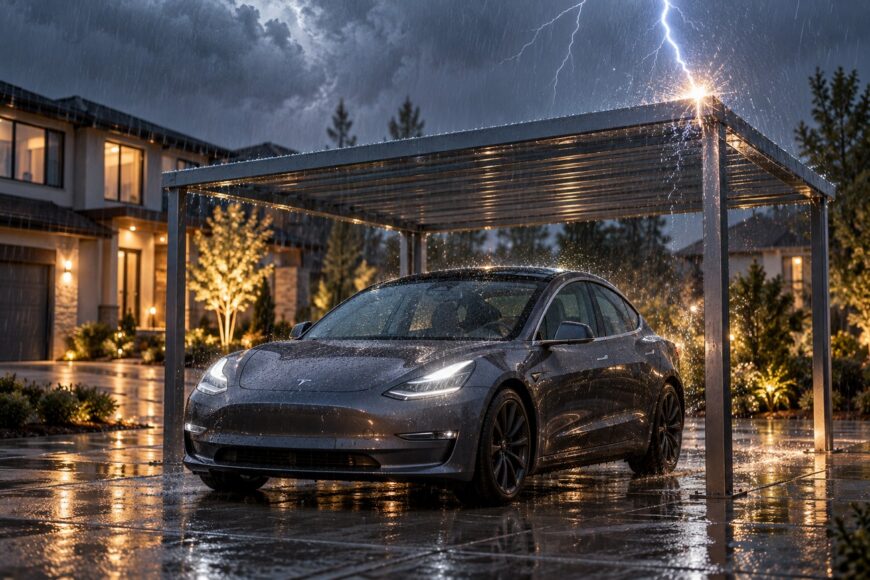
If lightning hits your Tesla Model 3, the glass roof and high-voltage battery may be your first concerns. In a closed vehicle, the conductive exterior generally routes lightning current around occupants and toward the ground. The glass roof alone does not determine that protection, and the battery does not normally make the cabin part of its electrical circuit. None of this is an absolute guarantee against injury.
The car itself may fare differently from the people inside it. A strike can leave a visible mark, damage a tire or glass, or disrupt electronics while the Model 3 still drives. A nearby discharge can also cause electrical problems without hitting the car directly. The safest next steps depend on what you see, smell, and hear, as well as any warnings or changes in how the car operates.
- What happens when lightning hits a Model 3?
- Do the glass roof and high-voltage battery change the risk?
- What damage can hide behind a car that still drives?
- What should you do if the strike happens while you’re inside?
- After a suspected strike: inspect, drive, or arrange a tow?
- Charging, repairs, and the costs owners overlook
- Frequently asked questions
- What are the odds of a car getting struck by lightning?
- How can I tell whether lightning hit my Model 3 or struck nearby?
- What should I document for an insurance claim after a suspected strike?
What happens when lightning hits a Model 3?
Lightning current generally travels along a closed car’s conductive exterior rather than through its occupants. It can then reach the ground through an electrical arc. This is often described as Faraday-cage-like protection: the body offers a path around the cabin, though the outcome of any particular strike cannot be guaranteed.
Rubber tires are not what makes the cabin safer. Lightning can arc across the gap between the vehicle and the ground, so tire insulation should never be treated as a reason to remain near the outside of a car during a storm. For people inside, the important conditions are a closed cabin and avoiding contact with metal connected to the exterior.
The damage depends on where the current travels. A direct hit might leave a mark on a panel, antenna, glass, or tire, and it may affect electrical components. Some cars remain drivable; others develop warnings, lose functions, or need substantial repair. A brief inspection of the body cannot establish which outcome applies.
There may also be no confirmed hit to the Model 3. A nearby lightning discharge can induce a surge that affects its electronics, particularly when the vehicle is connected to charging equipment. Similar symptoms after a storm deserve attention even if nobody saw lightning touch the car.
Do the glass roof and high-voltage battery change the risk?
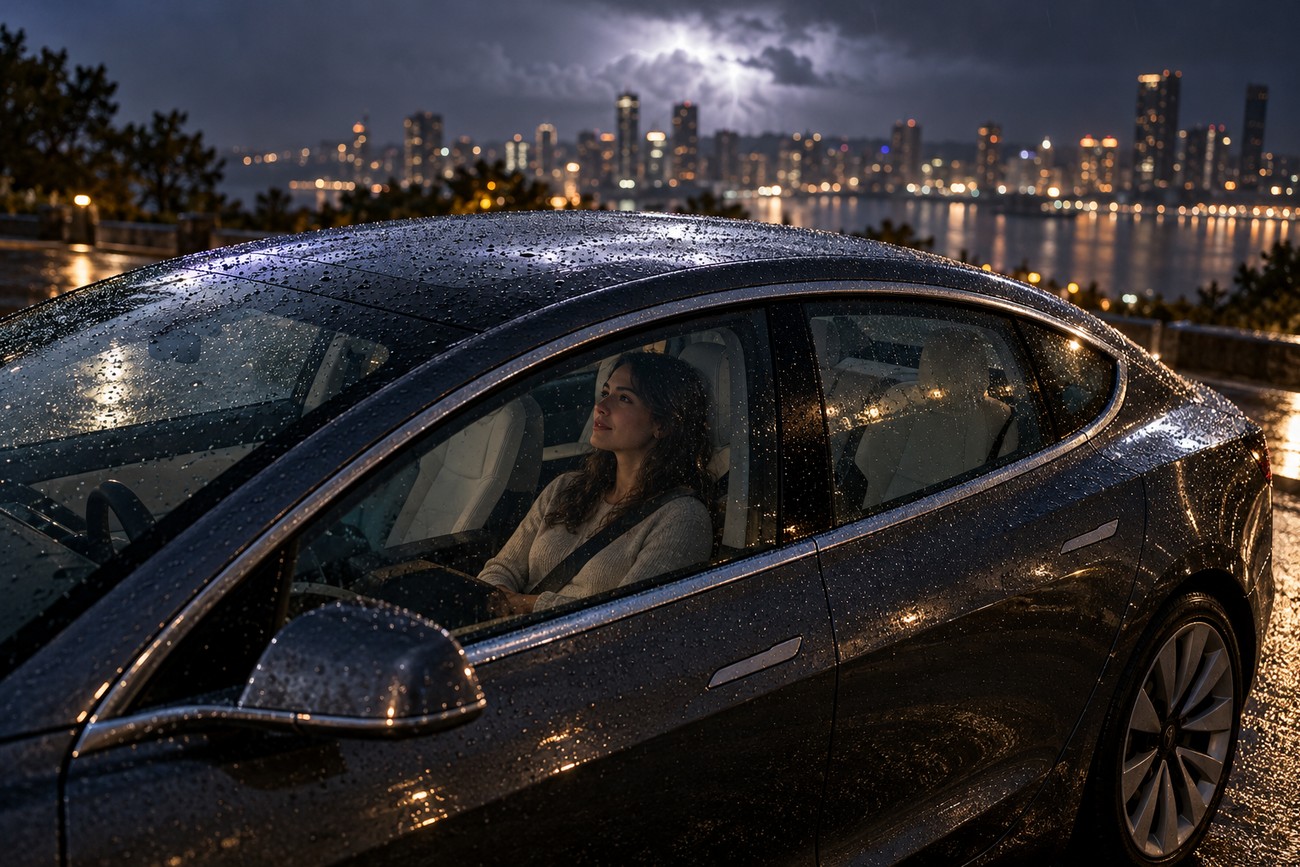
The Model 3’s glass roof does not, by itself, remove the protection associated with a closed vehicle. The relevant feature is the conductive structure surrounding the passenger compartment and the path available for current around its exterior. Glass is not a substitute for that structure, but its presence does not mean lightning must pass through the seats.
During a storm, keep the doors and windows closed and avoid touching exposed metal connected to the body. That advice applies to a Model 3 as it does to other closed cars. An open door or contact with the outside can compromise the separation that makes the cabin a safer place to wait.
The high-voltage system is normally isolated from the vehicle body. Its presence does not mean a strike should send battery current through the cabin. Lightning can nevertheless damage components or disrupt protective systems, so normal battery isolation is no promise that the vehicle needs no inspection afterward.
Passenger protection and vehicle condition are separate questions. You may leave an incident unharmed while a charging component, sensor, or other electrical part requires repair. Conversely, a glass roof that appears intact says little about faults elsewhere in the car.
What damage can hide behind a car that still drives?
Start with what can be seen: small marks on exterior panels, damage around an antenna, cracked or marked glass, and unusual tire damage. A strike can produce localized effects rather than destroy the whole vehicle. Photograph any findings from a safe position, and do not touch a suspect panel or tire while the storm is active.
Less visible faults may involve cameras, other sensors, telematics, charging electronics, or the low-voltage system. The car may still propel itself while a driver-assistance feature becomes unavailable or a warning appears on the screen. Missing functions matter even if steering and acceleration initially feel normal.
Electrical problems can be intermittent. A warning that disappears after a restart is worth recording rather than assuming the underlying fault has cleared; later diagnosis may depend on its wording and timing. Equally, a warning after a storm does not, on its own, prove lightning caused it.
A clean exterior cannot rule out damage, and an electrical symptom cannot confirm a direct strike. A nearby discharge may induce a surge without leaving a clear mark on the Model 3. This distinction matters when a technician investigates the fault and when you describe the event to an insurer: report what you observed, rather than an unverified strike path.
What should you do if the strike happens while you’re inside?
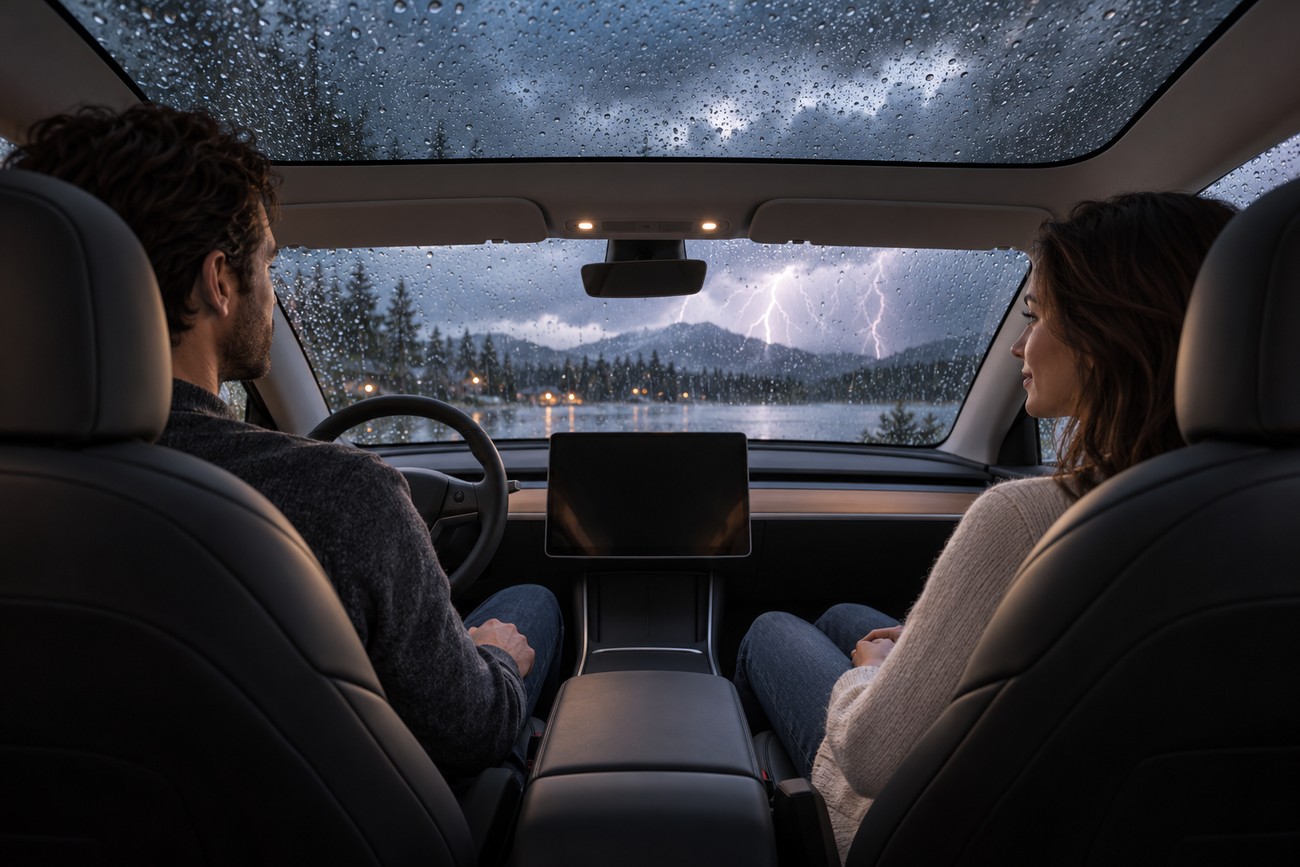
Keep the windows and doors closed if the cabin is otherwise safe. Stay inside while the storm remains active, and avoid touching exposed metal connected to the vehicle’s exterior. The closed body generally offers better shelter than standing outside or sitting in an open vehicle.
Do not get out to look for a strike mark while lightning is still nearby. Avoid reaching through an open window, leaning against an exterior panel, or handling the charge port or a cable to check whether they work. Those checks can wait until conditions are safer.
Smoke, fire, a burning smell, or another immediate danger changes the priority. Leave the vehicle if you can do so safely, move away from it, and seek emergency assistance. Do not remain inside solely because a closed car is usually a safer place during lightning.
Once the immediate hazard has passed, take stock of any injuries and the car’s condition before deciding whether to drive. If someone needs urgent help, contact local emergency services. Vehicle inspection comes after the safety of everyone involved.
After a suspected strike: inspect, drive, or arrange a tow?
Wait until it is safe to step outside, then look from a safe position for damaged glass, panels, and tires. Note smoke, unusual smells, screen warnings, and functions that no longer work. Do not touch suspected damage as a test, and do not open the battery, inverter, or other high-voltage components.
Stop using the car and seek professional assessment if you find a burning smell, smoke, warnings affecting safe operation, abnormal driving behavior, or damage to a tire or glass that could affect safe driving. Arrange a tow where driving could worsen the hazard or leave you unable to control the vehicle safely. Emergency help takes priority if there are signs of fire.
If the Model 3 appears normal, an automatic tow is not a universal requirement; guidance on towing every lightning-struck car varies. A documented service assessment is still prudent after a suspected direct hit, especially if you noticed a flash at the car, a new mark, or any change in its functions. Until it has been assessed, pay attention to new warnings and avoid relying on driver-assistance features that behave unexpectedly.
Keep a record of what happened and how the vehicle behaved afterward. Describe a suspected strike as suspected if you did not witness contact with the car. That distinction gives a technician a clearer starting point and avoids turning an uncertain observation into a firm diagnosis.
Charging, repairs, and the costs owners overlook
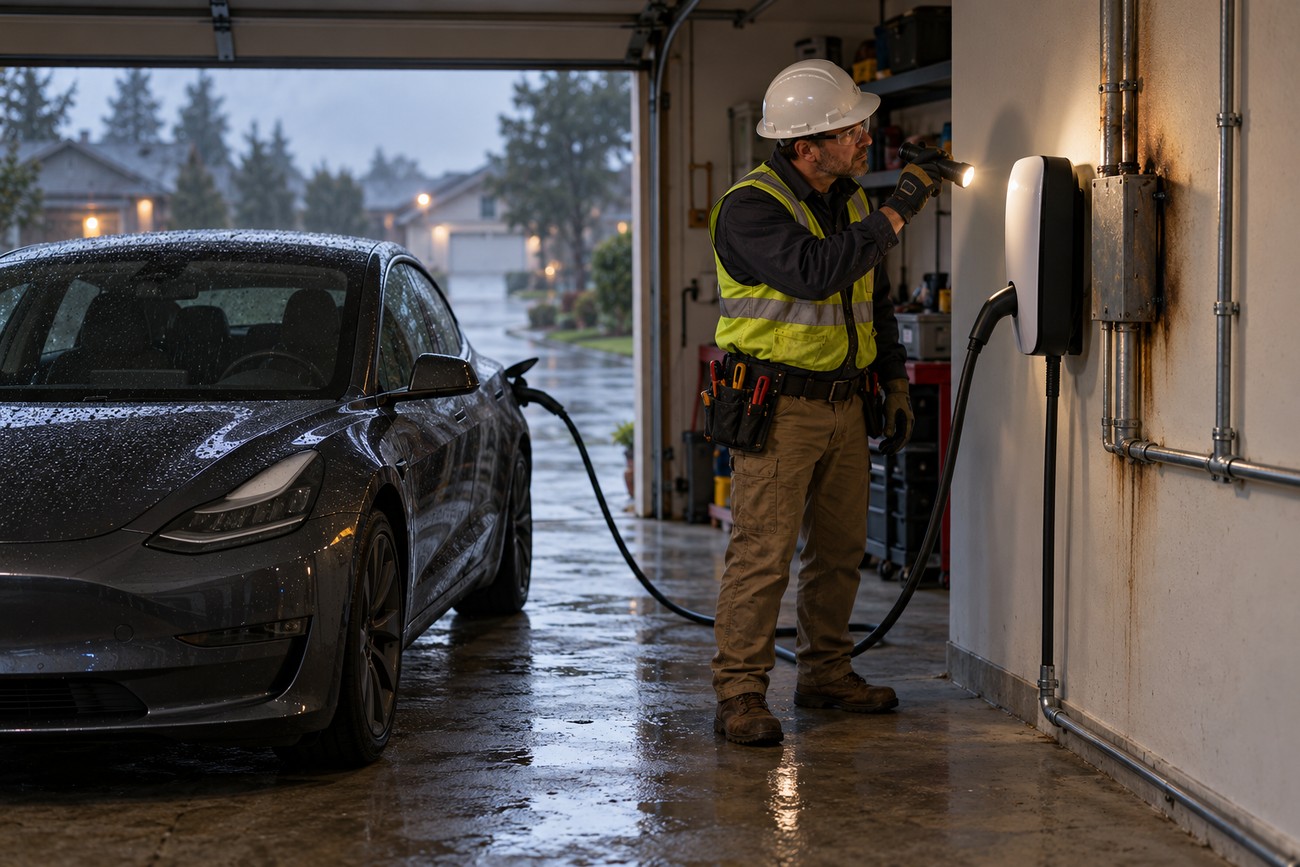
A plugged-in Model 3 needs a broader assessment. A discharge may affect the cable, charging equipment, and connected electrical installation as well as the car. If any part looks damaged, smells unusual, or behaves abnormally, avoid handling or reusing it until qualified personnel have assessed the equipment and electrical supply.
Repair work may extend beyond a visible mark on the body. Finding an intermittent electronic fault can require checks of modules, low-voltage functions, sensors, and charging operation. If affected cameras or other driver-assistance components are repaired or replaced, follow-up calibration may also be needed before those functions can be relied upon.
These less visible tasks explain why a car that drives can still require substantial diagnosis and repair. Ask for written findings that identify the observed damage, the tests performed, and any functions still awaiting verification. That record is more useful than a general statement that the car survived the incident.
Who pays depends on the circumstances, the service findings, and the terms of any applicable insurance policy or warranty. Do not assume a lightning-related fault is covered, or that every fault discovered afterward has the same cause. Preserve the evidence and seek a coverage decision based on the documented assessment.
Frequently asked questions
Lightning exposure differs by place and by storm, and the signs left on a vehicle are not always conclusive. These answers address the uncertainties owners are most likely to face after an incident. They do not replace an inspection where the car shows damage or abnormal behavior.
What are the odds of a car getting struck by lightning?
There is no reliable universal probability to give for an individual car from the available facts. Exposure changes with location, storm conditions, and how long the vehicle is outdoors during a storm. A single number would obscure those differences and would not tell you whether a particular parking place or trip is safe.
How can I tell whether lightning hit my Model 3 or struck nearby?
A fresh mark on the exterior may support the possibility of a direct hit, while electronic symptoms alone could also follow a nearby discharge. Record any marks and the sequence of events before seeking an inspection. Even a careful assessment may identify damage without establishing a definitive path for the lightning current.
What should I document for an insurance claim after a suspected strike?
Take photographs of visible damage when it is safe, and note the storm’s time and location, whether the car was charging, and any warnings or lost functions. Save screenshots where possible and request written service findings, including tests of affected systems. Submit observations separately from assumptions about a direct hit; coverage depends on the policy and the findings.







