
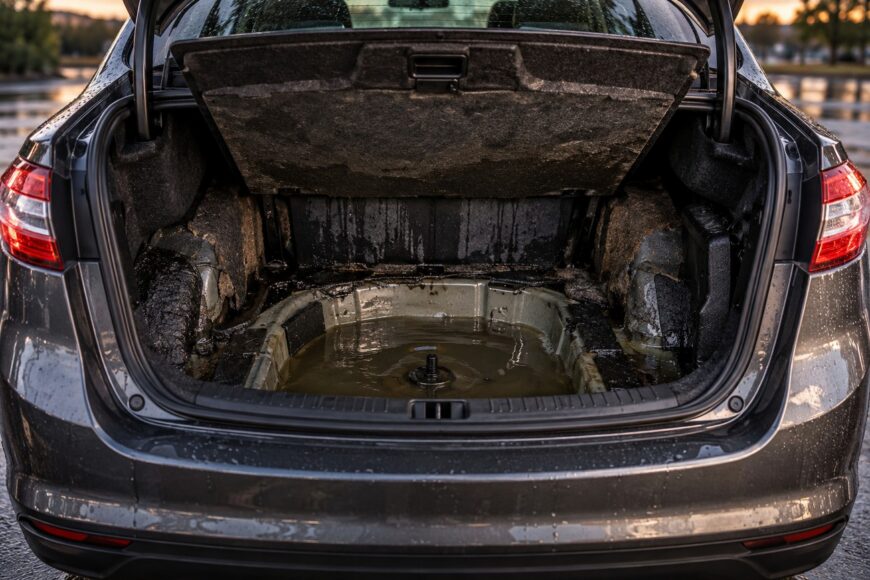
Water pooling in a Ford Fusion trunk or spare-tire well after rain often appears far from the point where water entered. It may run behind the side trim, along inner body panels, or beneath sound insulation before collecting at the rear wall or in the lowest part of the trunk.
A quick application of sealant can hide the symptom while leaving the leak active. Controlled testing is more reliable: expose the interior, wet one area at a time, and identify the first wet point. Also distinguish lamp condensation from water entry. Light fog without drops may be normal condensation and can clear within 48 hours in dry weather; a puddle, large drops, streaks, or visible runoff inside the lamp is abnormal.
- What Counts as Abnormal Water in a Ford Fusion Trunk?
- The Most Likely Leak Sources Behind the Trunk Pooling
- How to Trace the Leak Without Guessing
- Common Mistakes: Sealant, Drain Holes, and Incomplete Inspections
- Repair Verification and Drying the Spare-Tire Well
- Frequently asked questions
- How do I drain water from a Ford Fusion trunk safely?
- Why does the trunk still smell damp after the leak is repaired?
- Why is my trunk holding water?
- Which Ford Fusions are being recalled?
- Why is water pooling under my car?
What Counts as Abnormal Water in a Ford Fusion Trunk?
Standing water under the trunk floor deserves immediate attention, especially when it reaches the spare-tire well. Wet carpet, damp side trim, water marks on the rear wall, and a musty smell indicate that moisture has entered or remained inside the body. Even a shallow pool can saturate sound insulation and keep the metal damp after the visible water is removed.
Moisture inside a rear lamp needs a separate assessment. A light film of fog without drops may be normal condensation and can clear within 48 hours in dry weather. A puddle, large drops, streaks, or visible runoff inside the lamp is abnormal and points toward a sealing or mounting problem that warrants inspection.
The location of the puddle does not identify the entry point by itself. Water can travel behind interior panels and collect at the rear wall or spare-tire well, while the original opening may be near a lamp, a seam, the roof, or the trunk opening. This is why a dry section of carpet does not prove that the surrounding body is dry.
Inspect the area after rain and after washing the vehicle, then compare the water path with the position of the first damp material. A clean, dry surface on top can conceal wet insulation underneath. Leaving that moisture in place allows odor and corrosion to continue, even if the next rain produces only a small amount of visible water.
The Most Likely Leak Sources Behind the Trunk Pooling
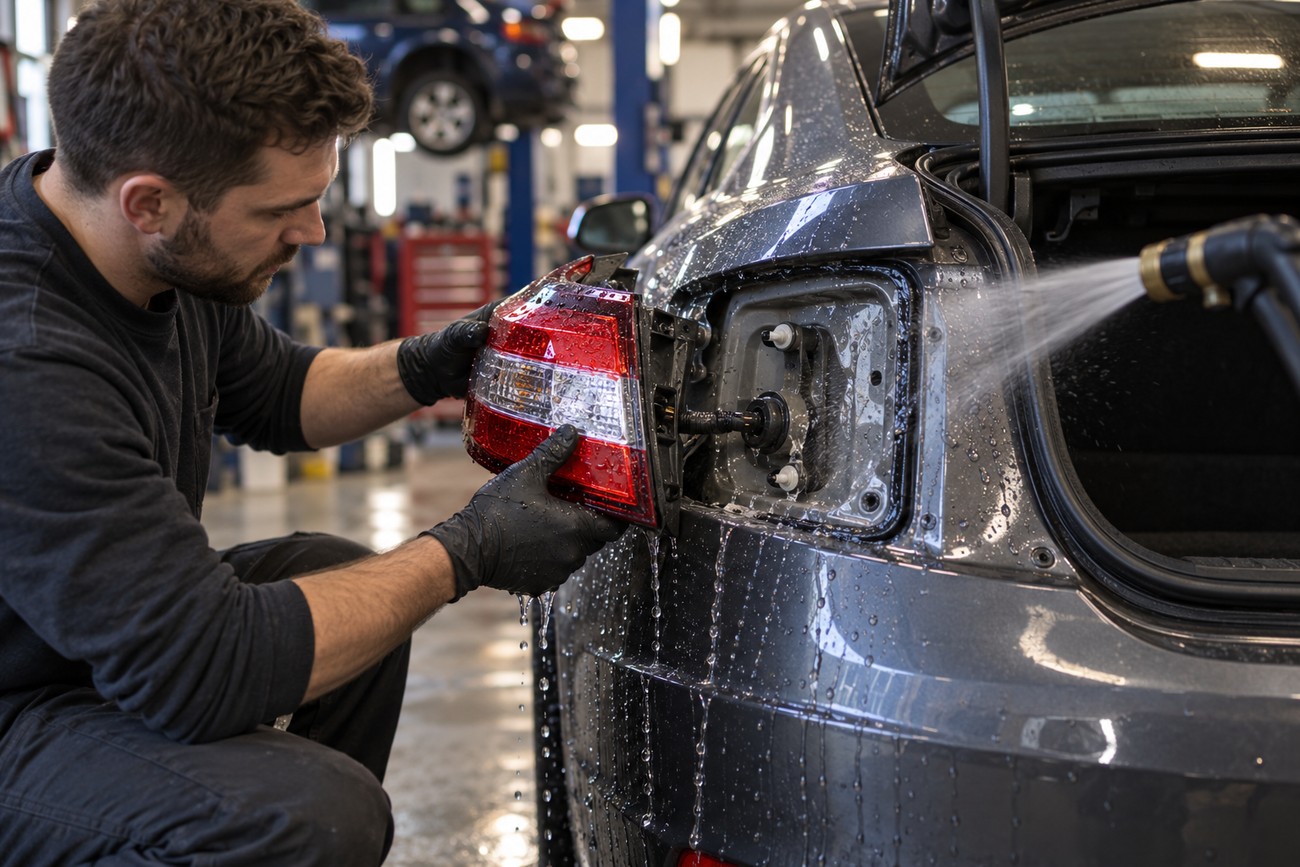
Rear-lamp seals and mounting areas are common suspects because water can pass behind the lamp housing and enter the side of the trunk without forming an obvious exterior stream. Body seams beneath or beside the lamp can behave similarly. A repair may require removing the lamp so the gasket, mounting surface, and surrounding seam can be examined directly.
The trunk-lid weatherstrip can leak even when it looks intact. It may be poorly seated, compressed unevenly, or allowing water through a nearby seam. Replacing that seal alone will not address leaks at the lamps, body seams, antenna, third brake light, or ventilation valves behind the bumper.
Ventilation valves behind the rear bumper can admit water if their seals or surrounding panels are damaged. The third brake light and roof antenna are also reported leak paths, particularly when water appears after roof-level wetting rather than only after water reaches the trunk lid. Cracks in metal or seam sealer near the rear glass can resemble a weatherstrip fault and may require close inspection with the trim removed.
On a Fusion equipped with a sunroof, blocked sunroof drains can route water toward the rear body and spare-tire well. The resulting pool may appear in the trunk even though the initial problem is above the cabin. Access to the drain system and rear body paths may be necessary before applying any sealant.
One owner of a 2017 Fusion reported an allegedly unsealed opening behind the bumper. That remains a single-owner observation, not a confirmed universal Ford condition. Some owners also identify factory openings or plugs as possible drains, so the construction should be established before treating any opening as a defect.
How to Trace the Leak Without Guessing
Begin by removing the trunk carpet, spare-tire contents, and relevant side trim where practical. Inspect the spare-tire well, lamp mounts, seams, and insulation before adding water. Mark existing damp areas so a later wet spot can be distinguished from moisture that was already present.
Use a controlled water test with a second person watching from inside the trunk. Apply water to one zone at a time, such as a rear lamp, the trunk-lid edge, a seam, the third brake light, the antenna, or the bumper area. Start with rear and lower zones, then move upward and toward the roof if the first tests remain dry.
The first damp seam often appears behind the lamp or along a bumper path rather than directly beneath the puddle. Exposing the side trim and spare-tire well before testing makes that upstream path visible.
Record the first visible wet point, then trace upward and outward from it. Water may travel behind interior panels and collect at the rear wall or in the spare-tire well, so the first puddle is often downstream from the actual entry point. A flashlight, dry paper towels, and careful inspection of seams can make a slow leak easier to locate.
Flooding the entire vehicle at once creates several possible paths and makes the result difficult to interpret. A sectional test also reduces the chance of soaking insulation unnecessarily. If the source appears behind the bumper, around a lamp, or near the roof, access may require removing the rear bumper, lamp, or interior trim.
Common Mistakes: Sealant, Drain Holes, and Incomplete Inspections
Replacing only the trunk-lid weatherstrip is a common false repair. The original leak may be at a rear lamp, body seam, antenna, third brake light, or ventilation valve. A seal that looks sound can also be seated incorrectly or positioned beside the actual opening.
Checking only the carpet misses water behind side trim, inside sound insulation, and in the spare-tire well. Water can remain hidden after the visible floor dries, particularly where absorbent materials contact the body. Remove enough trim to inspect the suspected path rather than relying on the surface condition of the carpet.
Applying exterior silicone before locating the leak can seal the wrong area and trap moisture inside a panel. It can also obscure the original path, making a later inspection harder. Sealant should follow a confirmed diagnosis and be compatible with the body joint or lamp assembly being repaired.
Drainage requires the same caution. Some owners identify factory openings or plugs as drains, while others regard them as manufacturing or unsealed openings; there is no confirmed universal instruction to drill new holes. New drain holes should not be drilled until the body design, existing access points, and actual leak source are established.
Repair Verification and Drying the Spare-Tire Well
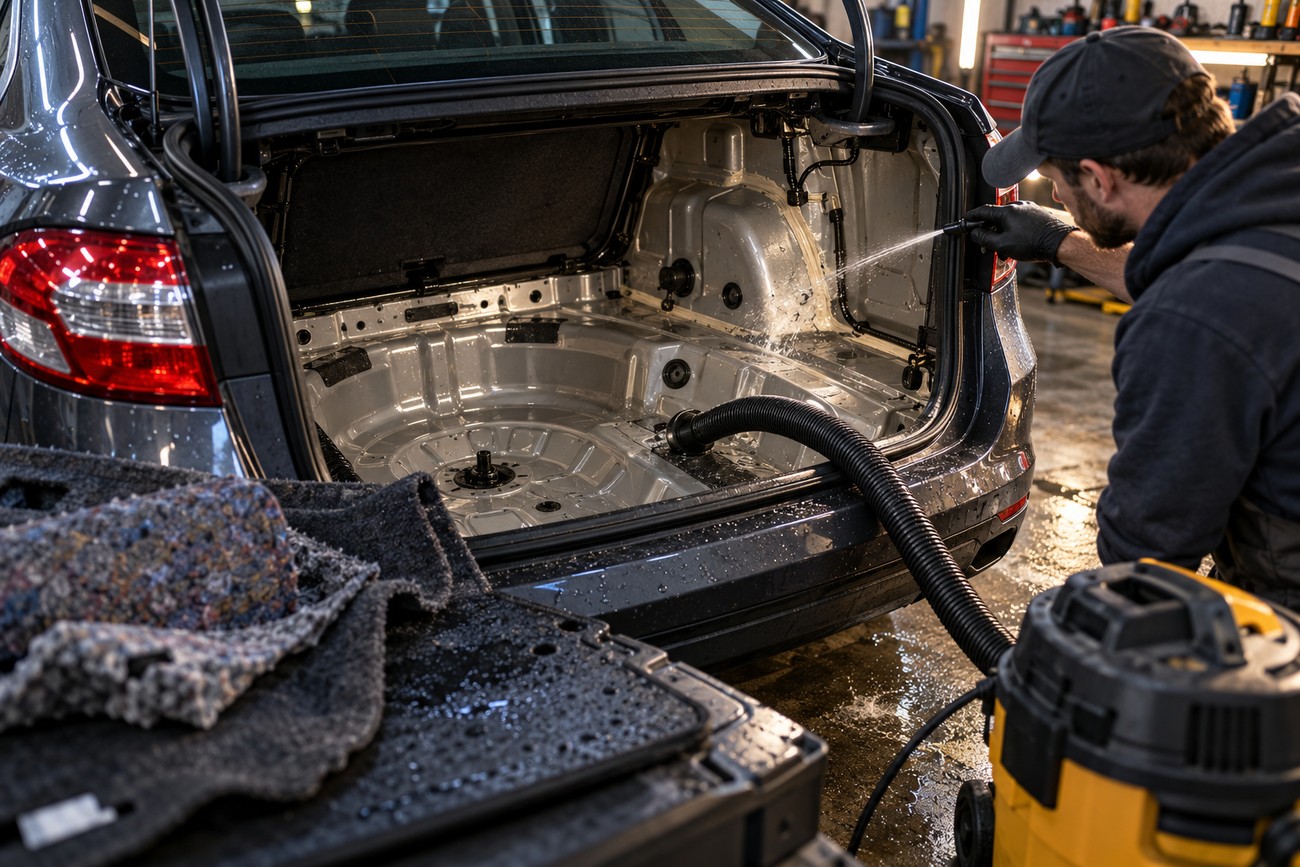
After repairing the suspected seal, lamp, seam, valve, or drain, repeat the sectional water test using the same sequence. The repaired area should remain dry while the surrounding zones are tested. If water reappears, record its first entry point again instead of adding more sealant over the previous repair.
Remove standing water from the spare-tire well and take out wet carpet and sound insulation where possible. These materials can retain water after the upper leak is fixed, so a dry visible floor does not prove that the trunk is dry. Check beneath insulation, around plugs, and along seams at the lowest part of the well.
Dry the metal and absorbent materials fully before reinstalling the trim. Air movement, careful lifting of the carpet, and separate drying of insulation help reduce continuing odor and corrosion. A lingering damp smell usually means that moisture remains somewhere in the carpet, insulation, or enclosed trim path.
Some repairs require removing rear lamps, interior trim, or the rear bumper to reach the sealing surface. Reassemble those parts only after the repair has passed a repeat water test. Water pooling alone does not establish recall coverage; recall applicability must be verified by the vehicle identification number.
Frequently asked questions
How do I drain water from a Ford Fusion trunk safely?
Remove the trunk floor covering, spare-tire contents, and loose trim that blocks access to the well. Absorb a small amount with towels or use a suitable pump for deeper water, then inspect existing factory plugs or drainage access points. Keep the removed materials separate so they can dry fully.
Draining removes the symptom and protects the interior while you investigate; it does not repair the entry point. Use existing access points and do not begin by drilling new holes, because an opening may have a structural, sealing, or intended drainage function that is not obvious from underneath.
Why does the trunk still smell damp after the leak is repaired?
Carpet and sound insulation can retain moisture after the entry point is sealed. Water may also remain in the spare-tire well or beneath trim where the visible floor feels dry.
The repair is complete only when the metal, insulation, carpet, and relevant trim are dry, rather than merely when the surface water has disappeared. If the smell persists, repeat the moisture inspection before treating the odor.
Why is my trunk holding water?
A Ford Fusion trunk may hold water because of a rear-lamp seal or mounting area, body seam, trunk-lid weatherstrip, ventilation valve behind the bumper, third brake light, roof antenna, or sunroof drain where fitted. Water can travel behind panels, so the pool may appear far from the entry point.
Use a sectional water test after exposing the carpet, side trim, and spare-tire well. The first wet point is more useful than the location of the largest puddle.
Which Ford Fusions are being recalled?
Water pooling alone does not identify a recall or establish that a particular Fusion is covered. Recall applicability depends on the vehicle identification number and the specific campaign recorded for that vehicle.
Check the VIN through Ford’s official recall resources or an authorized dealer. A confirmed leak still requires diagnosis and repair even when no recall applies.
Why is water pooling under my car?
Clear water under a car can come from normal air-conditioning condensation, while water under the rear body may also relate to body drainage or a leak path. Color, odor, location, and timing help distinguish ordinary condensation from coolant, fuel, oil, or rainwater.
If the water is associated with a wet trunk, a spare-tire pool, or damp interior trim, inspect the Fusion’s rear body and drainage paths rather than assuming the liquid came from underneath. Do not alter factory openings until the source and intended drainage design are known.







